Door Lift
CN → US| HS Code | Tariff Rate | Origin | Destination | Doc |
|---|---|---|---|---|
| 4418298060 | 39.8% | CN | US | Official Doc |
| 3926902500 | 24.0% | CN | US | Official Doc |
| 4418218060 | 39.8% | CN | US | Official Doc |
| 3926305000 | 22.8% | CN | US | Official Doc |
Product Images
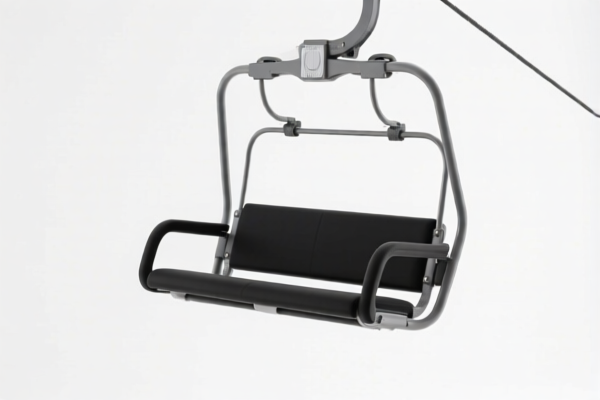
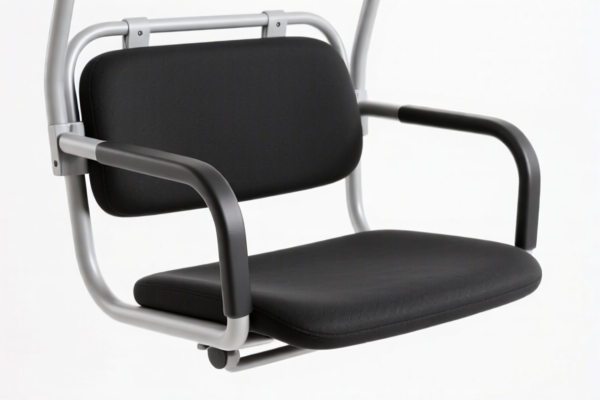
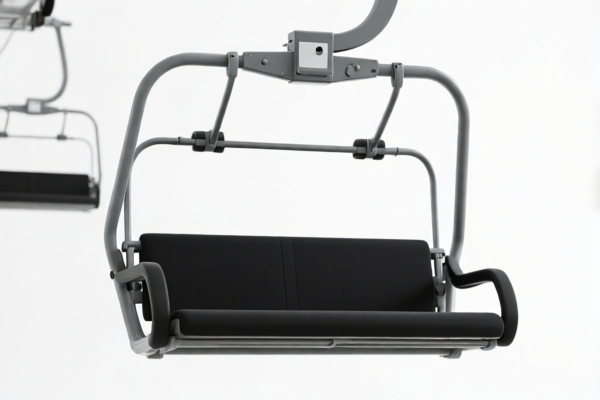
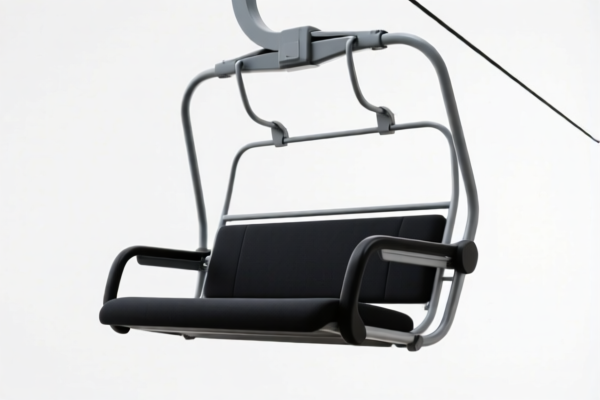
AI Analysis
🚪 Door Lift (Door Closer/Top Jamb Lift)
🌐 HS Code Reference & Customs Clearance Guide | 2026 Latest Tariff Analysis | Professional Clearance Strategy
📌 I. Product Definition & Classification: Do You Really Understand “Door Lift”?
A Door Lift (often part of a door closer assembly or top jamb mechanism) is a hardware component designed to lift the leading edge of a door slightly as it closes, reducing friction against the carpet or threshold. In international trade, its classification depends strictly on the material and functional purpose. It is generally categorized under either Wooden Construction Works or Plastic/Other Material Articles.
⚠️ Key Distinction Point:
- If the primary material is Wood → Classify under Chapter 44 (Wood and articles of wood);
- If the primary material is Plastic → Classify under Chapter 39 (Plastics and articles thereof);
- Misclassification Risk: Declaring a plastic door lift as wood (or vice versa) leads to severe penalties due to significant tariff differences.
📦 II. HS Code Classification Details (2026 Latest Tariff Authority Comparison)
| HS Code | Product Description | Material Basis | Application Scenario |
|---|---|---|---|
4418.29.80.60 |
Other wooden architectural joinery (fallback category) | Wood | Wooden door tops, wooden frames, wooden thresholds |
3926.90.25.00 |
Other articles of plastics | Plastic | Plastic door lift mechanisms, plastic hinges, plastic connectors |
4418.21.80.60 |
Other doors, window frames, thresholds made of tropical wood | Tropical Wood | High-end wooden door components made from tropical timber |
3926.30.50.00 |
Other fasteners and fixtures of plastic | Plastic | Plastic connectors, fixing parts, structural joints for furniture/buildings |
🔍 Key Reminder:
- Wooden Door Lifts: Must be declared under Chapter 44. The specific subheading depends on whether it’s a standard wood or tropical wood. The "fallback principle" applies here (4418.29.80.60) if no specific subheading for "door lift" exists.
- Plastic Door Lifts: Must be declared under Chapter 39. If it’s a simple shape/part, use3926.90.25.00. If it functions primarily as a connector/fastener,3926.30.50.00may apply.
- Mixed Materials: If made of multiple materials, classify based on the essential character (usually the structural body).
💰 III. 2026 Latest Tariff Rate Breakdown (Including Surtaxes & Policy Add-ons)
✅ Applicable Country: United States (US)
✅ Origin: China (CN)
✅ Effective Date: November 10, 2025 (and subsequent imports)
🎯 1. 4418.29.80.60 & 4418.21.80.60 —— Wooden Door Components (Architectural Joinery)
| Item | Content |
|---|---|
| Basic Tariff | 4.8% (ad valorem) |
| Section 301 Surtax | +25.0% (Standard USITC Footnote) |
| Section 122 Tariff | +10.0% (Specific provision for certain Chinese goods) |
| Total Tariff Rate | 39.8% |
| Tax Calculation | CIF Value × 39.8% |
| De Minimis Exemption | ❌ Not Eligible (deny_de_minimis) |
| Legal Basis Path | USITC:4418.29.80.60 → Section 301: Footnote 9903.88.01 → Section 122: 10% |
📌 Explanation:
- Base Rate 4.8%: Standard MFN rate for wooden joinery;
- Section 301 (+25%): Applied to most Chinese wooden products under the US-China trade dispute;
- Section 122 (+10%): Additional surcharge for specific Chinese imports;
- Total 39.8%: This is a high-cost category. Wooden door lifts face significant barriers.
🎯 2. 3926.90.25.00 —— Plastic Door Lift (Other Plastic Articles)
| Item | Content |
|---|---|
| Basic Tariff | 6.5% (ad valorem) |
| Section 301 Surtax | +7.5% (Standard USITC Footnote) |
| Section 122 Tariff | +10.0% |
| Total Tariff Rate | 24.0% |
| Tax Calculation | CIF Value × 24.0% |
| De Minimis Exemption | ❌ Not Eligible (deny_de_minimis) |
| Legal Basis Path | USITC:3926.90.25.00 → Section 301: Footnote 9903.88.01 → Section 122: 10% |
📌 Note:
- Plastic components generally face lower surtaxes (7.5%) compared to wood (25%) under Section 301;
- However, the base rate (6.5%) is higher than wood (4.8%);
- Net Result: Plastic is still cheaper (24%) than wood (39.8%), but significantly taxed.
🎯 3. 3926.30.50.00 —— Plastic Connector/Fastener
| Item | Content |
|---|---|
| Basic Tariff | 5.3% (ad valorem) |
| Section 301 Surtax | +7.5% |
| Section 122 Tariff | +10.0% |
| Total Tariff Rate | 22.8% |
| Tax Calculation | CIF Value × 22.8% |
| De Minimis Exemption | ❌ Not Eligible (deny_de_minimis) |
| Legal Basis Path | USITC:3926.30.50.00 → Section 301: Footnote 9903.88.01 → Section 122: 10% |
📌 Advantage:
- If the door lift can be technically justified as a “connector/fastener” rather than a general plastic article, the total rate drops to 22.8%, the lowest among all options.
- Strategy: Use functional description emphasizing its role as a "fixture" or "connector" in customs declaration.
🛠️ IV. Customs Clearance Practical Advice (Battle-Tested Pitfall Avoidance)
✅ 1. Document Checklist (Missing Any = Delay)
| Document | Required | Description |
|---|---|---|
| ✅ Product Specs Sheet | ✔️ | Material composition (wood vs. plastic), dimensions, weight |
| ✅ Material Certificate | ✔️ | Proof of material (e.g., FSC certificate for wood, plastic resin ID) |
| ✅ Product Photos | ✔️ | Clear shots of the mechanism, labeling, and installation context |
| ✅ Commercial Invoice | ✔️ | Must specify "Door Lift Mechanism" and material type |
| ✅ Packing List | ✔️ | Include net/gross weight, quantity, and packaging type |
| ✅ HS Code Declaration Form | ✔️ | Select correct HS based on material analysis |
✅ 2. Declaration Tips (Key Mnemonics)
🔥 “Material First, Function Second, Name Precise, Tax Reduced!”
| Scenario | Correct Declaration | Wrong Practice |
|---|---|---|
| Wooden Door Lift | 4418.29.80.60 "Wooden Door Top Component" |
Declare as "Plastic" → Severe Penalty |
| Plastic Door Lift (General) | 3926.90.25.00 "Plastic Door Lift Part" |
Declare as "Metal" → Wrong Chapter |
| Plastic Connector-Type | 3926.30.50.00 "Plastic Fixture/Connector" |
Declare as "General Plastic" → Higher Tax |
| Mixed Material | Based on Essential Character | Split declaration → Risk of Rejection |
✅ 3. Special Case Handling
| Scenario | Handling Advice |
|---|---|
| OEM Custom Parts | Provide client design drawings to prove functional purpose |
| Door Lift + Closer Body | Declare as complete unit if shipped together; do not split unless necessary |
| Sample Shipments | Still subject to full taxation; no de minimis exemption |
| Wood Origin | Ensure FSC certification if exporting from China to avoid phytosanitary issues |
🌍 V. Global Market Customs Comparison (2026 Latest)
| Country/Region | Recommended HS Code | Tariff (China Origin) | Certification | Notes |
|---|---|---|---|---|
| 🇺🇸 USA | 4418.29.80.60 / 3926.90.25.00 |
24.0% – 39.8% | None Required | High surtaxes apply |
| 🇨🇳 China | 4418.29 / 3926.90 |
5% – 12% | CCC (if applicable) | Lower base rates |
| 🇪🇺 EU | 4418.99 / 3926.90 |
0% – 3% | CE (if electric) | No Section 301 |
| 🇦🇺 Australia | 4418.99 / 3926.90 |
5% | RCM | Moderate tariffs |
| 🇯🇵 Japan | 4418.99 / 3926.90 |
0% – 5% | PSE (if electric) | Low tariffs |
📌 Conclusion:
- USA has the highest cost for Door Lifts due to Section 301 + Section 122;
- Plastic components are cheaper than wooden ones in the US market;
- Non-US markets (EU, Japan, Australia) have much lower barriers, making them favorable for pricing strategies.
📌 VI. Common Mistakes & Pitfalls (Lessons Learned)
❌ Mistake 1: Declaring a Wooden Door Lift as Plastic
👉 Consequence: Customs audit reveals material discrepancy → Confiscation + Fine
❌ Mistake 2: Using "Door Part" as a vague description
👉 Consequence: Customs assigns highest default rate → Unnecessary Tax Overpayment
❌ Mistake 3: Ignoring Section 122
👉 Consequence: Underestimating tax liability by 10% → Cash Flow Crisis
❌ Mistake 4: Splitting Wooden & Plastic Components in One Shipment
👉 Consequence: Each item taxed separately → Complexity + Higher Total Tax
✅ Correct Approach:
“Door Lift Mechanism, Plastic, Model XYZ, for Interior Doors, HS 3926.30.50.00”
OR
“Wooden Door Top Bracket, Tropical Wood, HS 4418.21.80.60”
🎯 VII. Conclusion: Professional Declaration, Save Money & Time
🎯 Remember the Mnemonic:
🔹 “Wood is 39.8%, Plastic is 24%, Connector is 22.8%!”
🔹 “Material Determines HS Code, HS Code Determines Tax!”
📌 Pro Tip:
- If possible, design door lifts using plastic to reduce Section 301 surtax (7.5% vs 25%);
- If plastic is unavoidable, classify as ‘Connector’ (3926.30.50.00) to save an extra 1.2% vs. general plastic;
- For wooden parts, ensure FSC certification to avoid phytosanitary delays.
📣 Immediate Action:
📞 Contact a licensed customs broker + Provide material specs + Apply for Pre-Ruling if shipment value is high
🚀 Ensure your Door Lifts clear customs smoothly, minimize tax burden, and maximize profit!
✨ Professional Clearance Starts with Accurate Classification!
💼 Every Penny of Tax Saved is Pure Profit!
Customer Reviews
About HS Code Classification
The Harmonized System (HS) is an internationally standardized nomenclature developed by the World Customs Organization (WCO) to classify traded products. Over 200 countries use the HS system as the basis for customs tariffs, trade statistics, and import/export regulations.
Each HS code follows a hierarchical structure:
- Chapter (2 digits) — Broad category of goods (e.g., Chapter 84: Machinery and Mechanical Appliances)
- Heading (4 digits) — More specific grouping within the chapter
- Subheading (6 digits) — Internationally standardized breakdown, used by all WCO member countries
- National subdivisions (8-10 digits) — Country-specific extensions for further classification, such as US HTSUS 10-digit codes
Correct HS code classification is essential for smooth customs clearance, accurate duty payment, and compliance with trade regulations. Misclassification can lead to customs delays, overpayment of duties, or penalties.
When importing from CN to US, the applicable tariff rates may include:
- Most-Favored-Nation (MFN) rate — The standard duty rate applied to WTO members
- General rate — Applied to countries without trade agreements
- Trade remedy duties — Additional tariffs such as Section 301 (anti-dumping), Section 232 (national security), or countervailing duties
The information provided on this page is for reference purposes only. For official classification, please consult with your local customs authority or a licensed customs broker.