Doped Semiconductor Silicon Wafer
CN → US| HS Code | Tariff Rate | Origin | Destination | Doc |
|---|---|---|---|---|
| 3818000020 | 60.0% | CN | US | Official Doc |
| 2804691000 | 15.3% | CN | US | Official Doc |
| 2804695000 | 15.5% | CN | US | Official Doc |
| 3824991100 | 35.0% | CN | US | Official Doc |
| 3824991900 | 41.5% | CN | US | Official Doc |
Product Images
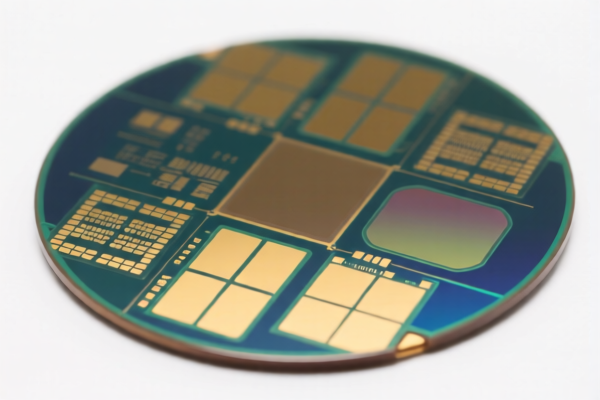
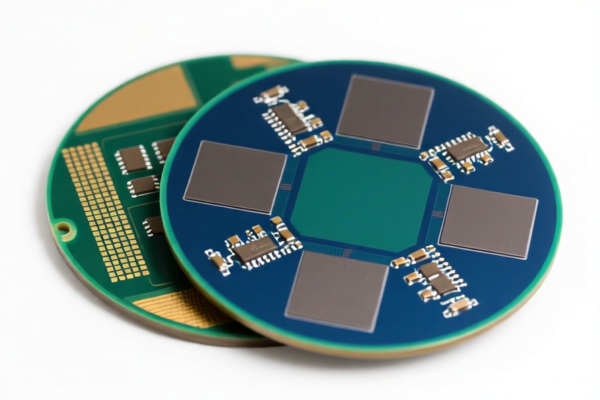
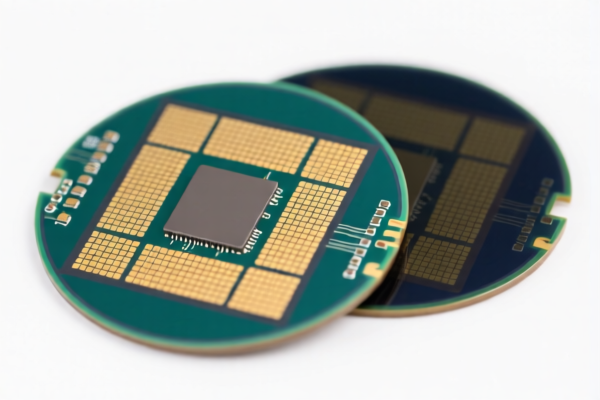
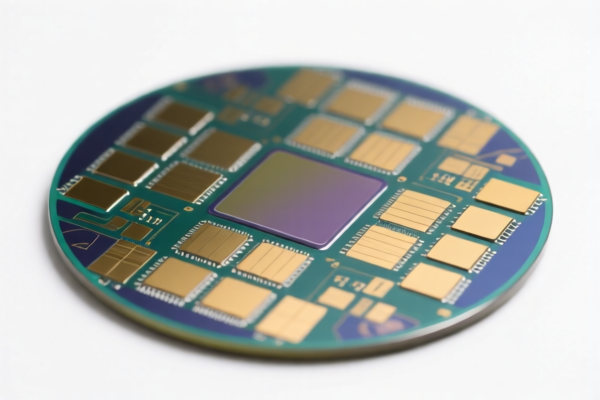
AI Analysis
⚛️ Doped Semiconductor Silicon Wafer (掺杂硅晶圆)
🌐 HS Code Reference & Customs Clearance Guide | 2026 Latest Tariff Analysis | Professional Compliance Strategy
📌 I. Product Definition & Classification: What Exactly is a "Doped Silicon Wafer"?
Doped semiconductor silicon wafers are the foundational substrates for integrated circuits (ICs), solar cells, and sensors. In international trade, they are classified differently depending on their physical state, processing level, and intended use. The critical distinction lies in whether the silicon is a primary raw material (inorganic chemical) or a processed chemical product (prepared reagent/alloy).
⚠️ Key Classification Points:
- If the wafer is a thin sheet of elemental silicon with doping as a physical modification of the element itself → It may fall under Silicon (2804) categories.
- If the doping process is viewed as a chemical preparation or semi-finished semiconductor material → It falls under Chemical Products (3818 / 3824) categories.
- Doping involves adding impurities (Boron, Phosphorus, etc.) to alter electrical properties. Customs authorities scrutinize whether this transformation exceeds "simple physical mixing" or constitutes a distinct chemical/industrial preparation.
📦 II. HS Code Classification Details (2026 Latest Tariff Authority Cross-Reference)
Based on the provided data, here are the 5 potential HS Codes for Doped Semiconductor Silicon Wafers, categorized by their legal interpretation in customs practice.
| HS Code | Product Description (Summary) | Applicable Scenario | Classification Logic |
|---|---|---|---|
3818.00.00.20 |
Doped Silicon Wafer, matching doping characteristics & polysilicon material morphology | Finished semiconductor substrates ready for IC manufacturing | Viewed as preparation of semiconductor materials for industrial use |
2804.69.10.00 |
Doped Silicon Wafer, thin sheet form of silicon material, fitting "Other Silicon" category | Primary silicon sheets with doping considered a basic material trait | Viewed as Elemental Silicon (Chapter 28), where doping is incidental to the element's form |
2804.69.50.00 |
Doped Silicon Wafer, primary sheet form of silicon material, fitting "Other" sub-category | Raw silicon wafers in early-stage processing | Viewed as Primary Silicon Products (Chapter 28), less refined than 3818 |
3824.99.11.00 |
Doped Silicon Wafer, semiconductor raw material, doping process falls under chemical modulation | Semi-finished chemical preparations for semiconductor industry | Viewed as Prepared Chemical Products (Chapter 38), focusing on the "preparation" aspect |
3824.99.19.00 |
Doped Silicon Wafer, silicon material in crystal growth form, belonging to "Other Chemical Preparations" | Silicon crystals prepared via chemical growth methods | Viewed as Other Prepared Chemicals (Chapter 38), broad category for specialty chemicals |
🔍 Key Insight:
- Chapter 28 (2804): Treats silicon as an elemental commodity. Doping is seen as a minor modification. Lower base tariff (5.3-5.5%).
- Chapter 38 (3818/3824): Treats silicon as a prepared industrial/chemical product. Doping is a significant value-adding process. Higher base tariff (0-6.5%) but subject to different trade remedies.
💰 III. 2026 Latest Tariff Rate Breakdown (Including Surtaxes & Policy Surcharges)
✅ Applicable Country: USA (US)
✅ Country of Origin: China (CN)
✅ Effective Date: Post-2025 (Current Trade Policy Context)
🎯 1. 3818.00.00.20 —— Doped Silicon Wafer (Semiconductor Preparation)
| Item | Detail |
|---|---|
| Base Tariff | 0.0% |
| Section 301 Surtax | +50.0% (High-level trade remedy tax) |
| Section 122 Tariff | +10.0% (Specific to semiconductor-related imports) |
| Total Rate | 60.0% |
| Tax Calculation | CIF Value × 60% |
| De Minimis Exemption? | ❌ NO (Not eligible for de minimis) |
| Legal Basis Path | USITC:3818.00.00.20 → Section 301 → Section 122 |
📌 Explanation:
- This code carries the highest total tax (60%).
- The 50% Section 301 tax reflects the US stance on high-tech semiconductor materials.
- The 10% Section 122 tax adds further burden on strategic materials.
- Recommendation: Avoid this classification unless the product is unequivocally a "prepared semiconductor material" and no lower-tariff alternative exists.
🎯 2. 2804.69.10.00 —— Doped Silicon Wafer (Thin Sheet, Elemental Silicon)
| Item | Detail |
|---|---|
| Base Tariff | 5.3% |
| Section 301 Surtax | 0.0% |
| Section 122 Tariff | +10.0% |
| Total Rate | 15.3% |
| Tax Calculation | CIF Value × 15.3% |
| De Minimis Exemption? | ❌ NO (Section 122 applies) |
| Legal Basis Path | USITC:2804.69.10.00 → Section 122 |
📌 Note:
- Lowest total tariff (15.3%) among all options.
- Section 301 tax is 0%, likely because elemental silicon under Chapter 28 may be excluded from certain high-tech surcharges.
- Critical: Must prove the product is essentially "silicon in sheet form" with doping being a secondary characteristic.
🎯 3. 2804.69.50.00 —— Doped Silicon Wafer (Primary Sheet Form)
| Item | Detail |
|---|---|
| Base Tariff | 5.5% |
| Section 301 Surtax | 0.0% |
| Section 122 Tariff | +10.0% |
| Total Rate | 15.5% |
| Tax Calculation | CIF Value × 15.5% |
| De Minimis Exemption? | ❌ NO (Section 122 applies) |
| Legal Basis Path | USITC:2804.69.50.00 → Section 122 |
📌 Comparison:
- Very similar to2804.69.10.00, but 0.2% higher total tax.
- "Primary form" suggests less processing than "thin sheet," potentially justifying a slightly different sub-heading.
- Still significantly cheaper than Chapter 38 codes.
🎯 4. 3824.99.11.00 —— Doped Silicon Wafer (Chemical Modulation)
| Item | Detail |
|---|---|
| Base Tariff | 0.0% |
| Section 301 Surtax | +25.0% |
| Section 122 Tariff | +10.0% |
| Total Rate | 35.0% |
| Tax Calculation | CIF Value × 35.0% |
| De Minimis Exemption? | ❌ NO |
| Legal Basis Path | USITC:3824.99.11.00 → Section 301 → Section 122 |
📌 Explanation:
- Mid-range tariff (35%).
- Lower Section 301 tax (25% vs. 50%) compared to3818.00.00.20.
- Suitable if the product is defined as a "prepared chemical" rather than a "finished semiconductor substrate."
🎯 5. 3824.99.19.00 —— Doped Silicon Wafer (Crystal Growth, Other Chemical)
| Item | Detail |
|---|---|
| Base Tariff | 6.5% |
| Section 301 Surtax | +25.0% |
| Section 122 Tariff | +10.0% |
| Total Rate | 41.5% |
| Tax Calculation | CIF Value × 41.5% |
| De Minimis Exemption? | ❌ NO |
| Legal Basis Path | USITC:3824.99.19.00 → Section 301 → Section 122 |
📌 Note:
- Higher base tariff (6.5%) makes it more expensive than3824.99.11.00.
- "Crystal growth" implies a specific manufacturing process that may trigger higher scrutiny.
- Least preferred among Chapter 38 codes due to higher overall cost.
🛠️ IV. Customs Clearance Practical Advice (Real-World Pitfall Guide)
✅ 1. Preparation Checklist (Non-Negotiable)
| Document | Required? | Purpose |
|---|---|---|
| ✅ Technical Data Sheet (TDS) | ✔️ | Details doping concentration, resistivity, wafer orientation (100/111), thickness |
| ✅ Process Flow Diagram | ✔️ | Proves whether the product is "elemental silicon" (Ch 28) or "prepared chemical" (Ch 38) |
| ✅ Product Photos | ✔️ | Clear images of wafer surface, edges, and packaging. Show any markings or labels |
| ✅ Certificate of Analysis (CoA) | ✔️ | From lab testing for purity and doping levels. Critical for Ch 28 vs. Ch 38 debate |
| ✅ Commercial Invoice | ✔️ | Must explicitly state "Doped Silicon Wafer" and HS Code. Avoid vague terms like "Silicon Material" |
| ✅ Packing List | ✔️ | Detail wafer quantity, weight, and protective packaging (vacuum, cassette, etc.) |
✅ 2. Declaration Tips (Key Mnemonics)
🔥 “Ch 28 is Cheaper, But Prove It’s Element; Ch 38 is Safer, But Pay More!”
| Scenario | Recommended HS Code | Risk Level |
|---|---|---|
| Thin, high-purity wafers | 2804.69.10.00 or 2804.69.50.00 |
✅ Low Tax (15.3-15.5%) ⚠️ High Audit Risk: Must prove doping is incidental to silicon element form |
| Finished semiconductor substrates | 3818.00.00.20 |
❌ High Tax (60%) ✅ Safe Classification: Clearly a prepared semiconductor material |
| Semi-finished chemical prep | 3824.99.11.00 |
⚖️ Mid Tax (35%) ✅ Balanced: Acceptable if not yet a "wafer" in final form |
| Crystal growth by-products | 3824.99.19.00 |
❌ High Tax (41.5%) ⚠️ Avoid: Only use if no other code fits |
✅ 3. Special Circumstances Handling
| Situation | Handling Advice |
|---|---|
| OEM Custom Wafers | Provide customer specs + doping profiles. If specs match Ch 28 descriptions, argue for lower tariff. |
| Wafer + Cleanroom Packaging | Declare as "Wafers" only. Packaging is incidental. Do not split into "silicon" and "plastic" parts. |
| Solar Grade vs. Electronic Grade | Electronic grade (Ch 38) often faces higher scrutiny. Solar grade (Ch 28) may have easier clearance but check Section 122 applicability. |
| Dispute on Classification | If customs challenges Ch 28, be ready with expert testimony that doping does not change the fundamental chemical nature of silicon. |
🌍 V. Global Market Comparison (2026 Latest)
| Country/Region | Recommended HS Code | Tariff (China Origin) | Certification Requirements | Notes |
|---|---|---|---|---|
| 🇺🇸 USA | 2804.69.10.00 |
15.3% | None specific | Lowest cost. High audit risk. |
| 🇺🇸 USA | 3818.00.00.20 |
60.0% | None specific | Avoid if possible due to high tax. |
| 🇪🇺 EU | 2804.69 |
~5.3% | REACH, RoHS | Generally lower tariffs. Section 122/301 not applicable. |
| 🇨🇳 China | 2804.69 |
~5.5% | CCC (if applicable) | No surtaxes. Ideal for domestic supply chain. |
| 🇹🇼 Taiwan | 2804.69 |
0% | None | Free trade agreements may apply. |
📌 Conclusion:
- USA: Aggressive tariffs on semiconductors. Chapter 28 (2804) offers the best rate (15.3%) but requires strong justification.
- Other Markets: Tariffs are significantly lower (0-5.5%). Focus on local certification (REACH, CE) rather than tariff optimization.
📌 VI. Common Mistakes & Pitfall Guide (Lessons Learned)
❌ Mistake 1: Classifying high-doped, finished wafers as 2804.69
👉 Consequence: Customs may reclassify to 3818 or 3824, leading to back taxes (up to 60%) and penalties.
✅ Fix: Ensure technical documentation supports the "elemental silicon" argument.
❌ Mistake 2: Not declaring Section 122 applicability
👉 Consequence: Even Ch 28 codes are subject to 10% Section 122 tax for semiconductor materials. Failure to declare leads to delays.
✅ Fix: Always include Section 122 in cost calculations.
❌ Mistake 3: Using generic terms like "Silicon Sheets"
👉 Consequence: Ambiguity triggers manual examination, causing shipment delays (1-4 weeks).
✅ Fix: Use precise terms: "Doped Single-Crystal Silicon Wafer, Resistivity X Ω·cm, Diameter Y mm."
❌ Mistake 4: Ignoring the difference between Polysilicon and Monocrystalline Silicon
👉 Consequence: 3818.00.00.20 explicitly mentions "polysilicon material morphology." Misapplication leads to errors.
✅ Fix: Verify material structure (mono/poly) and match with HS summary.
🎯 VII. Conclusion: Smart Classification, Lower Costs!
🎯 Key Takeaways:
🔹 “Ch 28 is your friend, but prove it’s basic silicon.”
🔹 “Ch 38 is safe, but costs 2x-4x more in taxes.”
🔹 “Section 122 is unavoidable for semiconductor silicon in the US.”
📌 Pro Tip:
If your wafers are electronic-grade (high purity, precise doping), consider 3818.00.00.20 for compliance safety, despite the 60% tariff. If they are industrial/solar-grade or semi-finished, argue for 2804.69.10.00 to save 45% in taxes.
Apply for a Pre-Import Ruling from US Customs if possible to lock in the lower rate.
📣 Immediate Action:
📞 Consult a licensed customs broker.
📄 Prepare technical datasheets proving the nature of doping.
🚀 Optimize your supply chain by choosing the right HS Code!
✨ Precision in Classification, Profit in Clearance!
💼 Your silicon wafer’s journey starts with the right code.
Customer Reviews
About HS Code Classification
The Harmonized System (HS) is an internationally standardized nomenclature developed by the World Customs Organization (WCO) to classify traded products. Over 200 countries use the HS system as the basis for customs tariffs, trade statistics, and import/export regulations.
Each HS code follows a hierarchical structure:
- Chapter (2 digits) — Broad category of goods (e.g., Chapter 84: Machinery and Mechanical Appliances)
- Heading (4 digits) — More specific grouping within the chapter
- Subheading (6 digits) — Internationally standardized breakdown, used by all WCO member countries
- National subdivisions (8-10 digits) — Country-specific extensions for further classification, such as US HTSUS 10-digit codes
Correct HS code classification is essential for smooth customs clearance, accurate duty payment, and compliance with trade regulations. Misclassification can lead to customs delays, overpayment of duties, or penalties.
When importing from CN to US, the applicable tariff rates may include:
- Most-Favored-Nation (MFN) rate — The standard duty rate applied to WTO members
- General rate — Applied to countries without trade agreements
- Trade remedy duties — Additional tariffs such as Section 301 (anti-dumping), Section 232 (national security), or countervailing duties
The information provided on this page is for reference purposes only. For official classification, please consult with your local customs authority or a licensed customs broker.