Doped Silicon Wafer (Specific Thickness)
CN → US| HS Code | Tariff Rate | Origin | Destination | Doc |
|---|---|---|---|---|
| 8541590040 | 60.0% | CN | US | Official Doc |
| 3818000020 | 60.0% | CN | US | Official Doc |
| 3824991900 | 41.5% | CN | US | Official Doc |
| 3824993990 | 35.0% | CN | US | Official Doc |
| 8541100040 | 60.0% | CN | US | Official Doc |
Product Images
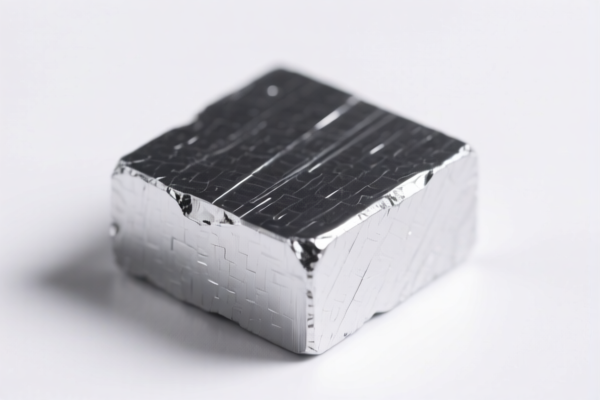
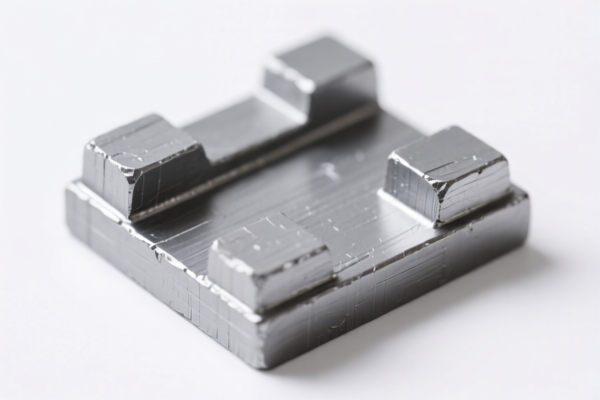
AI Analysis
⚛️ Doped Silicon Wafers & Semiconductor Substrates (Specific Thickness)
🌐 HS Code Reference & Customs Clearance Guide | 2026 Latest Tariff Analysis | Professional Entry Strategy
📌 I. Product Definition & Classification: Are You Importing Raw Material or Finished Devices?
Doped Silicon Wafers are the foundational building blocks of the semiconductor industry. They are slices of highly purified silicon crystal, chemically treated (doped) with impurities like boron, phosphorus, or nitrogen to alter their electrical properties. In international trade, the distinction between a "Wafer" (Component), a "Polysilicon Piece" (Raw Material), and a "Specific Semiconductor Material" determines the tariff rate, which can vary from 35% to 60%.
Key Distinctions: * Single-Crystal Wafer (Finished Form): High-precision, polished, doped for device manufacturing. → High Risk, High Tariff. * Polysilicon Pieces/Ingots: Less processed, raw material form. → High Risk, High Tariff. * Nitrogen-Doped/Specific Mixtures: Treated as specific chemical mixtures or other semiconductor materials. → Medium Risk, Medium Tariff.
⚠️ Critical Classification Point:
- If the product is a single-crystal silicon wafer ready for photolithography → HS 8541.59.00.40 or 8541.10.00.40.
- If the product is polysilicon (multi-crystal) → HS 3818.00.00.20.
- If the product is nitrogen-doped and described as a specific mixture → HS 3824.99.19.00 or 3824.99.39.90.
📦 II. HS Code Classification Details (2026 Latest Tariff Reference)
| HS Code | Product Description | Applicable Scenario | Key Characteristic |
|---|---|---|---|
8541.59.00.40 |
Silicon Wafers, Doped, Within Chapter 85 (Semiconductor Devices) | Polished single-crystal wafers, doped (P/N-type), ready for IC fabrication | ✅ Finished Semiconductor Substrate |
8541.10.00.40 |
Uninstalled Wafers, Silicon Material, Semiconductor Devices | Wafers without packaging, bulk silicon chips, pre-packaging stage | ✅ Component Form |
3818.00.00.20 |
Polysilicon Pieces, Doped, Silicon Material | Polysilicon rods/wafers, raw material for ingot pulling | ✅ Raw Material (Polysilicon) |
3824.99.19.00 |
Nitrogen-Doped Silicon Wafers, Specific Form of Semiconductor Material | Specialized nitrogen-doped substrates, treated as specific chemical goods | ✅ Specialized Chemical/Material |
3824.99.39.90 |
Nitrogen-Doped Silicon Wafers, Inorganic Compound Mixture | Described as inorganic mixtures or non-standard semiconductor forms | ✅ Inorganic Mixture |
🔍 Key Reminder:
- Chapter 85 (8541) generally carries higher tariffs (60%) for "doped silicon wafers" because they are classified as semiconductor devices/components.
- Chapter 38 (3824) carries lower tariffs (35%-41.5%) for "nitrogen-doped" variants if they are classified as chemical mixtures or other inorganic compounds.
- Misclassification Risk: Declaring a high-value single-crystal wafer as "polysilicon pieces" (3818) to avoid tariffs is a common audit trigger. Customs will check crystal structure and doping precision.
💰 III. 2026 Latest Tariff Rate Breakdown (Including Additional Duties & Policy Add-ons)
✅ Applicable Country: United States (US)
✅ Origin: China (CN)
✅ Effective Date: November 10, 2025 onwards (including subsequent imports)
🎯 1. 8541.59.00.40 & 8541.10.00.40 —— Silicon Wafers, Doped (Semiconductor Category)
| Item | Content |
|---|---|
| Base Tariff | 0.0% (Ad Valorem) |
| Section 301 Additional Duty | +50.0% |
| Section 122 Duty | +10.0% |
| Total Tariff Rate | 60.0% |
| Tax Calculation | CIF Value × 60% |
| De Minimis Exemption | ❌ Not Eligible (deny_de_minimis) |
| Legal Basis Path | USITC:8541.59.00.40 → SECTION_301:9903.03.01 → SECTION_122 |
📌 Explanation:
- These HS codes are classified under Chapter 85 (Electrical Machinery), specifically as semiconductor devices.
- The 50% Section 301 tariff applies to "Semiconductors" and related silicon products from China.
- The 10% Section 122 tariff is a broad national security/additional duty.
- Total 60% is extremely high, significantly impacting margins.
🎯 2. 3818.00.00.20 —— Polysilicon Pieces, Doped
| Item | Content |
|---|---|
| Base Tariff | 0.0% |
| Section 301 Additional Duty | +50.0% |
| Section 122 Duty | +10.0% |
| Total Tariff Rate | 60.0% |
| Tax Calculation | CIF Value × 60% |
| De Minimis Exemption | ❌ Not Eligible |
| Legal Basis Path | USITC:3818.00.00.20 → SECTION_301:9903.01.25 → SECTION_122 |
📌 Note:
- Despite being "raw material," polysilicon is heavily targeted.
- The 60% rate is identical to finished wafers due to strategic trade policies.
🎯 3. 3824.99.19.00 —— Nitrogen-Doped Silicon Wafers (Specific Form)
| Item | Content |
|---|---|
| Base Tariff | 6.5% |
| Section 301 Additional Duty | +25.0% |
| Section 122 Duty | +10.0% |
| Total Tariff Rate | 41.5% |
| Tax Calculation | CIF Value × 41.5% |
| De Minimis Exemption | ❌ Not Eligible |
| Legal Basis Path | USITC:3824.99.19.00 → SECTION_301:9903.01.24 → SECTION_122 |
📌 Insight:
- This rate is lower because it is classified under Chapter 38 (Miscellaneous Chemical Products) rather than Chapter 85.
- The base rate is 6.5%, not 0%, but the 301 duty is reduced to 25%.
🎯 4. 3824.99.39.90 —— Nitrogen-Doped Silicon Wafers (Inorganic Mixture)
| Item | Content |
|---|---|
| Base Tariff | 0.0% |
| Section 301 Additional Duty | +25.0% |
| Section 122 Duty | +10.0% |
| Total Tariff Rate | 35.0% |
| Tax Calculation | CIF Value × 35% |
| De Minimis Exemption | ❌ Not Eligible |
| Legal Basis Path | USITC:3824.99.39.90 → SECTION_301:9903.01.24 → SECTION_122 |
📌 Optimization Opportunity:
- 35% is the lowest possible rate in the provided data.
- This classification treats the material as an inorganic compound mixture, bypassing the "Semiconductor Device" classification.
- Caution: Requires technical justification that the product is a "mixture" or "non-standard semiconductor form," not a standard doped wafer.
🛠️ IV. Customs Clearance Practical Advice (Real-World Pitfall Guide)
✅ 1. Documentation Checklist (All Must Be Provided)
| Document | Mandatory? | Description |
|---|---|---|
| ✅ Product Specification Sheet | ✔️ | Must detail: Crystal structure (Single vs. Poly), Dopant type (Boron/Phosphorus/Nitrogen), Thickness, Resistivity. |
| ✅ Certificate of Origin (CO) | ✔️ | Must explicitly state "Origin: China" to trigger correct 301/122 duties. |
| ✅ Commercial Invoice | ✔️ | Description must match HS Code exactly. Avoid vague terms like "Silicon Plate." Use "Doped Silicon Wafer." |
| ✅ Technical Data Sheet | ✔️ | Prove doping level and material purity. Critical for distinguishing between HS 8541 and HS 3824. |
| ✅ Packing List | ✔️ | Show unit weight and quantity. |
✅ 2. Declaration Strategy (Key Mantra)
🔥 “Describe the Form, Justify the Category, Avoid ‘Semiconductor’ if ‘Chemical’ Fits!”
| Scenario | Correct Declaration | Incorrect Declaration | Consequence |
|---|---|---|---|
| Standard Single-Crystal Doped Wafer | HS 8541.59.00.40 | HS 3824.99.39.90 | Audit Risk: Customs will reject 35% rate, demand 60% + penalties. |
| Nitrogen-Doped Specific Material | HS 3824.99.39.90 | HS 8541.10.00.40 | Savings: Correctly claiming 35% vs 60%. |
| Polysilicon Pieces | HS 3818.00.00.20 | HS 8541.59.00.40 | Audit Risk: Misclassifying raw material as finished device. |
✅ 3. Special Cases & Handling
| Situation | Handling Advice |
|---|---|
| OEM Wafers for US Brands | Still subject to 60% tariff. No exemption for "customer owned." |
| Sample Wafers (Low Value) | No De Minimis Exemption. Even $100 samples are taxed at 35-60%. |
| Mixed Containers | If mixing HS 8541 (60%) and HS 3824 (35%), separate invoices are critical. Mixed declarations lead to higher-duty assessment on the whole batch. |
| Re-export from Third Country | If processed in Vietnam/Malaysia, provide Substantial Transformation Proof to avoid Section 301. Otherwise, Chinese origin rules still apply. |
🌍 V. Global Market Comparison (2026 Latest)
| Country/Region | Recommended HS Code | Tariff (China Origin) | Certification Requirements | Notes |
|---|---|---|---|---|
| 🇺🇸 USA | 8541.59.00.40 / 3824.99.39.90 |
60% or 35% | No specific CE/FCC, but high duty risk | Only major market with 122/301 combo |
| 🇨🇳 China | 8541.59.00.40 |
~0-6% | CCC (if end-use specific) | Domestic production dominates |
| 🇪🇺 EU | 3824.99.90 (approx) |
0-4% | CE (for end products), RoHS | Generally lower duties on silicon wafers |
| 🇮🇳 India | 8541.59.00 |
~5-10% | BIS Certification | Import duties increasing gradually |
| 🇻🇳 Vietnam | 3818.00.00 |
0-5% (if local origin) | None | Hub for re-export to US (with proper transformation) |
📌 Conclusion:
- The US market is the most expensive for doped silicon wafers due to Section 301 + Section 122.
- Strategy: If your product is Nitrogen-Doped, try to qualify it under HS 3824.99.39.90 (35%) by providing technical data that emphasizes its "inorganic mixture" nature rather than "semiconductor device" status.
- If it is standard Boron/Phosphorus doped wafer, expect 60%. Consider supply chain diversification (e.g., Vietnam/Malaysia) if volume is high.
📌 VI. Common Mistakes & Pitfalls (Lessons Learned)
❌ Mistake 1: Declaring "Silicon Wafers" as "Silicon Metal" to get lower tariff.
👉 Consequence: Customs lab test reveals crystal structure → 60% tariff + Fraud Penalty.
❌ Mistake 2: Using "De Minimis" (Section 321) for small wafer shipments.
👉 Consequence: Strictly Prohibited. Silicon wafers are on the denied de minimis list. All shipments are taxed.
❌ Mistake 3: Mixing "Doped" and "Undoped" wafers in one shipment without clear separation.
👉 Consequence: Customs may apply the highest tariff (60%) to the entire shipment if undoped wafers (often 0-3%) are hidden.
✅ Correct Practice:
"Single-Crystal Silicon Wafer, Nitrogen-Doped, 150mm, 500um Thickness, HS 3824.99.39.90"
vs.
"Silicon Wafer, Boron-Doped, 300mm, Polished, HS 8541.59.00.40"
🎯 VII. Conclusion: Professional Declaration, Cost Control!
🎯 Remember the Mantra:
🔹 "Doped Silicon = High Duty (60%)."
🔹 "Nitrogen Doped = Potential Savings (35%)."
🔹 "No De Minimis. No Excuses."
🔹 "Technical Data is Your Best Defense."
📌 Pro Tip:
If your nitrogen-doped wafers are critical for cost reduction, consult a customs broker to review your Technical Data Sheet. Ensure the description emphasizes "inorganic compound" and "specific chemical form" to support HS 3824 classification.
For standard wafers, factor in the 60% duty into your pricing model from Day 1. Do not assume exemptions.
📣 Immediate Action:
📞 Contact a Licensed Customs Broker
📄 Prepare Technical Specs for HS 3824 vs 8541 Debate
🚀 Secure Your Supply Chain Against 60% Tariff Shock!
✨ Precision in Classification, Profit in Logistics!
💼 Every Percentage Point Saved is Pure Margin!
Customer Reviews
About HS Code Classification
The Harmonized System (HS) is an internationally standardized nomenclature developed by the World Customs Organization (WCO) to classify traded products. Over 200 countries use the HS system as the basis for customs tariffs, trade statistics, and import/export regulations.
Each HS code follows a hierarchical structure:
- Chapter (2 digits) — Broad category of goods (e.g., Chapter 84: Machinery and Mechanical Appliances)
- Heading (4 digits) — More specific grouping within the chapter
- Subheading (6 digits) — Internationally standardized breakdown, used by all WCO member countries
- National subdivisions (8-10 digits) — Country-specific extensions for further classification, such as US HTSUS 10-digit codes
Correct HS code classification is essential for smooth customs clearance, accurate duty payment, and compliance with trade regulations. Misclassification can lead to customs delays, overpayment of duties, or penalties.
When importing from CN to US, the applicable tariff rates may include:
- Most-Favored-Nation (MFN) rate — The standard duty rate applied to WTO members
- General rate — Applied to countries without trade agreements
- Trade remedy duties — Additional tariffs such as Section 301 (anti-dumping), Section 232 (national security), or countervailing duties
The information provided on this page is for reference purposes only. For official classification, please consult with your local customs authority or a licensed customs broker.