Doped Silicon Wafers
CN → US| HS Code | Tariff Rate | Origin | Destination | Doc |
|---|---|---|---|---|
| 3818000020 | 60.0% | CN | US | Official Doc |
| 2804691000 | 15.3% | CN | US | Official Doc |
| 3824991100 | 35.0% | CN | US | Official Doc |
| 3824991900 | 41.5% | CN | US | Official Doc |
| 2804695000 | 15.5% | CN | US | Official Doc |
Product Images
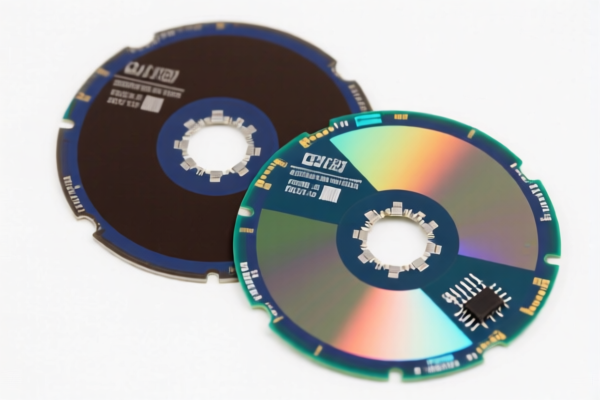
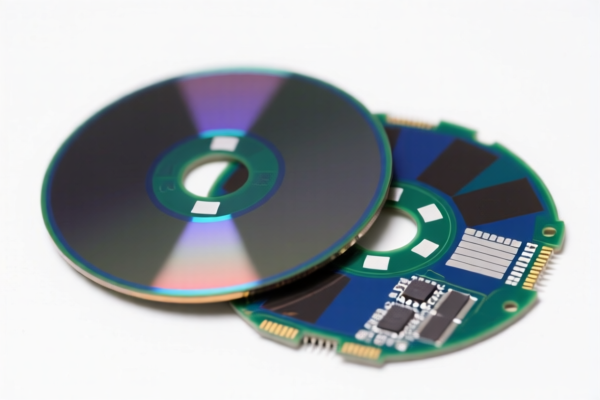
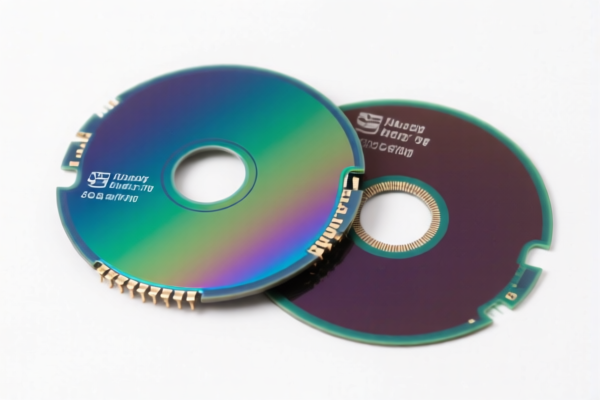
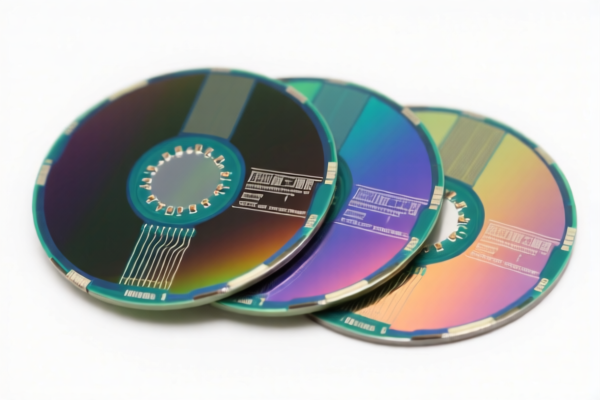
AI Analysis
⚛️ Doped Silicon Wafers (掺杂硅晶圆)
🌐 HS Code Reference & Customs Clearance Guide | 2026 Latest Tariff Analysis | Professional Clearance Strategy
📌 I. Product Definition & Classification: Do You Really Understand "Doped Silicon"?
Doped Silicon Wafers are the fundamental substrate material for semiconductor devices. In international trade, they are not treated as a single unified product. Their classification depends entirely on material state (crystalline vs. chemical preparation) and processing stage (wafer form vs. raw slice).
In the provided dataset, five distinct HS Codes are identified. The key to accurate classification lies in distinguishing between: 1. Silicon Material (Chapter 28/2804): Raw or lightly processed silicon slices/wafers. 2. Chemical Preparations (Chapter 38/3824): Silicon treated as a chemical industrial product or semiconductor raw material via doping processes.
⚠️ Critical Distinction Point:
- If classified as "Silicon Material/Slices" (HS 2804): Lower base duty, no Section 301 surcharge (0%), but subject to IEEPA 10%.
- If classified as "Chemical/Semiconductor Material" (HS 38xx): Higher base duty, subject to Section 301 surcharge (25%), plus IEEPA 10%.
- "Wafer Form" vs. "Slice Form": Specific physical descriptions trigger different subheadings within these chapters.
📦 II. HS Code Classification Details (2026 Latest Tariff Authority对照)
| HS Code | Product Description (Summary) | Applicable Scenario | Key Classification Logic | Total Tax Rate |
|---|---|---|---|---|
| 3818.00.00.20 | Doped Silicon Wafer, matching doping characteristics and polysilicon wafer form | High-purity semiconductor wafers with specific doping profiles | Classified under "Elements doped for use in electronics" | 60.0% |
| 2804.69.10.00 | Doped Silicon Wafer, thin slice form of silicon material, fits "Other Silicon" category | Basic silicon slices/wafers viewed as raw material | Classified as "Other Silicon" under Chapter 28 | 15.3% |
| 3824.99.11.00 | Doped Silicon Wafer, semiconductor raw material, doping process belongs to chemical modulation | Silicon treated as a chemically modified semiconductor precursor | Classified under "Chemical preparations for industrial use" | 35.0% |
| 3824.99.19.00 | Doped Silicon Wafer, silicon material in wafer form, belongs to chemical industrial preparations | General chemical industrial silicon wafers | Classified under "Other chemical industrial preparations" | 41.5% |
| 2804.69.50.00 | Doped Silicon Wafer, slice-like primary form of silicon material, fits "Other" category | Raw silicon slices, less processed than 2804.69.10 | Classified as "Other Silicon" (primary form) | 15.5% |
🔍 Key Reminder:
- HS 3818 and HS 3824 codes trigger the 25% Section 301 surcharge. This is the biggest cost driver.
- HS 2804 codes have 0% Section 301 surcharge. This is the biggest cost saver, but requires strict proof that the product is viewed as "silicon material" rather than a "chemical preparation."
💰 III. 2026 Latest Tariff Rate Details (Including Surcharges)
✅ Applicable Country: USA (US)
✅ Origin: China (CN)
✅ Effective Time: 2025/2026 (Current Trade Policy)
🎯 1. 3818.00.00.20 —— Doped Silicon Wafer (Polysilicon Form)
| Item | Content |
|---|---|
| Base Duty | 0% (ad valorem) |
| Section 301 Surcharge | +50% (Combined: 25% Base 301 + 25% Additional under 122 Clause/Trade War) |
| IEEPA Surcharge | +10% (Section 122/IEEPA specific to this subheading in dataset) |
| Total Duty | 60.0% |
| Tax Calculation | CIF Value × 60% |
| De Minimis Exemption | ❌ NO (High value item, strictly controlled) |
| Legal Basis | HTSUS:3818.00.00.20 → Section 301 → IEEPA:122 |
📌 Explanation:
- This is the highest tax bracket.
- The "50%" surcharge likely includes the standard 25% Section 301 tariff PLUS an additional 25% or specific "122 Clause" tariff mentioned in the data.
- Critical Risk: Do not use this code unless the wafer is specifically defined as "polysilicon wafer form" with matching doping characteristics. Even then, expect massive tax costs.
🎯 2. 2804.69.10.00 —— Doped Silicon Wafer (Silicon Material Slice)
| Item | Content |
|---|---|
| Base Duty | 5.3% |
| Section 301 Surcharge | 0.0% (Exempt) |
| IEEPA Surcharge | +10% |
| Total Duty | 15.3% |
| Tax Calculation | CIF Value × 15.3% |
| De Minimis Exemption | ❌ NO |
| Legal Basis | HTSUS:2804.69.10.00 → IEEPA:10 |
📌 Explanation:
- LOWEST COST OPTION among taxed categories.
- By classifying under Chapter 28 (Inorganic Chemicals; Metals...), the product is viewed as "Silicon Material."
- Requirement: Must prove the product is in "thin slice form" and fits "Other Silicon." Doping level must not push it into Chapter 38 classification.
🎯 3. 3824.99.11.00 —— Doped Silicon Wafer (Chemical Modulation)
| Item | Content |
|---|---|
| Base Duty | 0.0% |
| Section 301 Surcharge | +25% |
| IEEPA Surcharge | +10% |
| Total Duty | 35.0% |
| Tax Calculation | CIF Value × 35% |
| De Minimis Exemption | ❌ NO |
| Legal Basis | HTSUS:3824.99.11.00 → Section 301:25 → IEEPA:10 |
📌 Explanation:
- Mid-range tax.
- Classification depends on the argument that doping is a "chemical modulation" process, making it a "chemical preparation for industrial use."
- Less expensive than 3818.00.00.20 but significantly more than 2804.
🎯 4. 3824.99.19.00 —— Doped Silicon Wafer (General Chemical)
| Item | Content |
|---|---|
| Base Duty | 6.5% |
| Section 301 Surcharge | +25% |
| IEEPA Surcharge | +10% |
| Total Duty | 41.5% |
| Tax Calculation | CIF Value × 41.5% |
| De Minimis Exemption | ❌ NO |
| Legal Basis | HTSUS:3824.99.19.00 → Section 301:25 → IEEPA:10 |
📌 Explanation:
- "Other chemical industrial preparations."
- Higher base duty than 3824.99.11.00. Only use if it doesn't fit the specific "semiconductor raw material" (11) subcategory.
🎯 5. 2804.69.50.00 —— Doped Silicon Wafer (Primary Slice)
| Item | Content |
|---|---|
| Base Duty | 5.5% |
| Section 301 Surcharge | 0.0% (Exempt) |
| IEEPA Surcharge | +10% |
| Total Duty | 15.5% |
| Tax Calculation | CIF Value × 15.5% |
| De Minimis Exemption | ❌ NO |
| Legal Basis | HTSUS:2804.69.50.00 → IEEPA:10 |
📌 Explanation:
- Almost as cheap as 2804.69.10.00.
- Use when the silicon is in "slice-like primary form." Slightly higher base duty (5.5% vs 5.3%).
🛠️ IV. Customs Clearance Practical Advice (Avoiding Pitfalls)
✅ 1. Documentation Checklist (Must-Haves)
| Document | Required? | Description |
|---|---|---|
| ✅ Product Specification Sheet | ✔️ | Must detail: Doping type (N/P), resistivity, crystal orientation, thickness, diameter. |
| ✅ Material Safety Data Sheet (MSDS) | ✔️ | Proves chemical stability and handling requirements. |
| ✅ Certificate of Analysis (COA) | ✔️ | Critical for proving doping levels to support Chapter 28 vs. 38 classification. |
| ✅ Commercial Invoice | ✔️ | Clear description: "Doped Silicon Wafer, [Specs], for Semiconductor Fabrication." |
| ✅ Packing List | ✔️ | Detail units per box, net/gross weight. |
| ✅ Origin Certificate | ✔️ | To prove CN origin (triggering tariffs) or other origin if applicable. |
✅ 2. Classification Strategy (The "Golden Rule")
🔥 “Material Form Defines Tax! Chapter 28 vs. Chapter 38!”
| Scenario | Recommended HS Code | Total Tax | Why? |
|---|---|---|---|
| Thin Silicon Slice/Wafer | 2804.69.10.00 |
15.3% | Viewed as raw silicon material. NO Section 301. Lowest tax. |
| Primary Silicon Slice | 2804.69.50.00 |
15.5% | Viewed as raw silicon material. NO Section 301. Low tax. |
| Semiconductor Raw Material (Chemical) | 3824.99.11.00 |
35.0% | Viewed as chemically modulated. Yes Section 301. |
| Other Chemical Prep | 3824.99.19.00 |
41.5% | Viewed as general chemical. Yes Section 301. |
| Polysilicon Wafer Form | 3818.00.00.20 |
60.0% | Specific wafer classification. High Section 301 (50%). Highest tax. |
📌 Strategic Tip:
- If your product can be legally argued as "Silicon Material" (Chapter 28), ALWAYS choose2804.69.10.00or2804.69.50.00.
- The 45% tax difference (15.3% vs 60%) is enormous.
- Justification: Provide technical data showing the product is essentially silicon with minor dopant concentrations, fitting the definition of "Silicon" in Chapter 28, rather than a "preparation" in Chapter 38.
✅ 3. Special Cases & Handling
| Situation | Handling Advice |
|---|---|
| OEM Custom Doping | Provide detailed doping profiles. If doping is very high (>0.1%), customs may push to Chapter 38. |
| Wafer vs. Slice | "Wafer" implies polished, ready-for-use. "Slice" implies rough cut. Polished wafers are more likely to be classified under 3818 or 3824. Rough slices fit 2804 better. |
| Mixed Shipments | Do not mix HS codes on one line item. Separate shipments or lines for Chapter 28 and Chapter 38 products to avoid audit flags. |
| Pre-Ruling Request | Highly recommended. Apply for an HS Code Pre-Ruling from CBP before shipping to lock in the 15.3% rate if possible. |
🌍 V. Global Market Comparison (2026 Latest)
| Country/Region | Recommended HS Code | Estimated Duty | Certification | Note |
|---|---|---|---|---|
| 🇺🇸 USA | 2804.69.10.00 |
15.3% | None specific | Best rate! Avoids 301 tariffs. |
| 🇨🇳 China | 2804.69.10.00 |
~6-10% | N/A | Standard import duty. |
| 🇪🇺 EU | 2804.69.00 |
~6.5% | REACH | No Section 301 equivalent. |
| 🇯🇵 Japan | 2804.69.00 |
~6-8% | PSE (if part of device) | Stable rates. |
📌 Conclusion:
- The US is the most complex market due to Section 301 and IEEPA tariffs.
- Chinese origin doped silicon wafers face up to 60% tax in the US.
- Strategic Move: Classify as2804.69.10.00if technically defensible. This saves 44.7% in taxes compared to the 60% bracket.
📌 VI. Common Errors & Pitfalls (Blood Lessons)
❌ Error 1: Classifying polished, ready-to-use semiconductor wafers as 2804.69.10.00 when they are specifically "elements doped for electronics."
👉 Consequence: Customs may reclassify to 3818.00.00.20 or 3824.99.11.00 after audit, leading to back taxes + penalties.
❌ Error 2: Ignoring the "122 Clause" or "IEEPA" surcharges.
👉 Consequence: Underpaying by 10-50%. Always calculate Total Duty (Base + 301 + IEEPA).
❌ Error 3: Using vague descriptions like "Silicon Wafer" on invoices.
👉 Consequence: Customs lacks technical data to support Chapter 28 classification. They will default to the higher Chapter 38 rates.
✅ Correct Approach:
"Doped Silicon Wafer, N-Type, 8-inch, 10 Ohm-cm resistivity, Polished, for Semiconductor Substrate, HS 2804.69.10.00"
Include COA and Spec Sheet to prove "Silicon Material" status.
🎯 VII. Conclusion: Precision Classification Saves Millions!
🎯 Remember the Mantra:
🔹 "Chapter 28 is King! 15% vs 60%! Think Slice, Not Wafer!"
🔹 "Doping Level Matters! Low Doping = Material (28), High Doping = Chemical (38)!"
🔹 "No Section 301 for Silicon! Avoid the 50% Trap!"
📌 Pro Tip:
If your wafers are doped to very high levels (e.g., heavily doped for heating elements or specific industrial uses), they might legally require Chapter 38 classification. In that case, 3824.99.11.00 (35%) is the best compromise.
Always consult a customs broker and request an Advance Ruling for high-value semiconductor shipments.
📣 Take Action Now:
📞 Contact a licensed customs broker + Provide Technical Specs + File for Pre-Ruling
🚀 Let your silicon wafers clear smoothly, minimize tax, and maximize profit!
✨ Professional Clearance Starts with Accurate Classification!
💼 Every percentage point of tax saves you money. Classify wisely!
Customer Reviews
About HS Code Classification
The Harmonized System (HS) is an internationally standardized nomenclature developed by the World Customs Organization (WCO) to classify traded products. Over 200 countries use the HS system as the basis for customs tariffs, trade statistics, and import/export regulations.
Each HS code follows a hierarchical structure:
- Chapter (2 digits) — Broad category of goods (e.g., Chapter 84: Machinery and Mechanical Appliances)
- Heading (4 digits) — More specific grouping within the chapter
- Subheading (6 digits) — Internationally standardized breakdown, used by all WCO member countries
- National subdivisions (8-10 digits) — Country-specific extensions for further classification, such as US HTSUS 10-digit codes
Correct HS code classification is essential for smooth customs clearance, accurate duty payment, and compliance with trade regulations. Misclassification can lead to customs delays, overpayment of duties, or penalties.
When importing from CN to US, the applicable tariff rates may include:
- Most-Favored-Nation (MFN) rate — The standard duty rate applied to WTO members
- General rate — Applied to countries without trade agreements
- Trade remedy duties — Additional tariffs such as Section 301 (anti-dumping), Section 232 (national security), or countervailing duties
The information provided on this page is for reference purposes only. For official classification, please consult with your local customs authority or a licensed customs broker.