Double Layer Rubber Band Set
CN → US| HS Code | Tariff Rate | Origin | Destination | Doc |
|---|---|---|---|---|
| 4016993510 | 35.0% | CN | US | Official Doc |
| 4016993550 | 35.0% | CN | US | Official Doc |
Product Images
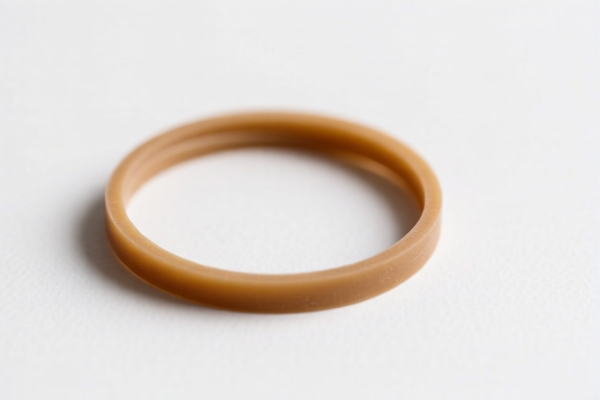

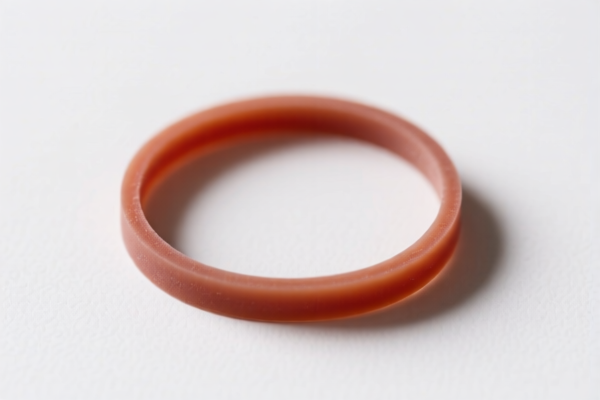
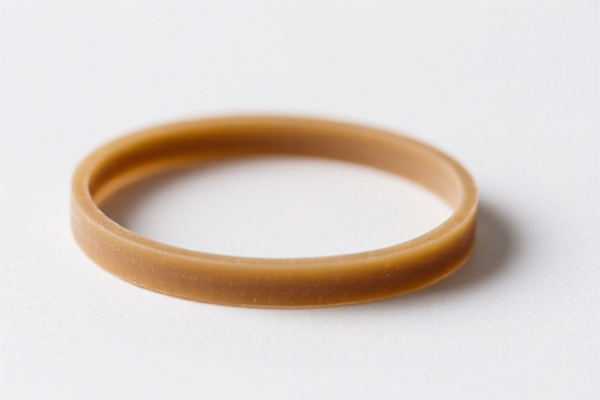
AI Analysis
🏋️♀️ Double Layer Rubber Band Set (Vulcanized Rubber Articles)
🌐 HS Code Reference & Customs Clearance Guide | 2026 Latest Tariff Analysis | Professional Strategy for US Imports
📌 I. Product Definition & Classification: Do You Know What "Rubber Bands" Really Are?
"Double Layer Rubber Band Set" refers to elastic loops made of vulcanized rubber, specifically designed for bundling, holding, or securing items. In international trade, the key distinction lies in the material composition.
Key Distinction: * Natural Rubber: Sourced from latex (Hevea brasiliensis). Subject to specific HS subheadings and often higher scrutiny due to agricultural origins. * Synthetic/Other Rubber: Made from styrene-butadiene, neoprene, etc.
⚠️ Critical Classification Point:
- If the rubber bands are made of Natural Rubber, they fall under 4016.99.35.
- If they are made of Synthetic Rubber or mixed materials (not primarily natural), they may fall under 4016.99.99 (Other).
Note: The data provided below is strictly based on the input JSON, which specifies Natural Rubber.
📦 II. HS Code Classification Details (2026 Latest Tariff Authority对照)
| HS Code | Product Description | Applicable Scenario | Material Basis |
|---|---|---|---|
4016.99.35.10 |
Other articles of vulcanized rubber other than hard rubber: Other: Of natural rubber: Other Rubber bands | Standard commercial rubber bands, office supplies, gym bands made of natural latex | ✅ Natural Rubber |
4016.99.35.50 |
Other articles of vulcanized rubber other than hard rubber: Other: Other: Of natural rubber: Other Other | Non-band rubber products made of natural rubber (e.g., gaskets, seals, custom molded parts) | ✅ Natural Rubber |
🔍 Focus Reminder:
- Double Layer Rubber Bands are explicitly classified under4016.99.35.10.
- Do NOT confuse with hard rubber (ebonite) or synthetic rubber bands.
- If the "set" includes non-rubber items (e.g., plastic clips), the entire set may be classified by the essential character (usually the rubber bands), or declared separately to avoid misclassification.
💰 III. 2026 Latest Tariff Rate Details (Including Additional Taxes)
✅ Applicable Country: United States (US)
✅ Origin: China (CN) (Implied by the 25% additional tariff structure typical of Section 301 tariffs)
✅ Effective Date: Current ongoing Section 301 tariffs
🎯 1. 4016.99.35.10 —— Rubber Bands (Natural Rubber)
| Item | Content |
|---|---|
| Base Tariff Rate | 0.0% (ad valorem) |
| Section 301 Additional Tariff | +25.0% |
| Total Tariff Rate | 25.0% |
| Tax Calculation | CIF Value × 25% |
| De Minimis Exemption | ❌ Not Eligible (For China-origin goods under Section 301) |
| Legal Basis Path | HTSUS: 4016.99.35.10 → Section 301 List 4 → 30% (now adjusted to 25% for many rubber articles) |
📌 Explanation:
- The 0% base tariff reflects the low duty on raw/semi-processed rubber goods.
- The 25% additional tariff is imposed under Section 301 of the Trade Act of 1974 against China-origin rubber articles.
- Total Effective Duty: 25%. This is a significant cost factor that must be calculated into your landed cost.
🎯 2. 4016.99.35.50 —— Other Rubber Articles (Natural Rubber)
| Item | Content |
|---|---|
| Base Tariff Rate | 0.0% |
| Section 301 Additional Tariff | +25.0% |
| Total Tariff Rate | 25.0% |
| Tax Calculation | CIF Value × 25% |
| De Minimis Exemption | ❌ Not Eligible |
| Legal Basis Path | HTSUS: 4016.99.35.50 → Section 301 List 4 |
📌 Note:
- If your "Double Layer Rubber Band Set" contains items other than standard bands (e.g., custom molded rubber shapes), and they are still made of natural rubber, they fall here.
- The tariff rate is identical to rubber bands: 25%.
🛠️ IV. Customs Clearance Practical Advice (Real-World Pitfall Avoidance Guide)
✅ 1. Documentation Checklist (No Exceptions)
| Document | Mandatory | Description |
|---|---|---|
| ✅ Product Specifications | ✔️ | Clearly state "Vulcanized Rubber," "Natural Rubber Latex," and "Double Layer Structure." |
| ✅ Material Declaration | ✔️ | Explicitly declare "100% Natural Rubber" or percentage if blended. Misdeclaring natural as synthetic can lead to fraud claims. |
| ✅ Commercial Invoice | ✔️ | Must describe as "Rubber Bands, Natural Rubber, Double Layer" – NOT just "Elastic Bands" (ambiguous). |
| ✅ Packing List | ✔️ | Show quantity, weight, and set composition. |
| ✅ Customs Bond | ✔️ | Ensure continuous bond coverage for duty payment. |
✅ 2. Declaration Tips (Key Mantras)
🔥 "Natural Rubber Declare Clearly, Don't Hide Section 301!"
| Scenario | Correct Declaration | Wrong Practice |
|---|---|---|
| Natural Rubber Bands | 4016.99.35.10 |
Misdeclare as 4016.99.99 (Synthetic) → Risk of penalty + back taxes |
| Synthetic Rubber Bands | 4016.99.99.00 |
Misdeclare as Natural → Wrong tariff calculation |
| Mixed Sets (Rubber + Plastic) | Declare by essential character (Rubber) | Split line items incorrectly → Misclassification |
| "Other" Rubber Articles | 4016.99.35.50 |
Only if NOT bands (e.g., gaskets) |
✅ 3. Special Situation Handling
| Situation | Handling Advice |
|---|---|
| OEM Custom Sizes | Provide drawings showing vulcanization process. Natural rubber bands are typically molded. |
| "Latex" Allergy Warning | Include labeling in English: "Contains Natural Rubber Latex" to comply with FDA/CPSC labeling if for consumer use. |
| China-Origin Goods | Be aware of the 25% Section 301 tariff. No de minimis exemption. Calculate cost accordingly. |
| Non-China Origin | If shipped from Vietnam/Malaysia, verify Certificate of Origin to potentially avoid 301 tariffs (but natural rubber may still have quotas). |
🌍 V. Global Market Comparison (2026 Latest)
| Country/Region | Recommended HS Code | Tariff (China Origin) | Notes |
|---|---|---|---|
| 🇺🇸 USA | 4016.99.35.10 |
25% (Base 0% + 301 25%) | High duty due to Section 301. |
| 🇨🇳 China | 4016.99.35.10 |
0% | No export duty on rubber bands. |
| 🇪🇺 EU | 4016.99.10 / 4016.99.90 |
0% - 4% | No Section 301 equivalent. |
| 🇬🇧 UK | 4016.99.90 |
0% - 4% | Post-Brexit, tariffs similar to EU. |
📌 Conclusion:
- USA is the only major market with a 25% surcharge on China-origin rubber bands.
- For US imports, cost planning must include the 25% duty.
- Consider sourcing from Southeast Asia (Malaysia, Thailand) if possible to avoid 301 tariffs, but verify "natural rubber" origin rules.
📌 VI. Common Errors & Pitfall Guide (Lessons Learned)
❌ Error 1: Declaring "Rubber Bands" without specifying "Natural Rubber"
👉 Consequence: Customs may classify as synthetic (4016.99.99.00) and audit for natural rubber content. If natural, back taxes + penalties.
❌ Error 2: Ignoring the 25% Section 301 Tariff in cost calculation
👉 Consequence: Profit margin erosion. The base tariff is 0%, but the total duty is 25%.
❌ Error 3: Misclassifying "Double Layer" as a different product
👉 Consequence: Still a rubber band. No special HS code for "double layer." Use 4016.99.35.10.
✅ Correct Approach:
"Natural Rubber Double-Layer Bands, Vulcanized, for Office Use, HS 4016.99.35.10, 25% Duty Applicable (Section 301)"
🎯 VII. Conclusion: Precision in Classification Saves Money!
🎯 Remember the Mantra:
🔹 "Natural Rubber = 4016.99.35.10"
🔹 "Base Duty: 0%, Additional: 25%, Total: 25%"
🔹 "No De Minimis Exemption for China-Origin Rubber Bands!"
📌 Pro Tip:
- If you are importing small quantities, remember that de minimis (Section 321) does NOT exempt goods subject to Section 301 tariffs from the 25% duty if the value exceeds $800.
- For bulk imports, negotiate CIF prices to include the 25% duty burden or explore foreign trade zones (FTZ) for duty deferral.
📣 Immediate Action:
📞 Verify Certificate of Origin to confirm China origin.
📊 Calculate Landed Cost including 25% duty.
📝 Use precise description: "Rubber Bands, Natural Rubber, Double Layer, Vulcanized."
✨ Professional Customs Clearance Starts with Accurate Classification!
💼 Your Profit Margin Depends on Correct Tariff Application!
Customer Reviews
About HS Code Classification
The Harmonized System (HS) is an internationally standardized nomenclature developed by the World Customs Organization (WCO) to classify traded products. Over 200 countries use the HS system as the basis for customs tariffs, trade statistics, and import/export regulations.
Each HS code follows a hierarchical structure:
- Chapter (2 digits) — Broad category of goods (e.g., Chapter 84: Machinery and Mechanical Appliances)
- Heading (4 digits) — More specific grouping within the chapter
- Subheading (6 digits) — Internationally standardized breakdown, used by all WCO member countries
- National subdivisions (8-10 digits) — Country-specific extensions for further classification, such as US HTSUS 10-digit codes
Correct HS code classification is essential for smooth customs clearance, accurate duty payment, and compliance with trade regulations. Misclassification can lead to customs delays, overpayment of duties, or penalties.
When importing from CN to US, the applicable tariff rates may include:
- Most-Favored-Nation (MFN) rate — The standard duty rate applied to WTO members
- General rate — Applied to countries without trade agreements
- Trade remedy duties — Additional tariffs such as Section 301 (anti-dumping), Section 232 (national security), or countervailing duties
The information provided on this page is for reference purposes only. For official classification, please consult with your local customs authority or a licensed customs broker.