Double Side Tissue Tape
CN → US| HS Code | Tariff Rate | Origin | Destination | Doc |
|---|---|---|---|---|
| 5603110070 | 35.0% | CN | US | Official Doc |
| 5603910090 | 35.0% | CN | US | Official Doc |
| 3919905060 | 40.8% | CN | US | Official Doc |
| 3926909989 | 22.8% | CN | US | Official Doc |
| 3919102055 | 40.8% | CN | US | Official Doc |
Product Images
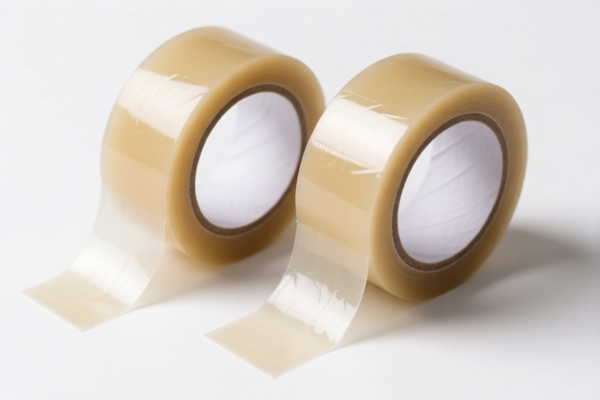
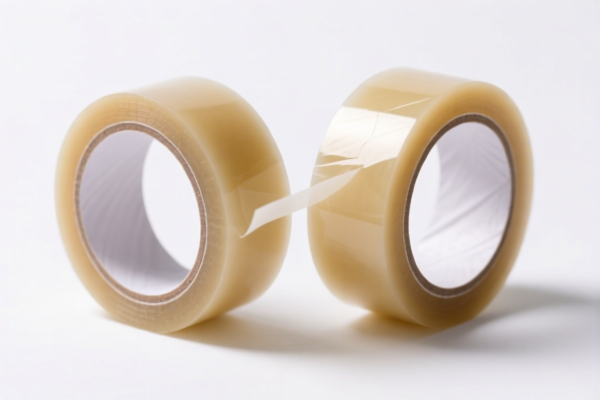
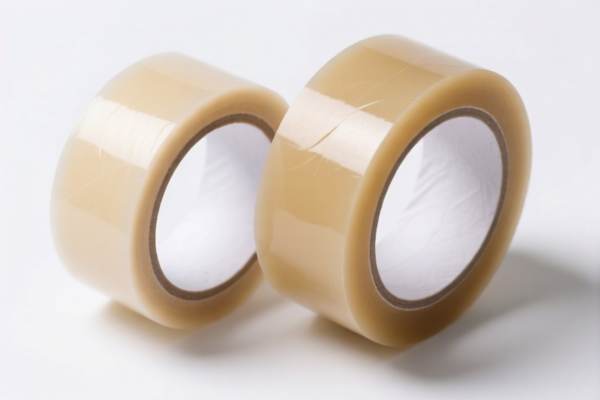
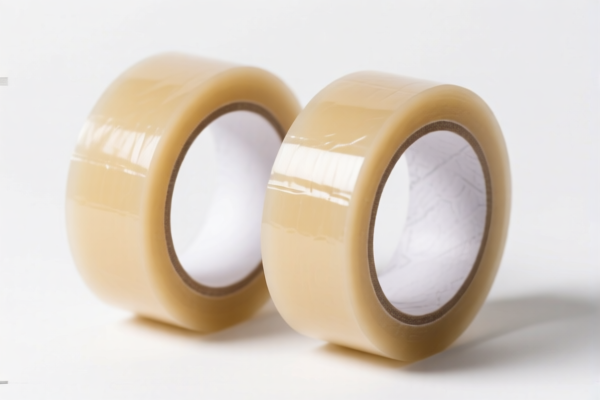
AI Analysis
🎗️ Double Side Tissue Tape (Double-Sided Adhesive Tape)
🌐 HS Code Reference & Customs Clearance Guide | 2026 Latest Tariff Analysis | Professional Entry Strategy
📌 I. Product Definition & Classification: What is "Double Side Tissue Tape"?
Double-sided tissue tape is an adhesive product consisting of a thin, porous paper or cellulose base (tissue) coated with adhesive on both sides. It is widely used in packaging, electronics, automotive assembly, and construction for bonding lightweight materials without visible fasteners.
In international trade, classification depends heavily on: 1. Material Composition: Primarily plastic-based vs. paper/tissue-based. 2. Form: Self-adhesive, in rolls or cut to shape. 3. Base Material: Whether it falls under plastics (Chapter 39) or non-woven/paper products (Chapter 56/48).
⚠️ Key Distinction Points:
- If the base is plastic film (e.g., PET, PP) → Typically falls under Chapter 39 (Plastics).
- If the base is non-woven fabric or tissue paper → May fall under Chapter 56 (Non-wovens) or other plastic categories depending on coating.
- Adhesive presence: All these codes assume the product is self-adhesive.
📦 II. HS Code Classification Details (2026 Latest Tariff Authority Comparison)
Based on the provided data, here are the 5 possible HS Codes for Double Side Tissue Tape, along with their rationales and tax implications.
| HS Code | Product Description | Summary / Rationale | Total Tax Rate |
|---|---|---|---|
3919.90.50.60 |
Other self-adhesive plates, sheets, film, foil, tape, strip, and other forms, of plastics | Bottom-line Category: Matches form (tape) with inferred plastic base. Used when specific material doesn't fit other plastic adhesive codes. | 40.8% |
3926.90.99.89 |
Other articles of plastics and articles of other materials of headings 3901 to 3914 | Plastic/Resin Category: Classified as a "plastic article" or "other material制品". Fits if considered a finished plastic product rather than a raw adhesive tape. | 22.8% |
3919.10.20.55 |
Self-adhesive plates, sheets, film, foil, tape, strip, and other flat shapes, of plastics, whether or not in rolls | Plastic Self-Adhesive Flat Shape: Specifically for "other" plastic self-adhesive tapes. No material or shape conflict. | 40.8% |
3919.10.60.90 |
Self-adhesive... of plastics, with backing of PET/PP etc. | Plastic Tape with Specific Backing: Fits if the tissue is reinforced with or backed by plastic materials like PET or PP. | 39.2% |
5603.11.00.70 |
Non-woven fabrics, whether or not impregnated, coated, covered or laminated; Non-woven products | Non-Woven/Thin Film Material: If the "tissue" is inferred to be a non-woven fabric or related thin film, it falls under non-woven products. | 35.0% |
🔍 Key Reminder:
- Plastic Base (Ch 39): Codes3919.xxxxand3926.xxxxapply if the primary structural material is plastic.
- Non-Woven Base (Ch 56): Code5603.11.00.70applies if the core is a non-woven fabric.
- Tax Variation: Rates range from 22.8% to 40.8%, significantly impacting cost. Correct classification is critical.
💰 III. 2026 Latest Tariff Rate Breakdown (Including Surcharge Policies)
✅ Applicable Country: United States (US)
✅ Country of Origin: China (CN)
✅ Effective Date: From November 10, 2025 onwards
🎯 1. 3919.90.50.60 & 3919.10.20.55 —— Plastic Self-Adhesive Tapes (High Tax)
| Item | Detail |
|---|---|
| Base Tariff | 5.8% (ad valorem) |
| Section 301 Surcharge | +25.0% |
| IEEPA Surcharge (Section 122) | +10.0% |
| Total Tax Rate | 40.8% |
| Tax Calculation | CIF Value × 40.8% |
| De Minimis Exemption | ❌ Not Available (deny_de_minimis) |
| Legal Basis Path | IEEPA:9903.01.25 → USITC:3919.90.50.60 → FOOTNOTE:301 |
📌 Explanation:
- The 25% is the standard Section 301 tariff on many Chinese plastics/adhesives.
- The 10% is an additional IEEPA surcharge targeting Chinese goods.
- Base 5.8% is the standard Most Favored Nation (MFN) rate for self-adhesive plastic tapes.
- Total 40.8% is a very high tariff. Precise classification is essential to avoid overpayment or penalties.
🎯 2. 3926.90.99.89 —— Other Plastic Articles (Lowest Tax)
| Item | Detail |
|---|---|
| Base Tariff | 5.3% |
| Section 301 Surcharge | +7.5% |
| IEEPA Surcharge (Section 122) | +10.0% |
| Total Tax Rate | 22.8% |
| Tax Calculation | CIF Value × 22.8% |
| De Minimis Exemption | ❌ Not Available |
| Legal Basis Path | IEEPA:9903.01.24 → USITC:3926.90.99.89 |
📌 Note:
- This code has a lower surcharge (7.5%) compared to the 25% on specific adhesive tapes.
- It may be applicable if the tape is considered a "finished article" rather than a raw adhesive material.
- Potential Savings: Significant compared to 40.8%. Requires strong justification that it fits "other plastic articles."
🎯 3. 3919.10.60.90 —— Plastic Tape with PET/PP Backing
| Item | Detail |
|---|---|
| Base Tariff | 4.2% |
| Section 301 Surcharge | +25.0% |
| IEEPA Surcharge (Section 122) | +10.0% |
| Total Tax Rate | 39.2% |
| Tax Calculation | CIF Value × 39.2% |
| De Minimis Exemption | ❌ Not Available |
| Legal Basis Path | IEEPA:9903.01.25 → USITC:3919.10.60.90 |
📌 Explanation:
- Specific to tapes with plastic backings like PET or PP.
- High tax rate (39.2%) due to the 25% Section 301 surcharge.
🎯 4. 5603.11.00.70 —— Non-Woven Fabric Based Tape
| Item | Detail |
|---|---|
| Base Tariff | 0.0% |
| Section 301 Surcharge | +25.0% |
| IEEPA Surcharge (Section 122) | +10.0% |
| Total Tax Rate | 35.0% |
| Tax Calculation | CIF Value × 35.0% |
| De Minimis Exemption | ❌ Not Available |
| Legal Basis Path | IEEPA:9903.01.24 → USITC:5603.11.00.70 |
📌 Note:
- Zero base tariff is a benefit, but the 25% + 10% surcharges still result in a 35% total.
- Applicable only if the "tissue" is certified as a non-woven fabric.
🛠️ IV. Customs Clearance Practical Advice (Battle-Tested Guide)
✅ 1. Required Documentation Checklist (All are Mandatory)
| Document | Mandatory | Description |
|---|---|---|
| ✅ Product Specification Sheet | ✔️ | Must detail base material (paper, plastic, non-woven), adhesive type, width, length, thickness. |
| ✅ Material Composition Statement | ✔️ | Clearly state the percentage of plastic vs. tissue vs. non-woven. |
| ✅ Product Photos | ✔️ | Clear images of the roll, cross-section (to show base layer), and labeling. |
| ✅ Commercial Invoice | ✔️ | Describe as "Double-Sided Adhesive Tape, Plastic/Tissue Base, Model XXX". |
| ✅ Packing List | ✔️ | Itemized list of rolls, dimensions, and gross/net weight. |
| ✅ Certificate of Origin (CO) | ✔️ | Required for origin verification and potential exemption claims. |
✅ 2. Declaration Strategy (Key Mantra)
🔥 “Material is King, Form is Queen, Name Matches Code, Tax Goes Down!”
| Scenario | Correct Declaration | Wrong Practice |
|---|---|---|
| Plastic Base Tape | Use 3919.xxxx or 3926.xxxx. Specify "Plastic Base". |
Declare as "Paper Tape" → Misclassification penalty. |
| Non-Woven Base Tape | Use 5603.11.00.70. Specify "Non-Woven Fabric". |
Declare as "Plastic Tape" → Higher tax (35% vs 40.8%? No, 35% vs 40.8% is lower, but still high). |
| Mixed Material | Break down or choose the predominant material. | Vague description "Tape" → Customs delay for inspection. |
| OEM Custom Tape | Provide client design specs. | Generic description → Risk of being treated as "Other" (40.8%). |
✅ 3. Special Cases Handling
| Case | Handling Suggestion |
|---|---|
| High-Value Adhesive | If the adhesive value is high, ensure it doesn't push the product into a different chemical category. |
| Medical Grade Tape | May require FDA registration documents in addition to customs docs. |
| Electronic Component Bonding | If used strictly for electronics, prove it’s a functional component, not just packaging. |
| Small Samples (De Minimis) | ❌ Cannot use De Minimis exemption for these HS codes. All shipments are subject to full duties. |
🌍 V. Global Market Comparison (2026 Latest)
| Country/Region | Recommended HS Code | Tariff (China Origin) | Certification Req. | Remarks |
|---|---|---|---|---|
| 🇺🇸 USA | 3919.90.50.60 / 3926.90.99.89 |
22.8% - 40.8% | None (General) | High tariffs due to Section 301 & IEEPA. |
| 🇨🇳 China | 3919.xxxx / 3926.xxxx |
5.3% - 6.0% | None | Low base tariffs. |
| 🇪🇺 EU | 3919.10 / 3926.90 |
6.5% - 7.5% | CE (if applicable) | No Section 301 equivalent, but anti-dumping may apply. |
| 🇦🇺 Australia | 3919.10 |
5.0% | RCM | Moderate tariffs. |
| 🇯🇵 Japan | 3919.10 |
6.0% | PSE (if electrical) | Stable tariffs. |
📌 Conclusion:
- The US market is significantly more expensive due to political tariffs.
- Cost Optimization: Try to qualify for3926.90.99.89(22.8%) if structurally possible, as it has a lower surcharge than3919codes (40.8%).
- Non-Woven (5603) at 35.0% is a middle ground if the material allows.
📌 VI. Common Mistakes & Pitfalls (Lessons Learned)
❌ Mistake 1: Declaring "Plastic Tape" when it’s actually Non-Woven
👉 Consequence: Misclassification. If caught, you may pay back duties + penalties. Also, 5603 has a 0% base, which might be favorable, but requires proof.
❌ Mistake 2: Ignoring the "Tissue" Material
👉 Consequence: If the base is paper, it might not fit Chapter 39 at all, leading to rejection or reclassification to Chapter 48 (Paper), which has different tax rates.
❌ Mistake 3: Assuming De Minimis Applies
👉 Consequence: These codes are not eligible for de minimis exemption (under $800). All shipments pay tax.
✅ Correct Approach:
"Double-Sided Adhesive Tape, 25mm x 50m, Plastic Base (PET), Acrylic Adhesive, Roll Form, Model XYZ"
🎯 VII. Conclusion: Precise Classification Saves Money!
🎯 Remember the Mantra:
🔹 "Base Material Determines Code, Code Determines Tax."
🔹 "3919 is 40.8%, 3926 is 22.8%, 5603 is 35.0%. Know your base!"
🔹 "No De Minimis for Tapes, Pay Up or Classify Right!"
📌 Pro Tip:
If your tape uses a non-Chinese base material (e.g., imported plastic film assembled in China), you may qualify for different tariff treatment.
Recommendation:
📞 Consult a customs broker to apply for an Advance Ruling if your product structure is complex.
🚀 Accurate declaration ensures smooth clearance and maximizes profit margins!
✨ Professional Clearance Starts with Accurate Classification!
💼 Every percentage point of duty counts!
Customer Reviews
About HS Code Classification
The Harmonized System (HS) is an internationally standardized nomenclature developed by the World Customs Organization (WCO) to classify traded products. Over 200 countries use the HS system as the basis for customs tariffs, trade statistics, and import/export regulations.
Each HS code follows a hierarchical structure:
- Chapter (2 digits) — Broad category of goods (e.g., Chapter 84: Machinery and Mechanical Appliances)
- Heading (4 digits) — More specific grouping within the chapter
- Subheading (6 digits) — Internationally standardized breakdown, used by all WCO member countries
- National subdivisions (8-10 digits) — Country-specific extensions for further classification, such as US HTSUS 10-digit codes
Correct HS code classification is essential for smooth customs clearance, accurate duty payment, and compliance with trade regulations. Misclassification can lead to customs delays, overpayment of duties, or penalties.
When importing from CN to US, the applicable tariff rates may include:
- Most-Favored-Nation (MFN) rate — The standard duty rate applied to WTO members
- General rate — Applied to countries without trade agreements
- Trade remedy duties — Additional tariffs such as Section 301 (anti-dumping), Section 232 (national security), or countervailing duties
The information provided on this page is for reference purposes only. For official classification, please consult with your local customs authority or a licensed customs broker.