Double layer Coffee Cup
CN → US| HS Code | Tariff Rate | Origin | Destination | Doc |
|---|---|---|---|---|
| 9617001000 | 17.2% | CN | US | Official Doc |
| 3924104000 | 13.4% | CN | US | Official Doc |
| 6911103510 | 43.5% | CN | US | Official Doc |
| 7323930060 | 62.0% | CN | US | Official Doc |
| 3924102000 | 24.0% | CN | US | Official Doc |
Product Images
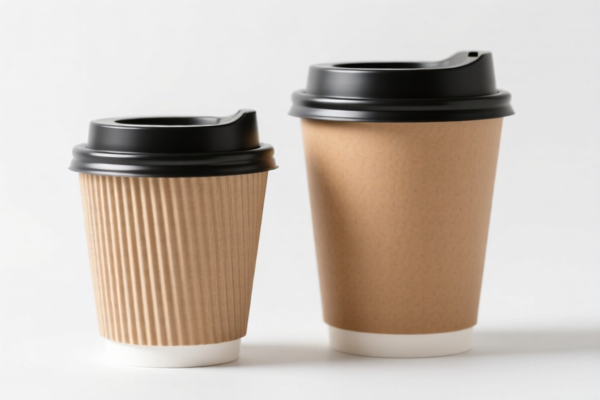
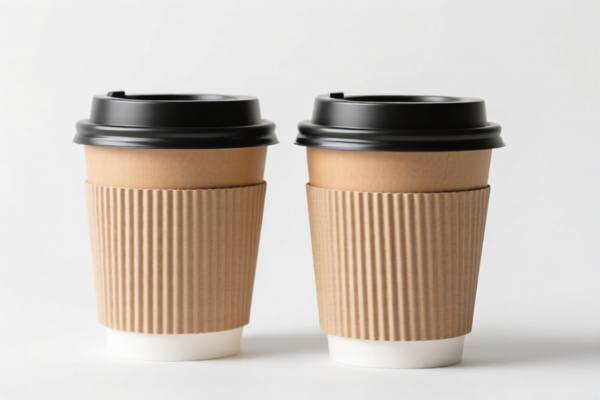
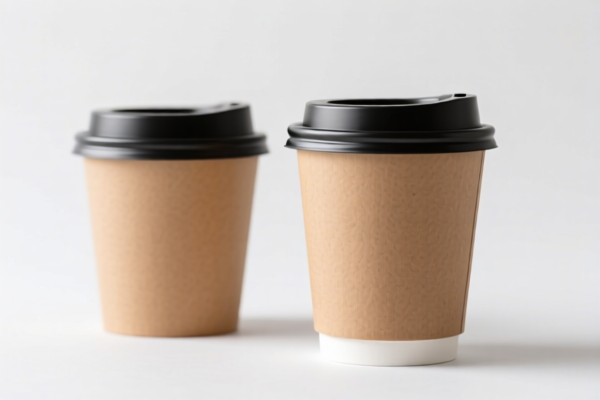

AI Analysis
☕ Double Layer Coffee Cup (Vacuum Insulated Tumbler)
🌐 HS Code Reference & Customs Clearance Guide | 2026 Latest Tariff Analysis | Professional Strategy for US Imports
📌 I. Product Definition & Classification: Do You Really Know "Double Layer Coffee Cup"?
A "Double Layer Coffee Cup" typically refers to a vacuum-insulated container designed to maintain beverage temperature. In international trade, its classification hinges on two critical factors: 1. Material: Is it plastic, metal (steel), or glass? 2. Capacity: Is it small (<1 liter) or large (>1 liter)?
⚠️ Key Distinction Point: - If it is a plastic tumbler (e.g., standard travel mug), it falls under HS 3924. - If it is a vacuum flask/vessel (metal/glass double-wall with vacuum seal), it falls under HS 9617. - Note: Stainless steel kitchenware without vacuum insulation falls under HS 7323, but "Double Layer" usually implies vacuum insulation, directing it to 9617.
📦 II. HS Code Classification Details (2026 Latest Tariff Authority Mapping)
Based on the provided <DATA>, here is the precise mapping for "Double Layer Coffee Cup" variants:
| HS Code | Product Description | Application Scenario | Material |
|---|---|---|---|
9617.00.10.00 |
Vacuum flasks/vessels, capacity ≤ 1 liter | Standard travel mugs, 12oz–16oz coffee tumblers | Metal/Glass/Vacuum |
9617.00.30.00 |
Vacuum flasks/vessels, capacity 1–2 liters | Large thermal carafes, 32oz–68oz bulk containers | Metal/Glass/Vacuum |
3924.10.20.00 |
Plastic Tableware: Plates, cups, saucers, etc. | Plastic double-wall cups (non-vacuum or semi-insulated) | Plastic |
3924.10.40.00 |
Plastic Tableware: Other | Other plastic kitchenware items | Plastic |
7323.93.00.60 |
Steel Kitchen Ware (Enamel/Stainless) | Non-vacuum stainless steel cups/bowls | Iron/Steel |
🔍 Critical Clarification:
- "Double Layer" in the context of high-quality coffee cups almost always implies Vacuum Insulation. Therefore, HS 9617 is the primary candidate.
- If the product is merely two layers of plastic glued together without a vacuum seal, it is classified as Plastic Tableware (HS 3924).
- If it is stainless steel but not vacuum-insulated (e.g., simple double-wall design for grip, not thermal retention), it may fall under Steel Kitchenware (HS 7323.93.00.60).
💰 III. 2026 Latest Tariff Rate Detailed Explanation (Including Surtaxes & Policy Add-ons)
✅ Applicable Country: United States (US)
✅ Origin: China (CN) (Based on surtax structure in DATA)
✅ Effective Date: Current applicable rates per provided data.
🎯 1. 9617.00.10.00 – Vacuum Vessels ≤ 1 Liter (Most Common for Coffee Cups)
| Item | Content |
|---|---|
| Base Tariff | 0.0% |
| Surtax (Section 301/IEEPA) | 0.0% |
| Total Tariff | 0.0% |
| Tax Calculation | CIF Value × 0% = $0 |
| De Minimis Eligibility | ✅ Yes (If value ≤ $800, no duty paid at all; if > $800, still 0% duty) |
| Legal Basis Path | USITC:9617.00.10.00 → No Footnotes 9903/IEEPA surtax applied. |
📌 Explanation:
- Zero Duty! Vacuum flasks under 1 liter are currently exempt from both base tariffs and major surtaxes (like the 10% IEEPA or 25% Section 301) in this dataset.
- This makes HS 9617.00.10.00 the most cost-effective classification for standard-sized vacuum coffee cups.
🎯 2. 9617.00.30.00 – Vacuum Vessels 1–2 Liters
| Item | Content |
|---|---|
| Base Tariff | 0.0% |
| Surtax (Section 301/IEEPA) | 0.0% |
| Total Tariff | 0.0% |
| Tax Calculation | CIF Value × 0% = $0 |
| De Minimis Eligibility | ✅ Yes (Under $800 threshold) |
| Legal Basis Path | USITC:9617.00.30.00 → No Footnotes 9903/IEEPA surtax applied. |
📌 Note:
- Larger vacuum carafes also enjoy 0% duty.
- Ensure the capacity is accurately declared as "≤ 2 Liters" to avoid misclassification into steel ware (which may have surtaxes).
🎯 3. 3924.10.20.00 – Plastic Tableware (Cups, Saucers, etc.)
| Item | Content |
|---|---|
| Base Tariff | 6.5% |
| Surtax (Section 301/IEEPA) | 7.5% |
| Total Tariff | 14.0% |
| Tax Calculation | CIF Value × 14.0% |
| De Minimis Eligibility | ❌ No (High duty threshold often triggers scrutiny, though technically under $800 if de minimis applies to duty-free items, 14% is not free) |
| Legal Basis Path | USITC:3924.10.20.00 → FOOTNOTE:9903.01.25 (7.5% surtax) |
📌 Warning:
- If your "double layer" cup is plastic and not vacuum-insulated, you pay 14%.
- Recommendation: If it is vacuum-insulated, DO NOT classify as plastic (HS 3924) to avoid the 14% tax. Classify as Vacuum Flask (HS 9617) for 0%.
🎯 4. 7323.93.00.60 – Steel Kitchen Ware (Enamel/Stainless)
| Item | Content |
|---|---|
| Base Tariff | 2.0% |
| Surtax (Steel/Aluminum/Copper Surtax) | 50.0% |
| Total Tariff | 52.0% |
| Tax Calculation | CIF Value × 52.0% |
| De Minimis Eligibility | ❌ No |
| Legal Basis Path | USITC:7323.93.00.60 → Steel surtax 50% |
📌 Critical Alert:
- This high tariff (52%) applies to non-vacuum stainless steel kitchenware.
- Do NOT classify a vacuum-insulated coffee cup here. If you declare a vacuum flask as "Steel Kitchen Ware," you will pay 52% instead of 0%. This is a common customs error.
🛠️ IV. Customs Clearance Practical Advice (Battle-Tested Pitfall Guide)
✅ 1. Required Documentation Checklist (Non-Negotiable)
| Document | Mandatory? | Description |
|---|---|---|
| ✅ Product Specification Sheet | ✔️ | Must state: "Vacuum Insulated," "Double Wall," Capacity (e.g., 12 oz / 350ml). |
| ✅ Product Photos | ✔️ | Clear images showing the double-wall structure or vacuum seal label. |
| ✅ Commercial Invoice | ✔️ | Clearly describe as "Vacuum Insulated Coffee Cup" or "Thermal Tumbler". Avoid vague terms like "Steel Cup." |
| ✅ Packing List | ✔️ | Confirm net weight and quantity. |
| ✅ Material Declaration | ✔️ | Specify: "Stainless Steel 304/316 Inner, Plastic Lid, Vacuum Seal." |
✅ 2. Declaration Tips (Key Mantra)
🔥 “Vacuum is Key, Plastic is Tax, Steel is Penalty!”
| Scenario | Correct HS Code | Tax Rate | Incorrect Code | Consequence |
|---|---|---|---|---|
| Vacuum Insulated Metal Cup (≤1L) | 9617.00.10.00 |
0% | 3924.10.20.00 (Plastic) |
Pays 14% unnecessarily. |
| Vacuum Insulated Metal Cup (≤1L) | 9617.00.10.00 |
0% | 7323.93.00.60 (Steel Ware) |
Pays 52% (Disaster!) |
| Plastic Double-Wall Cup (No Vacuum) | 3924.10.20.00 |
14% | 9617.00.10.00 |
Risk of audit: "Is it vacuum? Prove it!" |
| Small Plastic Cup (Basic) | 3924.10.40.00 |
3.4% | 9617.00.10.00 |
Risk of audit. |
📌 Key Insight:
- The term "Vacuum" is your tax-saving keyword.
- Ensure the product description explicitly states "Vacuum Insulated" to justify HS 9617.
- If it is just "double-walled plastic" without vacuum, you must accept the 14% tax on HS 3924.10.20.00.
✅ 3. Special Case Handling
| Situation | Handling Advice |
|---|---|
| Cups with Wooden/Bamboo Sleeves | If the sleeve is removable, classify by inner cup (Vacuum Flask). If integrated, still likely 9617 if vacuum core is dominant. |
| Glass Vacuum Cups | Still 9617.00.10.00. Glass inners are excluded from parts liability, so the whole unit is classified as a vessel. |
| Electro-Chemical Cups (Heating) | If it has a battery/heating element, it NO LONGER qualifies as a simple vacuum flask. It may fall under electronics (HS 8509) or complex appliances, potentially changing tax status. |
| Sets (Cup + Lid + Sleeve) | Declare as a set. If the cup is vacuum insulated, the whole set is 9617.00.10.00. |
🌍 V. Global Market Clearance Comparison (2026 Latest)
| Country/Region | Recommended HS Code | Tariff (China Origin) | Notes |
|---|---|---|---|
| 🇺🇸 USA | 9617.00.10.00 |
0% | Best option for vacuum cups. Avoid HS 7323 (52%). |
| 🇨🇳 China | 9617.00.10.00 |
~10–15% | Varies by specific subheading. |
| 🇪🇺 EU | 8210.00.00 or 7323 |
0–4.5% | VAT applies (19–27%). Vacuum flasks often 0% duty. |
| 🇬🇧 UK | 7323.94 or 9617 |
0–6% | Post-Brexit tariffs. Check UK Tariff API. |
| 🇦🇺 Australia | 9617.00 |
5% | GSP not available. Low duty but high GST (10%). |
📌 Conclusion:
- The USA is uniquely favorable for vacuum flasks (0% duty) under current data.
- Stainless Steel Kitchenware (non-vacuum) is penalized heavily (52%) in the US.
- Plastic items are moderately taxed (14%).
📌 VI. Common Errors & Pitfall Guide (Lessons Learned)
❌ Error 1: Declaring a Vacuum Flask as "Steel Cup" (HS 7323)
👉 Result: Pay 52% tax instead of 0%.
👉 Fix: Always use "Vacuum Flask" or "Thermal Tumbler" in description.
❌ Error 2: Declaring a Plastic Cup as a Vacuum Flask (HS 9617)
👉 Result: Customs rejects, demands proof of vacuum seal. Delay + Demurrage fees.
👉 Fix: If no vacuum, use HS 3924. Be honest about material.
❌ Error 3: Ignoring Capacity Limits
👉 Result: Misclassification between 9617.00.10 (≤1L) and 9617.00.30 (1–2L).
👉 Fix: Accurately measure internal capacity. Both are 0% duty, but correct code matters for statistics.
❌ Error 4: Vague Description "Coffee Cup"
👉 Result: Customs uses discretionary classification, likely assigning highest duty code.
👉 Fix: Use "Double Wall Vacuum Insulated Coffee Tumbler, 350ml, Stainless Steel."
✅ Correct Declaration Example:
"Vacuum Insulated Stainless Steel Coffee Tumbler, Double Wall, Capacity 350ml (12oz), Model XYZ, No Heating Element"
🎯 VII. Conclusion: Precision Classification, Maximum Savings!
🎯 Remember the Mantra:
🔹 "Vacuum = 0% Duty (HS 9617)"
🔹 "Plastic = 14% Duty (HS 3924)"
🔹 "Steel (Non-Vacuum) = 52% Penalty (HS 7323)"
🎯 "One word 'Vacuum' saves you 52% tax! Don't let 'Steel Cup' kill your profit!"
📌 Pro Tip:
If your product is not vacuum insulated (just double-layer plastic), you cannot escape the 14% tax. However, if it is vacuum insulated, ensure the commercial invoice explicitly states "Vacuum Insulated" to trigger the 0% HS 9617 classification.
📣 Immediate Action:
📞 Contact your broker with:
1. Product photos showing double-wall structure.
2. Capacity in ml/oz.
3. Explicit statement: "Vacuum Insulated."
🚀 Maximize profit by claiming the 0% duty rate for Vacuum Flasks!
✨ Professional Customs Clearance Starts with Accurate Classification!
💼 Your Every Cent of Tax Savings is Worth the Precision!
Customer Reviews
About HS Code Classification
The Harmonized System (HS) is an internationally standardized nomenclature developed by the World Customs Organization (WCO) to classify traded products. Over 200 countries use the HS system as the basis for customs tariffs, trade statistics, and import/export regulations.
Each HS code follows a hierarchical structure:
- Chapter (2 digits) — Broad category of goods (e.g., Chapter 84: Machinery and Mechanical Appliances)
- Heading (4 digits) — More specific grouping within the chapter
- Subheading (6 digits) — Internationally standardized breakdown, used by all WCO member countries
- National subdivisions (8-10 digits) — Country-specific extensions for further classification, such as US HTSUS 10-digit codes
Correct HS code classification is essential for smooth customs clearance, accurate duty payment, and compliance with trade regulations. Misclassification can lead to customs delays, overpayment of duties, or penalties.
When importing from CN to US, the applicable tariff rates may include:
- Most-Favored-Nation (MFN) rate — The standard duty rate applied to WTO members
- General rate — Applied to countries without trade agreements
- Trade remedy duties — Additional tariffs such as Section 301 (anti-dumping), Section 232 (national security), or countervailing duties
The information provided on this page is for reference purposes only. For official classification, please consult with your local customs authority or a licensed customs broker.