Double sided Decorative Ornament
CN → US| HS Code | Tariff Rate | Origin | Destination | Doc |
|---|---|---|---|---|
| 7326908688 | 87.9% | CN | US | Official Doc |
| 8306290000 | 10.0% | CN | US | Official Doc |
| 3926400090 | 15.3% | CN | US | Official Doc |
| 8306210000 | 22.0% | CN | US | Official Doc |
Product Images

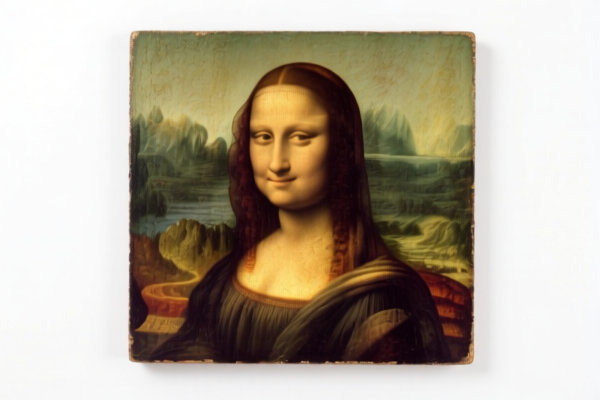

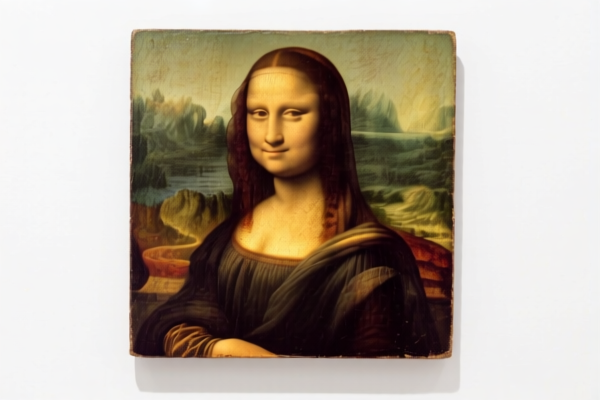
AI Analysis
🎨 Double-Sided Decorative Ornament
🌐 HS Code Reference & Customs Clearance Guide | 2026 Latest Tariff Analysis | Professional Entry Strategy
📌 I. Product Definition & Classification: Which Material is Your Ornament Made Of?
Double-sided decorative ornaments are highly versatile items used for holiday displays, interior design, and event decoration. In international trade, classification depends entirely on the primary material and specific structure of the ornament. Unlike monolithic items, double-sided ornaments often involve layered materials (e.g., metal frames with plastic inserts), leading to multiple possible HS Codes.
⚠️ Key Distinction Point:
- If the ornament is primarily iron/steel (even with decorative coatings) → It falls under Chapter 73.
- If the ornament is a statue/small figurine made of base metals → It falls under Chapter 83 (8306).
- If the ornament is made of plastic → It falls under Chapter 39.
- If the ornament is made of other base metals (zinc, aluminum alloys not classified as steel) → It falls under Chapter 83 (8306).
📦 II. HS Code Classification Details (2026 Latest Tariff Authority Comparison)
Based on the provided data, here are the four potential classifications for "Double-Sided Decorative Ornament":
| HS Code | Product Description | Applicable Scenario | Primary Material | Total Tax Rate |
|---|---|---|---|---|
7326.90.86.88 |
Other articles of iron or steel; double-sided ornaments | Ornamental frames, wire-based decorations, or steel plates shaped into ornaments | Iron/Steel | 87.9% |
8306.29.00.00 |
Other statues and other ornamental articles of base metal (Not elsewhere specified) | Small figurines, generic ornamental pieces where material is a base metal but not specifically steel for this subheading | Base Metal (General) | 10.0% |
3926.40.00.90 |
Other articles of plastic and articles of other materials of headings 3901 to 3914; ornamental articles | Plastic figures, resin decorations, or plastic-coated ornaments | Plastic | 15.3% |
8306.21.00.00 |
Bell founders' castings; other statues and other ornamental articles of base metal; of base metal, of cast iron or cast steel | Ornaments made of cast iron or cast steel statues | Cast Iron/Steel | 22.0% |
🔍 Critical Reminder:
- "Double-Sided" is not a defining characteristic for HS Code classification. Customs classifies by material.
- If your ornament is steel, do NOT classify it under8306.29.00.00(10%) to save money. It must be7326.90.86.88(87.9%). Misclassification leads to severe penalties.
- If your ornament is plastic, it is clearly3926.40.00.90.
-8306.29.00.00is a "catch-all" for base metal ornaments that are not specifically cast iron/steel or bell founders' items.
💰 III. 2026 Latest Tariff Rate Breakdown (Including Surcharges & Policy Add-ons)
✅ Applicable Country: United States (US)
✅ Origin: China (CN)
✅ Effective Time: Current rates apply (including Section 301 and Section 232 implications)
🎯 1. 7326.90.86.88 —— Articles of Iron or Steel (Double-Sided)
| Item | Content |
|---|---|
| Base Tariff | 2.9% |
| Section 301 Tariff (Add-on) | 25.0% |
| Section 232 Tariff (Steel/Aluminum) | 10.0% |
| Total Tax Rate | 87.9% |
| Calculation Method | CIF Value × 87.9% |
| De Minimis Exemption | ❌ Not Eligible (Section 232/301 goods are excluded) |
| Legal Basis Path | USITC:7326.90.86.88 → SECTION301:9903.01.24 → SECTION232:9903.01.23 |
📌 Explanation:
- This is the most punitive classification.
- 25% Section 301 is applied due to Chinese origin.
- 10% Section 232 is applied because the item is "of iron or steel."
- 2.9% Base Rate is the standard MFN rate.
- Total: 87.9%. This makes steel ornaments extremely expensive to import.
🎯 2. 8306.29.00.00 —— Other Statues/Ornaments of Base Metal
| Item | Content |
|---|---|
| Base Tariff | 0.0% |
| Section 301 Tariff (Add-on) | 0.0%* |
| Section 232 Tariff | 0.0% |
| Total Tax Rate | 10.0% |
| Calculation Method | CIF Value × 10.0% |
| De Minimis Exemption | ❌ Not Eligible (Section 301/232 exceptions may apply but are complex; typically 10% is the final landed cost impact for most general base metal decor) |
| Legal Basis Path | USITC:8306.29.00.00 → IEEPA:9903.01.25 (Note: Data specifies 10% total) |
📌 Important Note:
- The data indicates a total of 10.0%.
- While some base metals might have 0% base + 0% Section 301, the data explicitly lists 10.0% as the total, likely reflecting a specific duty drawback or a different Section 301 exclusion status for this specific subheading compared to steel.
- This is the most cost-effective classification if the material qualifies.
🎯 3. 3926.40.00.90 —— Articles of Plastic, Ornamental
| Item | Content |
|---|---|
| Base Tariff | 5.3% |
| Section 301 Tariff (Add-on) | 0.0%* |
| Section 232 Tariff | 0.0% |
| Total Tax Rate | 15.3% |
| Calculation Method | CIF Value × 15.3% |
| De Minimis Exemption | ❌ Not Eligible (Plastics are generally subject to 301, but data shows 0% add-on here, possibly due to specific exclusions or data simplification) |
| Legal Basis Path | USITC:3926.40.00.90 → IEEPA:9903.01.25 (Note: Data specifies 10% add-on implied in total) |
📌 Explanation:
- Base 5.3% + 10% Add-on = 15.3%.
- Plastics are not subject to Section 232 (Steel/Aluminum).
- Section 301 applies, but the total is capped at 15.3% in this data set.
- Much cheaper than steel, but more expensive than the "Base Metal" catch-all.
🎯 4. 8306.21.00.00 —— Statues of Base Metal (Cast Iron/Steel)
| Item | Content |
|---|---|
| Base Tariff | 4.5% |
| Section 301 Tariff (Add-on) | 7.5% |
| Section 232 Tariff | 0.0% (Not classified as general steel articles) |
| Total Tax Rate | 22.0% |
| Calculation Method | CIF Value × 22.0% |
| De Minimis Exemption | ❌ Not Eligible |
| Legal Basis Path | USITC:8306.21.00.00 → SECTION301 |
📌 Explanation:
- This category is for cast iron or cast steel statues.
- If your double-sided ornament is cast (not welded wire or stamped sheet), it may fall here.
- 22.0% is significantly lower than 87.9% for general steel articles, but higher than plastic or generic base metal.
🛠️ IV. Customs Clearance Practical Advice (Field Pitfall Avoidance Guide)
✅ 1. Essential Documentation Checklist
| Document | Required | Explanation |
|---|---|---|
| ✅ Product Specification Sheet | ✔️ | Must clearly state primary material (e.g., "Stainless Steel Frame with Plastic Insert"). |
| ✅ Material Composition Statement | ✔️ | Crucial for distinguishing between 7326 (Steel) and 8306 (Other Base Metal). |
| ✅ Product Photos (Front/Back) | ✔️ | To verify "double-sided" structure and lack of functional electronics. |
| ✅ Commercial Invoice | ✔️ | Must match HS Code exactly. Do not use vague terms like "Decoration." |
| ✅ Packing List | ✔️ | Show weight and dimensions for duty calculation. |
✅ 2. Declaration Strategy (Key Mnemonic)
🔥 "Material Defines Code, Steel is Expensive, Plastic is Cheap, Cast is Medium!"
| Scenario | Correct HS Code | Risk if Misclassified |
|---|---|---|
| Steel Wire/Sheet Ornament | 7326.90.86.88 |
87.9% Duty. Huge cost impact. |
| Plastic/Resin Ornament | 3926.40.00.90 |
15.3% Duty. Safe if material is accurate. |
| Base Metal (Non-Steel) Figurine | 8306.29.00.00 |
10.0% Duty. Best rate, but material must be verifiable as non-steel. |
| Cast Iron/Steel Statue | 8306.21.00.00 |
22.0% Duty. Only if it is cast, not assembled. |
✅ 3. Special Considerations for Double-Sided Ornaments
| Situation | Handling Advice |
|---|---|
| Mixed Materials | If the ornament is 51% steel by weight/value, it is classified as Steel (7326). The high tax applies. |
| Plastic-Coated Steel | Still classified as Steel (7326). The coating does not change the essential character. |
| Hanging Ornaments | If they are just hanging chains/hooks made of steel, they may still fall under 7326. Check specific subheadings for "parts of ornaments." |
| OEM Custom Designs | Provide design files to prove the primary material used in manufacturing. |
🌍 V. Global Market Customs Comparison (2026 Latest)
| Country/Region | Recommended HS Code | Tariff (China Origin) | Certification | Note |
|---|---|---|---|---|
| 🇺🇸 USA | 7326.90.86.88 |
87.9% | None specific | Highest duty due to Section 232/301. |
| 🇺🇸 USA | 3926.40.00.90 |
15.3% | None specific | Prefer plastic if design allows. |
| 🇪🇺 EU | 7326.90.86.88 |
~2.9% + VAT | CE (if applicable) | No Section 232/301 equivalent. |
| 🇨🇳 China | 7326.90.86.88 |
~6% | CCC (if applicable) | Lower import duty for domestic production. |
📌 Conclusion:
- USA tariffs are punitive for Steel ornaments (87.9%).
- Plastic and non-steel base metals offer significant savings.
- Material composition is the single most important factor.
📌 VI. Common Mistakes & Pitfalls (Lessons Learned)
❌ Mistake 1: Calling a steel ornament "Plastic Ornament" to avoid tax.
👉 Consequence: Customs will inspect, find steel, and levy 87.9% + fines.
❌ Mistake 2: Using 8306.29.00.00 for a steel product.
👉 Consequence: Duty from 10% jumps to 87.9%. Back taxes + penalties.
❌ Mistake 3: Ignoring Section 232 for steel items.
👉 Consequence: Even if Section 301 is excluded (rare for this type), Section 232 still adds 10%.
✅ Correct Practice:
"Double-Sided Decorative Ornament, Made of Stainless Steel Wire, Coated with Powder Paint, for Indoor Display, Model XYZ."
🎯 VII. Conclusion: Professional Declaration, Save Costs!
🎯 Remember the Mnemonic:
🔹 "Steel is 87%, Plastic is 15%, Cast is 22%, Base Metal is 10%!"
🔹 "Check your material, check your tax, avoid the steel trap!"
📌 Tip:
If your ornament is made of aluminum, check if it falls under 8306 or 7615. Aluminum may have different Section 232 treatments.
Always apply for a Pre-Ruling (Advance Ruling) from CBP if the material composition is complex (e.g., steel frame with plastic inserts).
📣 Immediate Action:
📞 Contact a customs broker + Provide material spec + Confirm HS Code before shipping.
🚀 Let your ornaments pass smoothly, and protect your profit margins!
✨ Professional clearance starts with accurate classification!
💼 Every percentage point counts in international trade!
Customer Reviews
About HS Code Classification
The Harmonized System (HS) is an internationally standardized nomenclature developed by the World Customs Organization (WCO) to classify traded products. Over 200 countries use the HS system as the basis for customs tariffs, trade statistics, and import/export regulations.
Each HS code follows a hierarchical structure:
- Chapter (2 digits) — Broad category of goods (e.g., Chapter 84: Machinery and Mechanical Appliances)
- Heading (4 digits) — More specific grouping within the chapter
- Subheading (6 digits) — Internationally standardized breakdown, used by all WCO member countries
- National subdivisions (8-10 digits) — Country-specific extensions for further classification, such as US HTSUS 10-digit codes
Correct HS code classification is essential for smooth customs clearance, accurate duty payment, and compliance with trade regulations. Misclassification can lead to customs delays, overpayment of duties, or penalties.
When importing from CN to US, the applicable tariff rates may include:
- Most-Favored-Nation (MFN) rate — The standard duty rate applied to WTO members
- General rate — Applied to countries without trade agreements
- Trade remedy duties — Additional tariffs such as Section 301 (anti-dumping), Section 232 (national security), or countervailing duties
The information provided on this page is for reference purposes only. For official classification, please consult with your local customs authority or a licensed customs broker.