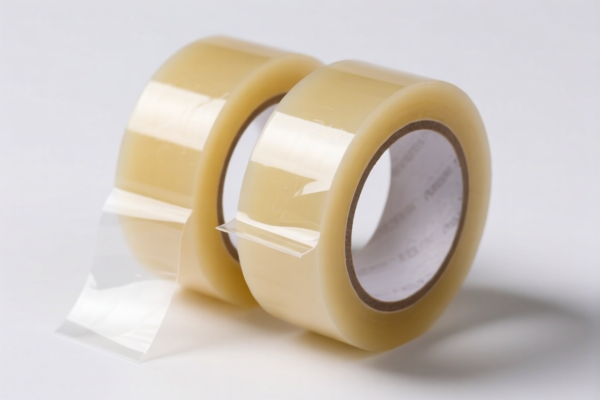
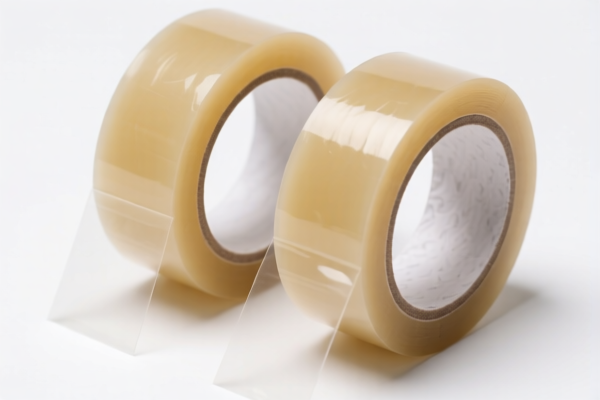
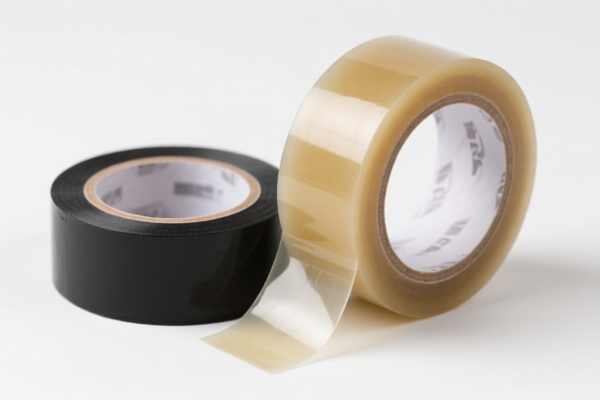
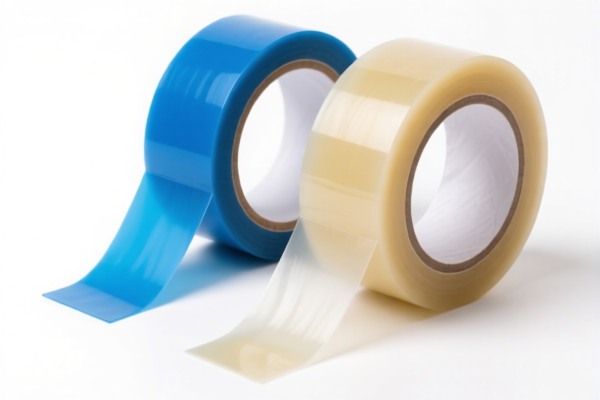
Double sided Plastic Self adhesive Tape
CN → US| HS Code | Tariff Rate | Origin | Destination | Doc |
|---|---|---|---|---|
| 5603910090 | 35.0% | CN | US | Official Doc |
| 5603110070 | 35.0% | CN | US | Official Doc |
| 3919905060 | 40.8% | CN | US | Official Doc |
| 3926909989 | 22.8% | CN | US | Official Doc |
| 3926906090 | 39.2% | CN | US | Official Doc |
| 3919102055 | 40.8% | CN | US | Official Doc |
Product Images
AI Analysis
🏷️ Double-Sided Plastic Self-Adhesive Tape (双面塑料自粘胶带)
🌐 HS Code Reference & Customs Clearance Guide | 2026 Latest Tariff Analysis | Professional-Level Strategy
📌 Part I: Product Definition & Classification: What Exactly Is "Double-Sided Plastic Self-Adhesive Tape"?
In international trade, "Double-Sided Plastic Self-Adhesive Tape" is a broad category. Its classification depends heavily on its physical form (is it a roll of tape, or a cut strip?) and its primary material (plastic/polymer vs. non-woven fabric base).
Two Main Categories: 1. Plastic-Based Adhesive Tapes (Plastic Substrate): Includes polypropylene (PP), polyester (PET), PVC, or polyethylene (PE) tapes. These are rigid or semi-rigid, smooth, and typically used for bonding, sealing, or electrical insulation. 2. Non-Woven/Fabric-Based Tapes (Non-Woven Substrate): Includes tapes made from fused fibers. These are softer, more flexible, and often used for masking, padding, or general-purpose bonding.
⚠️ Key Distinction Point:
- If the backing material is synthetic plastic film/roll (e.g., PP, PET) → Classified under Heading 3919 (Plastics).
- If the backing material is non-woven fabric/felt → Classified under Heading 5603 (Non-wovens).
- If it is a flat, cut piece (not a roll) made of plastic → Classified under Heading 3926 (Other plastic articles).
📦 Part II: HS Code Classification Details (2026 Latest Tariff Authority对照)
Based on the provided data, the potential HS codes are divided into three logical groups based on material and form.
| HS Code | Product Description | Applicability | Material/Substrate | Form |
|---|---|---|---|---|
| 3919.10.20.55 | Self-adhesive plates, sheets, film, foil, tape, etc., of plastics | Standard plastic double-sided tape (rolls) | Plastic (PP, PET, PVC, etc.) | Roll/Tape |
| 3919.90.50.60 | Other self-adhesive plates, sheets, film, foil, tape, etc., of plastics | Generic/Unspecified plastic adhesive tape | Plastic (General) | Roll/Tape |
| 3926.90.60.90 | Other articles of plastics (including "bands" or strips) | Cut plastic strips/bands (not rolls) | Plastic (Resin/Polymer) | Cut Strip/Band |
| 3926.90.99.89 | Other plastic articles (General "Plastic Material Products") | Non-standard plastic components | Plastic/Resin | Various/Other |
| 5603.11.00.70 | Non-woven fabric, weighing ≤ 25 g/m² | Non-woven based adhesive tape (lightweight) | Non-woven | Roll/Sheet |
| 5603.91.00.90 | Other non-woven fabrics (General "Other" Category) | Non-woven based adhesive tape (standard/heavyweight) | Non-woven | Roll/Sheet |
🔍 Critical Analysis:
- Most Common Scenario: For standard plastic double-sided tape (like VHB, duct tape backing, or packaging tape), the correct code is usually 3919.10.20.55 or 3919.90.50.60.
- Non-Woven Scenario: If the tape is made from a fabric-like material (e.g., double-sided mounting tape for walls), use 5603.11.00.70 or 5603.91.00.90.
- Cut Strips: If you are shipping pre-cut plastic strips (not rolls), use 3926.90.60.90.
💰 Part III: 2026 Latest Tariff Rate Breakdown (Including Surtaxes & Policy Add-ons)
✅ Applicable Country: United States (US)
✅ Country of Origin: China (CN)
✅ Effective Time: 2025/2026 (Post-Section 301 & IEEPA Regulations)
🎯 1. Plastic-Based Tapes (HS 3919 & 3926 Series)
📌 Case A: 3919.10.20.55 (Plastic Self-Adhesive Tape, Specific)
| Item | Content |
|---|---|
| Basic Tariff | 5.8% (ad valorem) |
| Section 301 Surtax | +25% (USITC Footnote 9903.88.01) |
| IEEPA Surcharge | +10% (China-specific, effective from Nov 2025) |
| Total Tariff Rate | 40.8% |
| Tax Calculation | CIF Value × 40.8% |
| De Minimis Eligibility | ❌ NO (Denied for China-origin Section 301 goods) |
| Legal Basis Path | IEEPA:9903.01.24 → USITC:3919.10.20.55 → FOOTNOTE:9903.88.01 |
📌 Explanation:
- The 25% is the standard Section 301 tariff on most Chinese plastics and articles.
- The 10% is the new IEEPA surcharge targeting specific Chinese imports.
- The 5.8% is the standard MFN (Most Favored Nation) duty.
- Total: 40.8%. This is a high-cost category.
📌 Case B: 3919.90.50.60 (Other Plastic Self-Adhesive Tapes)
| Item | Content |
|---|---|
| Basic Tariff | 5.8% |
| Section 301 Surtax | +25% |
| IEEPA Surcharge | +10% |
| Total Tariff Rate | 40.8% |
| Tax Calculation | CIF Value × 40.8% |
| De Minimis Eligibility | ❌ NO |
| Legal Basis Path | IEEPA:9903.01.24 → USITC:3919.90.50.60 → FOOTNOTE:9903.88.01 |
📌 Note:
- Identical tax burden to Case A. Do not attempt to miscategorize to avoid taxes; the substance (plastic + adhesive) triggers the same surcharge.
📌 Case C: 3926.90.60.90 (Plastic Bands/Strips, Cut)
| Item | Content |
|---|---|
| Basic Tariff | 4.2% |
| Section 301 Surtax | +25% |
| IEEPA Surcharge | +10% |
| Total Tariff Rate | 39.2% |
| Tax Calculation | CIF Value × 39.2% |
| De Minimis Eligibility | ❌ NO |
| Legal Basis Path | IEEPA:9903.01.24 → USITC:3926.90.60.90 → FOOTNOTE:9903.88.01 |
📌 Case D: 3926.90.99.89 (Other Plastic Articles)
| Item | Content |
|---|---|
| Basic Tariff | 5.3% |
| Section 301 Surtax | +7.5% (Lower rate for certain "other" plastic items) |
| IEEPA Surcharge | +10% |
| Total Tariff Rate | 22.8% |
| Tax Calculation | CIF Value × 22.8% |
| De Minimis Eligibility | ❌ NO |
| Legal Basis Path | IEEPA:9903.01.24 → USITC:3926.90.99.89 → FOOTNOTE:9903.88.01 |
📌 Note:
- This code has a significantly lower total rate (22.8%) because the Section 301 surcharge is only 7.5% instead of 25%.
- Risk: This code is for "Other" plastic articles not elsewhere specified. Misclassifying standard tape (which should be 3919) as "other articles" can lead to customs audits and penalties. Only use if the product truly does not fit 3919 (e.g., custom molded plastic adhesive components).
🎯 2. Non-Woven Based Tapes (HS 5603 Series)
📌 Case E: 5603.11.00.70 (Non-woven, ≤ 25 g/m²)
| Item | Content |
|---|---|
| Basic Tariff | 0.0% |
| Section 301 Surtax | +25% |
| IEEPA Surcharge | +10% |
| Total Tariff Rate | 35.0% |
| Tax Calculation | CIF Value × 35.0% |
| De Minimis Eligibility | ❌ NO |
| Legal Basis Path | IEEPA:9903.01.24 → USITC:5603.11.00.70 → FOOTNOTE:9903.88.01 |
📌 Case F: 5603.91.00.90 (Other Non-wovens)
| Item | Content |
|---|---|
| Basic Tariff | 0.0% |
| Section 301 Surtax | +25% |
| IEEPA Surcharge | +10% |
| Total Tariff Rate | 35.0% |
| Tax Calculation | CIF Value × 35.0% |
| De Minimis Eligibility | ❌ NO |
| Legal Basis Path | IEEPA:9903.01.24 → USITC:5603.91.00.90 → FOOTNOTE:9903.88.01 |
📌 Note:
- Non-woven tapes have 0% basic duty, but the 35% total rate is still high due to surcharges.
- If your tape is made of fabric/felt, do not use plastic codes (3919), as this will cause misdeclaration issues.
🛠️ Part IV: Customs Clearance Practical Advice (Real-World Pitfall Avoidance Guide)
✅ 1. Essential Documentation Checklist (Non-Negotiable)
| Document | Mandatory? | Notes |
|---|---|---|
| ✅ Product Specification Sheet | ✔️ | Must specify: Backing material (Plastic vs. Non-woven), Width, Length, Adhesive Type. |
| ✅ Photos of Product & Packaging | ✔️ | Clear images showing the roll/core, label, and adhesive texture. |
| ✅ Commercial Invoice | ✔️ | Must clearly state "Double-Sided Adhesive Tape" and "Plastic/Non-woven Backing". Avoid vague terms like "Adhesive Product". |
| ✅ Certificate of Origin (CO) | ✔️ | If originating from Vietnam/Mexico/Thailand, can claim IEEPA exemption! |
| ✅ Third-Party Test Report | ✔️ | RoHS, REACH, or flammability tests if applicable for electronics/consumer goods. |
✅ 2. Declaration Tips (Key Mnemonic)
🔥 “Material Defines Code, Form Defines Sub-Head, Origin Saves Money!”
| Scenario | Correct HS Code | Mistake to Avoid |
|---|---|---|
| Standard Plastic Tape (PP/PET roll) | 3919.10.20.55 |
Calling it "Fabric Tape" → Wrong code. |
| Fabric/Non-Woven Tape | 5603.91.00.90 |
Calling it "Plastic Tape" → Audit risk. |
| Cut Plastic Strips (Not Rolls) | 3926.90.60.90 |
Declaring as "Rolls" → Physical inspection discrepancy. |
| High-Value Custom Plastic Bonding Parts | 3926.90.99.89 |
Only if truly "Other" and not standard tape. |
✅ 3. Special Situation Handling
| Situation | Handling Advice |
|---|---|
| OEM Custom Tape | Provide client order + design specs. Prove it’s not a standard consumer good if claiming a lower rate. |
| Tape with Electrical Properties | May require FCC/UL certification for the final product, but the tape itself is still plastic/non-woven. |
| Origin Shift (Vietnam/Mexico) | Crucial! If the tape is manufactured and substantially transformed in Vietnam/Mexico, you can apply for IEEPA Exemption. Tax may drop to 0%~7.5%. |
| De Minimis (Section 321) | ❌ Do Not Rely On. All HS codes listed above are subject to Section 301/IEEPA surcharges for China-origin goods. Packages under $800 will NOT be exempt from these tariffs. |
🌍 Part V: Global Market Comparison (2026 Latest)
| Country/Region | Recommended HS Code | Tariff Rate (China Origin) | Certification Requirements | Notes |
|---|---|---|---|---|
| 🇺🇸 USA | 3919.10.20.55 |
40.8% (Plastic) / 35% (Non-woven) | No specific agency, but RoHS recommended | High tariff due to 301/IEEPA. |
| 🇨🇳 China | 3919.10.20.55 |
5-8% | No special import certs | Domestic trade friendly. |
| 🇪🇺 EU | 3919.10 |
0-3% (if GSP/LDC applies) | REACH, CE (if electronic) | No Section 301 equivalent. |
| 🇦🇺 Australia | 3919.10 |
5% | RCM (if electronic) | No major surcharges. |
📌 Conclusion:
- USA is the most expensive market for Chinese-made adhesive tapes.
- Cost Saving Strategy: Consider supply chain diversification to Vietnam, Thailand, or Mexico to leverage IEEPA exemptions.
- Documentation is Key: Ensure the "Backing Material" is explicitly stated in the invoice to avoid customs valuation delays.
📌 Part VI: Common Errors & Pitfall Guide (Lessons Learned from Blood & Tears)
❌ Mistake 1: Declaring "Plastic Tape" as "General Plastic Sheet" (3920)
👉 Consequence: Incorrect classification, potential penalty for evading Section 301 if the specific code 3919 is mandated.
❌ Mistake 2: Using "De Minimis" ($800 threshold) to avoid tariffs
👉 Consequence: FAIL. IEEPA and Section 301 surcharges apply even to de minimis shipments from China. Seizure or forced duty payment.
❌ Mistake 3: Mixing Plastic and Non-Woven tapes in one shipment without clear declaration
👉 Consequence: Customs may inspect the entire lot. If plastic tapes are mixed with non-woven, and you declared all as non-woven, you face penalties for undervaluation/tax evasion.
✅ Correct Practice:
"Double-Sided Adhesive Tape, Plastic Backing (PP), Width: 12mm, Roll Core: 1 inch, Model: XYZ, Made in China, HS: 3919.10.20.55"
🎯 Part VII: Conclusion: Professional Declaration, Time-Saving, Cost-Efficient!
🎯 Remember the Mantra:
🔹 "Plastic = 3919 (40.8%), Non-Woven = 5603 (35%), Cut Plastic = 3926 (39.2%). Origin Matters!"
🔹 "De Minimis Does Not Apply to 301/IEEPA. Plan Your Supply Chain!"
📌 Pro Tip:
If your double-sided tape is essential for electronics or automotive use, consider applying for an Exclusion under Section 301 if applicable, though these are rare for general tapes.
Best Strategy: Shift production to Vietnam/Mexico for US-bound goods to achieve 0-7.5% effective rates.
📣 Immediate Action:
📞 Consult a Licensed Customs Broker + Provide Material SDS + Apply for Advance Ruling if volume is high.
🚀 Ensure your Commercial Invoice explicitly states "Plastic Backing" or "Non-Woven Backing" to match the HS Code.
✨ Professional Customs Clearance Starts with Precise Classification!
💼 Your Margin Depends on the Decimal Point!
Customer Reviews
About HS Code Classification
The Harmonized System (HS) is an internationally standardized nomenclature developed by the World Customs Organization (WCO) to classify traded products. Over 200 countries use the HS system as the basis for customs tariffs, trade statistics, and import/export regulations.
Each HS code follows a hierarchical structure:
- Chapter (2 digits) — Broad category of goods (e.g., Chapter 84: Machinery and Mechanical Appliances)
- Heading (4 digits) — More specific grouping within the chapter
- Subheading (6 digits) — Internationally standardized breakdown, used by all WCO member countries
- National subdivisions (8-10 digits) — Country-specific extensions for further classification, such as US HTSUS 10-digit codes
Correct HS code classification is essential for smooth customs clearance, accurate duty payment, and compliance with trade regulations. Misclassification can lead to customs delays, overpayment of duties, or penalties.
When importing from CN to US, the applicable tariff rates may include:
- Most-Favored-Nation (MFN) rate — The standard duty rate applied to WTO members
- General rate — Applied to countries without trade agreements
- Trade remedy duties — Additional tariffs such as Section 301 (anti-dumping), Section 232 (national security), or countervailing duties
The information provided on this page is for reference purposes only. For official classification, please consult with your local customs authority or a licensed customs broker.