Double sided Tape
CN → US| HS Code | Tariff Rate | Origin | Destination | Doc |
|---|---|---|---|---|
| 5603110070 | 35.0% | CN | US | Official Doc |
| 5603910090 | 35.0% | CN | US | Official Doc |
| 3919905060 | 40.8% | CN | US | Official Doc |
| 3926909989 | 22.8% | CN | US | Official Doc |
| 3919102055 | 40.8% | CN | US | Official Doc |
Product Images
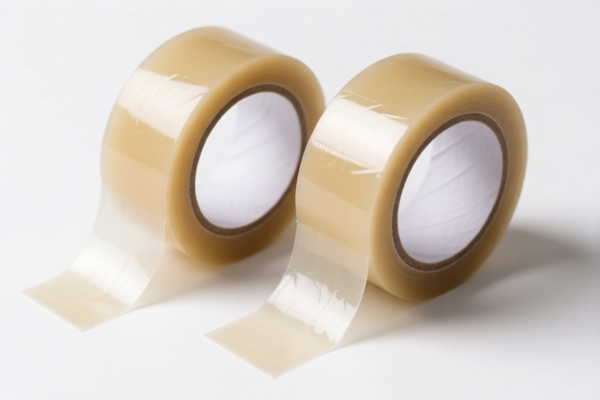
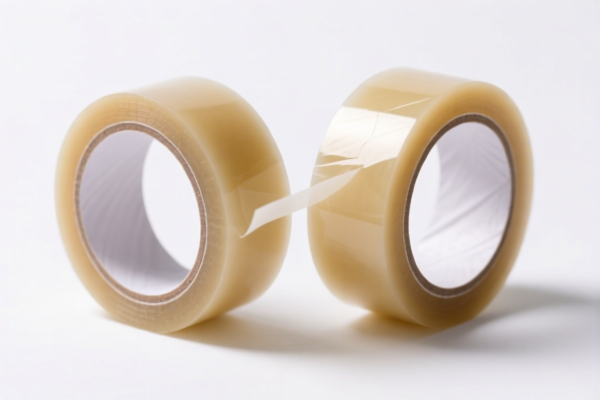
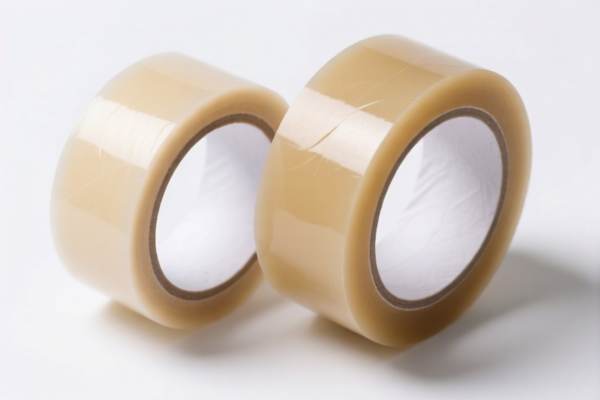
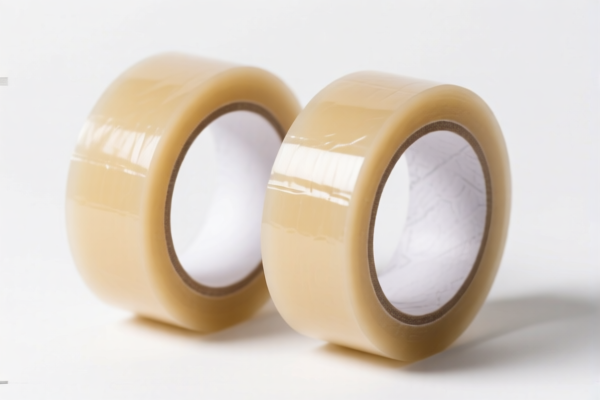
AI Analysis
🎗️ Double Sided Tape (Adhesive Tapes)
🌐 HS Code Classification & Customs Clearance Guide | 2026 Tariff Analysis | Strategic Trade Compliance
📌 One Product, Five HS Codes: Which One Fits Your Tape?
Double-sided tape is a ubiquitous industrial and consumer product. However, in international trade, its classification is highly sensitive to its基材 (base material) and physical form. Misclassification can lead to severe penalty risks or excessive tariff burdens (up to 40.8%).
⚠️ Critical Distinction Point:
- Is the base Non-woven fabric or Film? → Look at Chapter 56.
- Is the base Plastic/Resin in a flat, self-adhesive form? → Look at Chapter 39.
- Is it a generic plastic article without specific adhesive properties? → Look at 3926.
📦 II. Detailed HS Code Classification (2026 Latest Tariff Schedule)
Based on the core material and structure of the double-sided tape, here are the five primary classification paths.
| HS Code | Product Description & Classification Logic | Base Material Type | Typical Application |
|---|---|---|---|
5603.11.00.70 |
Double-sided tape based on non-woven fabric or related film material | Non-woven / Related Film | Heavy-duty industrial bonding, automotive interior lining, packaging. |
5603.91.00.90 |
Double-sided tape based on other non-woven or film substrates | Non-woven / Other Films | General-purpose tape, consumer packaging, light-duty bonding. |
3919.90.50.60 |
Double-sided tape based on plastic substrate | Plastic (General) | Clear plastic tapes, strong adhesive industrial tapes, general purpose. |
3926.90.99.89 |
Plastic/Resin-based double-sided tape (as a plastic article) | Plastic/Resin (Article) | Tapes considered "other plastic articles," often with specific resin compositions not covered elsewhere. |
3919.10.20.55 |
Plastic self-adhesive flat articles (Tape category) | Plastic (Self-adhesive) | Standard plastic adhesive tapes, rolls of self-adhesive flat plastic strips. |
🔍 Key Insight:
- Non-woven/Film bases fall under HS 5603 (Tariff ~35%).
- Plastic bases fall under HS 3919 (Tariff ~40.8%) or 3926 (Tariff ~22.8%).
- Why the difference? Non-woven materials are often viewed as textile-like technical goods, while plastic tapes are viewed as chemical/plastic products. The specific polymer composition and manufacturing process determine the exact code.
💰 III. 2026 Latest Tariff Rate Breakdown (US Market)
✅ Applicable Country: USA
✅ Origin: China (CN)
✅ Effective Time: Current policies (2024-2026)
🎯 1. 5603.11.00.70 & 5603.91.00.90 — Non-Woven/Film Based Tapes
| Item | Detail |
|---|---|
| Base Tariff | 0.0% (ad valorem) |
| Section 301 Additional Tariff | +25.0% |
| 122 Clause Tariff (IEEPA) | +10.0% |
| Total Tariff Rate | 35.0% |
| Calculation Basis | CIF Value × 35% |
| De Minimis Eligibility | ❌ Denied (Section 301 and IEEPA duties apply regardless of value) |
| Legal Basis Path | USITC:5603.11.00.70 → USITC:5603.91.00.90 → Footnote 301: 25% → IEEPA: 10% |
📌 Explanation:
- These HS codes benefit from 0% base duty, but the 35% total burden comes entirely from trade remedy measures.
- The 25% is standard Section 301 duty on Chinese goods.
- The 10% is the "122 Clause" tariff targeting specific Chinese manufacturing sectors.
🎯 2. 3919.90.50.60 & 3919.10.20.55 — Plastic-Based Tapes (High Tariff)
| Item | Detail |
|---|---|
| Base Tariff | 5.8% (ad valorem) |
| Section 301 Additional Tariff | +25.0% |
| 122 Clause Tariff (IEEPA) | +10.0% |
| Total Tariff Rate | 40.8% |
| Calculation Basis | CIF Value × 40.8% |
| De Minimis Eligibility | ❌ Denied |
| Legal Basis Path | USITC:3919.* → Footnote 301: 25% → IEEPA: 10% |
📌 Explanation:
- These codes have a higher base tariff (5.8%) compared to non-woven tapes.
- Total burden is 40.8%, making them significantly more expensive to import than non-woven alternatives.
- Strategy: If your tape can be technically classified as non-woven/film (5603), it saves 5.8% in base duty.
🎯 3. 3926.90.99.89 — Plastic/Resin Articles (Lowest Tariff Option)
| Item | Detail |
|---|---|
| Base Tariff | 5.3% (ad valorem) |
| Section 301 Additional Tariff | +7.5% |
| 122 Clause Tariff (IEEPA) | +10.0% |
| Total Tariff Rate | 22.8% |
| Calculation Basis | CIF Value × 22.8% |
| De Minimis Eligibility | ❌ Denied (Check specific 122 exclusions) |
| Legal Basis Path | USITC:3926.90.99.89 → Footnote 301: 7.5% → IEEPA: 10% |
📌 Explanation:
- This is the most cost-effective classification if your product qualifies.
- Total tariff is only 22.8%, which is 18% lower than the plastic tape classification (3919).
- Caution: This code is for "other plastic articles." You must prove the tape is not primarily "self-adhesive plastic tape" (which falls under 3919). It often applies to tapes with specific resin formulations or those not meeting the strict definition of "tape" in 3919.
🛠️ IV. Customs Clearance Practical Advice (Avoid Pitfalls)
✅ 1. Pre-shipment Documentation Checklist
| Document | Required? | Purpose |
|---|---|---|
| Product Spec Sheet | ✔️ | Must clearly state Base Material (e.g., "Non-woven fabric," "PET plastic," "PE foam") and Adhesive Type. |
| Structure Diagram | ✔️ | Shows layers: Liner → Adhesive → Base → Adhesive → Liner. |
| Material Safety Data Sheet (MSDS) | ✔️ | Required for chemical components (adhesive resins). |
| Commercial Invoice | ✔️ | Must accurately describe product as "Double Sided Tape" with HS code. |
| Bill of Lading (B/L) | ✔️ | Consistent with invoice. |
| Exclusion Proof (if applicable) | ✔️ | If claiming 122 Clause exclusion, provide valid USTR exclusion number. |
✅ 2. Classification Strategy & Risk Management
| Scenario | Recommended Action | Risk if Misclassified |
|---|---|---|
| Tape Base is Non-Woven | Use 5603.11.00.70 or 5603.91.00.90 |
Avoids higher base tariff of plastic codes. |
| Tape Base is Plastic | Evaluate if it fits 3926 (22.8%) or 3919 (40.8%). |
Misclassifying 3919 as 3926 triggers audits and penalties. |
| Mixed Materials | Classify based on Essential Character. | If non-woven provides structural integrity, prefer 5603. |
| Sample Testing | Provide lab test reports proving material composition. | Customs may doubt self-declared classification. |
✅ 3. Special Considerations for "122 Clause" (10% IEEPA)
- Applicability: The 10% IEEPA tariff applies to most Chinese-origin goods, including all these HS codes.
- Exclusions: Check the latest USTR exclusions list. Some specific plastic articles (
3926) might have temporary exclusions, but general tapes usually do not. - Documentation: Ensure your Certificate of Origin (CO) is clear. Customs may hold shipments for "122 Clause" verification if origin documentation is weak.
🌍 V. Global Market Comparison (2026)
| Market | Primary HS Code | Base Tariff | US-Specific Surcharges | Total Estimate (China Origin) |
|---|---|---|---|---|
| 🇺🇸 USA | 5603 / 3919 / 3926 |
0% - 5.8% | +25% (301) +10% (122) | 22.8% - 40.8% |
| 🇨🇳 China | 5603 / 3919 |
5% - 15% | None | 5% - 15% |
| 🇪🇺 EU | 5603 / 3919 |
2.5% - 4.0% | None (if GSP not applicable) | ~3.5% - 6.0% |
| 🇦🇺 Australia | 5603 / 3919 |
5.0% | None | 5.0% |
| 🇯🇵 Japan | 5603 / 3919 |
3.0% - 5.0% | None | 3.0% - 5.0% |
📌 Conclusion:
- The US market is the most challenging due to cumulative tariffs (Base + 301 + 122).
- Non-woven tapes (5603) are cheaper than standard plastic tapes (3919) in the US.
- Resin-based articles (3926) offer the lowest US tariff (22.8%) if legally justifiable.
📌 VI. Common Errors & Pitfalls
❌ Error 1: Calling all tapes "Plastic Tapes" → 3919 (40.8%)
👉 Solution: If base is non-woven, use 5603 (35%). Saves 5.8%.
❌ Error 2: Misclassifying 3919 (40.8%) as 3926 (22.8%) without justification
👉 Solution: Only use 3926 if the product is an "article" and not primarily a "self-adhesive tape" under 3919. Requires strong technical justification.
❌ Error 3: Ignoring the 122 Clause (10%)
👉 Solution: Always include 10% in cost calculations for US imports from China, regardless of HS code.
❌ Error 4: Vague Description: "Double Sided Tape"
👉 Solution: Use precise descriptions: "Non-woven fabric based double-sided adhesive tape, 12mm width, high strength" for 5603.
🎯 VII. Conclusion: Optimize Your Classification
🎯 Key Takeaway:
🔹 Non-Woven Base →
5603→ 35% Total Tariff
🔹 Plastic Base (Tape) →3919→ 40.8% Total Tariff
🔹 Plastic/Resin Article →3926→ 22.8% Total Tariff (Best Option if Valid)🔹 "Material Defines Code, Code Defines Cost."
📌 Pro Tip:
If your tape uses a foam base or special resin, consult with a customs broker to see if it qualifies for 3926.90.99.89. The 18% savings vs. 3919 can be substantial for high-volume shipments.
✨ Professional Classification, Significant Savings!
💼 Don't let customs codes eat your margin.
📞 Contact a licensed customs broker for a Pre-Ruling if unsure.
Customer Reviews
About HS Code Classification
The Harmonized System (HS) is an internationally standardized nomenclature developed by the World Customs Organization (WCO) to classify traded products. Over 200 countries use the HS system as the basis for customs tariffs, trade statistics, and import/export regulations.
Each HS code follows a hierarchical structure:
- Chapter (2 digits) — Broad category of goods (e.g., Chapter 84: Machinery and Mechanical Appliances)
- Heading (4 digits) — More specific grouping within the chapter
- Subheading (6 digits) — Internationally standardized breakdown, used by all WCO member countries
- National subdivisions (8-10 digits) — Country-specific extensions for further classification, such as US HTSUS 10-digit codes
Correct HS code classification is essential for smooth customs clearance, accurate duty payment, and compliance with trade regulations. Misclassification can lead to customs delays, overpayment of duties, or penalties.
When importing from CN to US, the applicable tariff rates may include:
- Most-Favored-Nation (MFN) rate — The standard duty rate applied to WTO members
- General rate — Applied to countries without trade agreements
- Trade remedy duties — Additional tariffs such as Section 301 (anti-dumping), Section 232 (national security), or countervailing duties
The information provided on this page is for reference purposes only. For official classification, please consult with your local customs authority or a licensed customs broker.