Dough Bag
CN → US| HS Code | Tariff Rate | Origin | Destination | Doc |
|---|---|---|---|---|
| 6305330060 | 25.9% | CN | US | Official Doc |
| 4819400040 | 35.0% | CN | US | Official Doc |
| 3923210095 | 38.0% | CN | US | Official Doc |
| 6305330080 | 25.9% | CN | US | Official Doc |
| 4819300040 | 35.0% | CN | US | Official Doc |
| 3923290000 | 38.0% | CN | US | Official Doc |
Product Images
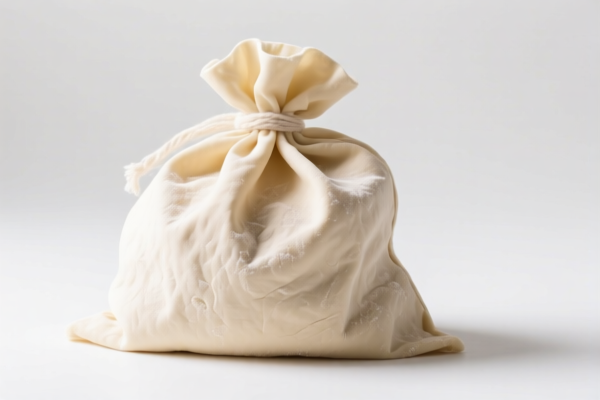
AI Analysis
🥯 Bread Bag (Dough Bag / Bread Pouch)
🌐 HS Code Reference & Customs Clearance Guide | 2026 Latest Tariff Analysis | Professional Clearance Strategy
📌 1. Product Definition & Classification: What Exactly is a "Bread Bag"?
A "Bread Bag" (often referred to as a dough bag or bakery pouch) is a flexible packaging container used primarily for wrapping, storing, or transporting bread, baked goods, or dough. In international trade, classification depends heavily on the material composition and specific form.
Based on the provided data, these products typically fall into three main material categories: 1. Paper-Based: Made of paper or paperboard, often used for artisanal or eco-friendly packaging. 2. Plastic-Based (Polymer): Made of polyethylene (PE) or polypropylene (PP), commonly used for freshness and moisture resistance. 3. Synthetic Fiber/Textile-Based: Made from artificial textile materials (e.g., woven PP), often used for bulk or reusable industrial purposes.
⚠️ Critical Classification Point:
- If the bag is made of Paper → It generally falls under Chapter 48.
- If the bag is made of Plastic (PE/PP) → It generally falls under Chapter 39 (Plastics) or Chapter 63 (Textiles/Specialized Bags).
- Shape Matters: All listed codes refer to "pouches," "sacks," or "bags," indicating a flexible container form.
📦 2. HS Code Classification Details (Based on Provided Data)
The following table details the specific HS Codes, summaries, and tax implications derived strictly from the provided <DATA> input.
| HS Code | Product Description & Rationale | Material/Shape Inference | Total Tax Rate |
|---|---|---|---|
| 6305.33.00.60 | Bag for Packaging of Goods: Specifically for bread/packaging. Rationale: Inferred as plastic strips (PE/PP), fitting the "Other" category under textile/synthetic bag rules. |
Plastic/Textile-like (PE/PP strips) | 25.9% |
| 4819.40.00.40 | Paper Bags & Sacks: Flexible packaging containers. Rationale: Inferred material is paper or plastic, but classified here under paper bags/sacks description. |
Paper or Plastic (Paper focus) | 35.0% |
| 3923.21.00.95 | Sacks & Bags (Plastic): Of polymers of ethylene. Rationale: Typically made of Polyethylene (PE), fitting the "Other" category for ethylene polymer pouches. |
Polyethylene (PE) | 38.0% |
| 6305.33.00.80 | Bag for Packaging of Goods: "Other" category. Rationale: Matches purpose (packaging) and form; inferred as artificial textile materials like PE/PP. |
Artificial Textile (PE/PP) | 25.9% |
| 4819.30.00.40 | Boxes, Pouches, Sacks, etc. (Paper): Paper or paperboard containers. Rationale: Inferred material is paper, matching "paper/board packaging containers"; form is "bag." |
Paper | 35.0% |
| 3923.29.00.00 | Sacks & Bags (Plastic): Other articles of plastics for packaging. Rationale: Inferred use is packaging, typically plastic material, matching "plastic" and "pouch" shape. |
Plastic (General) | 38.0% |
🔍 Key Insight:
- Cheapest Rate:6305.33.00.60and6305.33.00.80offer the lowest total tax at 25.9%. These are categorized under Chapter 63 (Articles of Apparel/Accessories/Other Textile Articles), often implying a specific textile-like synthetic bag definition.
- Most Expensive Rate:3923.21.00.95and3923.29.00.00carry the highest tax at 38.0%. These fall under Chapter 39 (Plastics), specifically for sacks and bags of polymers.
- Middle Ground: Paper-based bags (4819.xx) are taxed at 35.0%.
💰 3. 2026 Latest Tariff Rate Breakdown (Including Surtaxes & Policy Surcharges)
✅ Applicable Country: United States (US)
✅ Origin: China (CN) (Inferred from "122 Clause Tariff" and high surtaxes)
✅ Effective Date: Based on current trade regulations including Section 301 and IEEPA.
🎯 1. 6305.33.00.60 & 6305.33.00.80 (Textile/Synthetic Bag Category)
| Item | Content |
|---|---|
| Base Duty Rate | 8.4% (Ad Valorem) |
| Section 301 Surtax | +7.5% (Additional tariff under Trade Act of 1974) |
| Section 122 Tariff | +10% (Retaliation tariff under Section 122 of the Trade Act of 1974) |
| Total Tax Rate | 25.9% |
| Tax Calculation | CIF Value × 25.9% |
| De Minimis Eligibility | ❌ Not Applicable (High value threshold for this category) |
| Legal Basis Path | USITC:6305.33.00.60 → SECTION301 → SECTION122 |
📌 Explanation:
- The 8.4% base rate is standard for certain textile-like bags.
- The 7.5% surtax is a specific Section 301 adjustment.
- The 10% Section 122 tariff is a retaliatory measure.
- Total: 25.9%. This is the most favorable rate among the options.
🎯 2. 4819.40.00.40 & 4819.30.00.40 (Paper Bag Category)
| Item | Content |
|---|---|
| Base Duty Rate | 0.0% (Duty-Free Base) |
| Section 301 Surtax | +25.0% (Standard Section 301 surtax) |
| Section 122 Tariff | +10% (Retaliation tariff under Section 122) |
| Total Tax Rate | 35.0% |
| Tax Calculation | CIF Value × 35.0% |
| De Minimis Eligibility | ❌ Not Applicable |
| Legal Basis Path | USITC:4819.xx.xx → SECTION301 → SECTION122 |
📌 Explanation:
- Even though the base duty is 0%, the heavy surtaxes bring the total to 35.0%.
- Paper products are often subject to higher Section 301 rates compared to certain synthetic textile bags.
🎯 3. 3923.21.00.95 & 3923.29.00.00 (Plastic Bag Category)
| Item | Content |
|---|---|
| Base Duty Rate | 3.0% (Ad Valorem) |
| Section 301 Surtax | +25.0% (Standard Section 301 surtax) |
| Section 122 Tariff | +10% (Retaliation tariff under Section 122) |
| Total Tax Rate | 38.0% |
| Tax Calculation | CIF Value × 38.0% |
| De Minimis Eligibility | ❌ Not Applicable |
| Legal Basis Path | USITC:3923.xx.xx → SECTION301 → SECTION122 |
📌 Explanation:
- This is the highest cost option.
- Plastic bags face the maximum base duty (3%) plus the maximum Section 301 surtax (25%) and Section 122 (10%).
- Total: 38.0%. Avoid this classification if possible due to high cost.
🛠️ 4. Customs Clearance Practical Advice (Real-World Pitfall Guide)
✅ 1. Preparation Checklist (Non-negotiable)
| Document | Required | Notes |
|---|---|---|
| ✅ Product Specification Sheet | ✔️ | Must clearly state material composition (e.g., "100% Polyethylene," "Kraft Paper," "Woven PP"). |
| ✅ Material Safety Data Sheet (MSDS) | ✔️ | If applicable, especially for food-contact plastics. |
| ✅ Product Photos | ✔️ | Clear images of the bag, showing texture (paper vs. plastic vs. woven). |
| ✅ Commercial Invoice | ✔️ | Describe goods precisely: "Plastic Bread Bags, 10x15 inches, PE Material." Avoid vague terms like "Packaging Material." |
| ✅ Packing List | ✔️ | Net weight and gross weight per bag and per carton. |
| ✅ FDA Food Contact Notification | ✔️ | Critical for bread bags in the US. Must prove FDA compliance for food safety. |
✅ 2. Declaration Tips (Key Mnemonic)
🔥 "Material Defines Code, FDA Defines Clearance, Section 301 Defines Cost!"
| Scenario | Correct Declaration | Error Consequence |
|---|---|---|
| Plastic (PE) Bag | Use 3923 or 6305 (if woven/synthetic) |
Misdeclaring as Paper (4819) → Customs seizure + fines |
| Paper Bag | Use 4819 |
Misdeclaring as Plastic → Potential fraud claims if material differs |
| Food Contact Item | Add "FDA Compliant" in description | No FDA proof → Detention at Port |
| Bundled Bags | Declare as "Bread Bags" | Declare as "Plastic Rolls" → Wrong HS Code → Higher Tax |
✅ 3. Special Situation Handling
| Situation | Handling Advice |
|---|---|
| Eco-Friendly/Compostable Bags | Specify "PLA (Polylactic Acid)" or "Biodegradable." May fall under 3920 or 6305 depending on composition. |
| Custom Printed Bags | Provide design file. Ensure trademark compliance. |
| Bulk vs. Retail Packaging | Bulk industrial sacks (6305) vs. Retail bread bags (4819/3923). Classification differs significantly. |
| Origin Labeling | Must clearly state "Made in China" to trigger correct Section 122 tariffs. |
🌍 5. Global Market Clearance Comparison (2026 Latest)
| Country/Region | Recommended HS Code | Estimated Duty | Certification Required | Notes |
|---|---|---|---|---|
| 🇺🇸 USA | 6305.33.00.60 |
25.9% (Best) | FDA + Country of Origin Labeling | High scrutiny on Section 301/122. |
| 🇺🇸 USA | 3923.21.00.95 |
38.0% (Worst) | FDA | Avoid if alternative classification exists. |
| 🇨🇳 China | 3923.21.00.95 |
~5-9% | CCC (if applicable) | No Section 301/122. |
| 🇪🇺 EU | 3923.29 |
4-6% | REACH + LFGB (Food Contact) | No Section 301, but strict environmental rules. |
| 🇬🇧 UK | 3923.29 |
4-6% | UKCA + Food Standards | Post-Brexit regulations apply. |
📌 Conclusion:
- USA Market: The 25.9% rate for6305.33.00.60is significantly cheaper than the 38.0% for plastic bags (3923).
- Strategy: If your bread bags are made of woven polypropylene or synthetic textile-like materials, argue for Chapter 63 classification to save 12.1% in taxes.
- Food Safety: Regardless of HS Code, FDA Compliance is mandatory for any product touching bread.
📌 6. Common Errors & Pitfall Guide (Lessons Learned)
❌ Error 1: Using vague term "Bag" in invoice.
👉 Consequence: Customs assigns highest default rate (3923 @ 38%).
✅ Fix: Specify "Plastic Bread Pouch, 100% PE."
❌ Error 2: Ignoring FDA requirements for food-contact items.
👉 Consequence: Goods held at port for weeks; potential destruction.
✅ Fix: Include FDA compliance statement on invoice and packaging.
❌ Error 3: Misclassifying Paper Bags as Plastic.
👉 Consequence: If inspected and found to be paper, but declared as plastic, penalties apply.
✅ Fix: Accurate material declaration.
❌ Error 4: Overlooking Section 122 Tariff.
👉 Consequence: Unexpected 10% cost increase at customs.
✅ Fix: Budget for 10% Section 122 surcharge in all calculations.
🎯 7. Conclusion: Professional Declaration, Cost Savings, Smooth Clearance!
🎯 Remember the Mnemonic:
🔹 "Textile Bag (6305) is Cheapest (25.9%), Plastic (3923) is Most Expensive (38%), Paper (4819) is Middle (35%)."
🔹 "Material is King, FDA is Queen, Section 301 is the Taxman!"
🔹 "Declare Precisely, Save Thousands, Clear Customs Fast!"
📌 Pro Tip:
If your bread bags are made of woven PP or non-woven fabric, insist on HS Code 6305.33. This classification often allows for the lowest tax burden (25.9%) compared to standard plastic sacks (38.0%).
Recommend Advance Ruling (Pre-classification) with US Customs if the material composition is complex (e.g., plastic-coated paper).
📣 Immediate Action:
📞 Consult a licensed customs broker.
📤 Provide Material Composition and FDA Compliance Docs.
🚀 Optimize your HS Code to 6305.33.00.60 if possible for maximum savings!
✨ Professional Clearance Starts with Precise Classification!
💼 Every Percent Saved is Pure Profit!
Customer Reviews
About HS Code Classification
The Harmonized System (HS) is an internationally standardized nomenclature developed by the World Customs Organization (WCO) to classify traded products. Over 200 countries use the HS system as the basis for customs tariffs, trade statistics, and import/export regulations.
Each HS code follows a hierarchical structure:
- Chapter (2 digits) — Broad category of goods (e.g., Chapter 84: Machinery and Mechanical Appliances)
- Heading (4 digits) — More specific grouping within the chapter
- Subheading (6 digits) — Internationally standardized breakdown, used by all WCO member countries
- National subdivisions (8-10 digits) — Country-specific extensions for further classification, such as US HTSUS 10-digit codes
Correct HS code classification is essential for smooth customs clearance, accurate duty payment, and compliance with trade regulations. Misclassification can lead to customs delays, overpayment of duties, or penalties.
When importing from CN to US, the applicable tariff rates may include:
- Most-Favored-Nation (MFN) rate — The standard duty rate applied to WTO members
- General rate — Applied to countries without trade agreements
- Trade remedy duties — Additional tariffs such as Section 301 (anti-dumping), Section 232 (national security), or countervailing duties
The information provided on this page is for reference purposes only. For official classification, please consult with your local customs authority or a licensed customs broker.