Dough Mixer
CN → US| HS Code | Tariff Rate | Origin | Destination | Doc |
|---|---|---|---|---|
| 8479820040 | 35.0% | CN | US | Official Doc |
| 8479820080 | 35.0% | CN | US | Official Doc |
| 8438100010 | 17.5% | CN | US | Official Doc |
| 8438100090 | 17.5% | CN | US | Official Doc |
| 8509400025 | 14.2% | CN | US | Official Doc |
| 8509400015 | 14.2% | CN | US | Official Doc |
Product Images
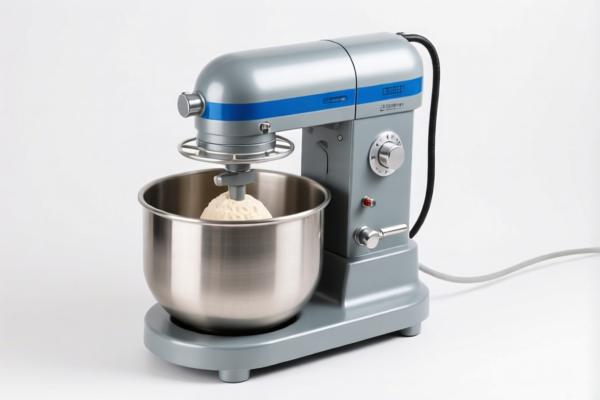
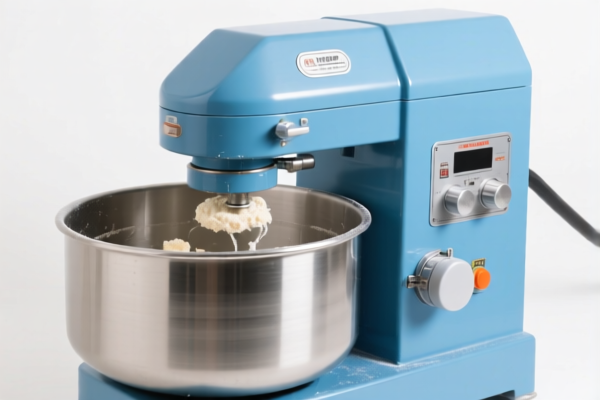
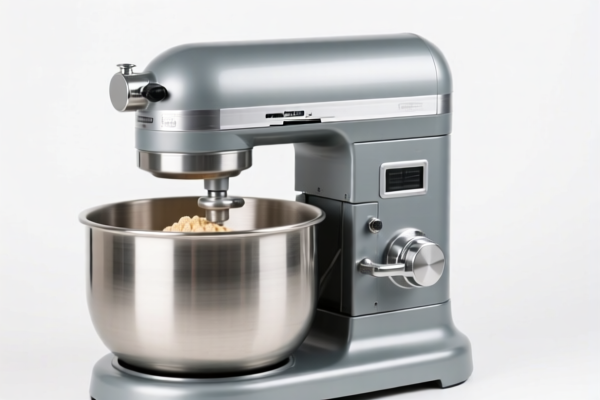
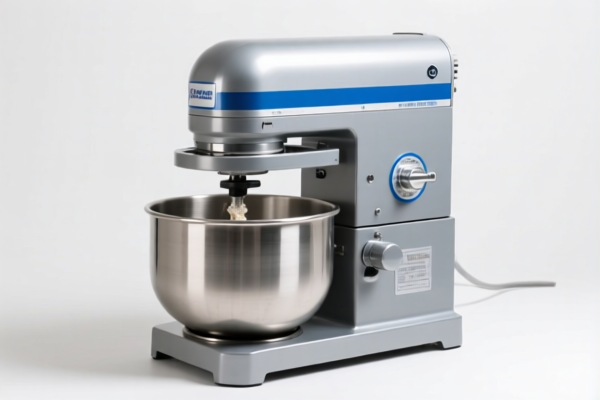
AI Analysis
🍞 Dough Mixers & Baking Machinery (Industrial & Commercial)
🌐 HS Code Reference & Customs Clearance Guide | 2026 Latest Tariff Analysis | Professional Clearance Strategy
📌 1. Product Definition & Classification: Do You Know the Difference?
Dough mixers are critical equipment in the food processing industry, ranging from small household units to massive industrial spiral mixers. In international trade, they are strictly categorized based on power source, capacity, and intended use (domestic vs. industrial).
Key Distinction: - Domestic Electrical Appliances (Heading 8509): Small mixers with self-contained electric motors, intended for home use (e.g., kitchen aid-style mixers, food processors, blenders). - Industrial Machinery (Heading 8438/8479): Large-scale machines for bakeries, pasta factories, or food processing plants. These are often defined by their specific function (baking, mixing, kneading) in a manufacturing context.
⚠️ Critical Classification Point:
- If it is a small household appliance (e.g., a countertop stand mixer) → Chapter 85 (Electrical Machinery).
- If it is a large industrial machine for commercial bakeries → Chapter 84 (Machinery for Food Preparation).
- Do not confuse "Food Processors" (which slice/grind) with "Dough Mixers" (which knead/mix).
📦 2. HS Code Classification Details (2026 Latest Tariff Authority Match)
Based on the provided <DATA>, here are the precise HS Codes and corresponding descriptions for Dough Mixers and related equipment:
| HS Code | Product Description | Application Scenario | Tax Rate (Total) |
|---|---|---|---|
8509.40.00.25 |
Other food mixers (Electromechanical domestic appliance, self-contained motor) | Small kitchen mixers, stand mixers, non-blender domestic food mixers | 0.0% |
8509.40.00.15 |
Blenders (Electromechanical domestic appliance, self-contained motor) | Note: Often grouped with food mixers but classified separately if primarily for liquefying. Some dough mixers may fall here if they have blender functions, but pure dough mixers usually go to .25. | 0.0% |
8438.10.00.10 |
Bakery machinery (Machinery for industrial preparation of food/drink) | Industrial oven auxiliaries, large commercial dough kneaders for bread factories | 7.5% |
8438.10.00.90 |
Other bakery machinery (Machinery for industrial preparation of food/drink) | Specialized industrial baking equipment not specifically listed (e.g., automatic dough dividers, proofers) | 7.5% |
8479.82.00.40 |
Mixing, kneading, or stirring machines (Machines having individual functions) | Industrial planetary mixers, large-scale dough mixers for general food processing (not specific to bakery) | 25.0% |
8479.82.00.80 |
Other mixing, kneading, crushing, grinding... machines | General industrial mixing equipment, industrial food mixers not classified under 8438 or 8509 | 25.0% |
🔍 Key Insight:
- Domestic vs. Industrial: The biggest cost driver is the distinction between 8509 (0% tax) and 8479 (25% tax).
- Bakery Specific: If the mixer is specifically for bakery use (bread/pasta), it may qualify for 8438 (7.5% tax), which is cheaper than the general industrial mixer (8479, 25% tax).
- Blenders vs. Mixers: Ensure the product is not misclassified as a "Blender" (8509.40.00.15) if it is a dough mixer. While both are domestic appliances, the subheading matters for inventory and regulatory compliance.
💰 3. 2026 Tariff Rate Breakdown (Including Additional Taxes)
✅ Applicable Market: USA (US)
✅ Origin: China (CN)
✅ Effective Date: From Nov 10, 2025 (for subsequent imports)
🎯 1. Domestic Appliances (8509.40.00.15 / 8509.40.00.25)
Scenario: Household Stand Mixers, Countertop Food Processors
| Item | Detail |
|---|---|
| Base Tariff | 0.0% |
| Additional Tariff (Section 301) | 0.0% |
| IEEPA Additional Tariff | 0.0% |
| Total Tax Rate | 0.0% |
| De Minimis Eligibility | ✅ Yes (For shipments under $800, often duty-free anyway) |
| Legal Basis | Standard USMF Tariff Schedule for Chapter 85 |
📌 Explanation:
- Small domestic kitchen appliances enjoy zero duty under current US-China trade relations for these specific subheadings.
- This makes domestic mixers highly competitive in the US market.
🎯 2. Industrial Bakery Machinery (8438.10.00.10 / 8438.10.00.90)
Scenario: Commercial Dough Kneaders for Bakeries
| Item | Detail |
|---|---|
| Base Tariff | 0.0% |
| Additional Tariff (Section 301) | 7.5% |
| IEEPA Additional Tariff | 0.0% (Not applied to this specific footnote in current data) |
| Total Tax Rate | 7.5% |
| De Minimis Eligibility | ❌ No (Industrial machinery exceeds $800 value threshold) |
| Legal Basis | USITC:8438.10.00.10 → FOOTNOTE:301 |
📌 Explanation:
- Industrial bakery machinery is subject to a 7.5% additional tariff.
- This is significantly lower than general industrial mixers (25%), so proper classification as "Bakery Machinery" is crucial.
🎯 3. General Industrial Mixers (8479.82.00.40 / 8479.82.00.80)
Scenario: Large Planetary Mixers, Food Processing Mixers (Non-Bakery Specific)
| Item | Detail |
|---|---|
| Base Tariff | 0.0% |
| Additional Tariff (Section 301) | 25.0% |
| IEEPA Additional Tariff | 0.0% |
| Total Tax Rate | 25.0% |
| De Minimis Eligibility | ❌ No |
| Legal Basis | USITC:8479.82.00.40 → FOOTNOTE:301 |
📌 Explanation:
- This is the highest tax bracket for dough mixers.
- If a "Dough Mixer" is classified as a general industrial mixing machine rather than "Bakery Machinery," you pay 25% instead of 7.5%.
- Savings Opportunity: If your machine is used in a bakery, argue for classification under 8438 to save 17.5% in taxes.
🛠️ 4. Customs Clearance Practical Advice (Real-World Pitfall Avoidance)
✅ 1. Documentation Checklist (Non-Negotiable)
| Document | Required? | Purpose |
|---|---|---|
| ✅ Product Specification Sheet | ✔️ | Must clearly state: Motor type, capacity (liters/kg), speed (RPM), and intended use (Home vs. Industrial). |
| ✅ Circuit Diagram & Structure Photo | ✔️ | To distinguish between "Self-contained motor" (8509) and "Industrial Machinery" (8479/8438). |
| ✅ Commercial Invoice | ✔️ | Must describe item as "Dough Mixer for Bakery Use" or "Household Kitchen Mixer" accurately. Vague terms like "Food Machine" will be flagged. |
| ✅ Packing List | ✔️ | Show if parts are shipped separately. Never split a complete machine into parts and main unit to avoid higher tariffs on parts. |
| ✅ CE/FCC Certification | ✔️ | Proof of electrical safety. Required for 8509 (electrical) and often requested for 8479. |
| ✅ Origin Certificate (CO) | ✔️ | If shipped from Vietnam/Mexico, may claim lower tariffs. Must prove substantial transformation. |
✅ 2. Declaration Strategy (Key Mantras)
🔥 "Know the Use, Save the Rate!"
| Scenario | Correct HS Code | Incorrect Code | Risk |
|---|---|---|---|
| Home Stand Mixer | 8509.40.00.25 |
8479.82.00.80 |
25% Penalty + Potential Fraud Allegation |
| Commercial Bakery Mixer | 8438.10.00.10 |
8479.82.00.40 |
17.5% Overpayment (7.5% vs 25%) |
| Industrial Food Processor | 8479.82.00.80 |
8509.40.00.15 |
25% Penalty (If deemed industrial) |
| Blender (Liquefier) | 8509.40.00.15 |
8509.40.00.25 |
Low Risk, but Inventory Mismatch |
📌 Pro Tip:
- For 8438.10.00.10, provide a Declaration of Use: "This machine is primarily designed for kneading dough in commercial bakeries."
- For 8509.40.00.25, emphasize: "Domestic appliance with self-contained electric motor, intended for household kitchen use."
✅ 3. Special Case Handling
| Situation | Handling Advice |
|---|---|
| OEM Mixers for Supermarkets | If branded for home use (e.g., KitchenAid-style), use 8509. Even if sold in bulk, if intended for home use, it remains domestic. |
| Semi-Industrial Mixers | If it has a large capacity (e.g., 50L+) but is sold to small cafes, consult a broker. It may still be 8438 (7.5%) rather than 8479 (25%). |
| Parts Shipment | If shipping spare parts (e.g., dough hooks, bowls) for an 8509 mixer, declare as "Parts of domestic appliances". Do not declare as "Industrial Parts" unless they are exclusively for industrial use. |
| Origin Routing | If shipped from China, expect 0% (Home) or 7.5%/25% (Industrial). If re-routed through Vietnam, ensure proper transformation documentation to avoid US anti-circumvention duties. |
🌍 5. Global Market Comparison (2026 Latest)
| Country/Region | Recommended HS Code | Tariff (China Origin) | Key Requirement |
|---|---|---|---|
| 🇺🇸 USA | 8509.40.00.25 (Home) 8438.10.00.10 (Bakery) |
0% (Home) 7.5% (Bakery) 25% (General Ind.) |
FCC Certification for electrical models |
| 🇨🇳 China | 8479.82.00 |
~10-15% | CCC Certification (if electrical) |
| 🇪🇺 EU | 8438.10 or 8479.82 |
0-5% (if preferential) | CE Marking, RoHS Directive |
| 🇬🇧 UK | 8438.10 or 8479.82 |
0-5% | UKCA Marking |
📌 Conclusion:
- USA is the most tariff-sensitive market for industrial mixers due to the 25% vs 7.5% disparity.
- Home appliances are duty-free, making them the most competitive product line.
- Clear classification is the #1 cost-saving measure. Misclassifying a bakery mixer as a general mixer costs 17.5% extra.
📌 6. Common Errors & Pitfalls (Lessons Learned)
❌ Error 1: Calling a "Dough Kneader" a "Food Processor"
👉 Result: If it kneads, it's a mixer. If classified incorrectly, customs may reject the 8509 home-appliance status and apply 25% industrial tariffs.
❌ Error 2: Splitting a "Complete Bakery Mixer" into "Motor" and "Bowl"
👉 Result: Parts may be taxed differently. Declare as a complete machine to ensure correct Chapter 84 classification.
❌ Error 3: Ignoring "Self-Contained Motor" Language
👉 Result: For 8509, the motor must be self-contained. If the motor is external, it cannot be classified under 8509.
❌ Error 4: Using Generic Descriptions
👉 Result: "Mixing Machine" is too vague. Use "Commercial Dough Mixer for Bakery Use" or "Household Stand Mixer".
✅ Correct Declaration Example:
"Commercial Spiral Dough Mixer, 50L Capacity, 3-Phase Motor, Designed for Bread Manufacturing in Bakeries, Model DM-500, CE/FCC Certified"
HS Code:8438.10.00.10→ Tariff: 7.5%
🎯 7. Conclusion: Precision Saves Money!
🎯 Remember the Golden Rules:
🔹 Home Mixers = 0% Tariff (Classify as
8509.40.00.25)
🔹 Bakery Mixers = 7.5% Tariff (Classify as8438.10.00.10)
🔹 General Industrial Mixers = 25% Tariff (Classify as8479.82.00.40)
🔹 Never Guess the Use Case – Define it clearly in your documentation!
📌 Pro Tip:
For high-value industrial mixers, consider Requesting a Binding Ruling from US Customs (CBP) before shipment. This locks in the 7.5% rate for bakery machinery and avoids a 25% surprise.
📣 Take Action Now:
📞 Consult a Customs Broker + Provide Product Photos + Specify Intended Use
🚀 Optimize Your HS Code, Minimize Your Tariff, Maximize Your Profit!
✨ Professional Clearance Starts with Accurate Classification!
💼 Every Percent Saved is Pure Profit!
Customer Reviews
About HS Code Classification
The Harmonized System (HS) is an internationally standardized nomenclature developed by the World Customs Organization (WCO) to classify traded products. Over 200 countries use the HS system as the basis for customs tariffs, trade statistics, and import/export regulations.
Each HS code follows a hierarchical structure:
- Chapter (2 digits) — Broad category of goods (e.g., Chapter 84: Machinery and Mechanical Appliances)
- Heading (4 digits) — More specific grouping within the chapter
- Subheading (6 digits) — Internationally standardized breakdown, used by all WCO member countries
- National subdivisions (8-10 digits) — Country-specific extensions for further classification, such as US HTSUS 10-digit codes
Correct HS code classification is essential for smooth customs clearance, accurate duty payment, and compliance with trade regulations. Misclassification can lead to customs delays, overpayment of duties, or penalties.
When importing from CN to US, the applicable tariff rates may include:
- Most-Favored-Nation (MFN) rate — The standard duty rate applied to WTO members
- General rate — Applied to countries without trade agreements
- Trade remedy duties — Additional tariffs such as Section 301 (anti-dumping), Section 232 (national security), or countervailing duties
The information provided on this page is for reference purposes only. For official classification, please consult with your local customs authority or a licensed customs broker.