Dough Pressing Meat Machine
CN → US| HS Code | Tariff Rate | Origin | Destination | Doc |
|---|---|---|---|---|
| 8438100010 | 17.5% | CN | US | Official Doc |
| 8479820080 | 35.0% | CN | US | Official Doc |
| 8210000000 | 38.7% | CN | US | Official Doc |
| 8438100090 | 17.5% | CN | US | Official Doc |
| 8479820040 | 35.0% | CN | US | Official Doc |
Product Images
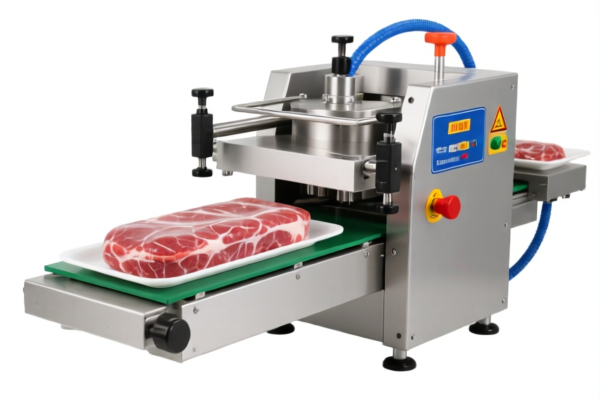
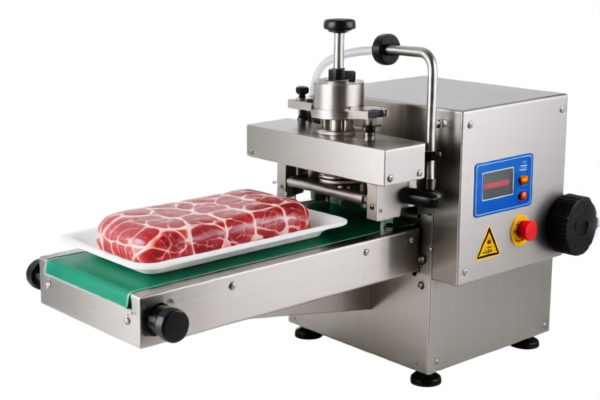
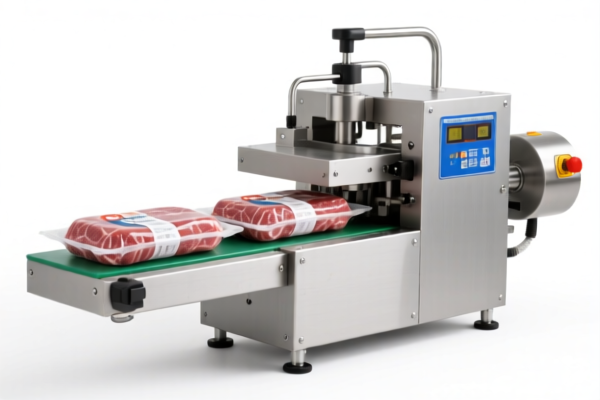
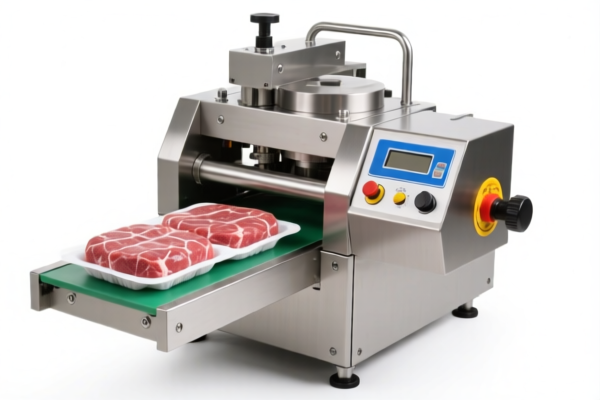
AI Analysis
🥩 Dough Pressing Meat Machine (Multi-Functional Food Processing Equipment)
🌐 HS Code Reference & Customs Clearance Guide | 2026 Latest Tariff Analysis | Professional Entry Strategy
📌 I. Product Definition & Classification: What Exactly is a "Dough Pressing Meat Machine"?
A "Dough Pressing Meat Machine" is typically a versatile industrial or commercial food processing device. The name suggests a dual functionality or ambiguity in its primary purpose: 1. "Dough Pressing": Implies mixing, kneading, or extruding capabilities suitable for bakery items (bread, noodles, dumplings). 2. "Meat Machine": Implies crushing, grinding, or mixing capabilities suitable for meat processing (sausages, patties, minced meat).
In international trade, classification depends on the primary function and design intent. Is it primarily a bakery mixer or a general-purpose industrial mixer? The ambiguity requires careful mapping to the provided HS Codes to avoid misclassification penalties.
⚠️ Key Distinction Point:
- If designed specifically for baking/pasta making (kneading dough) → Likely 8438.10 (Food/Beverage Prep Machinery for Bakery).
- If designed for general mechanical mixing/crushing of various materials (including meat) without specific bakery features → Likely 8479.82 (Other Machinery).
- If constructed largely of base metals (cutlery/manual type) → Likely 8210.00 (Manual food prep tools).
📦 II. HS Code Classification Details (Based on Provided Data)
| HS Code | Product Description | Applicability Scenario | Reason for Classification (Per Data) |
|---|---|---|---|
8438.10.00.10 |
Bakery Machinery for Dough/Bread Processing | Industrial bread, noodle, or dumpling makers | "Scope belongs to food processing, logically consistent with bakery machinery. No material or form conflict." |
84438.10.00.90 |
Pasta/Noodle Processing Machinery | Machines specifically for flour-based products | "Equipment belongs to pasta processing machinery, conforms to the definition of flour product manufacturing machinery. No material conflict." |
8479.82.00.80 |
Other Mixing/Kneading/Crushing Machinery | General industrial mixers capable of meat/dough | "The term 'Press' in the name extends to 'Crushing' function, fitting the 'Other' category under mixing/kneading/crushing machines." |
8479.82.00.40 |
Other Machinery for Mechanical Processing | General-purpose mechanical mixers | "Belongs to mechanical processing machinery, fits the functional scope of mixing, kneading, or stirring. No material conflict." |
8210.00.00.00 |
Manual/Manual-Assist Food Prep Tools (Base Metal) | Hand-cranked meat tenderizers or small pressers | "Belongs to food preparation machinery, fits the use characteristic for food/drink prep. Inferentially contains base metal components." |
🔍 Critical Note:
- The machine's primary function dictates the HS Code.
- If it is a large, motorized industrial unit for bakery use,8438.10is the most accurate and cost-effective choice.
- If it is a general-purpose mixer used for meat but not specialized for it,8479.82may apply.
- If it is a simple, hand-held, or manually operated press made of metal,8210.00applies.
💰 III. 2026 Latest Tariff Rate Breakdown (Including Additional Taxes & Policy Add-ons)
✅ Applicable Country: United States (US)
✅ Origin: China (CN)
✅ Effective Time: 2025/2026 (Current Trade Environment)
🎯 1. 8438.10.00.10 & 8438.10.00.90 —— Bakery & Pasta Machinery
(Best for Dough/Bread/Noodle Focused Machines)
| Item | Details |
|---|---|
| Base Tariff | 0.0% (Ad Valorem) |
| Section 301 (Add-on) | +7.5% |
| Section 122 (Add-on) | +10.0% (Specific policy add-on) |
| Total Tax Rate | 17.5% |
| Tax Calculation | CIF Value × 17.5% |
| De Minimis Eligibility | ❌ Not Eligible (High risk of seizure if undervalued) |
| Legal Basis Path | Base: 8438.10 → 301: +7.5% → 122: +10% |
📌 Interpretation:
- This is the lowest tax bracket among the provided options.
- Suitable for machines explicitly designed for bakery or pasta production.
- Strategy: Emphasize "Bakery" or "Pasta" functionality in documentation to justify this lower rate.
🎯 2. 8479.82.00.80 & 8479.82.00.40 —— General Mechanical Mixers/Crushers
(For Meat Processing or General Purpose Mixers)
| Item | Details |
|---|---|
| Base Tariff | 0.0% (Ad Valorem) |
| Section 301 (Add-on) | +25.0% |
| Section 122 (Add-on) | +10.0% |
| Total Tax Rate | 35.0% |
| Tax Calculation | CIF Value × 35.0% |
| De Minimis Eligibility | ❌ Not Eligible |
| Legal Basis Path | Base: 8479.82 → 301: +25% → 122: +10% |
📌 Interpretation:
- Higher tax rate due to broader "Other Machinery" classification.
- If the machine is primarily for meat crushing or not strictly bakery, it falls here.
- Cost Impact: 35% is significantly higher than 17.5%. Ensure the machine's description doesn't accidentally trigger this higher rate if it can be classified as bakery machinery.
🎯 3. 8210.00.00.00 —— Base Metal Food Preparation Tools
(For Manual or Simple Mechanical Presses)
| Item | Details |
|---|---|
| Base Tariff | 3.7% |
| Section 301 (Add-on) | +25.0% |
| Section 122 (Add-on) | +10.0% |
| Total Tax Rate | 38.7% |
| Tax Calculation | CIF Value × 38.7% |
| De Minimis Eligibility | ❌ Not Eligible |
| Legal Basis Path | Base: 8210 → 301: +25% → 122: +10% |
📌 Interpretation:
- Highest Tax Rate among the options.
- Applies only if the machine is considered a "tool" made of base metal (e.g., manual meat tenderizer, simple hand press).
- Avoid: Do not classify a motorized industrial machine as this unless it is explicitly a manual tool.
🛠️ IV. Customs Clearance Practical Advice (Pitfall Avoidance Guide)
✅ 1. Documentation Checklist (Essential for Clearance)
| Document | Required? | Notes |
|---|---|---|
| ✅ Product Specification Sheet | ✔️ | Must detail: Function (Mixing/Crushing/Pressing), Power, Capacity, Material (Stainless Steel vs. Base Metal). |
| ✅ Product Photos | ✔️ | Clear images of the machine, especially control panels and feeding chutes. |
| ✅ Commercial Invoice | ✔️ | Must specify: "Food Processing Machinery - Dough Mixer" or "Meat Crushing Machine" to match HS Code intent. |
| ✅ Origin Certificate | ✔️ | If applicable for any potential future exemptions, though currently high tariffs apply. |
| ✅ Function Declaration | ✔️ | Explicitly state if the machine is for bakery/pasta (to qualify for 17.5%) or general/meat (35%). |
✅ 2. Classification Strategy (Key Tips)
🔥 "Function Determines Code, Code Determines Cost!"
| Scenario | Recommended HS Code | Tax Rate | Reason |
|---|---|---|---|
| Industrial Bread/Noodle Machine | 8438.10.00.10 / .90 |
17.5% | Primary use is bakery/pasta. Low tax. |
| General Meat Grinder/Mixer | 8479.82.00.80 / .40 |
35.0% | Primary use is meat/general mixing. Higher tax. |
| Manual Metal Press | 8210.00.00.00 |
38.7% | Simple, non-motorized or basic metal tool. Highest tax. |
📌 Warning:
- Do NOT mislabel a8479.82machine as8438.10if it lacks bakery-specific features (e.g., dough hook, extruder for pasta). Customs may inspect and penalize.
- Conversely, do not classify a complex bakery machine as8210(manual tool) to save on base tariff, as the Section 301 add-on makes8438much cheaper overall.
✅ 3. Special Cases
| Case | Handling Advice |
|---|---|
| Dual-Function Machine (Bakery + Meat) | Classify based on primary intended use. If marketed to bakeries, use 8438.10. If sold to butchers, use 8479.82. |
| Component Import | If importing only parts, ensure they are not classified as "complete machines." Use appropriate parts HS Codes. |
| Material Composition | If the machine is heavily constructed of base metal and lacks advanced electronics, customs might lean towards 8210. Ensure electronic components are clearly stated to support 8438 or 8479. |
🌍 V. Global Market Comparison (2026 Overview)
| Region | Recommended HS Code | Est. Tariff (China Origin) | Notes |
|---|---|---|---|
| 🇺🇸 USA | 8438.10 |
17.5% | Best for bakery. 8479.82 is 35%. |
| 🇨🇳 China | 8438.10 |
~10-13% | Standard import duty. |
| 🇪🇺 EU | 8438.10 |
~0-5% | No Section 301/122 equivalent. Lower overall cost. |
| 🇬🇧 UK | 8438.10 |
~0-5% | Post-Brexit tariffs apply, but generally lower than US add-ons. |
📌 Conclusion:
- The USA market has the highest effective tariff burden due to Section 301 and 122 add-ons.
- Classifying as Bakery Machinery (8438.10) is the most cost-effective strategy if the machine's design supports it.
- Avoid8210.00.00.00unless it is a simple manual tool, as the 38.7% rate is the most expensive.
📌 VI. Common Mistakes & Pitfalls (Lessons Learned)
❌ Mistake 1: Classifying a motorized industrial mixer as 8210 (Manual Tool)
👉 Result: Customs rejection or penalty for misclassification. Machines with motors/electronics belong to Chapter 84.
❌ Mistake 2: Claiming 8438.10 for a machine clearly used for meat processing (no bakery features)
👉 Result: High risk of audit, potential re-classification to 8479.82 (35%), plus back taxes and fines.
❌ Mistake 3: Ignoring Section 122 Tariffs
👉 Result: Unexpected 10% add-on on top of the 301 tariff. Always budget for Total Tax = Base + 301 + 122.
✅ Correct Approach:
"Industrial Food Mixing Machine for Dough and Meat Processing, Motorized, Stainless Steel, Model XYZ"
- If bakery-focused: HS 8438.10.00.10
- If general/meat-focused: HS 8479.82.00.80
🎯 VII. Conclusion: Smart Classification for Cost Efficiency
🎯 Key Takeaway:
🔹 "Bakery Focus = 17.5% Tax"
🔹 "General/Meat Focus = 35.0% Tax"
🔹 "Manual/Base Metal = 38.7% Tax"
📌 Action Plan:
1. Define Primary Use: Is it for bread/pasta or meat/general mixing?
2. Match Function: Select 8438.10 for bakery, 8479.82 for general/meat.
3. Document Clearly: Ensure invoices and specs reflect the chosen function.
4. Budget for 122: Remember the extra 10% on all these codes in the US market.
📣 Immediate Action:
📞 Consult a Customs Broker: Provide machine specs for a Pre-Ruling to confirm the correct HS Code.
🚀 Optimize for 17.5%: If possible, design/marketing emphasize bakery/pasta capabilities to utilize the lower tax bracket.
✨ Professional Clearance Starts with Precise Classification!
💼 Every percentage point in tax rate impacts your bottom line!
Customer Reviews
About HS Code Classification
The Harmonized System (HS) is an internationally standardized nomenclature developed by the World Customs Organization (WCO) to classify traded products. Over 200 countries use the HS system as the basis for customs tariffs, trade statistics, and import/export regulations.
Each HS code follows a hierarchical structure:
- Chapter (2 digits) — Broad category of goods (e.g., Chapter 84: Machinery and Mechanical Appliances)
- Heading (4 digits) — More specific grouping within the chapter
- Subheading (6 digits) — Internationally standardized breakdown, used by all WCO member countries
- National subdivisions (8-10 digits) — Country-specific extensions for further classification, such as US HTSUS 10-digit codes
Correct HS code classification is essential for smooth customs clearance, accurate duty payment, and compliance with trade regulations. Misclassification can lead to customs delays, overpayment of duties, or penalties.
When importing from CN to US, the applicable tariff rates may include:
- Most-Favored-Nation (MFN) rate — The standard duty rate applied to WTO members
- General rate — Applied to countries without trade agreements
- Trade remedy duties — Additional tariffs such as Section 301 (anti-dumping), Section 232 (national security), or countervailing duties
The information provided on this page is for reference purposes only. For official classification, please consult with your local customs authority or a licensed customs broker.