Douglas Fir Beam
CN → US| HS Code | Tariff Rate | Origin | Destination | Doc |
|---|---|---|---|---|
| 4403250140 | 35.0% | CN | US | Official Doc |
| 4403260140 | 35.0% | CN | US | Official Doc |
| 4407190055 | 35.0% | CN | US | Official Doc |
| 4407190056 | 35.0% | CN | US | Official Doc |
| 4401110000 | 35.0% | CN | US | Official Doc |
Product Images
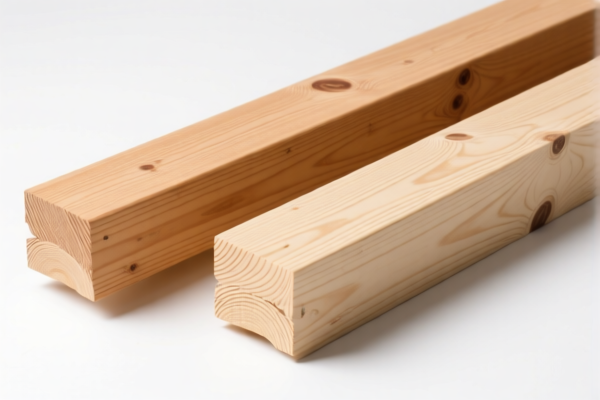
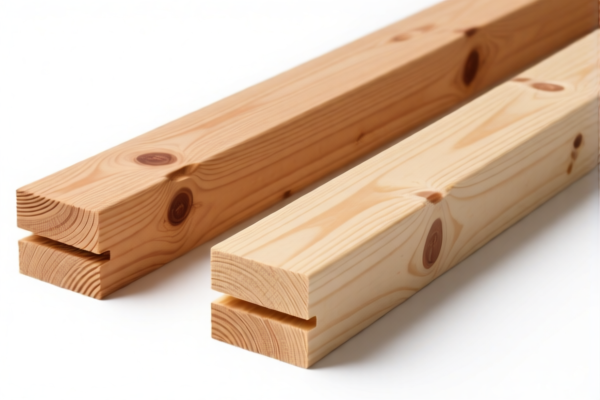
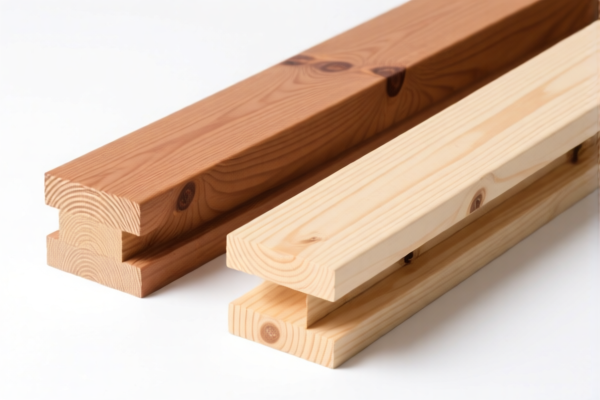
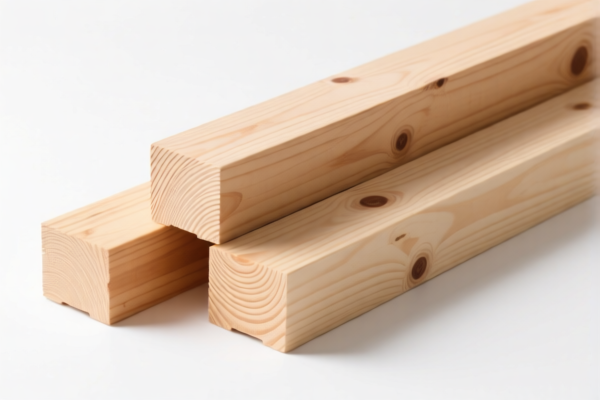
AI Analysis
🌲 Douglas Fir Beam (Lumber & Raw Logs)
🌐 HS Code Reference & Customs Clearance Guide | 2026 Latest Tariff Analysis | Professional Import Strategy for US Market
📌 I. Product Definition: What is "Douglas Fir"?
Douglas Fir is a premium softwood species primarily harvested in North America, widely used in construction, furniture making, and industrial applications. In international trade, it is classified based on its processing state:
- Raw Logs (Sawnwood in the rough): Unprocessed tree trunks, debarked or debarked, suitable for further milling.
- Sawn Wood (Planks, Beams, Timbers): Wood that has been longitudinally sawn or chipped, retaining its cross-section shape but processed from raw logs.
⚠️ Key Distinction:
- If the wood is in its natural, unprocessed form (even if debarked) → Classified under Chapter 44, Heading 4403 (Wood in the rough).
- If the wood has been sawn, planed, or shaped longitudinally → Classified under Chapter 44, Heading 4407 (Wood sawn or chipped lengthwise).
- If used strictly as fuel → Classified under 4401.11.00.00.
📦 II. HS Code Classification Details (2026 Latest Tariff Authoritative Comparison)
Based on the provided data, here are the specific classifications for Douglas Fir:
| HS Code | Product Description | Processing State | Application Scenario |
|---|---|---|---|
4403.25.01.40 |
Douglas Fir Logs | Raw Logs | Debarked/undebarked logs, primary harvest state. |
4403.26.01.40 |
Douglas Fir Logs | Raw Logs & Lumber | General classification for logs and primary wood forms. |
4407.19.00.55 |
Douglas Fir Sawn Wood | Longitudinally Sliced/Chipped | Primary form after initial milling (boards, planks). |
4407.19.00.56 |
Douglas Fir Sawn Wood | Unprocessed Longitudinal Saws | Sawn/peeled wood without further finishing (planing/veneer). |
4401.11.00.00 |
Fuel Wood | Coniferous Timber | Logs/branches intended for burning as fuel. |
🔍 Critical Note:
- "Beam" usually implies sawn wood (Heading 4407) if it has been cut to dimensions. If you import raw tree trunks intended to be milled into beams later, it falls under Heading 4403.
- Species Identification: Must explicitly state "Douglas Fir" (Pseudotsuga menziesii) in documentation to avoid misclassification.
- Coniferous vs. Non-Coniferous: Douglas Fir is a conifer (softwood). Misclassifying as hardwood leads to severe penalties.
💰 III. 2026 Latest Tariff Rate Details (Including Surtaxes & Policy Add-ons)
✅ Applicable Country: United States (US)
✅ Origin: China (CN) [Note: Data provided assumes US import from China context based on tax details]
✅ Effective Date: 2025/2026 (Current Policy)
🎯 1. 4403.25.01.40 & 4403.26.01.40 —— Douglas Fir Logs (Raw)
| Item | Detail |
|---|---|
| Base Tariff | 0.0% (ad valorem) |
| Section 301 Surcharge | +25.0% (USITC Footnote related to Chinese goods) |
| Section 122 Tariff | +10.0% (Specific provision for certain Chinese imports) |
| Total Tariff Rate | 35.0% |
| Tax Calculation | CIF Value × 35% |
| De Minimis Exemption | ❌ Not Applicable (High tariff threshold) |
| Legal Basis Path | Section 301 + Section 122 → 4403.25/26 |
📌 Explanation:
- Base 0%: Standard MFN (Most Favored Nation) rate for wood logs is often low or zero.
- +25% Section 301: The primary US trade war tariff on Chinese goods.
- +10% Section 122: Additional levy under Section 232/122 authorities (often applied to strategic materials or specific Chinese imports).
- Total 35%: This is a very high effective duty for raw timber, impacting margin significantly.
🎯 2. 4407.19.00.55 & 4407.19.00.56 —— Douglas Fir Sawn Wood (Processed)
| Item | Detail |
|---|---|
| Base Tariff | 0.0% |
| Section 301 Surcharge | +25.0% |
| Section 122 Tariff | +10.0% |
| Total Tariff Rate | 35.0% |
| Tax Calculation | CIF Value × 35% |
| De Minimis Exemption | ❌ Not Applicable |
| Legal Basis Path | Section 301 + Section 122 → 4407.19 |
📌 Note:
- Even though the wood is processed (sawn), the tariff rate remains 35%.
- Value-added processing does not reduce the tariff burden for Chinese-origin Douglas Fir entering the US.
🎯 3. 4401.11.00.00 —— Douglas Fir for Fuel
| Item | Detail |
|---|---|
| Base Tariff | 0.0% |
| Section 301 Surcharge | +25.0% |
| Section 122 Tariff | +10.0% |
| Total Tariff Rate | 35.0% |
| Tax Calculation | CIF Value × 35% |
| Usage | Strictly for combustion/fuel. |
⚠️ Warning:
- Do not classify structural timber as "fuel" to avoid scrutiny. This is fraud if the wood is intended for construction.
🛠️ IV. Customs Clearance Practical Advice (Pitfall Avoidance Guide)
✅ 1. Required Documentation Checklist (Non-Negotiable)
| Document | Mandatory? | Description |
|---|---|---|
| ✅ Phytosanitary Certificate | ✔️ YES | Issued by the country of origin, proving wood is free from pests. Critical for 4403/4407. |
| ✅ Commercial Invoice | ✔️ | Must specify: "Douglas Fir", HS Code, Value, Origin. |
| ✅ Packing List | ✔️ | Detail dimensions, volume (board feet/cubic meters), and weight. |
| ✅ Bill of Lading (B/L) | ✔️ | Consistency with invoice and PL is vital. |
| ✅ ISF Filing (10+2) | ✔️ | For US imports, file 24 hours before loading. |
| ✅ Origin Declaration | ✔️ | Explicitly state "Made in China" to trigger correct 35% tariff calculation. |
✅ 2. Declaration Tips (Key Mantra)
🔥 "Species Specific, Process Clear, Phytosanitary Ready!"
| Scenario | Correct Declaration | Common Mistake |
|---|---|---|
| Raw Logs | 4403.25.01.40 - "Douglas Fir Logs, Unprocessed" |
Calling it "Lumber" → Wrong HS, Penalties. |
| Sawn Beams | 4407.19.00.56 - "Douglas Fir, Longitudinally Sawn" |
Calling it "Logs" → Under-valuation risk. |
| Fuel Wood | 4401.11.00.00 - "Douglas Fir, for Fuel" |
Misusing this for construction → Customs Fraud. |
✅ 3. Special Handling & Risk Management
| Issue | Solution |
|---|---|
| Pest Control | Ensure wood is heat-treated (HT) or fumigated. Provide ISO 15 value on ISPM 15 mark. |
| Moisture Content | High moisture can lead to rejection. Specify moisture content in invoice. |
| Tariff Engineering | No reduction possible for Chinese origin. Consider transshipment from non-China sources (e.g., Canada/USA origin) if applicable, but Country of Origin is key. |
| Valuation | Ensure CIF value includes freight and insurance. Under-invoicing leads to seizures. |
🌍 V. Global Market Clearance Comparison (2026)
| Country/Region | Recommended HS Code | Tariff (China Origin) | Certification | Note |
|---|---|---|---|---|
| 🇺🇸 USA | 4403.25.01.40 / 4407.19.00.56 |
35% (25% + 10%) | Phytosanitary + ISPM 15 | Highest tariff barrier for Chinese Douglas Fir. |
| 🇨🇳 China | 4403.25.01.40 |
0% - 5% (Import from US/Canada) | None required | China imports Douglas Fir; exports usually go to US/EU. |
| 🇪🇺 EU | 4403.25.01.40 |
~20% (Standard + Anti-dumping?) | Fumigation Certificate | EU has strict phytosanitary rules. |
| 🇯🇵 Japan | 4403.25.01.40 |
~20% | Fumigation Certificate | Strict wood pest checks. |
📌 Conclusion:
- The US market imposes a heavy 35% tariff on Chinese-origin Douglas Fir.
- Canadian or American Douglas Fir (if sourced there) may have 0% or low tariffs under USMCA, offering significant cost advantage.
- If you are importing from China, the 35% duty must be factored into your landed cost immediately.
📌 VI. Common Errors & Pitfalls (Lessons Learned)
❌ Error 1: Claiming "Douglas Fir" is a hardwood.
👉 Result: Wrong HS Code, fines, and potential seizure.
👉 Fix: Douglas Fir is a softwood (conifer). Use Chapter 44 codes starting with 4403/4407.
❌ Error 2: Forgetting the Phytosanitary Certificate.
👉 Result: Cargo held at port, destroyed, or re-exported.
👉 Fix: Ensure the shipper provides a valid ISPM 15 marked certificate before shipment.
❌ Error 3: Misdeclaring "Sawn Wood" as "Raw Logs" to avoid inspection.
👉 Result: High risk of detection via dimensions/descriptions. Customs will reclassify and apply penalties.
👉 Fix: Accurately describe the processing state.
🎯 VII. Conclusion: Strategic Sourcing for Douglas Fir
🎯 Key Takeaway:
🔹 Tariff Shock: Chinese Douglas Fir faces a 35% total tariff in the US.
🔹 Compliance is Key: Phytosanitary certificates are non-negotiable.
🔹 Sourcing Strategy: If cost is sensitive, consider sourcing Douglas Fir from North America (Canada/USA) where tariffs are significantly lower or zero.
📌 Pro Tip:
If your supplier is in China, verify if they can provide transshipment documentation from a non-target country (e.g., Malaysia) ONLY IF the processing changes the origin substantially. Otherwise, assume 35% duty.
🚀 Plan your budget accordingly: Include 35% duty + 10% buffer for potential delays/inspections.
✨ Professional Customs Clearance Starts with Accurate Classification!
💼 Protect Your Margin: Know Your HS Code, Pay Your Duties, Avoid the Penalties!
Customer Reviews
About HS Code Classification
The Harmonized System (HS) is an internationally standardized nomenclature developed by the World Customs Organization (WCO) to classify traded products. Over 200 countries use the HS system as the basis for customs tariffs, trade statistics, and import/export regulations.
Each HS code follows a hierarchical structure:
- Chapter (2 digits) — Broad category of goods (e.g., Chapter 84: Machinery and Mechanical Appliances)
- Heading (4 digits) — More specific grouping within the chapter
- Subheading (6 digits) — Internationally standardized breakdown, used by all WCO member countries
- National subdivisions (8-10 digits) — Country-specific extensions for further classification, such as US HTSUS 10-digit codes
Correct HS code classification is essential for smooth customs clearance, accurate duty payment, and compliance with trade regulations. Misclassification can lead to customs delays, overpayment of duties, or penalties.
When importing from CN to US, the applicable tariff rates may include:
- Most-Favored-Nation (MFN) rate — The standard duty rate applied to WTO members
- General rate — Applied to countries without trade agreements
- Trade remedy duties — Additional tariffs such as Section 301 (anti-dumping), Section 232 (national security), or countervailing duties
The information provided on this page is for reference purposes only. For official classification, please consult with your local customs authority or a licensed customs broker.