Douglas Fir Boards
CN → US| HS Code | Tariff Rate | Origin | Destination | Doc |
|---|---|---|---|---|
| 4403250140 | 35.0% | CN | US | Official Doc |
| 4403260140 | 35.0% | CN | US | Official Doc |
| 4407190055 | 35.0% | CN | US | Official Doc |
| 4407190056 | 35.0% | CN | US | Official Doc |
| 4401110000 | 35.0% | CN | US | Official Doc |
Product Images
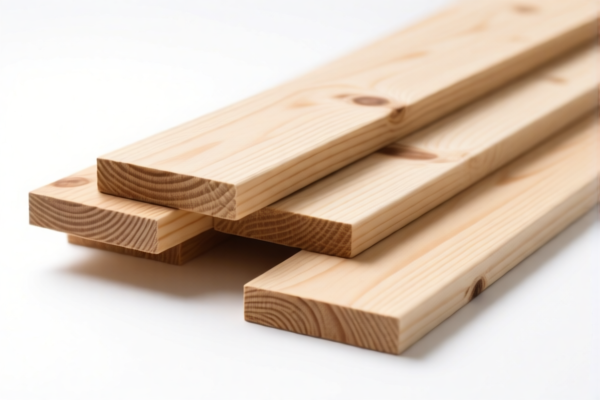
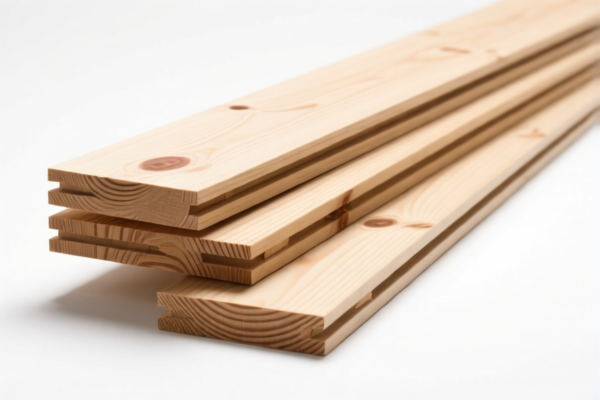
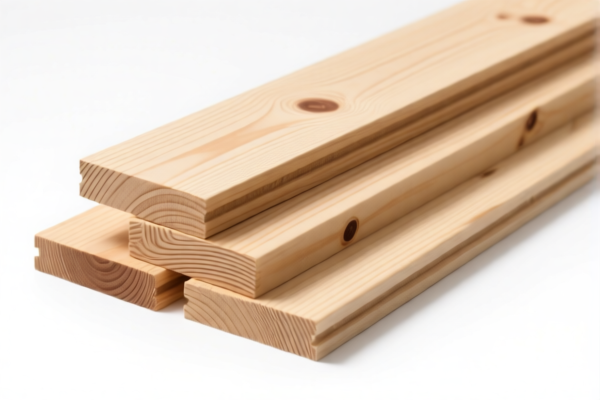
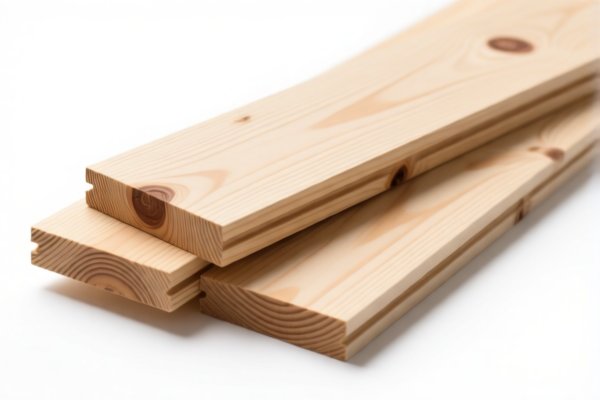
AI Analysis
🌲 Douglas Fir Boards (Softwood Sawn Wood)
🌐 HS Code Reference & Customs Clearance Guide | 2026 Latest Tariff Breakdown | Professional Entry Strategies for US Imports
📌 I. Product Definition & Classification: What Exactly is "Douglas Fir Boards"?
Douglas Fir (Pseudotsuga menziesii) is one of the most widely traded softwoods in international commerce, prized for its strength, durability, and aesthetic grain. In the context of US imports from China, it is critical to distinguish between raw logs, primary processed lumber, and fuel wood, as the HS Code determines the tariff structure.
The term "Boards" generally refers to sawn wood, falling under Chapter 44 (Wood and Articles of Wood). However, customs authorities scrutinize the physical state (round, sawn, planed) and end-use to assign the correct subheading.
⚠️ Key Distinction:
- If the wood is round/unprocessed → It is classified as Logs (4403.25or4403.26).
- If the wood is sawn/planed (planks, boards, beams) → It is classified as Sawn Wood (4407.19).
- If the wood is chipped/crushed for fuel → It is classified as Fuel Wood (4401.11).
📦 II. HS Code Classification Matrix (2026 Authorized List)
Based on the provided dataset, here are the specific HS Codes applicable to Douglas Fir products. Note that while "Boards" usually implies sawn wood, the data includes logs and fuel wood variants for comprehensive coverage.
| HS Code | Product Description | Form/State | Primary Usage |
|---|---|---|---|
4403.25.01.40 |
Douglas Fir Logs | Round Logs | Raw material for sawmills |
4403.26.01.40 |
Douglas Fir Logs | Round Logs & Timber | Industrial processing |
4407.19.00.55 |
Douglas Fir Sawn Wood | Vertical Sawn/Cut | Construction, framing, furniture |
4407.19.00.56 |
Douglas Fir Sawn Wood | Untreated Vertical Sliced/Peeling | Primary processing stage |
4401.11.00.00 |
Douglas Fir Fuel Wood | Raw/Chipped | Heating, biomass energy |
🔍 Critical Clarification:
- "Boards" typically fall under4407.19.00.55or4407.19.00.56(Sawn Wood).
- If you are importing raw timber trunks, use4403.25.01.40.
- Never misclassify sawn lumber as "fuel wood" (4401) to avoid scrutiny, nor logs as "sawn wood" if they are round.
💰 III. 2026 Tariff Rate Breakdown (China-Origin Imports to USA)
✅ Applicable Country: United States (US)
✅ Origin: China (CN)
✅ Effective Time: Current rates apply under Trade Act Section 301 & IEEPA provisions.
🎯 All Listed HS Codes Share Identical Tariff Structure
For all HS Codes listed in the <DATA> section (4403.25.01.40, 4403.26.01.40, 4407.19.00.55, 4407.19.00.56, 4401.11.00.00), the tax composition is uniform:
| Component | Rate | Legal Basis / Description |
|---|---|---|
| Base Duty | 0.0% | Standard MFN (Most Favored Nation) rate for these wood products is often 0%. |
| Section 301 Duty | +25.0% | Additional duty under US Trade Act Section 301 (Targeting Chinese imports). |
| Section 122 Duty | +10.0% | Additional duty under Section 122 of the Trade Act of 1974 (Presidential authority to adjust tariffs). |
| Total Effective Rate | 35.0% | Sum of all applicable taxes. |
📌 Explanation:
- "Base Tariff 0%": The foundational duty for wood products from China is minimal.
- "Additional Tariff 25%": This is the major penalty under Section 301 for Chinese-manufactured or Chinese-origin goods.
- "Section 122 Tariff 10%": An additional surcharge applied under specific trade authorities.
- Total 35%: This is a high-cost category. Importers must calculate CIF (Cost, Insurance, Freight) × 35% as pure duty cost.
- No De Minimis: These codes do not qualify for Section 321 de minimis ($800 exemption). Full formal entry is required.
🛠️ IV. Customs Clearance Practical Advice (Avoiding Pitfalls)
✅ 1. Documentation Checklist (Mandatory)
| Document | Requirement | Notes |
|---|---|---|
| Commercial Invoice | Must state "Douglas Fir" explicitly | Avoid vague terms like "Lumber" or "Timber" |
| Packing List | Detail dimensions, volume, and count | Crucial for verifying HS Code form (Logs vs. Sawn) |
| Fumigation Certificate | ISPM 15 Compliant | Required for all wood packaging and raw wood to prevent pests |
| Phytosanitary Certificate | Issued by Chinese Export Authority | Mandatory for plant products |
| Bill of Lading | Clean On-Board | Ensure no damage noted |
| Product Specification Sheet | Confirm moisture content & treatment | Untreated (4407.19.00.56) vs. Processed |
✅ 2. Declaration Strategy
🔥 "State the Form, State the Species, State the Treatment!"
| Scenario | Correct HS Code | Risk if Misclassified |
|---|---|---|
| Round Logs (Unprocessed) | 4403.25.01.40 or 4403.26.01.40 |
If declared as sawn wood → Rejection/Detention |
| Sawn Boards (Planks/Beams) | 4407.19.00.55 or 4407.19.00.56 |
If declared as logs → Delays for physical inspection |
| Chipboard/Biomass | 4401.11.00.00 |
Only if <20cm or chipped; otherwise misclassification |
⚠️ Critical Tip:
- If importing Treated wood (e.g., pressure-treated for outdoor use), ensure the invoice specifies "Treated." While the HS Code remains4407.19, treatment status can affect inspection priority.
- Untreated wood (4407.19.00.56) requires stricter phytosanitary checks.
✅ 3. Cost Optimization Tips
- Volume Calculation: Duty is ad valorem (based on value), not weight. Accurate valuation on the invoice is key.
- Supply Chain Diversification: If possible, consider sourcing from North America (Canada/USA) or Europe. Wood products from Canada often have 0% Section 301 duty, significantly reducing the 35% burden.
- Advance Ruling: Apply for a Customs Ruling from CBP if the form of wood is ambiguous (e.g., partially processed). This provides legal certainty.
🌍 V. Global Market Comparison (Wood Products)
| Destination | HS Code (Sawn Wood) | Duty Rate (China Origin) | Key Requirement |
|---|---|---|---|
| 🇺🇸 USA | 4407.19.00.55 |
35.0% | Phytosanitary + Fumigation |
| 🇨🇳 China (Importing) | 4407.19.00.55 |
~10-15% | Standard Customs |
| 🇪🇺 EU | 4407.19.00 |
0% - 5% | FLEGT License / EUTR Compliance |
| 🇬🇧 UK | 4407.19.00 |
0% - 5% | UK Timber Regulation |
📌 Conclusion:
- The US market is the most expensive for Chinese Douglas Fir due to the 35% combined tariff.
- Non-US markets (EU/UK/Asia) often have lower or zero duties, making them more competitive if logistics allow.
📌 VI. Common Mistakes & Pitfalls
❌ Mistake 1: Using "Wood Boards" without specifying "Douglas Fir."
👉 Consequence: Customs may classify under a higher-duty general wood code, or demand additional testing to identify species.
❌ Mistake 2: Ignoring ISPM 15 Fumigation.
👉 Consequence: Cargo held at port, re-exported, or destroyed. Fines apply.
❌ Mistake 3: Confusing "Logs" with "Sawn Wood."
👉 Consequence: If you ship logs but declare 4407.19.00.55 (Sawn), CBP will detain shipment for misdeclaration. Physical inspection will reveal round wood.
✅ Correct Declaration Example:
"Douglas Fir Sawn Lumber, Untreated, Vertical Sliced, for Construction Use, Model DF-2026, Phytosanitary Cert #XXXXX, Fumigated per ISPM 15"
🎯 VII. Conclusion: Smart Sourcing for Wood Products
🎯 Remember:
🔹 "Species Matters, Form Dictates Code, Tariff is 35%."
🔹 "Fumigate or Fail: ISPM 15 is non-negotiable."
🔹 "Consider Non-US Origins to Save 35% Duty."
📌 Pro Tip:
If your Douglas Fir is processed in Canada (e.g., sawn in BC, USA border), you may qualify for NAFTA/USMCA Zero Duty status. Investigate substantial transformation rules.
📣 Immediate Action:
📞 Engage a licensed US Customs Broker.
📄 Request ISPM 15 Fumigation Certificate from supplier.
💡 Calculate landed cost with 35% duty included in your pricing model.
✨ Precision in Classification = Profit in Clearance!
💼 Your Wood Supply Chain, Optimized for 2026!
Customer Reviews
About HS Code Classification
The Harmonized System (HS) is an internationally standardized nomenclature developed by the World Customs Organization (WCO) to classify traded products. Over 200 countries use the HS system as the basis for customs tariffs, trade statistics, and import/export regulations.
Each HS code follows a hierarchical structure:
- Chapter (2 digits) — Broad category of goods (e.g., Chapter 84: Machinery and Mechanical Appliances)
- Heading (4 digits) — More specific grouping within the chapter
- Subheading (6 digits) — Internationally standardized breakdown, used by all WCO member countries
- National subdivisions (8-10 digits) — Country-specific extensions for further classification, such as US HTSUS 10-digit codes
Correct HS code classification is essential for smooth customs clearance, accurate duty payment, and compliance with trade regulations. Misclassification can lead to customs delays, overpayment of duties, or penalties.
When importing from CN to US, the applicable tariff rates may include:
- Most-Favored-Nation (MFN) rate — The standard duty rate applied to WTO members
- General rate — Applied to countries without trade agreements
- Trade remedy duties — Additional tariffs such as Section 301 (anti-dumping), Section 232 (national security), or countervailing duties
The information provided on this page is for reference purposes only. For official classification, please consult with your local customs authority or a licensed customs broker.