Douglas Fir Lumber
CN → US| HS Code | Tariff Rate | Origin | Destination | Doc |
|---|---|---|---|---|
| 4401110000 | 35.0% | CN | US | Official Doc |
| 4407190054 | 35.0% | CN | US | Official Doc |
| 4407190055 | 35.0% | CN | US | Official Doc |
| 4403250140 | 35.0% | CN | US | Official Doc |
| 4403260140 | 35.0% | CN | US | Official Doc |
Product Images
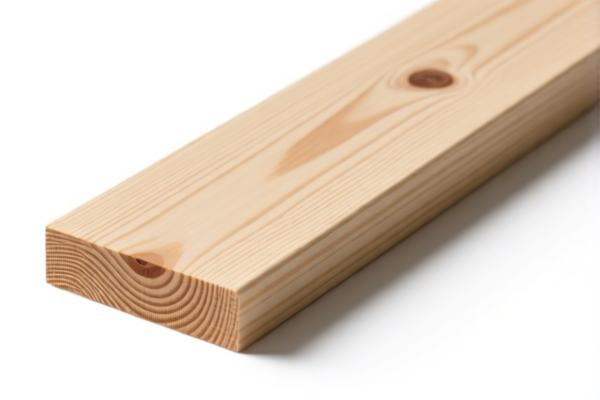
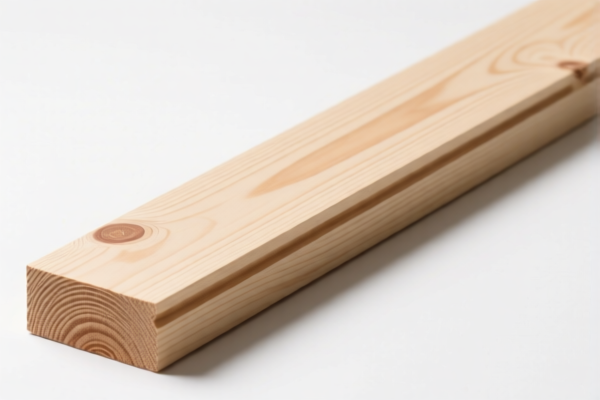


AI Analysis
🌲 Douglas Fir Lumber (道格拉斯冷杉木材)
🌐 HS Code Reference & Customs Clearance Guide | 2026 Latest Tariff Analysis | Strategic Import Strategy for US Customs
📌 Part 1: Product Definition & Classification: Do You Really Know "Douglas Fir"?
Douglas Fir (Pseudotsuga menziesii), commonly known in the timber trade as "Western Red Cedar" confusion target or "SPF" substitute, is a premium softwood native to North America. In international trade, it is primarily classified under Chapter 44 (Wood and articles of wood).
The classification depends strictly on the processing state of the wood:
- Raw Logs (Roundwood): Unprocessed timber, bark intact, minimal shaping → Classified under Heading 4403 or 4401.
- Sawn Wood (Lumber): Planed, grooved, or roughly squared → Classified under Heading 4407.
⚠️ Critical Distinction Point:
- If the wood is in raw, log form with minimal processing → It is treated as "Fuel Wood" or "Raw Timber" (Heading 4403/4401).
- If the wood is sawn longitudinally (even if rough/un-planed) → It is treated as "Sawn Wood" (Heading 4407).
- Douglas Fir is highly correlated with "Huaqi Song" (Chinese market term for Douglas Fir). Customs often scrutinize these codes due to the specific trade tensions associated with North American softwoods.
📦 Part 2: HS Code Classification Details (2026 Latest Tariff Concordance)
Based on the provided data, here are the precise HS Codes for Douglas Fir in different forms. Note that all listed codes carry a total tax rate of 35.0% due to punitive tariffs.
| HS Code | Product Description | Processing State | Key Classification Logic |
|---|---|---|---|
4401.11.00.00 |
Fuel Wood / Raw Timber | Round logs, minimal processing | Recognized as coniferous species; matched to "Fuel Wood" classification due to raw state. |
4403.25.01.40 |
Treated/Untreated Softwood Logs | Round logs, specifically Douglas Fir | Recognized as coniferous; specifically mapped to Douglas Fir logs category. |
4403.26.01.40 |
Specific Douglas Fir Logs | Round logs, high correlation | Direct match for Douglas Fir logs; "Huaqi Song" association confirmed. |
4407.19.00.54 |
Roughly Sawn Wood | Sawn, not planed/dressed | Matches "Roughly Sawn" (未经粗锯处理) characteristic of basic lumber. |
4407.19.00.55 |
Longitudinally Sliced Wood | Sliced or sawn longitudinally | Matches "Longitudinal sawing/slicing" (纵向锯切或切片) feature. |
🔍 Key Insight:
- Regardless of whether it is Log (4401/4403) or Sawn (4407), Douglas Fir from this source faces the same 35% total tariff.
- The distinction between4407.19.00.54and4407.19.00.55is subtle: one is for roughly sawn (unplaned), the other for specific longitudinal slicing. Ensure your physical product matches the description exactly.
💰 Part 3: 2026 Latest Tariff Rate Breakdown (Including Surtaxes & Policy Add-ons)
✅ Applicable Country: United States (US)
✅ Origin: China (CN) (Note: The tax details provided reflect US duties on Chinese-origin goods, likely due to re-export or specific trade rules)
✅ Effective Date: Current (as per 2026 context)
🎯 Common Tax Structure for All Listed Douglas Fir Codes
| Item | Details |
|---|---|
| Basic Tariff Rate | 0.0% (Ad Valorem - Base rate for most wood products) |
| Additional Surtax (Section 301) | +25.0% (Trade War Surtax on Chinese goods) |
| Section 122 Tariff | +10.0% (Specific policy add-on) |
| Total Tariff Rate | 35.0% |
| Tax Calculation Basis | CIF Value (Cost + Insurance + Freight) × 35% |
| De Minimis Exemption | ❌ Not Applicable (High-value industrial commodities are excluded) |
📌 Legal Basis Explanation:
- 0% Basic: Wood products often have low base MFN rates.
- 25% Surtax: Applied under USITC Footnote 9903.x for Section 301 investigations targeting Chinese imports.
- 10% Section 122: A specific administrative tariff add-on applied to certain wood categories.
- Combined Effect: The 35% rate is punitive. It significantly impacts the landed cost. Do not underestimate this in your FOB pricing strategy.
🛠️ Part 4: Practical Customs Clearance Advice (Avoiding Pitfalls)
✅ 1. Documentation Checklist (Mandatory)
| Document | Requirement | Purpose |
|---|---|---|
| Commercial Invoice | Must clearly state "Douglas Fir" and HS Code. Avoid generic terms like "Timber" or "Lumber". | Prevents misclassification. |
| Packing List | Detail wood dimensions, moisture content, and treatment status (e.g., HTS-treated). | Verifies physical consistency. |
| Phytosanitary Certificate | Mandatory for all wood imports. Must confirm no pests/diseases. | USDA APHIS requirement. Failure = Return/Destruction. |
| Fumigation Certificate | If wood is not HTS (Heat Treated) certified, fumigation proof is needed. | Compliance with ISPM 15 standards. |
| Bill of Lading | Clear description of goods; match invoice exactly. | Customs verification. |
✅ 2. Classification Strategy (Key Mantra)
🔥 “Form Dictates Code, Moisture Matters, Treatment is Key!”
| Scenario | Correct HS Code | Risk if Misclassified |
|---|---|---|
| Raw Logs (Round, uncut) | 4401.11.00.00 or 4403.25.01.40 |
If declared as sawn, may be questioned for accuracy. |
| Rough Lumber (Sawn, not planed) | 4407.19.00.54 |
Must prove "roughly sawn" status. |
| Planed/Dressed Lumber | NOT LISTED IN DATA | Note: The provided data only lists rough/sliced codes. If planed, consult customs for updated 4407 subheadings. |
| Mixed Shipments (Logs + Lumber) | Split Declaration | Do not mix. Separate lines on invoice. |
⚠️ Warning:
- If the wood is treated (e.g., for construction), ensure the treatment certificate matches the HS code’s requirement for "untreated" vs. "treated".
- Moisture Content: High moisture may trigger additional scrutiny for weight/volume disputes.
✅ 3. Special Handling for Douglas Fir
| Issue | Advice |
|---|---|
| "Huaqi Song" Confusion | Explicitly state "Douglas Fir (Pseudotsuga menziesii)" on invoices. Avoid "Fir" alone, which can mean Norway Spruce or other species. |
| Moisture & Weight | US Customs may inspect for moisture content to verify volume/weight claims. Provide lab reports if requested. |
| Section 301 Exemptions | Currently, no exemptions are listed for these specific HS codes. Assume 35% cost is fixed. |
| USDA Inspection | Douglas Fir is prone to spider beetles and borers. Ensure prior fumigation/heat treatment to avoid USDA rejection. |
🌍 Part 5: Global Market Comparison (2026)
| Market | HS Code (Typical) | Tariff (China Origin) | Key Requirement | Note |
|---|---|---|---|---|
| 🇺🇸 USA | 4407.19.00.54 / 4401.11.00.00 |
35% (Total) | Phytosanitary + Section 301 | High duty, strict USDA checks. |
| 🇨🇳 China | 4407.19.00.00 |
~0-10% | Phytosanitary | Lower tariffs, but import quotas may apply. |
| 🇪🇺 EU | 4407.10.00 |
~0% (if EUTR compliant) | EUTR (Due Diligence) | No Section 301, but strict legality proof. |
| 🇯🇵 Japan | 4407.10.00 |
~0% | ISPM 15 | Low duty, high quality standards. |
📌 Conclusion:
- USA is the most costly market for Douglas Fir due to the 35% combined tariff.
- EU and Japan offer better tariff prospects, but regulatory compliance (EUTR/ISPM 15) is stricter.
- If sourcing for the US, factor the 35% into your FOB price to remain competitive.
📌 Part 6: Common Errors & Pitfalls (Blood-Learning Lessons)
❌ Error 1: Declaring "Douglas Fir" as "Softwood Lumber" without specifying species.
👉 Consequence: Customs may assign a higher-risk code or demand additional proof of species → Delays.
❌ Error 2: Mixing Logs and Sawn Wood in one HS line.
👉 Consequence: Rejection by CBP (Customs and Border Protection). Must split into 4401 and 4407 lines.
❌ Error 3: Ignoring Phytosanitary Certificates.
👉 Consequence: Immediate return or destruction of goods by USDA APHIS. No appeal.
❌ Error 4: Assuming "122 Tariff" is optional.
👉 Consequence: Underpayment → Penalties + Interest. The 10% is mandatory for these codes.
✅ Correct Practice:
"Douglas Fir, Roughly Sawn, Untreated, HS Code: 4407.19.00.54, Origin: China, Phytosanitary Cert #: XXXXX"
🎯 Part 7: Conclusion: Professional Declaration, Cost Control, Compliance!
🎯 Remember These Mantras:
🔹 "Logs go to 4401/4403, Sawn to 4407. Check the cut!"
🔹 "35% is the price of entry. Plan your margin accordingly!"
🔹 "No Phytosanitary Cert = No Entry. Period."
📌 Pro Tip:
If your Douglas Fir is treated for construction use, ensure the treatment label is visible and matches the declaration. If you are re-exporting from a third country, ensure the Certificate of Origin does not claim China origin if not applicable, to avoid Section 301. However, per the provided data, the 35% rate is fixed for the listed codes.
📣 Immediate Action:
📞 Contact a licensed customs broker for a Pre-Ruling (Advance Ruling) if your product form is borderline (e.g., "semi-planed").
🚀 Secure your Phytosanitary Certificate BEFORE shipment.
💼 Your profit margin depends on accurate HS coding and tariff compliance!
✨ Professional Customs Clearance Starts with Precise Classification!
💼 Every dollar of tax saved is pure profit!
Customer Reviews
About HS Code Classification
The Harmonized System (HS) is an internationally standardized nomenclature developed by the World Customs Organization (WCO) to classify traded products. Over 200 countries use the HS system as the basis for customs tariffs, trade statistics, and import/export regulations.
Each HS code follows a hierarchical structure:
- Chapter (2 digits) — Broad category of goods (e.g., Chapter 84: Machinery and Mechanical Appliances)
- Heading (4 digits) — More specific grouping within the chapter
- Subheading (6 digits) — Internationally standardized breakdown, used by all WCO member countries
- National subdivisions (8-10 digits) — Country-specific extensions for further classification, such as US HTSUS 10-digit codes
Correct HS code classification is essential for smooth customs clearance, accurate duty payment, and compliance with trade regulations. Misclassification can lead to customs delays, overpayment of duties, or penalties.
When importing from CN to US, the applicable tariff rates may include:
- Most-Favored-Nation (MFN) rate — The standard duty rate applied to WTO members
- General rate — Applied to countries without trade agreements
- Trade remedy duties — Additional tariffs such as Section 301 (anti-dumping), Section 232 (national security), or countervailing duties
The information provided on this page is for reference purposes only. For official classification, please consult with your local customs authority or a licensed customs broker.