Down Pillow
CN → US| HS Code | Tariff Rate | Origin | Destination | Doc |
|---|---|---|---|---|
| 9404902060 | 23.5% | CN | US | Official Doc |
| 6701006000 | 39.7% | CN | US | Official Doc |
| 3926909989 | 22.8% | CN | US | Official Doc |
| 6701003000 | 39.7% | CN | US | Official Doc |
| 9404902060 | 23.5% | CN | US | Official Doc |
Product Images
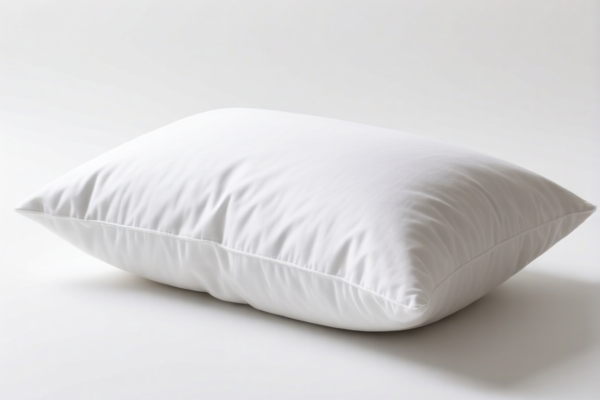
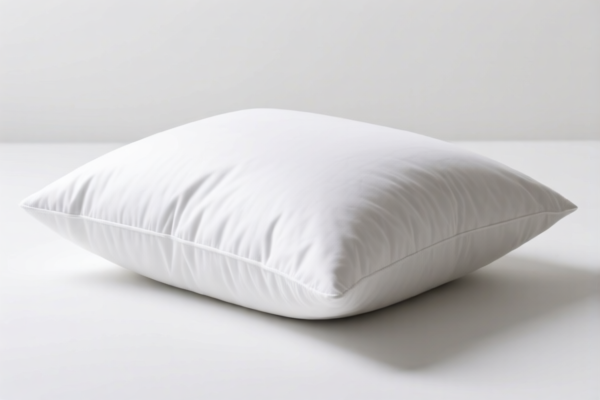
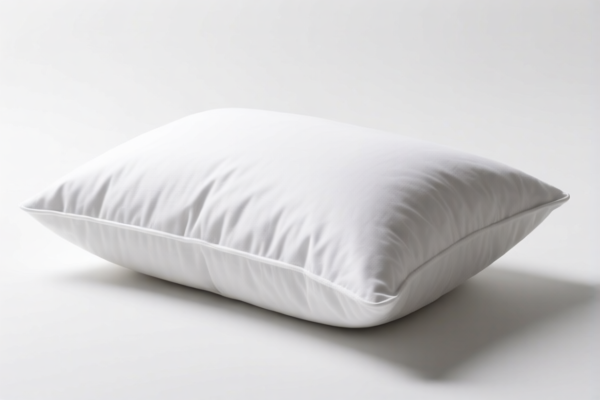
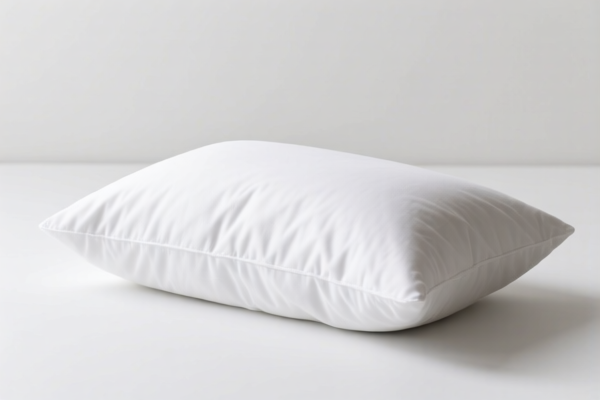
AI Analysis
🪶 Down Pillow: HS Code Classification & Clearance Strategy | 2026 Tax Analysis
🌐 HS Code Reference & Clearance Guide | 2026 Latest Tariff Analysis | Professional Customs Strategy
📌 One, Product Definition & Classification: Do You Really Understand "Down Pillows"?
A down pillow is a bedding item primarily filled with waterfowl feathers and down (from ducks or geese). In international trade, the classification hinges on two key factors: 1. Form: Is it a finished bedding article (pillow) or raw material (feathers/down)? 2. Material Composition: Is it purely natural down, or does it contain plastic/synthetic components?
⚠️ Key Distinction:
- If the product is a finished pillow with filling → Generally classified under Heading 9404 (Bedding). - If the product is raw feathers/down or processed feathers not yet in a finished article → Generally classified under Heading 6701 (Feathers, Down, etc.). - If the pillow structure includes plastic/synthetic components (e.g., plastic casing, synthetic fiber mix) → May fall under Heading 3926 (Other articles of plastics) or remain in 9404/6701 depending on the "essential character."
📦 Two. HS Code Classification Details (2026 Latest Tariff Authority Comparison)
| HS Code | Product Description | Application Scenario | Key Classification Logic |
|---|---|---|---|
9404.90.20.60 |
Bedding articles (including sleeping bags) filled with other materials (not foam) | Finished down pillows, feather pillows | ✅ Finished Pillow Form. Down is treated as "other filling material." Logical fit for bedding articles. |
6701.00.60.00 |
Feathers and down, etc.; articles of feathers or down; artificial flowers; flowers, fruit, or foliage made of artificial materials | Raw down, processed feathers, or feather products not classified as finished bedding | ✅ Material Focus. Covers feathers/down and their related products. If the item is seen primarily as a "feather product" rather than a "bedding article," this may apply. |
3926.90.99.89 |
Other articles of plastics and articles of other materials of headings 3901 to 3914 | Pillows with plastic/synthetic structural components, unlisted plastic articles | ✅ Plastic/Synthetic Content. If the pillow's structure or casing is predominantly plastic or synthetic fiber, it may be classified here as an "unlisted other article." |
6701.00.30.00 |
Feathers and down, etc.; articles of feathers or down | Processed feathers/down used as filling, classified under feather制品 (feather products) | ✅ Feather Product Focus. Similar to 6701.00.60.00, but specific subheading for certain feather processing states. Emphasizes "feather-related articles." |
🔍 Critical Reminder:
- Finished Pillows are typically best classified under 9404.90.20.60 because they are clearly "bedding articles." The down is merely the "filling." - Raw/Processed Down goes to 6701 (either .30 or .60 depending on specific country tariff line nuances). - Plastic-Integrated Pillows might trigger 3926, especially if the plastic component defines the article's character.
💰 Three. 2026 Latest Tariff Rate Details (Including Additional Taxes, Policy Add-ons)
✅ Applicable Country: United States (US)
✅ Origin: China (CN)
✅ Effective Date: 2025 November 10 onwards (including subsequent imports)
🎯 1. 9404.90.20.60 —— Bedding Articles (Finished Down Pillow)
| Item | Content |
|---|---|
| Base Tariff Rate | 6.0% (ad valorem) |
| Section 301 Additional Tariff | 7.5% |
| Section 122 Tariff | 10.0% |
| Total Tariff Rate | 23.5% |
| Tax Calculation | CIF Value × 23.5% |
| De Minimis Exemption Available? | ❌ No (deny_de_minimis) |
| Legal Basis Path | Base Tariff → Section 301 → Section 122 |
📌 Explanation:
- This is the most common classification for finished down pillows. - The total tax burden is 23.5%. - While lower than the feather material classification, it is still significant due to Section 301 and Section 122 add-ons.
🎯 2. 6701.00.60.00 —— Feathers and Down Products
| Item | Content |
|---|---|
| Base Tariff Rate | 4.7% (ad valorem) |
| Section 301 Additional Tariff | 25.0% |
| Section 122 Tariff | 10.0% |
| Total Tariff Rate | 39.7% |
| Tax Calculation | CIF Value × 39.7% |
| De Minimis Exemption Available? | ❌ No |
| Legal Basis Path | Base Tariff → Section 301 → Section 122 |
📌 Explanation:
- If customs authorities view the item as a "feather article" rather than a "bedding article," this higher rate applies. - The Section 301 tariff is significantly higher (25%) compared to bedding articles (7.5%). - Result: A 16.2% higher tax burden than if classified as a pillow.
🎯 3. 3926.90.99.89 —— Other Plastic/Synthetic Articles
| Item | Content |
|---|---|
| Base Tariff Rate | 5.3% (ad valorem) |
| Section 301 Additional Tariff | 7.5% |
| Section 122 Tariff | 10.0% |
| Total Tariff Rate | 22.8% |
| Tax Calculation | CIF Value × 22.8% |
| De Minimis Exemption Available? | ❌ No |
| Legal Basis Path | Base Tariff → Section 301 → Section 122 |
📌 Explanation:
- Applies only if the pillow has significant plastic/synthetic components. - Slightly lower than the pillow classification (22.8% vs. 23.5%), but risky if the item is predominantly natural down. - Use only if the product structure is truly plastic-dominated.
🎯 4. 6701.00.30.00 —— Feathers and Down (Specific Subheading)
| Item | Content |
|---|---|
| Base Tariff Rate | 4.7% (ad valorem) |
| Section 301 Additional Tariff | 25.0% |
| Section 122 Tariff | 10.0% |
| Total Tariff Rate | 39.7% |
| Tax Calculation | CIF Value × 39.7% |
| De Minimis Exemption Available? | ❌ No |
| Legal Basis Path | Base Tariff → Section 301 → Section 122 |
📌 Note:
- Same tax burden as6701.00.60.00. - Applies to specific states of feather processing. - Avoid this classification for finished pillows unless specifically required by customs for certain feather products.
🛠️ Four. Clearance Practical Advice (Practical Pitfall Avoidance Guide)
✅ 1. Documentation Checklist (Must-Haves)
| Document | Required? | Explanation |
|---|---|---|
| ✅ Product Specifications | ✔️ | Include fill power, down percentage, pillow dimensions, casing material. |
| ✅ Material Composition Sheet | ✔️ | Specify % of down/feather vs. synthetic fibers or plastic components. |
| ✅ Product Photos | ✔️ | Clear images of the pillow, label, and any unique structural features. |
| ✅ Commercial Invoice | ✔️ | Clearly state "Down Pillow" or "Feather Pillow," NOT just "Bedding" or "Feathers." |
| ✅ Packing List | ✔️ | Detail quantity, weight, and packaging type. |
| ✅ Certificate of Origin | ✔️ | If applicable for preferential treatment (rare for China-origin under current tariffs). |
✅ 2. Declaration Tips (Key Mantras)
🔥 "Finish the Pillow, Don't Sell the Feather; State the Form, Avoid the High Rate!"
| Situation | Correct Declaration | Incorrect Action |
|---|---|---|
| Finished Down Pillow | 9404.90.20.60 |
Misdeclare as "Feathers" → 39.7% Tax |
| Raw Down/Feathers | 6701.00.60.00 or 6701.00.30.00 |
Misdeclare as "Pillow" → 23.5% Tax |
| Pillow with Plastic Casing | 3926.90.99.89 (if plastic dominates) |
Misdeclare as "Down Pillow" → 23.5% Tax |
| Mixed Material Pillow | 9404.90.20.60 (if bedding character prevails) |
Split declaration → Complex audit risk |
✅ 3. Special Cases Handling
| Situation | Handling Advice |
|---|---|
| OEM Custom Pillows | Provide design specs to prove "bedding" function, not raw material. |
| Pillow with Plastic Insert | If plastic >50%, consider 3926. Otherwise, stick to 9404. |
| "Eco-Friendly" or "Hypoallergenic" Claims | Still classified by form/material. Marketing terms don't change HS code. |
| Small Sample Shipments | Even small shipments are subject to the same tariffs if for commercial purposes. |
🌍 Five. Global Main Market Clearance Comparison (2026 Latest)
| Country/Region | Recommended HS Code | Tariff Rate (China Origin) | Certification Requirements | Notes |
|---|---|---|---|---|
| 🇺🇸 USA | 9404.90.20.60 |
23.5% | None specific for down | High tariff due to Section 301 & 122 |
| 🇨🇳 China | 9404.90.20.60 |
~10-12% | CCC (if applicable) | Lower base tariff, no Section 301 |
| 🇪🇺 EU | 9404.90 |
~4-6% | REACH, OEKO-TEX | No Section 301/122 equivalent |
| 🇦🇺 Australia | 9404.90 |
~5% | None specific | Competitive rate |
| 🇯🇵 Japan | 9404.90 |
~0-8% | FSC (if applicable) | Varies by specific subheading |
📌 Conclusion:
- USA imposes the highest tax burden (23.5%) on finished down pillows. - EU, Japan, and Australia are much more favorable for down pillow exports. - Misclassification to6701in the US increases tax by 16.2%, a critical error to avoid.
📌 Six. Common Mistakes & Pitfall Guide (Lessons Learned the Hard Way)
❌ Mistake 1: Declaring a finished pillow as "Feathers/Down" (6701)
👉 Consequence: Tax jumps from 23.5% to 39.7% → Overpayment of 16.2%!
❌ Mistake 2: Declaring a finished pillow as "Plastic Article" (3926) without justification
👉 Consequence: Customs may reject, demand proof of plastic dominance, causing delays.
❌ Mistake 3: Not specifying "Pillow" in the description
👉 Consequence: Customs may classify as "Other textile articles" or "Feathers," leading to uncertainty.
❌ Mistake 4: Ignoring Section 122 tariffs
👉 Consequence: Underestimating total cost by 10% → Profit margin erosion.
✅ Correct Action:
"Down Pillow, 20" x 26", 80% Down, 20% Feather, Poly-Cotton Cover, Model ABC"
🎯 Seven. Conclusion: Professional Declaration Saves Money!
🎯 Remember the Mantra:
🔹 "Finished Pillow = 9404 (23.5%);
🔹 Raw Feather = 6701 (39.7%);
🔹 Plastic Structure = 3926 (22.8%).
🔹 Choose Form, Not Just Material!"🔹 "HS Code determines your fate; a 16% difference costs you dearly."
📌 Pro Tip:
If your down pillow is originating from Vietnam, Mexico, Thailand, or Malaysia, you may apply for IEEPA Exemption or lower Section 301 rates.
Recommend Applying for Advance Ruling to confirm the correct HS code and avoid customs disputes.
📣 Take Action Now:
📞 Contact a professional customs broker + Provide product photos + Apply for HS Code Advance Ruling
🚀 Let your down pillows pass customs smoothly, maximize profits, and scale globally!
✨ Professional clearance starts with precise classification!
💼 Every cent of your cost deserves to be calculated accurately!
Customer Reviews
About HS Code Classification
The Harmonized System (HS) is an internationally standardized nomenclature developed by the World Customs Organization (WCO) to classify traded products. Over 200 countries use the HS system as the basis for customs tariffs, trade statistics, and import/export regulations.
Each HS code follows a hierarchical structure:
- Chapter (2 digits) — Broad category of goods (e.g., Chapter 84: Machinery and Mechanical Appliances)
- Heading (4 digits) — More specific grouping within the chapter
- Subheading (6 digits) — Internationally standardized breakdown, used by all WCO member countries
- National subdivisions (8-10 digits) — Country-specific extensions for further classification, such as US HTSUS 10-digit codes
Correct HS code classification is essential for smooth customs clearance, accurate duty payment, and compliance with trade regulations. Misclassification can lead to customs delays, overpayment of duties, or penalties.
When importing from CN to US, the applicable tariff rates may include:
- Most-Favored-Nation (MFN) rate — The standard duty rate applied to WTO members
- General rate — Applied to countries without trade agreements
- Trade remedy duties — Additional tariffs such as Section 301 (anti-dumping), Section 232 (national security), or countervailing duties
The information provided on this page is for reference purposes only. For official classification, please consult with your local customs authority or a licensed customs broker.