Draft Excluder for Windows
CN → US| HS Code | Tariff Rate | Origin | Destination | Doc |
|---|---|---|---|---|
| 4016935050 | 37.5% | CN | US | Official Doc |
| 4016996050 | 37.5% | CN | US | Official Doc |
| 3926904590 | 38.5% | CN | US | Official Doc |
| 3926909989 | 22.8% | CN | US | Official Doc |
Product Images
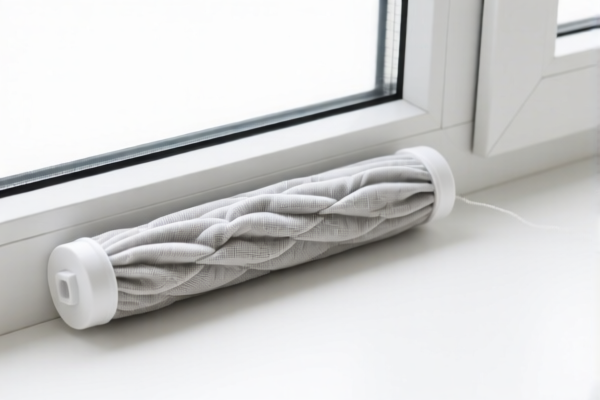
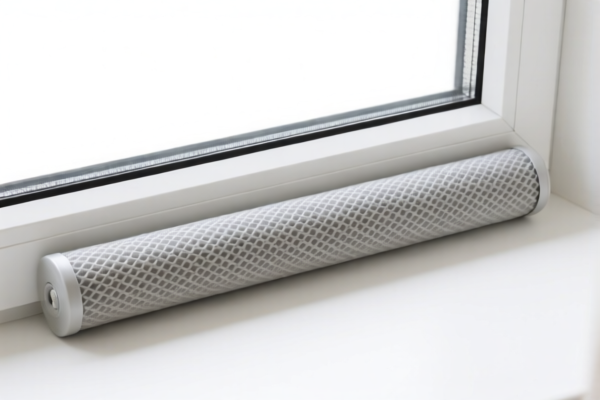
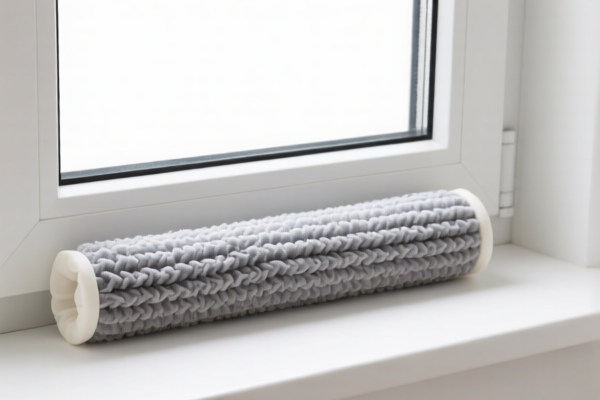
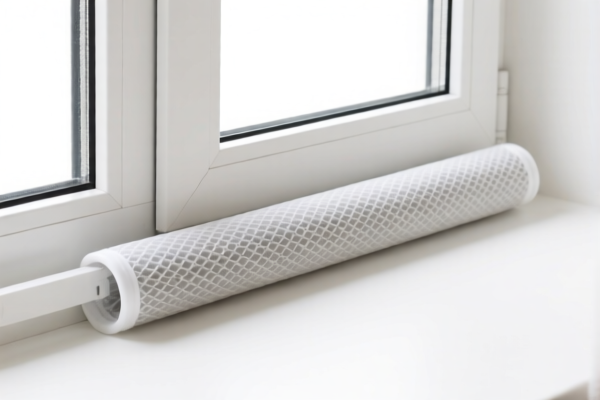
AI Analysis
🚪 Draft Excluders for Windows (Door & Window Seals)
🌐 HS Code Reference & Customs Clearance Guide | 2026 Latest Tariff Analysis | Professional Entry Strategy
📌 I. Product Definition & Classification: What Exactly is a "Draft Excluder"?
Draft excluders (often referred to as weatherstripping, door sweeps, or window seals) are critical components in building materials and automotive industries used to prevent air, water, and dust infiltration. In international trade, the classification depends strictly on material composition and specific usage.
Rubber-based Seals: Made from vulcanized rubber (e.g., EPDM, Silicone, NBR). These are typically classified under Chapter 40. Plastic-based Seals: Made from PVC, TPE, or other polymers. These are typically classified under Chapter 39.
⚠️ Key Distinction:
- If the product is vulcanized rubber and designed as a specific mechanical seal → Go to 4016.93.50.50
- If it is vulcanized rubber but not specifically defined as a mechanical seal part → Go to 4016.99.60.50
- If it is plastic/rubber composite or purely plastic and not fitting specific rubber codes → Go to 3926.90.45.90 or 3926.90.99.89
📦 II. HS Code Classification Details (2026 Latest Tariff Authority Comparison)
| HS Code | Product Description | Applicable Scenario | Material Type | Specific Use? |
|---|---|---|---|---|
4016.93.50.50 |
Rubber seals for doors/windows, specifically classified as "other sealing elements" | EPDM window seals, rubber door bottom sweeps, automotive rubber seals | 🧱 Rubber (Vulcanized) | ✅ Yes (Sealing Element) |
4016.99.60.50 |
Other vulcanized rubber articles, not specified elsewhere | Generic rubber gaskets, rubber strips not meeting strict "sealing element" definition | 🧱 Rubber (Vulcanized) | ❌ No (General Use) |
3926.90.45.90 |
Other plastic/rubber seals, classified as "other seals" | PVC window seals, TPE weatherstrips, plastic-rubber composites | 🧪 Plastic/Rubber | ✅ Yes (Seal) |
3926.90.99.89 |
Other plastic articles, not specified elsewhere | Generic plastic strips, non-functional decorative plastic seals | 🧪 Plastic | ❌ No (General Article) |
🔍 Critical Reminder:
- Rubber vs. Plastic: If the primary material is rubber, do NOT classify under Chapter 39.
- "Sealing Element" Definition: HS Code4016.93specifically targets "sealing elements." If your product is a simple rubber strip used for cushioning rather than sealing, it might fall under4016.99. However, for window/door draft excluders,4016.93is the most accurate if made of rubber.
- Composite Materials: If made of plastic with rubber inserts, check the essential character. Often, if plastic is predominant, it goes to Chapter 39.
💰 III. 2026 Latest Tariff Rate Breakdown (Including Additional Duties & Policy Surcharges)
✅ Applicable Country: United States (US)
✅ Country of Origin: China (CN)
✅ Effective Date: November 10, 2025 onwards (including subsequent imports)
🎯 1. 4016.93.50.50 & 4016.99.60.50 — Rubber Draft Excluders (Seals)
| Item | Content |
|---|---|
| Basic Tariff | 2.5% (ad valorem) |
| Section 301 Additional Tariff | +25% |
| Section 122 Tariff | +10% |
| Total Tariff Rate | 37.5% |
| Tax Calculation | CIF Value × 37.5% |
| De Minimis Exemption Eligible | ❌ No (deny_de_minimis) |
| Legal Authority Path | USITC:4016.93.50.50 / USITC:4016.99.60.50 → Footnote: Section 301 → Section 122 |
📌 Explanation:
- Basic 2.5%: Standard MFN rate for rubber articles.
- 25% Section 301: USITC additional duty on Chinese-origin rubber products.
- 10% Section 122: Additional duty under International Emergency Economic Powers Act (IEEPA) for specific Chinese imports.
- Total 37.5%: This is a high-cost category. Rubber seals are heavily impacted by US-China trade tensions.
🎯 2. 3926.90.45.90 — Plastic/Rubber Composite Seals (Other Seals)
| Item | Content |
|---|---|
| Basic Tariff | 3.5% (ad valorem) |
| Section 301 Additional Tariff | +25% |
| Section 122 Tariff | +10% |
| Total Tariff Rate | 38.5% |
| Tax Calculation | CIF Value × 38.5% |
| De Minimis Exemption Eligible | ❌ No (deny_de_minimis) |
| Legal Authority Path | USITC:3926.90.45.90 → Footnote: Section 301 → Section 122 |
📌 Note:
- Plastic-based seals have a slightly higher basic rate (3.5% vs 2.5%) but suffer the same additional tariffs.
- Total rate is 38.5%, making it the most expensive option among the four.
🎯 3. 3926.90.99.89 — Other Plastic Articles (General Use)
| Item | Content |
|---|---|
| Basic Tariff | 5.3% (ad valorem) |
| Section 301 Additional Tariff | +7.5% |
| Section 122 Tariff | +10% |
| Total Tariff Rate | 22.8% |
| Tax Calculation | CIF Value × 22.8% |
| De Minimis Exemption Eligible | ❌ No (deny_de_minimis) |
| Legal Authority Path | USITC:3926.90.99.89 → Footnote: Section 301 → Section 122 |
📌 Critical Insight:
- This code has the lowest total tariff (22.8%).
- However, it applies only if the product is classified as a generic plastic article and NOT as a specific "seal" under3926.90.45.90.
- Risk: If customs inspectors determine the item is functionally a "seal," they will reclassify it to3926.90.45.90(38.5%), resulting in back taxes and penalties. Use this code only if the product lacks specific sealing functionality or is primarily decorative/generic.
🛠️ IV. Customs Clearance Practical Advice (Real-World Pitfall Guide)
✅ 1. Required Documentation Checklist (Mandatory)
| Document | Required | Description |
|---|---|---|
| ✅ Product Specification Sheet | ✔️ | Must detail material (e.g., "70% EPDM Rubber, 30% PVC"), hardness, temperature resistance. |
| ✅ Material Composition Proof | ✔️ | Lab test reports or supplier declarations confirming % of rubber vs. plastic. |
| ✅ Product Photos (Clear) | ✔️ | Show cross-section, installation method, and labeling. |
| ✅ Commercial Invoice | ✔️ | Must clearly state "Window/Door Draft Excluder" and material type. Avoid vague terms like "Rubber Strip." |
| ✅ Packing List | ✔️ | Detail net/gross weight. Ensure packaging doesn't imply additional duties (e.g., separate packaging for accessories). |
| ✅ Certificate of Origin (CO) | ✔️ | If claiming any preferential treatment (though unlikely for China-US here). |
✅ 2. Declaration Strategies (Key Mnemonics)
🔥 “Material Dictates Code, Function Dictates Duty!”
| Scenario | Correct Declaration | Wrong Practice |
|---|---|---|
| Pure EPDM Rubber Seal | 4016.93.50.50 |
Declare as "Plastic Seal" → High risk of penalty |
| PVC Window Seal | 3926.90.45.90 |
Declare as "Rubber Article" → Wrong classification |
| Generic Plastic Strip (Non-Sealing) | 3926.90.99.89 |
Declare as "Seal" → Unjustified low tax rate |
| Mixed Rubber/Plastic Seal | 3926.90.45.90 (if plastic dominant) |
Declare as 4016.93 → If rubber is <50%, this is risky |
📌 Warning:
- Do not use "De Minimis" (Section 321) for shipments from China. All these codes are explicitly denied de minimis treatment for Chinese origin.
- Labeling: Ensure the product label states the exact material. Ambiguity leads to customs hold.
✅ 3. Special Situations & Handling
| Situation | Handling Advice |
|---|---|
| OEM Custom Seals | Provide OEM contract and design specs. Prove it’s a "sealing element" to justify 4016.93 or 3926.90.45. |
| Automotive Seals vs. Building Seals | If the seal is for automotive use, it may still fall under 4016.93, but ensure documentation specifies "Automotive" to avoid confusion with building materials. |
| Pre-Assembled Kits | If sold as a "Door Kit" with seal, handle, and screws, the entire kit is classified based on the essential character (usually the seal). Do not split declaration. |
| Re-export from Third Country | If shipped from Vietnam/Mexico, you may claim IEEPA Exemption. Ensure Certificate of Origin proves substantial transformation. |
🌍 V. Global Market Comparison (2026 Latest)
| Country/Region | Recommended HS Code | Tariff (China Origin) | Certification Required | Notes |
|---|---|---|---|---|
| 🇺🇸 USA | 4016.93.50.50 / 3926.90.45.90 |
37.5% - 38.5% | None (Basic) | Highest duty due to 301 + 122 clauses |
| 🇨🇳 China | 4016.93.50.50 |
~5-10% | CCC (if applicable) | Low import duty, but export checks apply |
| 🇪🇺 EU | 4016.93.50 |
0-4% | CE (if applicable) | No Section 301/122 equivalents |
| 🇬🇧 UK | 4016.93.50 |
0-4% | UKCA | Post-Brexit rules, generally favorable |
| 🇨🇦 Canada | 4016.93.50 |
0-5% | Health Canada | CUSMA/USMCA benefits if originating |
📌 Conclusion:
- USA is the most challenging market for draft excluders due to Section 301 and Section 122.
- Alternative Strategy: Consider third-country assembly (e.g., Vietnam, Mexico) to bypass Chinese origin penalties, if legally compliant with substantial transformation rules.
📌 VI. Common Errors & Pitfalls (Lessons Learned)
❌ Error 1: Classifying Rubber Seals as Plastic Articles (3926.90)
👉 Consequence: Customs may detect rubber content via testing, reclassify to 4016.93, and charge 37.5% instead of 22.8%, plus penalties.
❌ Error 2: Using De Minimis for small shipments of draft excluders
👉 Consequence: Shipment held or seized. Chinese-origin rubber/plastic seals are explicitly excluded from de minimis treatment.
❌ Error 3: Vague Description "Rubber Strip" on Invoice
👉 Consequence: Customs cannot determine if it’s a "sealing element" (4016.93) or "general rubber article" (4016.99). Leads to audits and delays.
❌ Error 4: Ignoring Section 122 (10%)
👉 Consequence: Many importers only account for Section 301 (25%). Forgetting the extra 10% leads to unbudgeted costs.
✅ Correct Practice:
"EPDM Rubber Door Draft Excluder, Sealing Element, 2m Length, Model XYZ, Chinese Origin"
🎯 VII. Conclusion: Professional Declaration, Cost Control!
🎯 Remember the Mnemonic:
🔹 "Rubber Seal → 37.5% | Plastic Seal → 38.5% | Generic Plastic → 22.8% (High Risk!)"
🔹 "No De Minimis for China Rubber/Plastic Seals!"
🔹 "301 + 122 = 35% Additional Duty + 2.5-5.3% Base!"
📌 Pro Tip:
If your draft excluders are originating from Vietnam, Mexico, or Malaysia, you may qualify for IEEPA Exemption, reducing duties to 0-5%.
Recommend Advance Ruling from CBP to confirm HS Code classification before large-scale shipments.
📣 Immediate Action:
📞 Contact a licensed customs broker + Provide material test reports + Apply for HS Code Pre-Ruling
🚀 Ensure your draft excluders clear customs smoothly, avoid penalties, and maximize profit margins!
✨ Professional clearance starts with accurate classification!
💼 Every percentage point of tariff matters!
Customer Reviews
About HS Code Classification
The Harmonized System (HS) is an internationally standardized nomenclature developed by the World Customs Organization (WCO) to classify traded products. Over 200 countries use the HS system as the basis for customs tariffs, trade statistics, and import/export regulations.
Each HS code follows a hierarchical structure:
- Chapter (2 digits) — Broad category of goods (e.g., Chapter 84: Machinery and Mechanical Appliances)
- Heading (4 digits) — More specific grouping within the chapter
- Subheading (6 digits) — Internationally standardized breakdown, used by all WCO member countries
- National subdivisions (8-10 digits) — Country-specific extensions for further classification, such as US HTSUS 10-digit codes
Correct HS code classification is essential for smooth customs clearance, accurate duty payment, and compliance with trade regulations. Misclassification can lead to customs delays, overpayment of duties, or penalties.
When importing from CN to US, the applicable tariff rates may include:
- Most-Favored-Nation (MFN) rate — The standard duty rate applied to WTO members
- General rate — Applied to countries without trade agreements
- Trade remedy duties — Additional tariffs such as Section 301 (anti-dumping), Section 232 (national security), or countervailing duties
The information provided on this page is for reference purposes only. For official classification, please consult with your local customs authority or a licensed customs broker.