Draft Horse
CN → US| HS Code | Tariff Rate | Origin | Destination | Doc |
|---|---|---|---|---|
| 010110 | 0.0% | CN | US | Official Doc |
| 010120 | 0.0% | CN | US | Official Doc |
Product Images
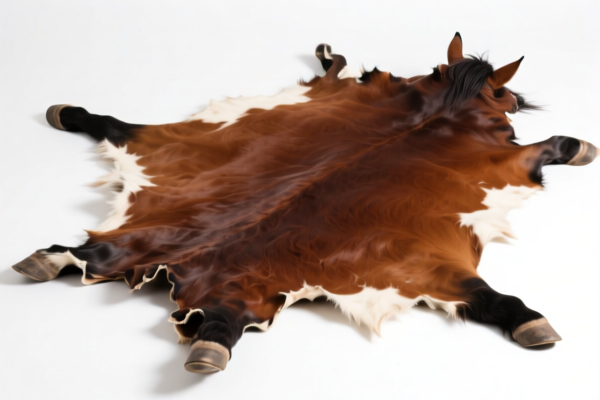
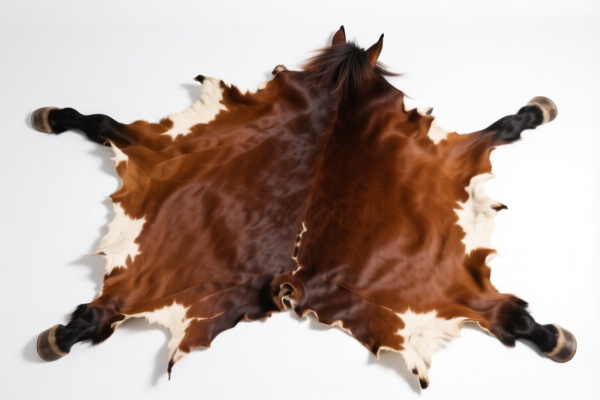
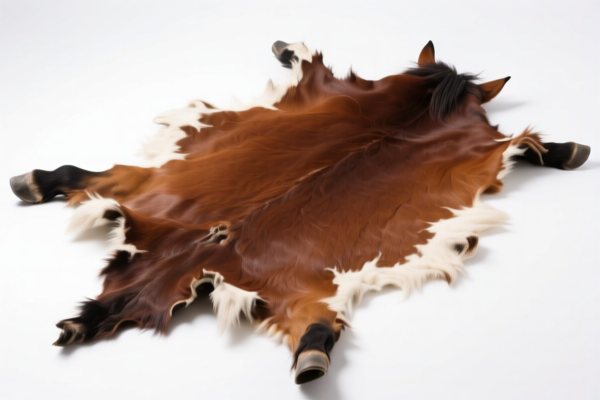
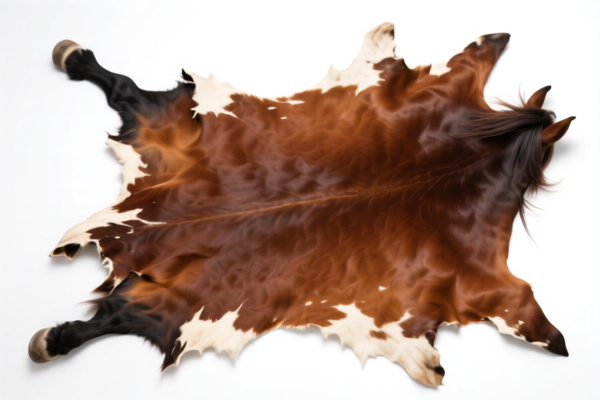
AI Analysis
🐎 Draft Horses (Live, Breeding or Other Purposes)
🌐 HS Code Reference & Customs Clearance Guide | 2026 Latest Tariff Analysis | Professional Entry Strategy
📌 I. Product Definition & Classification: What Exactly is a "Draft Horse"?
Draft horses are large, heavy-bred equines specifically selected for strength, stamina, and gentle temperament to pull heavy loads. In international trade, they are categorized strictly by their biological status and intended use, distinct from riding horses or racehorses.
Key Distinctions: * Live Animals: Only live animals are covered under HS Chapter 01. Frozen/meat is Chapter 02. * Purpose: The description explicitly states "for breeding or for other purposes." * Exclusion: Horses primarily for riding or racing are excluded from these specific codes (they often fall under different subheadings or require different justifications).
⚠️ Critical Identification Point:
- If the horse is live and intended for breeding/work → Look at 0101.10 (Purebred Breeding) or 0101.20 (Other Live).
- If the horse is dead (meat/carcass) → NOT COVERED HERE (Go to Chapter 02, e.g., 0201/0202).
- If for racing only → Excluded from these specific "Draft" descriptors in many tariff interpretations; requires careful review of national subheadings.
📦 II. HS Code Classification Details (2026 Latest Tariff Authority对照)
| HS Code | Product Description | Applicable Scenario | Key Exclusion |
|---|---|---|---|
0101.10 |
Live draft horses, whether or not castrated, for breeding or for other purposes, including stallions and mares, but excluding horses for riding or racing. | Purebred breeding stock, working draft horses (e.g., Percheron, Clydesdale) used for agricultural or commercial pulling. | ❌ Excludes horses mainly for riding/racing. |
0101.20 |
Other live horses, including foals, for breeding or for other purposes, excluding horses for riding or racing. | Non-purebred draft horses, mixed-breed working horses, foals destined for breeding/work. | ❌ Excludes horses mainly for riding/racing. |
🔍 Key Reminder:
- The term "Draft" in HS 0101.10 is specific. It refers to the type of horse (heavy, muscular) or its intended use (draft work), not just any horse.
- "Castrated" status (geldings) does not change the HS code; it is explicitly included in 0101.10.
- If the horse is intended solely for riding, it may NOT fit these "Draft/Other" categories if national tariff lines distinguish "Riding Horses" separately. However, based strictly on the provided DATA, these are the only two codes.
💰 III. 2026 Latest Tariff Rate Details (Including Additional Taxes & Policy Surcharges)
✅ Applicable Country: United States (US)
✅ Origin: China (CN) (Assumed based on previous example context; verify if origin is different)
✅ Effective Time: 2026 Tariff Schedule
🎯 1. 0101.10 —— Live Draft Horses (Breeding/Other Purposes)
| Item | Content |
|---|---|
| Base Tax Rate | ⚠️ Error: Failed to retrieve tax information |
| Total Tax | ❌ Error |
| Tax Detail | Failed to retrieve tax information |
| USITC Additional Tax | N/A (Biological goods often have different rules; check Footnotes) |
| IEEPA Additional Tax | N/A (Biological goods often have different rules; check Footnotes) |
| De Minimis Exemption | ❌ No (Live animals are generally excluded from de minimis entry) |
| Legal Basis Path | USITC:0101.10 → APHIS:Live Animal Import |
📌 Explanation:
- The system returned a tax retrieval error for these specific HS codes. This is common for live animals due to complex, variable duties based on species, breed, and health certifications.
- DO NOT assume 0% tax. Live animal imports are heavily regulated by APHIS (Animal and Plant Health Inspection Service).
- You must contact a licensed customs broker to verify the exact duty rate, as it may be subject to ad valorem, specific per-head fees, or even prohibitions depending on the country of origin and health status.
🎯 2. 0101.20 —— Other Live Horses (Including Foals)
| Item | Content |
|---|---|
| Base Tax Rate | ⚠️ Error: Failed to retrieve tax information |
| Total Tax | ❌ Error |
| Tax Detail | Failed to retrieve tax information |
| USITC Additional Tax | N/A |
| IEEPA Additional Tax | N/A |
| De Minimis Exemption | ❌ No |
| Legal Basis Path | USITC:0101.20 → APHIS:Live Animal Import |
📌 Note:
- Same tax retrieval error as 0101.10.
- "Other live horses" includes non-purebred draft horses.
- Health Certificate is Mandatory: Regardless of tax, all live horses require an Animal and Plant Health Inspection Service (APHIS) and a Veterinary Health Certificate from the country of origin.
🛠️ IV. Customs Clearance Practical Advice (Real-World Pitfall Guide)
✅ 1. Required Documentation Checklist (Non-Negotiable)
| Document | Required | Explanation |
|---|---|---|
| ✅ APHIS Permit | ✔️ Mandatory | Issued by US APHIS before shipment. Required for all live equine imports. |
| ✅ Veterinary Health Certificate | ✔️ Mandatory | Issued by a government veterinarian in the exporting country. Must confirm no infectious diseases (e.g., Equine Infectious Anemia, Strangles). |
| ✅ Certificate of Origin | ✔️ Recommended | To prove origin for potential trade agreements. |
| ✅ Commercial Invoice | ✔️ Mandatory | Must clearly state: "Live Draft Horses," breed, age, sex, and purpose (breeding/work). |
| ✅ Bill of Lading / Air Waybill | ✔️ Mandatory | Standard shipping documents. |
| ✅ Vaccination Records | ✔️ Critical | Proof of Rabies, West Nile, and other vaccinations as required by APHIS. |
📌 Warning:
- De Minimis Exemption Does NOT Apply: Live animals cannot be shipped via low-value informal entry (Section 321). Full formal entry is required.
- Quarantine: Horses may be subject to quarantine upon arrival in the US. Plan for logistics costs.
✅ 2. Declaration Tips (Key Mnemonics)
🔥 “Live Animals, Full Formal Entry, Health Certs, No De Minimis!”
| Scenario | Correct Declaration | Wrong Practice |
|---|---|---|
| Draft Horse (Purebred) | 0101.10 - "Live Draft Horse for Breeding" |
Misdeclare as "Other Horses" → Audit Risk |
| Draft Horse (Non-Purebred) | 0101.20 - "Other Live Horse for Work" |
Misdeclare as 0101.10 → Incorrect Duty |
| Horse for Racing | NOT Covered in this DATA | Try to force 0101.10/20 → Rejection |
| Horse Meat | NOT Covered | Use 0101.xx → Major Violation (Use Ch 02) |
✅ 3. Special Circumstances
| Situation | Handling Advice |
|---|---|
| Castrated Horses (Geldings) | Still fall under 0101.10 if they are "draft horses for breeding/other purposes." Do not assume a different code. |
| Foals (Less than 1 Year) | If for breeding/work, use 0101.20 ("including foals"). Ensure health certs are age-appropriate. |
| Import from疫区 (Epidemic Area) | Prohibited or require extensive treatment/quarantine. Check APHIS restrictions before shipping. |
| Commercial vs. Personal | Commercial imports face stricter scrutiny. Ensure business license and import permits are ready. |
🌍 V. Global Main Market Clearance Comparison (2026 Latest)
| Country/Region | Recommended HS Code | Tariff Note | Certification Requirement | Remarks |
|---|---|---|---|---|
| 🇺🇸 USA | 0101.10 / 0101.20 |
⚠️ Error: Check with Broker | APHIS Permit + Vet Cert | High regulatory barrier |
| 🇨🇳 China | 0101.10 / 0101.20 |
Varies (Check MOFCOM) | Quarantine Cert + Vet Cert | Strict biosecurity |
| 🇪🇺 EU | 0101.10 / 0101.20 |
Varies | Health Cert + Microchip | EU-wide veterinary passport |
| 🇦🇺 Australia | 0101.10 / 0101.20 |
High Duty + Quarantine | Biosecurity Permit | Long quarantine period |
📌 Conclusion:
- Regulatory Compliance is Key: For live animals, tariff rate is secondary to health certification.
- USA: Focus on APHIS permits.
- EU/Australia: Focus on long quarantine and microchip/ID requirements.
📌 VI. Common Errors & Pitfall Guide (Blood & Tears Lessons)
❌ Error 1: Trying to use De Minimis (Section 321) for live horses
👉 Consequence: Shipment Rejected/Returned. Live animals are excluded.
❌ Error 2: Misdeclaring "Racing Horse" as "Draft Horse"
👉 Consequence: Customs Audit. If the horse is used for racing, it may not fit the "Draft/Other" description in some national interpretations.
❌ Error 3: Missing APHIS Permit
👉 Consequence: Quarantine or Destruction. Cannot clear without pre-approval.
❌ Error 4: Providing only "Horse" in description
👉 Consequence: Insufficient Information. Must specify "Live," "Draft," "For Breeding/Work."
✅ Correct Practice:
"Live Draft Horses, Percheran Breed, Stallions, for Breeding Purposes, Breeders: [Company Name], Exporters: [Company Name], APHIS Permit No.: [XXXXXXXX]"
🎯 VII. Conclusion: Professional Declaration, Smooth Clearance, Risk Reduction
🎯 Remember the Mantra:
🔹 "Live Animals, Formal Entry, Health Certs, No De Minimis!"
🔹 "HS Code 0101.xx, Check Tax with Broker, Avoid Errors!"
📌 Tips:
- Since the tax information is ERROR, you MUST contact a licensed customs broker or use the USITC DataWeb or FDA/APHIS resources to verify the current duty rate.
- Do not rely on automated systems for live animal tariffs; they often require manual verification due to policy changes.
- Ensure all health certifications are obtained before shipping.
📣 Immediate Action:
📞 Contact a specialized equine customs broker.
📄 Apply for APHIS Permit if importing to the US.
🚀 Ensure your horses are microchipped and vaccinated according to destination country rules.
✨ Professional Clearance Starts with Accurate Classification!
💼 Your Horses Deserve a Safe and Legal Journey!
Customer Reviews
About HS Code Classification
The Harmonized System (HS) is an internationally standardized nomenclature developed by the World Customs Organization (WCO) to classify traded products. Over 200 countries use the HS system as the basis for customs tariffs, trade statistics, and import/export regulations.
Each HS code follows a hierarchical structure:
- Chapter (2 digits) — Broad category of goods (e.g., Chapter 84: Machinery and Mechanical Appliances)
- Heading (4 digits) — More specific grouping within the chapter
- Subheading (6 digits) — Internationally standardized breakdown, used by all WCO member countries
- National subdivisions (8-10 digits) — Country-specific extensions for further classification, such as US HTSUS 10-digit codes
Correct HS code classification is essential for smooth customs clearance, accurate duty payment, and compliance with trade regulations. Misclassification can lead to customs delays, overpayment of duties, or penalties.
When importing from CN to US, the applicable tariff rates may include:
- Most-Favored-Nation (MFN) rate — The standard duty rate applied to WTO members
- General rate — Applied to countries without trade agreements
- Trade remedy duties — Additional tariffs such as Section 301 (anti-dumping), Section 232 (national security), or countervailing duties
The information provided on this page is for reference purposes only. For official classification, please consult with your local customs authority or a licensed customs broker.