Drawstring Backpack
CN → US| HS Code | Tariff Rate | Origin | Destination | Doc |
|---|---|---|---|---|
| 4202923900 | 52.6% | CN | US | Official Doc |
| 4202929700 | 52.6% | CN | US | Official Doc |
| 6305390000 | 25.9% | CN | US | Official Doc |
| 6305900000 | 23.7% | CN | US | Official Doc |
Product Images
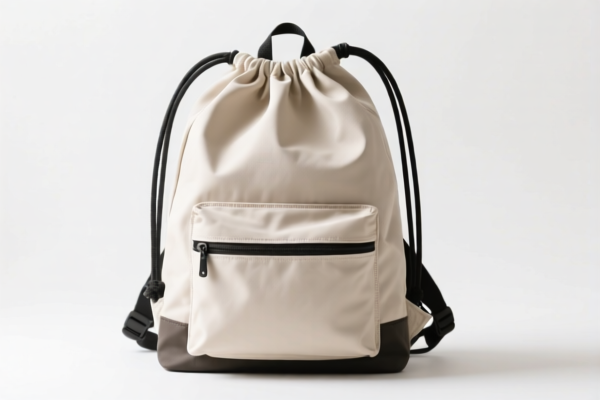
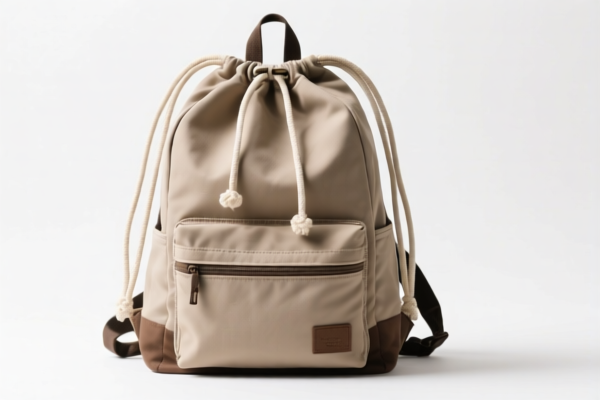
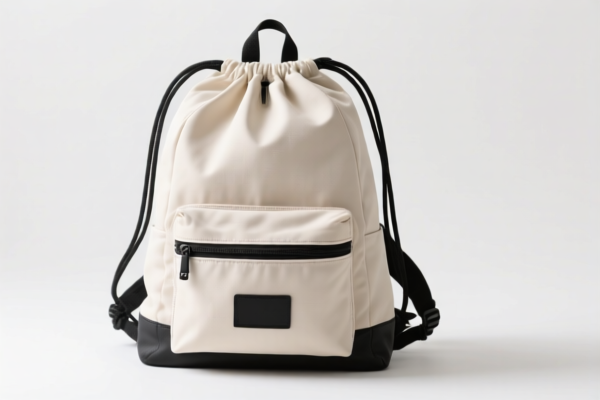
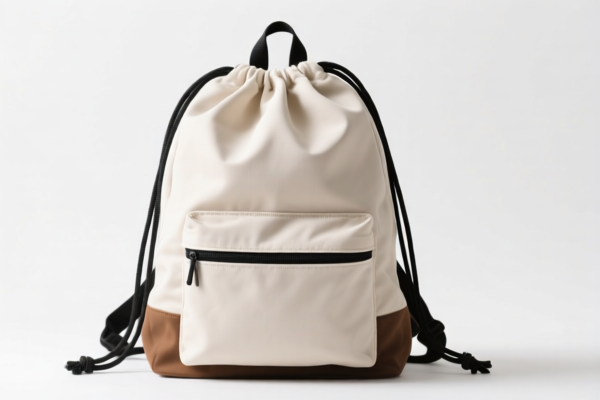
AI Analysis
🎒 Drawstring Backpack: HS Code Classification & US Customs Clearance Guide
🌐 HS Code Reference & Clearance Strategy | 2026 Latest Tariff Analysis | Professional Customs Strategy
📌 I. Product Definition & Classification: What is a "Drawstring Backpack"?
A Drawstring Backpack (also known as a cinch sack, gym sack, or baggy) is a flexible container typically made of fabric, featuring a drawstring closure at the top. In international trade, these items are generally classified under Chapter 42 (Articles of Leather; Saddle harness and travel goods) or Chapter 63 (Other made up textile articles), depending on the specific material composition and construction.
⚠️ Key Distinction Point:
- Fabric/Textile Exterior: If the outer surface is primarily textile materials (nylon, polyester, cotton, etc.), it often falls under HS 4202 if considered a "travel/sports bag," or HS 6305 if considered a "packing bag." - Material Specificity: The distinction between "Travel Goods" (Ch 42) and "Other Made Up Textile Articles" (Ch 63) is critical because the tariff rates differ significantly.
📦 II. HS Code Classification Details (Based on Provided Data)
| HS Code | Product Description | Tax Details Breakdown | Total Tax Rate |
|---|---|---|---|
4202.92.39.00 |
Other travel, sports, and similar bags with outer surface of textile materials | Base Tariff: 17.6% Add-on Tariff: 25.0% Section 301/122 Tariff: 10% |
52.6% |
4202.92.97.00 |
Containers with outer surface of textile materials (other specified items) | Base Tariff: 17.6% Add-on Tariff: 25.0% Section 301/122 Tariff: 10% |
52.6% |
6305.39.00.00 |
Sacks and bags, of man-made textile materials (specific packing bags) | Base Tariff: 8.4% Add-on Tariff: 7.5% Section 301/122 Tariff: 10% |
25.9% |
6305.90.00.00 |
Other sacks and bags of textile materials (for packing or storing goods) | Base Tariff: 6.2% Add-on Tariff: 7.5% Section 301/122 Tariff: 10% |
23.7% |
🔍 Critical Insight:
- HS 4202 Codes (...39.00/...97.00): Apply if the bag is classified as a Travel, Sports, or Similar Bag. This classification typically results in a higher total tax rate of 52.6%.
- HS 6305 Codes (...39.00/...90.00): Apply if the bag is classified as a Textile Sack or Bag for Packing/Storing. This classification results in a significantly lower total tax rate of 23.7% - 25.9%.
- Strategy: For standard drawstring backpacks used for gym, school, or casual carry, customs may allow classification under HS 6305 if they are not specifically designed for "travel" (e.g., no shoulder straps, no rigid structure). This can save ~27% in duties.
💰 III. 2026 Tariff Rate Breakdown (Detailed Policy Analysis)
✅ Applicable Country: United States (US)
✅ Origin: China (CN)
✅ Effective Date: Post-2025 (Current Policy Structure)
🎯 1. HS Code: 4202.92.39.00 & 4202.92.97.00 (Travel/Sports Bags)
| Item | Detail |
|---|---|
| Base Tariff | 17.6% |
| Section 301 Add-on | 25.0% |
| Section 122 Tariff | 10.0% |
| Total Tax Rate | 52.6% |
| Tax Calculation | CIF Value × 52.6% |
| De Minimis Exemption | ❌ Not Eligible (High duty rate disqualifies from Section 321 de minimis benefits) |
| Legal Basis | USITC Harmonized Tariff Schedule → Section 301 Footnotes → Section 122 Provisions |
📌 Explanation:
- These codes are taxed at the highest bracket among the options.
- The 25% Section 301 tariff is specifically targeted at Chinese goods.
- The 10% Section 122 tariff applies to certain textile/apparel imports.
- Result: A $100 drawstring backpack incurs $52.60 in duties.
🎯 2. HS Code: 6305.39.00.00 (Man-Made Textile Bags)
| Item | Detail |
|---|---|
| Base Tariff | 8.4% |
| Section 301 Add-on | 7.5% |
| Section 122 Tariff | 10.0% |
| Total Tax Rate | 25.9% |
| Tax Calculation | CIF Value × 25.9% |
| De Minimis Exemption | ❌ Not Eligible (Generally, bags are excluded, but verify specific packaging rules) |
| Legal Basis | USITC Harmonized Tariff Schedule → Section 301 Footnotes → Section 122 Provisions |
📌 Explanation:
- This classification assumes the bag is a "bag of man-made textile materials" for packing.
- The Section 301 add-on is lower (7.5%) compared to the 25% for travel goods.
- Result: A $100 drawstring backpack incurs $25.90 in duties.
🎯 3. HS Code: 6305.90.00.00 (Other Textile Bags)
| Item | Detail |
|---|---|
| Base Tariff | 6.2% |
| Section 301 Add-on | 7.5% |
| Section 122 Tariff | 10.0% |
| Total Tax Rate | 23.7% |
| Tax Calculation | CIF Value × 23.7% |
| De Minimis Exemption | ❌ Not Eligible |
| Legal Basis | USITC Harmonized Tariff Schedule → Section 301 Footnotes → Section 122 Provisions |
📌 Explanation:
- This is the most cost-effective classification if applicable.
- It covers "other" textile bags not specifically listed elsewhere.
- Result: A $100 drawstring backpack incurs $23.70 in duties.
- Savings: Compared to HS 4202, this saves 28.9% in total duties.
🛠️ IV. Customs Clearance Practical Advice (Real-World Pitfall Guide)
✅ 1. Document Checklist (Mandatory)
| Document | Required | Description |
|---|---|---|
| ✅ Product Specification Sheet | ✔️ | Must detail material composition (e.g., 100% Polyester, Nylon, Cotton) and construction method (stitched, glued). |
| ✅ Product Photos | ✔️ | Clear images of the bag, including drawstring, lining, and any logos/branding. |
| ✅ Commercial Invoice | ✔️ | Must clearly state: "Drawstring Backpack" or "Cinch Sack," not just "Bag." Specify material. |
| ✅ Packing List | ✔️ | Quantity, weight, and dimensions of each package. |
| ✅ Certificate of Origin | ✔️ | If claiming any preferential treatment (though unlikely for China-US trade currently). |
✅ 2. Classification Strategy (Key Tips)
🔥 "Classify as Packing Bag, Not Travel Bag!"
| Scenario | Recommended HS Code | Risk |
|---|---|---|
| Simple Drawstring Gym Sack | 6305.90.00.00 |
Low risk if marketed as "promo bag," "gym bag," or "packing sack." |
| Bag with Shoulder Straps & Pockets | 4202.92.39.00 |
High risk for HS 6305. Likely to be classified as "travel/sports bag" → 52.6% tax. |
| Heavy-Duty Canvas Drawstring Bag | 6305.39.00.00 |
Moderate risk. Ensure it is not marketed as "travel gear." |
| Linen/Cotton Promotional Bag | 6305.90.00.00 |
Lower tax rate, but must prove it is not a "travel good." |
📌 Note:
- If the bag has shoulder straps, zippers, or rigid structure, Customs is likely to classify it as HS 4202 (Travel/Sports Bag), triggering the 52.6% tax.
- If the bag is simple, no straps, pure textile sack, argue for HS 6305 to achieve 23.7%-25.9% tax.
✅ 3. Special Cases
| Situation | Advice |
|---|---|
| Custom Logo Printing | Ensure the invoice mentions "Promotional Drawstring Bag" to support HS 6305 classification. |
| Mixed Materials | If lining is different (e.g., polyester outer, nylon lining), declare the principal material (outer surface). |
| Small Quantities | If under $800, Section 321 De Minimis may apply, but verify if bags are excluded. Currently, many textile bags are excluded from de minimis. |
| Section 301 Exclusions | Check if your specific drawstring bag model was ever on the Section 301 exclusion list (unlikely for basic bags). |
🌍 V. Global Market Comparison (2026 Context)
| Country/Region | Recommended HS Code | Approx. Tax Rate | Notes |
|---|---|---|---|
| 🇺🇸 USA | 6305.90.00.00 |
23.7% | Best option. Avoid 4202 to save 28.9%. |
| 🇨🇳 China | 6305.90.00.00 |
~5-10% | Import duties may be lower; check local VAT. |
| 🇪🇺 EU | 6305.90.00.00 |
~4-12% | No Section 301/122 equivalent; VAT applies separately. |
| 🇬🇧 UK | 6305.90.00.00 |
~4-12% | Post-Brexit rules; VAT applies. |
| 🇨🇦 Canada | 6305.90.00.00 |
~17-20% | No Section 301; CUSMA may apply if origin is US/Mexico. |
📌 Conclusion:
- The US market is the most challenging due to Section 301 and 122 tariffs.
- Correct classification is the #1 cost-saving strategy.
- Misclassification from6305to4202results in a 28.9% increase in duties.
📌 VI. Common Mistakes & Pitfalls (Lessons Learned)
❌ Mistake 1: Classifying all drawstring bags as 4202 automatically.
👉 Consequence: Paying 52.6% instead of 23.7%.
✅ Fix: Justify classification under 6305 if the bag is a simple sack without travel-specific features.
❌ Mistake 2: Not specifying material in the invoice.
👉 Consequence: Customs may assign a higher default rate or demand additional documentation.
✅ Fix: Clearly state "100% Polyester Drawstring Bag" or "Nylon Cinch Sack."
❌ Mistake 3: Assuming de minimis applies to all small shipments.
👉 Consequence: Seizure or back-taxes if bags are excluded from Section 321.
✅ Fix: Verify current CBP exclusions for textile bags.
❌ Mistake 4: Using "Travel Bag" in marketing materials.
👉 Consequence: Customs may reject HS 6305 classification.
✅ Fix: Use terms like "Promotional Bag," "Gym Sack," or "Packing Sack."
🎯 VII. Conclusion: Professional Classification, Maximum Savings!
🎯 Remember the Rule:
🔹 "Simple Sack = 23.7% | Travel Bag = 52.6%"
🔹 "No Straps = 6305 | With Straps = 4202"
🔹 "Clear Description = Fast Clearance | Vague Description = Delays"
📌 Pro Tip:
If your drawstring backpack has shoulder straps, multiple compartments, or rugged construction, it will likely be classified as HS 4202.92.39.00, resulting in a 52.6% total tax.
If it is a simple, strapless sack, argue for HS 6305.90.00.00, resulting in a 23.7% total tax.
Savings: ~$28.90 per $100 of goods.
📣 Immediate Action:
📞 Contact a licensed customs broker.
📄 Provide product photos and material specs.
🚀 Declare accurately to minimize duties and avoid penalties!
✨ Professional Customs Clearance Starts with Precise Classification!
💼 Every Percentage Point Matters in International Trade!
Customer Reviews
About HS Code Classification
The Harmonized System (HS) is an internationally standardized nomenclature developed by the World Customs Organization (WCO) to classify traded products. Over 200 countries use the HS system as the basis for customs tariffs, trade statistics, and import/export regulations.
Each HS code follows a hierarchical structure:
- Chapter (2 digits) — Broad category of goods (e.g., Chapter 84: Machinery and Mechanical Appliances)
- Heading (4 digits) — More specific grouping within the chapter
- Subheading (6 digits) — Internationally standardized breakdown, used by all WCO member countries
- National subdivisions (8-10 digits) — Country-specific extensions for further classification, such as US HTSUS 10-digit codes
Correct HS code classification is essential for smooth customs clearance, accurate duty payment, and compliance with trade regulations. Misclassification can lead to customs delays, overpayment of duties, or penalties.
When importing from CN to US, the applicable tariff rates may include:
- Most-Favored-Nation (MFN) rate — The standard duty rate applied to WTO members
- General rate — Applied to countries without trade agreements
- Trade remedy duties — Additional tariffs such as Section 301 (anti-dumping), Section 232 (national security), or countervailing duties
The information provided on this page is for reference purposes only. For official classification, please consult with your local customs authority or a licensed customs broker.