Dress Button
CN → US| HS Code | Tariff Rate | Origin | Destination | Doc |
|---|---|---|---|---|
| 3926903500 | 24.0% | CN | US | Official Doc |
| 7116204000 | 28.0% | CN | US | Official Doc |
| 7117909000 | 28.5% | CN | US | Official Doc |
| 7116205000 | 17.5% | CN | US | Official Doc |
| 9606212000 | 35.0% | CN | US | Official Doc |
Product Images
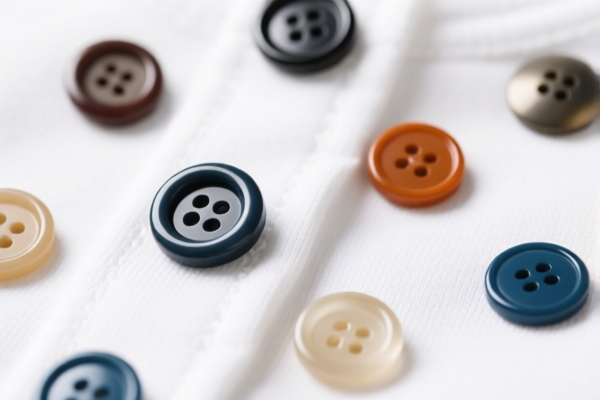
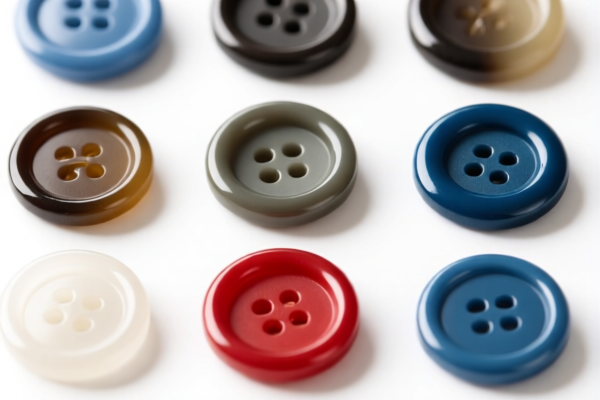


AI Analysis
🧵 Dress Buttons (Buttons for Garments)
🌐 HS Code Reference & Customs Clearance Guide | 2026 Latest Tariff Analysis | Professional Entry Strategies
📌 I. Product Definition & Classification: Do You Really Understand "Buttons"?
Dress buttons are small fasteners used on clothing. In international trade, classification is highly dependent on material composition and specific intent. There is no single HS Code for all buttons; instead, the tariff rate varies drastically based on whether the button is plastic, metal, shell-based, gemstone, or considered an imitation jewelry item.
⚠️ Key Distinction Point:
- If the button is plain plastic, it falls under general plastics (3926).
- If the button contains metal, shell, or gemstone elements, it is often classified under Chapter 71 (Articles of Jewelry/Cosmetics) (7116/7117).
- If the button is purely functional without decorative value (e.g., simple plastic snap), it might fall under 9606 (Button Class).
📦 II. HS Code Classification Details (2026 Latest Tariff Authority Cross-Reference)
| HS Code | Product Description | Applicable Scenario | Material Basis |
|---|---|---|---|
3926.90.35.00 |
Buttons, other articles of plastic; "Pearlescent" quality buttons inferred as plastic. | Plastic buttons, especially those with a pearl-like finish or general plastic fasteners. | Plastic (Inferred) |
7116.20.40.00 |
Buttons; inferred as plastic, metal, or shell; "Other" articles in this category. | Buttons made of mixed materials, shell, or metal not specified elsewhere. | Mixed/Metal/Shell (Inferred) |
7117.90.90.00 |
Imitation jewelry; buttons based on the principle of "other" imitation jewelry articles. | Buttons lacking clear material description, acting as a fallback for decorative imitation jewelry. | Unknown/Imitation Jewelry (Fallback) |
7116.20.50.00 |
Buttons; inferred to be made of gems or semi-precious stones. | Decorative buttons using gemstone or semi-precious stone materials. | Gem/Semi-Precious Stone (Inferred) |
9606.21.20.00 |
Buttons; form matches "buttons," material inferred as plastic or similar; fits fallback logic. | Standard plastic buttons, functionally matching the definition of a button. | Plastic (Functional Match) |
🔍 Important Reminder:
- Material is King: Customs will look at the material, not just the function. A "pearl button" might be plastic (3926) or real shell/gem (7116).
- Fallback Codes: Codes like7117.90.90.00are used when material data is missing or ambiguous. Using these without justification can lead to audits.
- Decorative vs. Functional: Highly decorative buttons often lean towards Chapter 71, while simple utilitarian buttons lean towards Chapter 96 or 39.
💰 III. 2026 Latest Tariff Rate Details (Including Surcharges & Policy Add-ons)
✅ Applicable Country: United States (US)
✅ Origin: China (CN)
✅ Effective Date: 2025 November 10 onwards (including subsequent imports)
🎯 1. 3926.90.35.00 —— Pearlescent Plastic Buttons
| Item | Content |
|---|---|
| Base Tariff | 6.5% (ad valorem) |
| Section 301 Surcharge | +7.5% (Section 301 Tariff) |
| Section 122 Tariff | +10% (Section 122 Tariff) |
| Total Tariff Rate | 24.0% |
| Tax Calculation | CIF Value × 24.0% |
| De Minimis Eligibility | ❌ No (deny_de_minimis) |
| Legal Basis Path | Base Tariff → Section 301 → Section 122 |
📌 Explanation:
- This is the lowest effective rate among the options provided.
- It applies specifically to plastic buttons, particularly those with a "pearlescent" finish or general plastic classification.
- Strategy: If your buttons are plastic, ensure the description explicitly states "Plastic" or "Polymer" to target this lower bracket.
🎯 2. 7116.20.40.00 —— Buttons (Mixed/Metal/Shell)
| Item | Content |
|---|---|
| Base Tariff | 10.5% (ad valorem) |
| Section 301 Surcharge | +7.5% (Section 301 Tariff) |
| Section 122 Tariff | +10% (Section 122 Tariff) |
| Total Tariff Rate | 28.0% |
| Tax Calculation | CIF Value × 28.0% |
| De Minimis Eligibility | ❌ No (deny_de_minimis) |
| Legal Basis Path | Base Tariff → Section 301 → Section 122 |
📌 Note:
- Higher base rate due to classification under Chapter 71 (Jewelry/Cosmetic articles).
- Applies if the button is made of metal, shell, or is a mix of materials.
🎯 3. 7117.90.90.00 —— Buttons (Imitation Jewelry Fallback)
| Item | Content |
|---|---|
| Base Tariff | 11.0% (ad valorem) |
| Section 301 Surcharge | +7.5% (Section 301 Tariff) |
| Section 122 Tariff | +10% (Section 122 Tariff) |
| Total Tariff Rate | 28.5% |
| Tax Calculation | CIF Value × 28.5% |
| De Minimis Eligibility | ❌ No (deny_de_minimis) |
| Legal Basis Path | Base Tariff → Section 301 → Section 122 |
📌 Warning:
- This is a fallback category for "other imitation jewelry."
- It has the highest total rate (28.5%) among the non-gemstone options.
- Only use this if the material is truly unknown or ambiguous, but be prepared for higher costs.
🎯 4. 7116.20.50.00 —— Gemstone/Semi-Precious Stone Buttons
| Item | Content |
|---|---|
| Base Tariff | 0.0% (ad valorem) |
| Section 301 Surcharge | +7.5% (Section 301 Tariff) |
| Section 122 Tariff | +10% (Section 122 Tariff) |
| Total Tariff Rate | 17.5% |
| Tax Calculation | CIF Value × 17.5% |
| De Minimis Eligibility | ❌ No (deny_de_minimis) |
| Legal Basis Path | Base Tariff → Section 301 → Section 122 |
📌 Key Insight:
- This has the lowest overall rate (17.5%) because the base tariff is 0%.
- Crucial Condition: The button must genuinely be made of gems or semi-precious stones. Misclassifying plastic as gemstone is fraud.
- Strategy: If using real shells, coral, or semi-precious stones, this is the most cost-effective route.
🎯 5. 9606.21.20.00 —— Standard Plastic/Functional Buttons
| Item | Content |
|---|---|
| Base Tariff | 0.0% (ad valorem) |
| Section 301 Surcharge | +25.0% (Section 301 Tariff) |
| Section 122 Tariff | +10% (Section 122 Tariff) |
| Total Tariff Rate | 35.0% |
| Tax Calculation | CIF Value × 35.0% |
| De Minimis Eligibility | ❌ No (deny_de_minimis) |
| Legal Basis Path | Base Tariff → Section 301 → Section 122 |
📌 Trap Alert:
- While the base tariff is 0%, the Section 301 surcharge is significantly higher (+25%) compared to other categories (+7.5%).
- This results in the highest total rate (35.0%) for standard plastic buttons.
- Strategy: Avoid this code if possible if you can justify classification under3926.90.35.00(24%) or7116.20.50.00(17.5%).
🛠️ IV. Customs Clearance Practical Advice (Battle-Tested Pitfall Guide)
✅ 1. Documentation Checklist (Missing items cause delays)
| Document | Required | Explanation |
|---|---|---|
| ✅ Product Spec Sheet | ✔️ | Must list exact material composition (e.g., "Polyester," "Zinc Alloy," "Mother of Pearl"). |
| ✅ Material Declaration | ✔️ | Explicitly state: "Button Material: Plastic," or "Button Material: Shell." |
| ✅ Product Photos | ✔️ | High-res images showing texture (metallic, pearl, stone) to support HS Code claim. |
| ✅ Commercial Invoice | ✔️ | Description must match HS Code rationale (e.g., do not just say "Buttons"; say "Pearl-finish Plastic Buttons"). |
| ✅ Packing List | ✔️ | Ensure weight and quantity match invoice. |
✅ 2. Declaration Tips (Key Mnemonics)
🔥 “Material First, Section 301 Watch, Gemstone is Best, Plastic Needs Care!”
| Scenario | Correct HS Code | Reason |
|---|---|---|
| Pearlescent Plastic Buttons | 3926.90.35.00 |
Specific plastic category, lower surcharge (7.5%). |
| Real Shell/Gem Buttons | 7116.20.50.00 |
0% Base tariff makes total rate lowest (17.5%). |
| Metal/Mixed Buttons | 7116.20.40.00 |
Standard Chapter 71 rate (28.0%). |
| Unknown Material | 7117.90.90.00 |
Fallback for imitation jewelry (28.5%). |
| Generic Plastic Buttons | 9606.21.20.00 |
Avoid if possible! High 301 surcharge (35.0%). |
📌 Critical:
- Do not declare all plastic buttons as9606. If they have a "pearlescent" finish or specific plastic characteristics,3926may apply with lower surcharges.
- If using7116.20.50.00(Gemstone), be ready to prove it. Customs may test or inspect.
✅ 3. Special Cases
| Situation | Recommendation |
|---|---|
| OEM Custom Buttons | Provide design drawings and material specs to justify 3926 or 7116. |
| Mixed Lots (Plastic + Metal) | Split shipment or declare each type separately to optimize tax. |
| Button Materials | Ensure "Pearl" buttons are not actually plastic imitations if you claim 7116.20.50.00 (Gemstone). |
| Small Shipments (De Minimis) | ❌ None of these codes qualify for De Minimis exemption. All are subject to full duty assessment. |
🌍 V. Global Market Comparison (2026 Latest)
| Country/Region | Recommended HS Code | Tariff (China Origin) | Notes |
|---|---|---|---|
| 🇺🇸 USA | 7116.20.50.00 or 3926.90.35.00 |
17.5% or 24.0% | Highest rates due to Section 301 + 122. Gemstone is cheapest. |
| 🇨🇳 China | 3926.90.90.90 or 7116.20.40.00 |
0% - 6% | Domestic consumption has low tariffs. |
| 🇪🇺 EU | 7113.11.00 or 3926.90.97 |
0% - 6% | Generally lower than US. No Section 301 equivalent. |
| 🇬🇧 UK | 7116.20.90 or 3926.90.97 |
0% - 6% | Post-Brexit rules apply, generally moderate. |
📌 Conclusion:
- The US market is the most expensive for buttons due to layered surcharges.
- Gemstone/Shell buttons (7116.20.50.00) are the most cost-effective for US entry due to 0% base rate.
- Plastic buttons should aim for3926.90.35.00(24%) rather than9606.21.20.00(35%) to save 11%.
📌 VI. Common Errors & Pitfalls (Lessons Learned)
❌ Mistake 1: Declaring all buttons as 9606.21.20.00
👉 Result: 35% Total Tax.
💡 Fix: Check if "pearlescent" plastic buttons fit 3926.90.35.00 (24%).
❌ Mistake 2: Declaring plastic buttons as "Gemstone" (7116.20.50.00) to save tax
👉 Result: Customs Audit, Penalties, and Back Taxes.
💡 Fix: Only use 7116.20.50.00 for genuine gems/shells.
❌ Mistake 3: Ambiguous Material Description ("Buttons")
👉 Result: Customs assigns fallback 7117.90.90.00 (28.5%) or higher scrutiny.
💡 Fix: Always specify material: "Plastic," "Metal," "Shell."
✅ Correct Approach:
"Dress Buttons, Material: Plastic, Finish: Pearlescent, Model: XYZ" → Target
3926.90.35.00
"Dress Buttons, Material: Mother of Pearl, Model: ABC" → Target7116.20.50.00
🎯 VII. Conclusion: Smart Classification, Lower Costs!
🎯 Remember This:
🔹 "Gemstone is Cheapest (17.5%), Plastic Pearlescent is Mid (24%), Generic Plastic is Most Expensive (35%)!"
🔹 "Always specify material. Ambiguity leads to higher fallback tariffs!"
📌 Pro Tip:
If your buttons are not made in China (e.g., Vietnam, India), check for Section 301 exemptions or lower base rates.
Consider applying for a Pre-Ruling from CBP if you have large, consistent shipments to lock in the lower HS Code and tax rate.
📣 Act Now:
📞 Consult your customs broker + Provide material specs + Optimize HS Code selection
🚀 Save up to 11% on taxes by choosing the right Plastic vs. Gemstone classification!
✨ Professional Customs Clearance Starts with Precise Classification!
💼 Every cent saved in duty is pure profit!
Customer Reviews
About HS Code Classification
The Harmonized System (HS) is an internationally standardized nomenclature developed by the World Customs Organization (WCO) to classify traded products. Over 200 countries use the HS system as the basis for customs tariffs, trade statistics, and import/export regulations.
Each HS code follows a hierarchical structure:
- Chapter (2 digits) — Broad category of goods (e.g., Chapter 84: Machinery and Mechanical Appliances)
- Heading (4 digits) — More specific grouping within the chapter
- Subheading (6 digits) — Internationally standardized breakdown, used by all WCO member countries
- National subdivisions (8-10 digits) — Country-specific extensions for further classification, such as US HTSUS 10-digit codes
Correct HS code classification is essential for smooth customs clearance, accurate duty payment, and compliance with trade regulations. Misclassification can lead to customs delays, overpayment of duties, or penalties.
When importing from CN to US, the applicable tariff rates may include:
- Most-Favored-Nation (MFN) rate — The standard duty rate applied to WTO members
- General rate — Applied to countries without trade agreements
- Trade remedy duties — Additional tariffs such as Section 301 (anti-dumping), Section 232 (national security), or countervailing duties
The information provided on this page is for reference purposes only. For official classification, please consult with your local customs authority or a licensed customs broker.