Dried Beef Liver
CN → USProduct Images
AI Analysis
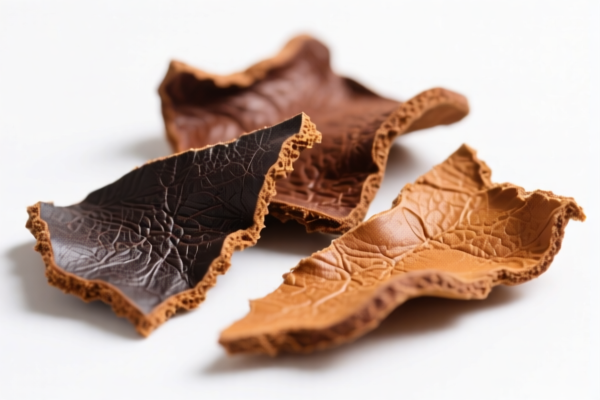
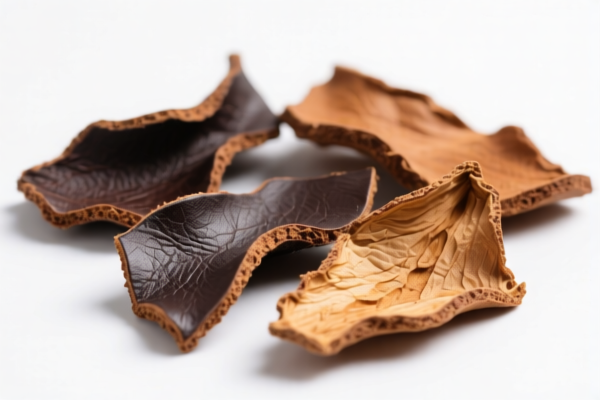
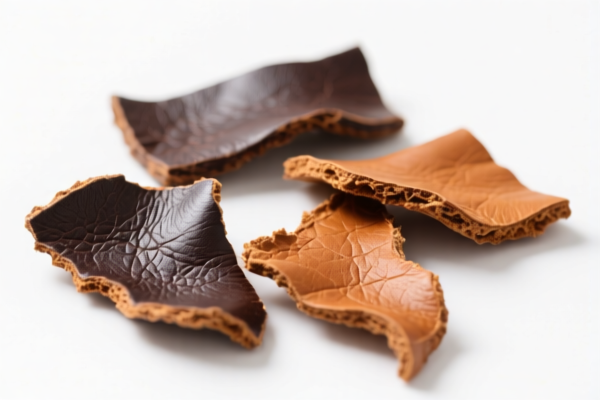
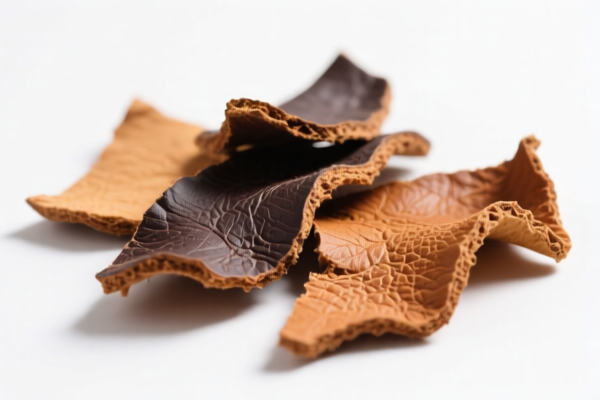
🥩 Dried Beef Liver (Dried Offal of Bovine Animals)
🌐 HS Code Reference & Customs Clearance Guide | 2026 Latest Tariff Analysis | Professional Compliance Strategy
📌 Part 1: Product Definition & Classification: Do You Truly Understand "Dried Beef Liver"?
Dried beef liver falls under the category of prepared or preserved meat. Unlike fresh liver (HS 0206) or frozen liver (HS 0206), the drying process changes its preservation state, moisture content, and shelf life, moving it into Chapter 02 (Meats) or potentially Chapter 16 (Preparations) depending on specific processing methods.
Key Classification Distinction: * Simple Drying/Salting: If the liver is simply dried, salted, or smoked without further cooking or complex preparation, it generally remains in Chapter 02. * Cooked/Prepared: If the liver is cooked, mixed with spices, or made into pâtés, it may fall under Chapter 16.
⚠️ Critical Distinction Point: - If simple drying/salting/smoking only →归入 Chapter 02 (specifically 0206) - If cooked, seasoned, or blended →归入 Chapter 16 (specifically 1602) - Packaging doesn’t change HS: Vacuum-packed dried liver is still classified by its content, not the packaging.
📦 Part 2: HS Code Classification Details (2026 Latest Tariff Authority Comparison)
| HS Code | Product Description | Application Scenario | Processing Level |
|---|---|---|---|
0206.29.90 |
Other edible offal of bovine animals, dried, salted, or in brine (excluding liver specifically listed if separate) | Note: In many 8-digit systems, "Liver" is often subsumed under "Other offal" or has a specific code depending on the country. USA Specific: See below. |
✅ Simple Drying/Salting |
0206.21 |
Liver of bovine animals, frozen | Not applicable for dried products. This is for fresh/frozen. | ❌ Wrong Category |
1602.49.00 |
Other prepared or preserved meat or meat offal | If the dried liver is cooked, seasoned, or mixed with other ingredients before drying. | ✅ Cooking/Seasoning |
0206.29.90 (USA) |
Other dried, salted, or smoked edible offal of bovine animals | USA Specific HS Code for dried bovine offal (including liver if not separately enumerated). | ✅ Simple Drying |
🔍 Important Note for US Imports: - The US HTS (Harmonized Tariff Schedule) often groups "Liver" with "Other Offal" under 0206.29.90 for dried/salted products unless there is a specific subheading for liver. - Verification is Key: Always check the latest USITC HTS code for "Liver, dried". If no specific "Liver" code exists in Chapter 02, it defaults to "Other edible offal".
💰 Part 3: 2026 Latest Tariff Rate Details (Including Additional Taxes & Policy Add-ons)
✅ Applicable Country: United States (US)
✅ Origin: China (CN)
✅ Effective Time: Post-November 2025 (Current Status)
🎯 1. 0206.29.90 —— Dried/Salted Bovine Offal (Including Liver)
| Item | Content |
|---|---|
| Base Rate | 2.4% (ad valorem) |
| USITC Additional Duty | +25% (Under USITC Footnote 9903.88.01 – Section 301) |
| IEEPA Additional Duty | +10% (For China/HK origin, effective Nov 2025) |
| Total Rate | 37.4% |
| Tax Calculation | CIF Value × 37.4% |
| De Minimis Eligibility | ❌ No (deny_de_minimis) |
| Legal Basis Path | IEEPA:9903.01.25 → IEEPA:9903.01.24 → USITC:0206.29.90.00 → FOOTNOTE:9903.88.01 |
📌 Explanation: - "USITC 25%": Comes from Section 301 tariffs on Chinese goods. - "IEEPA 10%": The new surcharge on Chinese imports effective Nov 2025. - Total 37.4%: This is a high tariff for meat products. Profit margins must account for this.
🎯 2. 1602.49.00 —— Prepared/Cooked Bovine Offal (If Applicable)
| Item | Content |
|---|---|
| Base Rate | 2.4% |
| USITC Additional Duty | +25% (Section 301) |
| IEEPA Additional Duty | +10% (China Origin) |
| Total Rate | 37.4% |
| Tax Calculation | CIF Value × 37.4% |
| De Minimis Eligibility | ❌ No |
| Legal Basis Path | Same as above, but under Chapter 16 code. |
📌 Note: - Whether classified under Chapter 02 or 16, Section 301 and IEEPA tariffs apply equally to most Chinese meat products. - If the product is considered "Highly Processed," it might still fall under 1602, but the tariff rate remains high.
🛠️ Part 4: Customs Clearance Practical Advice (Real-World Pitfall Avoidance)
✅ 1. Required Documentation Checklist (All are Mandatory)
| Document | Must Provide | Description |
|---|---|---|
| ✅ Commercial Invoice | ✔️ | Must specify "Dried Beef Liver" and HS Code |
| ✅ Packing List | ✔️ | Show net weight, gross weight, and number of packages |
| ✅ Certificate of Origin (CO) | ✔️ | From Chinese customs; may help with origin verification |
| ✅ Health Certificate | ✔️ | Critical: Issued by Chinese AQSIQ or equivalent authority, stating product is fit for human consumption |
| ✅ Production Facility Registration | ✔️ | Facility must be registered with USDA FSIS for meat import eligibility |
| ✅ FSIS Import Permit | ✔️ | Required for most meat products entering the US |
| ✅ Ingredient List | ✔️ | If seasoned, list all spices/seasonings |
✅ 2. Declaration Tips (Key Mantra)
🔥 "Accurate Description, Health Cert, USDA Check!"
| Scenario | Correct Declaration | Wrong Practice |
|---|---|---|
| Dried Beef Liver | 0206.29.90.00 |
Misdeclare as "Spice" or "Animal Feed" → Seizure |
| Vacuum-Packed | Declare as "Dried Beef Liver" | Declare as "Food Product" → Delay |
| Seasoned Dried Liver | Check if it meets "Prepared" criteria (1602.49.00) |
Use Chapter 02 code for cooked product → Classification Error |
| Small Sample Shipments | Still requires Health Cert & FSIS Permit | Skip docs for samples → Confiscation |
✅ 3. Special Cases Handling
| Situation | Handling Advice |
|---|---|
| OEM/Private Label | Provide brand authorization if using a US brand |
| Mixed Products | If dried liver is mixed with beef jerky, declare each component separately or use the principal ingredient code |
| Animal Feed vs. Human Food | CRITICAL: Dried liver for pets (animal feed) has different rules (Chapter 23). Human consumption requires strict USDA/AQSIQ certs. Do not mix purposes. |
| Re-export | If clearing through a Free Trade Zone (FTZ), duties may be deferred, but still subject to entry requirements |
🌍 Part 5: Global Market Comparison (2026 Latest)
| Country/Region | Recommended HS Code | Tariff | Certification | Notes |
|---|---|---|---|---|
| 🇺🇸 USA | 0206.29.90.00 |
37.4% (China) | USDA FSIS + Health Cert | High barriers |
| 🇨🇳 China | 0206.29.90.00 |
15-20% | CIQ Inspection | Import restrictions apply |
| 🇪🇺 EU | 0206.29.90.00 |
12-18% | EU Health Certificate | Strict on additives |
| 🇦🇺 Australia | 0206.29.90.00 |
5-10% | Australian Biosecurity | Very strict biosecurity |
| 🇯🇵 Japan | 0206.29.90.00 |
15-20% | Japan Food Safety | High inspection rates |
📌 Conclusion: - USA has the highest effective tariff due to trade war policies. - EU and Japan have strict sanitary and phytosanitary (SPS) measures. - Australia is notoriously difficult for meat products due to biosecurity risks.
📌 Part 6: Common Errors & Pitfall Guide (Lessons Learned)
❌ Error 1: Declaring as "Beef Jerky" (Chapter 0216/0210) instead of "Dried Offal"
👉 Consequence: Classification error → Fines + Back Taxes
❌ Error 2: Missing Health Certificate or USDA Registration
👉 Consequence: Product Rejected/Destroyed at US Border
❌ Error 3: Mixing Human Food and Animal Feed in one shipment
👉 Consequence: Whole Shipment Seized for misdeclaration
❌ Error 4: Under-declaring Weight or Value
👉 Consequence: Seizure + Civil Penalty (up to 40% of value)
✅ Correct Practice:
"Dried Beef Liver, Vacuum Packed, 5kg/net weight, Produced in [Country], Fit for Human Consumption, Certified by [Agency]"
🎯 Part 7: Conclusion: Professional Declaration Saves Money!
🎯 Remember the Mantra:
🔹 "Dried Liver = High Tariff + Strict Docs"
🔹 "Human Food ≠ Animal Feed: Never Mix!"
🔹 "Health Cert is King: No Cert, No Entry!"
📌 Pro Tip: If you are exporting dried liver to the US, consider if processing the liver into a paste or pâté (Chapter 16) changes the tariff profile. Sometimes, further processing can shift the HS code to a different rate, though for China-origin, the 25%+10% surcharge often remains.
📣 Immediate Action:
📞 Contact a licensed US customs broker.
📄 Ensure your Chinese supplier has USDA FSIS Registration.
🚀 Start the Health Certificate process before shipment!
✨ Professional Clearance, Start with Accurate Classification!
💼 Your Profit Margin Depends on Precise Compliance!
Customer Reviews
About HS Code Classification
The Harmonized System (HS) is an internationally standardized nomenclature developed by the World Customs Organization (WCO) to classify traded products. Over 200 countries use the HS system as the basis for customs tariffs, trade statistics, and import/export regulations.
Each HS code follows a hierarchical structure:
- Chapter (2 digits) — Broad category of goods (e.g., Chapter 84: Machinery and Mechanical Appliances)
- Heading (4 digits) — More specific grouping within the chapter
- Subheading (6 digits) — Internationally standardized breakdown, used by all WCO member countries
- National subdivisions (8-10 digits) — Country-specific extensions for further classification, such as US HTSUS 10-digit codes
Correct HS code classification is essential for smooth customs clearance, accurate duty payment, and compliance with trade regulations. Misclassification can lead to customs delays, overpayment of duties, or penalties.
When importing from CN to US, the applicable tariff rates may include:
- Most-Favored-Nation (MFN) rate — The standard duty rate applied to WTO members
- General rate — Applied to countries without trade agreements
- Trade remedy duties — Additional tariffs such as Section 301 (anti-dumping), Section 232 (national security), or countervailing duties
The information provided on this page is for reference purposes only. For official classification, please consult with your local customs authority or a licensed customs broker.