Dried Bovine Leather (Full Grain, Unsplit, Unit Area Not Exceeding 2.6 m²)
CN → US| HS Code | Tariff Rate | Origin | Destination | Doc |
|---|---|---|---|---|
| 4107111020 | 35.0% | CN | US | Official Doc |
| 4107112000 | 37.4% | CN | US | Official Doc |
Product Images
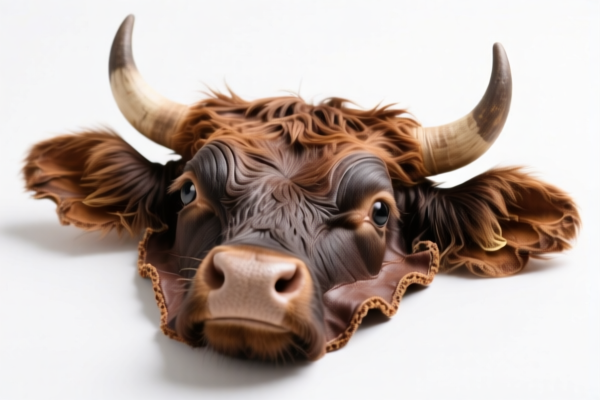
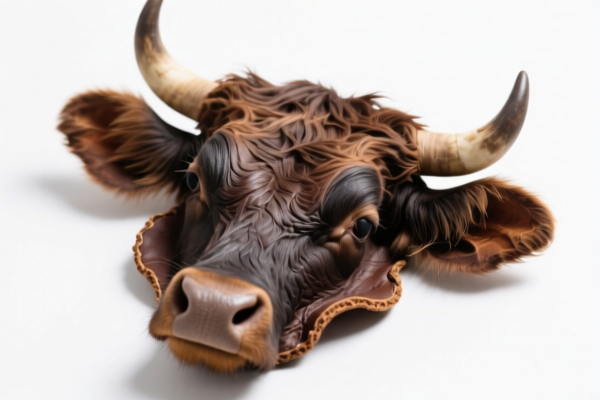
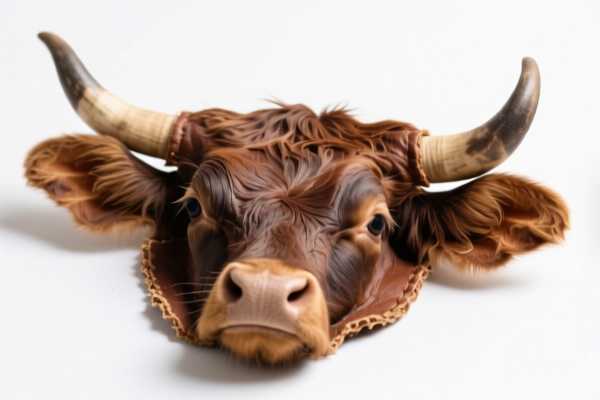
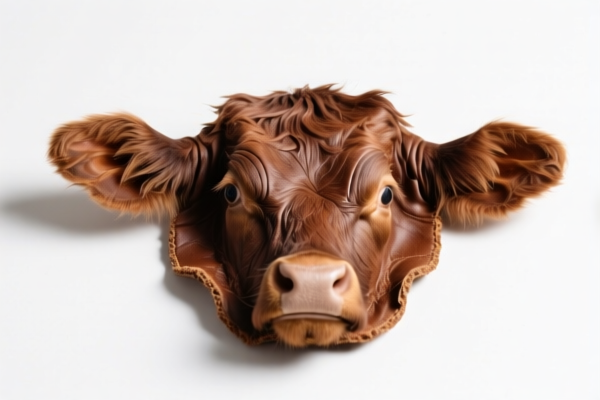
AI Analysis
🧵 Dried Bovine Leather (Full Grain, Unsplit, Unit Area ≤ 2.6 m²)
🌐 HS Code Reference & Customs Clearance Guide | 2026 Latest Tariff Analysis | Professional-Level Entry Strategy
📌 I. Product Definition & Classification: What Exactly Is "Bovine Leather"?
Bovine leather refers to the skins of cattle (including buffalo) that have undergone tanning or crust processing. In international trade, this category is strictly defined by:
- Animal Origin: Bovine (including buffalo) or equine animals.
- Processing Status: Further prepared after tanning or crusting, including parchment-dressed leather.
- Surface Condition: Without hair on, whether or not split.
- Size Constraint: Unit surface area not exceeding 28 square feet (2.6 m²).
- Exclusions: Leather of heading 4114 (e.g., patent leather or lacquered leather) is excluded.
⚠️ Key Distinction Point:
- If the leather is Upper Leather (used for footwear uppers) → It falls under specific sub-headings like4107.11.10.20.
- If it is Other Full Grain Leather (not classified as "fancy" or specific upper/lining types) → It may fall under general categories like4107.11.20.00.
📦 II. HS Code Classification Details (2026 Latest Tariff Authority Comparison)
Based on the provided data, the product is classified under two main HS codes depending on its specific use or type:
| HS Code | Product Description | Application Scenario | Tax Rate |
|---|---|---|---|
4107.11.10.20 |
Upper leather (Full grain, unsplit, bovines, ≤ 2.6 m²) | Footwear uppers, high-end leather goods where "upper leather" classification applies | 25.0% |
4107.11.20.00 |
Other: Not fancy (Full grain, unsplit, bovines, ≤ 2.6 m²) | General full-grain leather for bags, upholstery, belts, etc., not specifically "upper leather" or "fancy" | 27.4% |
🔍 Important Note:
- Both codes apply to whole hides/skins that are full grain and unsplit.
- The key difference lies in whether the leather is specifically designated as "Upper Leather" (for shoes) or falls under a broader "Other" category.
- "Not fancy" in4107.11.20.00means the leather is not specially treated for decorative purposes (e.g., embossed, colored, or finished for fashion items).
💰 III. 2026 Latest Tariff Rate Breakdown (Including Surcharge Policies)
✅ Applicable Country: United States (US)
✅ Origin: China (CN) (Assumed based on typical trade context; adjust if origin differs)
✅ Effective Date: Subject to current USITC and IEEPA regulations
🎯 1. 4107.11.10.20 —— Upper Leather (Bovine, Full Grain, ≤ 2.6 m²)
| Item | Content |
|---|---|
| Base Tariff | 0.0% (ad valorem) |
| USITC Surcharge | +25.0% (Section 301 Duties) |
| Total Tax Rate | 25.0% |
| Tax Calculation | CIF Value × 25.0% |
| De Minimis Exemption | ❌ Not Applicable (Section 321 de minimis does not apply to Section 301 goods from China) |
| Legal Basis | USITC Footnote 9903.88.01 (if applicable to leather imports) |
📌 Explanation:
- Although the base tariff is 0%, the 25% Section 301 surcharge applies to certain Chinese-origin bovine leather products.
- This results in a flat 25% total tax rate for this specific sub-category.
🎯 2. 4107.11.20.00 —— Other Full Grain Leather (Not Fancy)
| Item | Content |
|---|---|
| Base Tariff | 2.4% (ad valorem) |
| USITC Surcharge | +25.0% (Section 301 Duties) |
| Total Tax Rate | 27.4% |
| Tax Calculation | CIF Value × 27.4% |
| De Minimis Exemption | ❌ Not Applicable |
| Legal Basis | USITC Footnote 9903.88.01 (if applicable) |
📌 Explanation:
- This category carries a higher effective rate due to the 2.4% base tariff combined with the 25% surcharge.
- Use this code if the leather is not classified as "upper leather" and is not fancy.
🛠️ IV. Customs Clearance Practical Advice (Avoiding Common Pitfalls)
✅ 1. Required Documentation (All Are Mandatory)
| Document | Required | Notes |
|---|---|---|
| ✅ Product Specification Sheet | ✔️ | Must specify: animal type (bovine/equine), tanning process, surface area, split/unsplit status |
| ✅ Photos of Leather Hides | ✔️ | Show texture, edge, and any markings; must confirm no hair and full grain |
| ✅ Commercial Invoice | ✔️ | Clearly state "Dried Bovine Leather, Full Grain, Unsplit, ≤ 2.6 m²" |
| ✅ Packing List | ✔️ | Indicate quantity, weight, and dimensions |
| ✅ Certificate of Origin (CO) | ✔️ | If originating from China, confirm country of origin for accurate duty assessment |
| ✅ Tanning Process Description | ✔️ | Briefly describe tanning method (chrome, vegetable, etc.) if requested |
✅ 2. Declaration Tips (Critical for Accuracy)
🔥 "Specify Use: Upper vs. Other; Area Matters; Grain Must Be Full!"
| Scenario | Correct HS Code | Incorrect Practice |
|---|---|---|
| Leather intended for shoe uppers | 4107.11.10.20 (25.0%) |
Misdeclaring as "general leather" → 27.4% |
| General full-grain leather (bags, belts) | 4107.11.20.00 (27.4%) |
Misdeclaring as "upper leather" → 25.0% |
| Leather > 2.6 m² | ❌ Not covered by these codes | Must use different headings (e.g., 4107.21) |
| Leather with hair on | ❌ Incorrect | Must be "without hair" for heading 4107 |
✅ 3. Special Circumstances Handling
| Situation | Handling Advice |
|---|---|
| OEM Custom Leather | Provide customer orders + design specs to justify "upper leather" if applicable |
| Mixed Shipments | Separate shipments by HS code to avoid misclassification penalties |
| Dispute on "Full Grain" | Provide microscopic analysis or supplier certification if challenged by Customs |
| Area Exceeds 2.6 m² | Re-classify under heading 4107.21 (larger hides), which may have different rates |
🌍 V. Global Market Comparison (2026 Latest)
| Country/Region | Recommended HS Code | Tariff Rate | Notes |
|---|---|---|---|
| 🇺🇸 United States | 4107.11.10.20 or 4107.11.20.00 |
25.0% / 27.4% | Section 301 surcharge applies to Chinese origin |
| 🇨🇳 China | 4107.11 | 0–10% | Depends on import policy; no Section 301 surcharge |
| 🇪🇺 European Union | 4107.11 | ~2.5–6.5% | No Section 301 surcharge; CET applies |
| 🇬🇧 United Kingdom | 4107.11 | ~2.5–6.5% | Post-Brexit tariff schedule applies |
| 🇯🇵 Japan | 4107.11 | 0–5.5% | No additional surcharges |
📌 Conclusion:
- The US imposes the highest effective duty (25–27.4%) on Chinese-origin bovine leather due to Section 301 tariffs.
- Non-US markets generally have lower or zero base tariffs without such surcharges.
- Supply chain strategy: Consider sourcing from non-China origins if entering the US market to avoid 25%+ duties.
📌 VI. Common Errors & Pitfalls (Lessons Learned)
❌ Error 1: Declaring split leather as "full grain"
👉 Consequence: Misclassification → Penalty + Back Taxes
❌ Error 2: Ignoring unit surface area
👉 Consequence: If > 2.6 m², it falls under a different HS code with potentially different duties → Clearance Delay
❌ Error 3: Not specifying "without hair"
👉 Consequence: If hair is present, it may fall under heading 4104 or 4105 → Wrong Duty Rate
❌ Error 4: Confusing "upper leather" with "fancy leather"
👉 Consequence: Fancy leather may have different classifications and tariffs → Underpayment or Overpayment
✅ Correct Declaration Example:
"Dried Bovine Leather, Full Grain, Unsplit, Without Hair, Unit Area 2.5 m², Tanned, For Shoe Upper Use"
🎯 VII. Conclusion: Precision in Classification Saves Costs!
🎯 Key Takeaways:
🔹 "Full Grain, Unsplit, ≤ 2.6 m²" = Heading 4107
🔹 "Upper Leather" → 25.0% Tax
🔹 "Other (Not Fancy)" → 27.4% Tax
🔹 "Without Hair" is Mandatory
🔹 Section 301 Surcharge Applies to Chinese Origin
📌 Pro Tip:
If your bovine leather is not from China, the 25% Section 301 surcharge may not apply, significantly reducing costs.
Always seek Advance Ruling from US Customs if unsure about classification.
📣 Immediate Action:
📞 Consult a licensed customs broker
📄 Provide detailed product specs & photos
🚀 Ensure correct HS code selection to avoid 25–27.4% surprises!
✨ Professional Clearance Starts with Accurate Classification!
💼 Every Dollar Saved Is a Dollar Earned!
Customer Reviews
About HS Code Classification
The Harmonized System (HS) is an internationally standardized nomenclature developed by the World Customs Organization (WCO) to classify traded products. Over 200 countries use the HS system as the basis for customs tariffs, trade statistics, and import/export regulations.
Each HS code follows a hierarchical structure:
- Chapter (2 digits) — Broad category of goods (e.g., Chapter 84: Machinery and Mechanical Appliances)
- Heading (4 digits) — More specific grouping within the chapter
- Subheading (6 digits) — Internationally standardized breakdown, used by all WCO member countries
- National subdivisions (8-10 digits) — Country-specific extensions for further classification, such as US HTSUS 10-digit codes
Correct HS code classification is essential for smooth customs clearance, accurate duty payment, and compliance with trade regulations. Misclassification can lead to customs delays, overpayment of duties, or penalties.
When importing from CN to US, the applicable tariff rates may include:
- Most-Favored-Nation (MFN) rate — The standard duty rate applied to WTO members
- General rate — Applied to countries without trade agreements
- Trade remedy duties — Additional tariffs such as Section 301 (anti-dumping), Section 232 (national security), or countervailing duties
The information provided on this page is for reference purposes only. For official classification, please consult with your local customs authority or a licensed customs broker.