Dried Bovine Leather Full Grain Unsplit
CN → US| HS Code | Tariff Rate | Origin | Destination | Doc |
|---|---|---|---|---|
| 4107111040 | 35.0% | CN | US | Official Doc |
| 4107191040 | 35.0% | CN | US | Official Doc |
| 4115100000 | 35.0% | CN | US | Official Doc |
| 4113903000 | 38.3% | CN | US | Official Doc |
| 4113906000 | 36.6% | CN | US | Official Doc |
| 4107112000 | 37.4% | CN | US | Official Doc |
Product Images
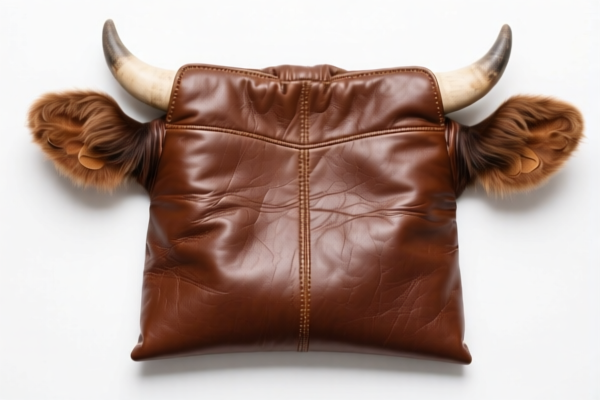
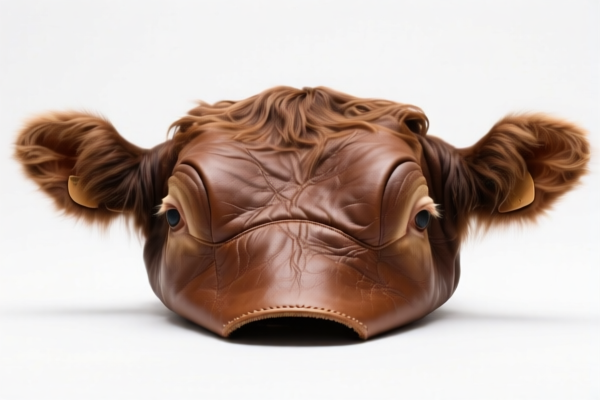
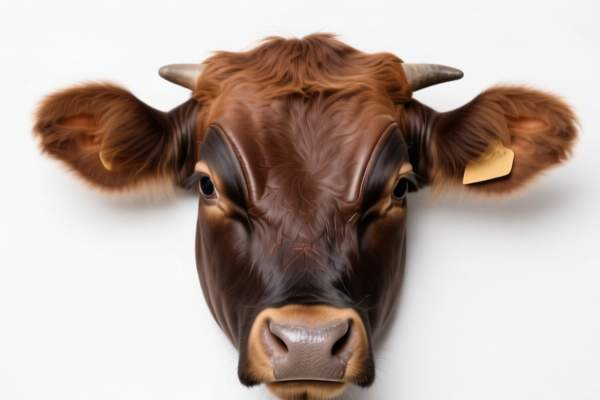
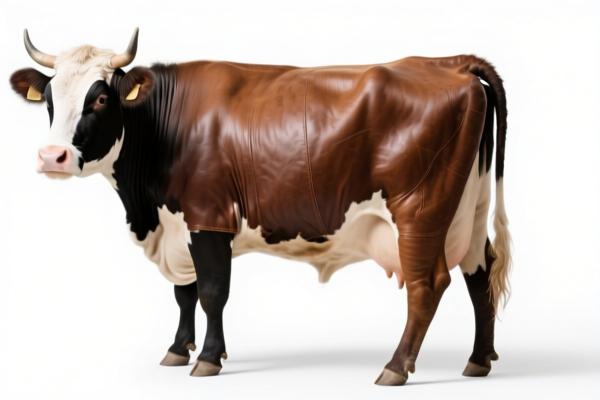
AI Analysis
🐄 Dried Bovine Leather: Full Grain, Unsplit (Cattle Skin)
🌐 HS Code Reference & Customs Clearance Guide | 2026 Latest Tariff Analysis | Professional Clearance Strategy for US Imports
📌 I. Product Definition & Classification: Do You Truly Understand "Full-Grain Bovine Leather"?
Dried Bovine Leather (Full Grain, Unsplit) is a premium material used in high-end footwear, luggage, belts, and furniture. In international trade, its classification depends heavily on its post-tanning processing status and intended form (e.g., raw skin vs. sheet vs. lining).
The term "Unsplit" is critical: it means the hide has not been sliced into layers. The top layer (grain layer) remains intact. However, the destination HS Code changes drastically based on whether it is classified as "Raw Hide" (Chapter 41) or "Worked Leather" (Chapter 41/42), and specifically if it is designated for lining (shoe uppers/linings) or general sheet use.
⚠️ Key Distinction Point:
- If the leather is prepared specifically for use as shoe linings or upper linings → It falls under 4107 (Prepared Leather for Linings).
- If it is prepared for general use as sheets, plates, or strips → It falls under 4113 (Other Prepared Leather).
- Crucial: "Full Grain" does not automatically mean a lower tariff. For US imports from China, the destination use (Lining vs. General) dictates the HS Code, which triggers different tariff footnotes.
📦 II. HS Code Classification Details (2026 Latest Tariff Authority Comparison)
| HS Code | Product Description | Application Scenario | Specific Classification Logic |
|---|---|---|---|
4107.11.10.40 |
Full-Grain Bovine Leather for Linings | Shoe linings, bag linings, inner layers of jackets | ✅ Specifically prepared for lining use. "Unsplit" ensures full grain integrity. |
4107.19.10.40 |
Other Full-Grain Bovine Leather for Linings | Other specific lining applications not covered in 4107.11 | ✅ General category for other lining purposes. |
4115.10.00.00 |
Bovine Leather Lining/Sheet (Composite Leather Requirement) | Leather sheets intended for lamination or composite manufacturing | ✅ Classified under "Other prepared leather" if used as a sheet material for composites. |
4113.90.30.00 |
Other Animal Leather, Further Processed | General prepared leather not for linings, further worked | ✅ Falls under "Other animal leather" when not specifically for linings. |
4113.90.60.00 |
Other Animal Leather, Patterned/Decorated | Leather with embossing, engraving, or other surface decoration | ✅ Classified under "Other animal leather" with specific surface features. |
🔍 Critical Reminder:
- Do NOT misclassify "Lining Leather" as "General Leather."
- 4107 codes are specifically for leather prepared for use as linings.
- 4113/4115 codes are for leather prepared for other uses (e.g., soles, general bags, furniture).
- For US imports from China, all these categories face high additional tariffs (see Section III).
💰 III. 2026 Latest Tariff Rate Breakdown (Including Surcharge, Policy Surcharge)
✅ Applicable Country: United States (US)
✅ Origin: China (CN)
✅ Effective Date: November 10, 2025 (and subsequent imports)
🎯 1. 4107.11.10.40 & 4107.19.10.40 —— Bovine Leather for Linings (Full Grain)
| Item | Content |
|---|---|
| Base Tariff Rate | 0% (ad valorem) |
| USITC Surcharge | +25% (Section 301 Tariffs) |
| IEEPA Surcharge | +10% (China-specific, effective Nov 10, 2025) |
| Total Tax Rate | 35.0% |
| Tax Calculation | CIF Value × 35% |
| De Minimis Eligibility | ❌ No (deny_de_minimis) |
| Legal Basis Path | IEEPA:9903.01.25 → USITC:4107.11.10.40 / 4107.19.10.40 → FOOTNOTE:301 |
📌 Explanation:
- Base Rate 0%: Leather products generally have low base MFN rates.
- 25% Surcharge: Applies to most Chinese-origin goods under Section 301.
- 10% IEEPA Surcharge: A new/additional layer targeting specific categories from China.
- Total 35%: This is a significant cost factor. Do not underestimate this even if the base rate is 0%.
🎯 2. 4115.10.00.00 —— Bovine Leather Lining/Sheet (Composite)
| Item | Content |
|---|---|
| Base Tariff Rate | 0% (ad valorem) |
| USITC Surcharge | +25% (Section 301 Tariffs) |
| IEEPA Surcharge | +10% (China-specific) |
| Total Tax Rate | 35.0% |
| Tax Calculation | CIF Value × 35% |
| De Minimis Eligibility | ❌ No |
| Legal Basis Path | IEEPA:9903.01.25 → USITC:4115.10.00.00 → FOOTNOTE:301 |
📌 Note:
- Same tariff burden as lining leathers.
- Even if labeled as "sheet" or "composite material," if it is Chinese-origin, the 35% total applies.
🎯 3. 4113.90.30.00 —— Other Animal Leather, Further Processed
| Item | Content |
|---|---|
| Base Tariff Rate | 3.3% (ad valorem) |
| USITC Surcharge | +25% (Section 301 Tariffs) |
| IEEPA Surcharge | +10% (China-specific) |
| Total Tax Rate | 38.3% |
| Tax Calculation | CIF Value × 38.3% |
| De Minimis Eligibility | ❌ No |
| Legal Basis Path | IEEPA:9903.01.25 → USITC:4113.90.30.00 → FOOTNOTE:301 |
📌 Warning:
- Higher Total Rate! Because the base rate is 3.3%, the total burden increases to 38.3%.
- Misclassifying "Lining Leather" as "Other Leather" to avoid 4107 codes is risky and may still be challenged by CBP, leading to penalties.
🎯 4. 4113.90.60.00 —— Other Animal Leather, Patterned/Decorated
| Item | Content |
|---|---|
| Base Tariff Rate | 1.6% (ad valorem) |
| USITC Surcharge | +25% (Section 301 Tariffs) |
| IEEPA Surcharge | +10% (China-specific) |
| Total Tax Rate | 36.6% |
| Tax Calculation | CIF Value × 36.6% |
| De Minimis Eligibility | ❌ No |
| Legal Basis Path | IEEPA:9903.01.25 → USITC:4113.90.60.00 → FOOTNOTE:301 |
📌 Note:
- If the leather is embossed, engraved, or otherwise surface-decorated, it may fall here.
- Base rate is slightly higher than 0%, leading to a 36.6% total rate.
🛠️ IV. Customs Clearance Practical Advice (Field Pitfall Avoidance Guide)
✅ 1. Preparation Checklist (All Required)
| Document | Must Provide | Explanation |
|---|---|---|
| ✅ Product Specification Sheet | ✔️ | Must state: "Full Grain," "Unsplit," "Bovine," "Dried," "Prepared for Lining/Sheet." |
| ✅ Photo of Leather Surface | ✔️ | Clear image showing grain texture. Must prove it is not split (no suede-like underside). |
| ✅ Commercial Invoice | ✔️ | Must clearly describe: "Dried Bovine Leather, Full Grain, Unsplit, for Use as [Lining/Sheet]." |
| ✅ Packing List | ✔️ | Weight, dimensions, number of hides/sheets. |
| ✅ Certificate of Origin (CO) | ✔️ | Essential for determining Country of Origin (China triggers surcharges). |
| ✅ Tanning Process Description | ✔️ | Briefly explain if it is chrome-tanned or vegetable-tanned (affects some codes, but not tariff rate here). |
✅ 2. Declaration Tips (Key Mantras)
🔥 "Lining vs. Sheet: Define Use First. Full Grain Means No Split. China Origin = 35%+!"
| Scenario | Correct Declaration | Incorrect Practice |
|---|---|---|
| Leather for Shoe Linings | 4107.11.10.40 / 4107.19.10.40 |
Misclassifying as 4113 → Potential penalty if intent is proven. |
| Leather Sheets for Lamination | 4115.10.00.00 |
Misclassifying as 4107 if not for lining → Unnecessary complexity. |
| Decorated/Embossed Leather | 4113.90.60.00 |
Misclassifying as plain 4113.90.30.00 → Underpayment of base tariff. |
| Unsplit Full Grain | Explicitly state "Unsplit" | Failing to state "Unsplit" → CBP may assume split leather (different code). |
✅ 3. Special Cases Handling
| Scenario | Handling Advice |
|---|---|
| Mixed Shipment (Lining + General) | Split the declaration. Do not lump all leather into one HS Code. Misclassification can invalidate the entire shipment's clearance. |
| Leather for Footwear Uppers | NOT 4107. If used for uppers, it is not for linings. It should be classified under 4106.32 or 4107.20 (if for uppers) or 4113/4115 depending on form. Note: The provided DATA only covers lining/general sheets. For uppers, check other codes. However, based on your DATA, if it's "Unsplit Full Grain" and used for lining, use 4107. |
| Leather for Bags/Accessories | If for bags, it is generally 4113 or 4115. Not 4107 (lining). |
| Small Samples (De Minimis) | ❌ No Exemption. Even for samples, if the HS Code is deny_de_minimis, you must pay duties. |
🌍 V. Global Market Customs Comparison (2026 Latest)
| Country/Region | Recommended HS Code (Example) | Tariff | Certification Requirements | Notes |
|---|---|---|---|---|
| 🇺🇸 USA | 4107.11.10.40 |
35.0% | None specific for leather, but accurate description is key. | Highest cost. Section 301 + IEEPA applies. |
| 🇨🇳 China | 4107.11.10.40 |
~10-15% | None | Lower duties, but export restrictions may apply. |
| 🇪🇺 EU | 4107.21.10 |
6.5% | Ecolabel (if eco-tanned) | No Section 301 equivalent, but anti-dumping may apply. |
| 🇬🇧 UK | 4107.21.10 |
6.5% | None | Post-Brexit rules apply. |
📌 Conclusion:
- USA is the most expensive market for Chinese bovine leather due to the 35%-38.3% total rate.
- Accurate description of "Use" (Lining vs. General) is the most critical factor in classification.
- No de minimis exemption applies, so even small shipments must pay duties.
📌 VI. Common Errors & Pitfall Guide (Lessons Learned)
❌ Error 1: Declaring "Full Grain Leather" without specifying "For Lining" or "For Sheets"
👉 Consequence: CBP will classify it under the highest duty rate or hold shipment for clarification.
❌ Error 2: Misclassifying "Lining Leather" as "General Leather" (4113) to avoid scrutiny
👉 Consequence: If CBP determines the leather is specifically prepared for linings (e.g., uniform thickness, specific finish), they may reassess under 4107 or penalize for false declaration.
❌ Error 3: Assuming "Full Grain" means lower tariff
👉 Consequence: Irrelevant for tariff rate in this context. The Surcharge (25% + 10%) is the dominant cost driver.
❌ Error 4: Ignoring the "Unsplit" status
👉 Consequence: If it is split, it may fall under different codes (e.g., suede/nubuck), changing the HS Code entirely. Must be clearly "Full Grain/Unsplit."
✅ Correct Declaration Example:
"DRIED BOVINE LEATHER, FULL GRAIN, UNSPLIT, PREPARED FOR USE AS SHOE LINING, CHROME TAN, COUNTRY OF ORIGIN: CHINA"
🎯 VII. Conclusion: Professional Declaration, Cost Optimization!
🎯 Remember the Mantra:
🔹 "Lining = 4107 (35%), Sheet/General = 4113/4115 (36.6-38.3%)."
🔹 "Full Grain, Unsplit = Premium, but Tariff = Heavy."
🔹 "China Origin + Leather = No De Minimis."
📌 Pro Tip:
If your leather is tanned in a third country (e.g., Vietnam, Italy) from Chinese raw hides, ensure the Substantial Transformation rules are met to change the Country of Origin. This could potentially reduce IEEPA surcharges.
Recommendation: Apply for an Advance Ruling from US CBP if your shipment volume is high.
📣 Immediate Action:
📞 Contact your customs broker with Product Photos and Intended Use (Lining vs. General).
🚀 Ensure accurate HS Code selection to avoid 35%+ unexpected duties.
✨ Professional clearance starts with precise classification!
💼 Every percentage point of tariff impacts your margin!
Customer Reviews
About HS Code Classification
The Harmonized System (HS) is an internationally standardized nomenclature developed by the World Customs Organization (WCO) to classify traded products. Over 200 countries use the HS system as the basis for customs tariffs, trade statistics, and import/export regulations.
Each HS code follows a hierarchical structure:
- Chapter (2 digits) — Broad category of goods (e.g., Chapter 84: Machinery and Mechanical Appliances)
- Heading (4 digits) — More specific grouping within the chapter
- Subheading (6 digits) — Internationally standardized breakdown, used by all WCO member countries
- National subdivisions (8-10 digits) — Country-specific extensions for further classification, such as US HTSUS 10-digit codes
Correct HS code classification is essential for smooth customs clearance, accurate duty payment, and compliance with trade regulations. Misclassification can lead to customs delays, overpayment of duties, or penalties.
When importing from CN to US, the applicable tariff rates may include:
- Most-Favored-Nation (MFN) rate — The standard duty rate applied to WTO members
- General rate — Applied to countries without trade agreements
- Trade remedy duties — Additional tariffs such as Section 301 (anti-dumping), Section 232 (national security), or countervailing duties
The information provided on this page is for reference purposes only. For official classification, please consult with your local customs authority or a licensed customs broker.