Dried Buffalo Leather for Furniture
CN → US| HS Code | Tariff Rate | Origin | Destination | Doc |
|---|---|---|---|---|
| 4104413060 | 12.4% | CN | US | Official Doc |
| 4101203500 | 19.9% | CN | US | Official Doc |
| 4104113010 | 12.4% | CN | US | Official Doc |
| 4101503500 | 19.9% | CN | US | Official Doc |
| 4107915000 | 12.8% | CN | US | Official Doc |
Product Images
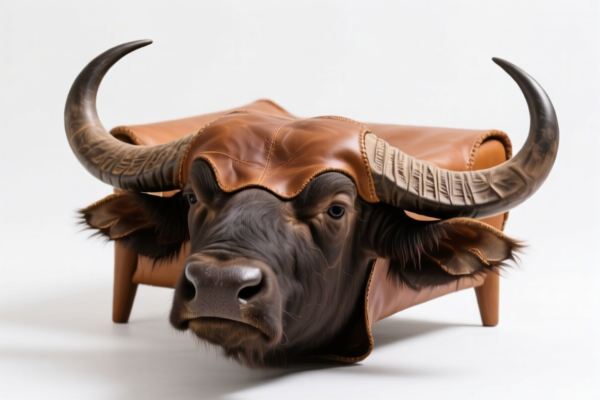
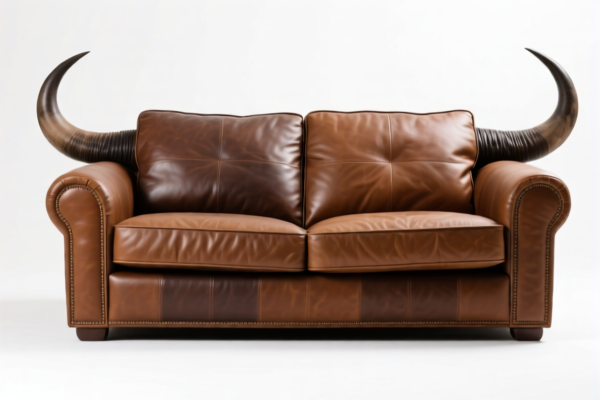
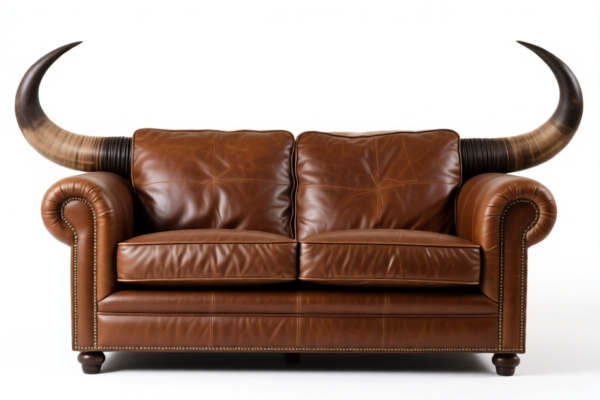
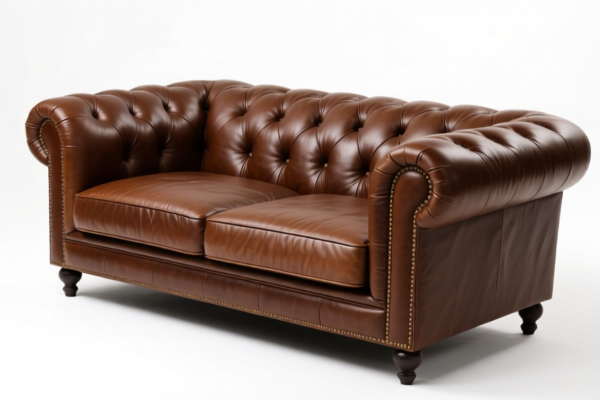
AI Analysis
🐃 Dried Buffalo Leather for Furniture
🌐 HS Code Reference & Customs Clearance Guide | 2026 Latest Tariff Analysis | Professional Clearance Strategy
📌 1. Product Definition & Classification: Do You Really Understand "Dried Buffalo Leather"?
Dried buffalo leather is a raw material primarily used in furniture manufacturing, upholstery, and leather goods. In international trade, its classification depends on whether it has been tanned, processed, or remains in its raw state. The key distinctions are:
Raw Skins (未加工原皮): Skins that have only been dried or salted, with no tanning or further processing.
Tanned/Processed Leather (已鞣制皮革): Skins that have undergone chemical or mechanical tanning, splitting, or finishing processes.
⚠️ Critical Distinction:
- If the leather is raw, dried, or salted without tanning → Classified under Chapter 41 (Raw Hides & Skins)
- If the leather is tanned or further processed → Classified under Chapter 41 (Tanned Leather)
- Furniture use does NOT change the HS code; it is determined by the material's processing state.
📦 2. HS Code Classification Details (2026 Latest Tariff Authority Comparison)
| HS Code | Product Description | Application Scenario | Processing State |
|---|---|---|---|
4104.41.30.60 |
Tanned buffalo leather, split, for furniture | Finished leather for upholstery, sofas, chairs | ✅ Tanned & Split |
4101.20.35.00 |
Raw buffalo skins, whole, unprocessed | Raw material for tanning, not yet processed | ❌ Raw/Unprocessed |
4104.11.30.10 |
Tanned buffalo leather, whole grain, unsplit | High-quality full-grain leather, minimal processing | ✅ Tanned & Whole |
4101.50.35.00 |
Raw buffalo skins, split, unprocessed | Raw material for tanning, split into layers | ❌ Raw/Unprocessed |
4107.91.50.00 |
Tanned buffalo leather, other (furniture use) | General tanned leather for furniture applications | ✅ Tanned & Other |
🔍 Key Reminder:
- All "raw" skins (even if dried) fall under 4101.xxxx or 4102.xxxx, not tanned leather codes.
- Tanned leather (even if used for furniture) falls under 4104.xxxx or 4107.xxxx.
- Furniture use is irrelevant to HS classification; it only affects the product description in customs declarations.
💰 3. 2026 Latest Tariff Rate Details (Including Surcharge, Policy Surcharges)
✅ Applicable Country: United States (US)
✅ Origin: China (CN)
✅ Effective Date: From November 10, 2025 (including subsequent imports)
🎯 1. 4104.41.30.60 —— Tanned Buffalo Leather, Split, for Furniture
| Item | Content |
|---|---|
| Base Tariff | 2.4% (ad valorem) |
| USITC Surcharge | 0.0% |
| Section 122 Surcharge | +10.0% (Targeting China) |
| Total Tariff | 12.4% |
| Tax Calculation | CIF Value × 12.4% |
| De Minimis Exemption | ❌ Not Applicable (deny_de_minimis) |
| Legal Basis Path | Section 122: 10% → USITC: 4104.41.30.60 → Base: 2.4% |
📌 Explanation:
- "Base Tariff 2.4%" is the standard duty for tanned bovine leather under HTSUS 4104.41.30.60;
- "Section 122 Surcharge 10%" is a targeted tariff on Chinese-origin leather products;
- Total 12.4%, which is moderate but still significant for high-volume shipments.
🎯 2. 4101.20.35.00 —— Raw Buffalo Skins, Whole, Unprocessed
| Item | Content |
|---|---|
| Base Tariff | 2.4% |
| USITC Surcharge | +7.5% |
| Section 122 Surcharge | +10.0% |
| Total Tariff | 19.9% |
| Tax Calculation | CIF Value × 19.9% |
| De Minimis Exemption | ❌ Not Applicable |
| Legal Basis Path | USITC: 7.5% → Section 122: 10% → USITC: 4101.20.35.00 → Base: 2.4% |
📌 Note:
- Raw skins attract higher surcharges due to USITC policies protecting domestic leather industries;
- Even though it's "raw," the 7.5% USITC surcharge pushes the total to 19.9%.
🎯 3. 4104.11.30.10 —— Tanned Buffalo Leather, Whole Grain, Unsplit
| Item | Content |
|---|---|
| Base Tariff | 2.4% |
| USITC Surcharge | 0.0% |
| Section 122 Surcharge | +10.0% |
| Total Tariff | 12.4% |
| Tax Calculation | CIF Value × 12.4% |
| De Minimis Exemption | ❌ Not Applicable |
| Legal Basis Path | Section 122: 10% → USITC: 4104.11.30.10 → Base: 2.4% |
📌 Note:
- Similar to4104.41.30.60, whole grain leather benefits from 0% USITC surcharge;
- Total 12.4%, same as split tanned leather, but higher value per square foot.
🎯 4. 4101.50.35.00 —— Raw Buffalo Skins, Split, Unprocessed
| Item | Content |
|---|---|
| Base Tariff | 2.4% |
| USITC Surcharge | +7.5% |
| Section 122 Surcharge | +10.0% |
| Total Tariff | 19.9% |
| Tax Calculation | CIF Value × 19.9% |
| De Minimis Exemption | ❌ Not Applicable |
| Legal Basis Path | USITC: 7.5% → Section 122: 10% → USITC: 4101.50.35.00 → Base: 2.4% |
📌 Note:
- Like4101.20.35.00, raw split skins are subject to 7.5% USITC surcharge;
- Total 19.9%, same as whole raw skins.
🎯 5. 4107.91.50.00 —— Tanned Buffalo Leather, Other (Furniture Use)
| Item | Content |
|---|---|
| Base Tariff | 2.8% |
| USITC Surcharge | 0.0% |
| Section 122 Surcharge | +10.0% |
| Total Tariff | 12.8% |
| Tax Calculation | CIF Value × 12.8% |
| De Minimis Exemption | ❌ Not Applicable |
| Legal Basis Path | Section 122: 10% → USITC: 4107.91.50.00 → Base: 2.8% |
📌 Note:
- This is a catch-all category for tanned leather not specified elsewhere;
- Base tariff is higher (2.8%) but no USITC surcharge;
- Total 12.8%, slightly higher than4104.xxxxbut still competitive.
🛠️ 4. Customs Clearance Practical Advice (Battle-Tested Pitfall Avoidance)
✅ 1. Required Documents Checklist (All Mandatory)
| Document | Mandatory | Description |
|---|---|---|
| ✅ Product Specification Sheet | ✔️ | Include type (raw/tanned), processing method, dimensions, thickness |
| ✅ Tanning Certificate | ✔️ | If tanned, provide proof of tanning process (vegetable/chrome) |
| ✅ Product Photos (Including Labels) | ✔️ | Clear images of hides/skins, showing grain, texture, and any markings |
| ✅ Third-Party Inspection Report | ✔️ | SGS, BV, or equivalent, confirming quality and processing state |
| ✅ Commercial Invoice | ✔️ | Clearly state "Buffalo Leather for Furniture" or "Raw Buffalo Skins" |
| ✅ Certificate of Origin (CO) | ✔️ | If not Chinese, may qualify for preferential tariffs |
| ✅ Packing List | ✔️ | Detail number of hides/skins, weight, and packaging method |
✅ 2. Declaration Tips (Key Mantra)
🔥 "State Processing Clearly, Avoid Raw/Tanned Confusion, Correct HS Saves Money!"
| Scenario | Correct Declaration | Wrong Practice |
|---|---|---|
| Tanned leather for furniture | 4104.41.30.60 or 4107.91.50.00 |
Misdeclare as "raw" → 19.9% |
| Raw skins (dried/salted) | 4101.20.35.00 or 4101.50.35.00 |
Misdeclare as "tanned" → 12.4% but risk penalties |
| Whole grain vs. split | Specify in description | Ambiguous → Customs delays |
| Mixed shipments | Separate HS codes per item | Combined declaration → Higher risk |
✅ 3. Special Case Handling
| Scenario | Handling Advice |
|---|---|
| OEM Custom Leather | Provide customer order + design specs, avoid "non-standard" labeling |
| Leather with Minor Defects | Still classified by processing state, not quality |
| Leather for Non-Furniture Use | HS code remains the same; only product description changes |
| Leather from Non-China Origin | Check for trade agreements (e.g., USMCA, GSP) for reduced tariffs |
🌍 5. Global Market Customs Comparison (2026 Latest)
| Country/Region | Recommended HS Code | Tariff | Certification | Remarks |
|---|---|---|---|---|
| 🇺🇸 United States | 4104.41.30.60 |
12.4% (Chinese origin) | No specific | 19.9% for raw skins |
| 🇨🇳 China | 4104.41.30.60 |
2.4% | No specific | No surcharge |
| 🇪🇺 European Union | 4104.41.30.60 |
5.5% | REACH Compliance | No surcharge |
| 🇦🇺 Australia | 4104.41.30.60 |
5.0% | No specific | No surcharge |
| 🇯🇵 Japan | 4104.41.30.60 |
3.5% | JIS Standards | No surcharge |
📌 Conclusion:
- US is the only market with significant surcharges for Chinese-origin leather;
- Raw skins are taxed higher than tanned leather in the US due to USITC policies;
- Non-US markets offer significantly lower tariffs, suggesting supply chain diversification.
📌 6. Common Errors & Pitfall Avoidance (Lessons Learned)
❌ Mistake 1: Declaring "tanned leather" when it's actually raw
👉 Consequence: Underpayment of duty → Back taxes + penalties!
❌ Mistake 2: Declaring "raw skins" when they are tanned
👉 Consequence: Overpayment of duty → Unnecessary 19.9% instead of 12.4%
❌ Mistake 3: Failing to specify processing state in description
👉 Consequence: Customs holds shipment for verification → Delay + storage fees
❌ Mistake 4: Using generic terms like "leather" without details
👉 Consequence: Classification ambiguity → Higher scrutiny + potential misclassification
✅ Correct Practice:
"Tanned Buffalo Leather, Split, for Furniture, Chrome-Tanned, 2.0mm Thickness, HS 4104.41.30.60"
🎯 7. Conclusion: Precision Declaration, Time-Saving, Cost-Efficient!
🎯 Remember the Mantra:
🔹 "Raw vs. Tanned is Key, HS Code Dictates Tariff, Declare Clearly, Save Big!"
🔹 "12.4% for Tanned, 19.9% for Raw, Choose Wisely, Profit Maximizes!"
📌 Tips:
- If your leather is sourced from Vietnam, Mexico, or Thailand, you may qualify for IEEPA exemptions, reducing tariffs to 0%~5%;
- Recommend Applying for Advance Ruling before shipment to avoid customs risks.
📣 Immediate Action:
📞 Contact a professional customs broker + Provide product photos + Apply for HS Code Advance Ruling
🚀 Ensure your leather, smooth clearance, efficient export, profit maximization!
✨ Professional clearance starts with precise classification!
💼 Every cent of your cost deserves accurate calculation!
Customer Reviews
About HS Code Classification
The Harmonized System (HS) is an internationally standardized nomenclature developed by the World Customs Organization (WCO) to classify traded products. Over 200 countries use the HS system as the basis for customs tariffs, trade statistics, and import/export regulations.
Each HS code follows a hierarchical structure:
- Chapter (2 digits) — Broad category of goods (e.g., Chapter 84: Machinery and Mechanical Appliances)
- Heading (4 digits) — More specific grouping within the chapter
- Subheading (6 digits) — Internationally standardized breakdown, used by all WCO member countries
- National subdivisions (8-10 digits) — Country-specific extensions for further classification, such as US HTSUS 10-digit codes
Correct HS code classification is essential for smooth customs clearance, accurate duty payment, and compliance with trade regulations. Misclassification can lead to customs delays, overpayment of duties, or penalties.
When importing from CN to US, the applicable tariff rates may include:
- Most-Favored-Nation (MFN) rate — The standard duty rate applied to WTO members
- General rate — Applied to countries without trade agreements
- Trade remedy duties — Additional tariffs such as Section 301 (anti-dumping), Section 232 (national security), or countervailing duties
The information provided on this page is for reference purposes only. For official classification, please consult with your local customs authority or a licensed customs broker.