Dried Cowhide (Full Grain, Unsplit, Unit Area Not Exceeding 2.6 Square Meters)
CN → US| HS Code | Tariff Rate | Origin | Destination | Doc |
|---|---|---|---|---|
| 4107111020 | 35.0% | CN | US | Official Doc |
| 4107112000 | 37.4% | CN | US | Official Doc |
Product Images
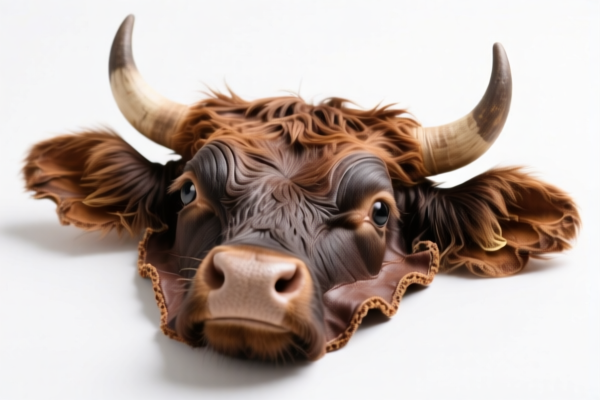
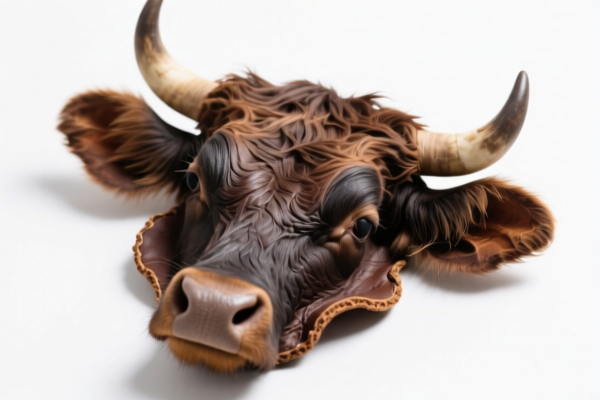
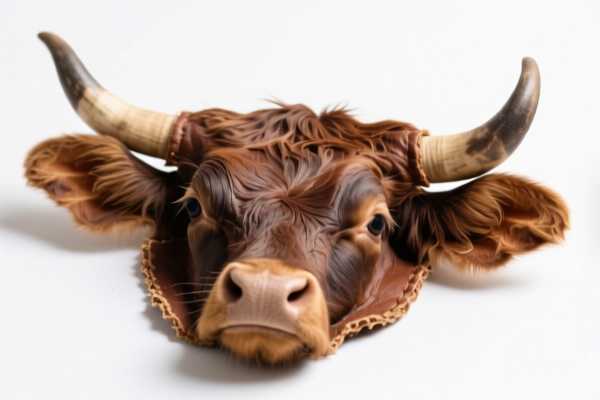
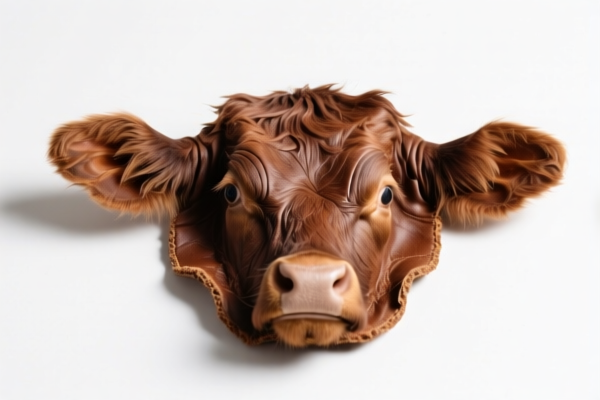
AI Analysis
🐄 Dried Cowhide (Full Grain, Unsplit, ≤ 2.6 m²)
🌐 HS Code Reference & Clearance Guide | 2026 Latest Tariff Analysis | Professional Customs Strategy
📌 1. Product Definition & Classification: What Exactly is This Leather?
Dried cowhide, as defined in the provided data, refers to leather further prepared after tanning or crusting. Specifically, it involves: * Material: Bovine animals (including buffalo) or equine animals. * State: Without hair on, whether or not split. * Grain/Structure: Full grains, unsplit. * Size Constraint: Unit surface area not exceeding 28 square feet (2.6 m²). * Exclusion: Excludes leather of heading 4114 (chamois-dressed, etc.).
⚠️ Key Distinction:
- If the hide is split (two layers: grain and flesh), it does NOT fall under this specific "unsplit" category.
- If the surface area exceeds 2.6 m² (28 sq ft), it falls under different subheadings not listed here.
- The description specifies "Whole hides and skins", meaning it is not cut into patterns or shapes for final products (like gloves or shoes) yet.
📦 2. HS Code Classification Details (Based on Provided Data)
Based on the UNITED STATES tariff schedule (implied by the "25% additional tariff" context common in US-China trade data), the classification depends on the end-use type (Upper vs. Other).
| HS Code | Product Description | Key Characteristics | Surface Area Limit |
|---|---|---|---|
| 4107.11.10.20 | Upper Leather; Lining Leather Full grains, unsplit Bovine hides |
- Used for shoe uppers, bag exteriors. - High-quality grain surface. - "Upper leather" implies specific tanning/dyeing for final goods. |
≤ 28 sq ft (2.6 m²) |
| 4107.11.20.00 | Other: Not Fancy Full grains, unsplit Bovine hides |
- General purpose leather. - Not classified as "Upper" or "Fancy". - Likely for upholstery, gloves, or other non-upper applications. |
≤ 28 sq ft (2.6 m²) |
🔍 Critical Note:
- 4107.11.10.20 is for Upper/Lining leather.
- 4107.11.20.00 is for Other leather (Not Fancy).
- Misclassification Risk: Declaring "Other" leather as "Upper Leather" (or vice versa) can lead to customs delays, re-valuation, or penalties. You must know the intended use of the tanned hide.
💰 3. 2026 Tariff Rate Breakdown (Detailed Tax Clause Explanation)
✅ Applicable Country: United States (US)
✅ Origin: Likely China (CN) given the "25% additional tariff" context (Section 301).
✅ Effective Time: Current Section 301 tariffs apply.
🎯 1. HS Code 4107.11.10.20 – Upper/Lining Leather (Unsplit, ≤2.6 m²)
| Item | Content |
|---|---|
| Product Description | Leather, bovine, full grain, unsplit, ≤28 sq ft, for uppers/lining |
| Base Tariff Rate | 0.0% (Free of duty) |
| Section 301 Additional Tariff | +25.0% |
| Total Tax Rate | 25.0% |
| Tax Calculation | CIF Value × 25% |
| De Minimis Eligibility | ❌ No (De minimis does not apply to Section 301 goods >$800) |
| Legal Basis | HTSUS 4107.11.10.20 + USITC Footnote 9903.88.01 (Section 301) |
📌 Explanation:
- Although the base duty is 0%, the 25% Section 301 tariff applies to most leather products from China.
- This results in a 25% total cost increase on the customs value.
🎯 2. HS Code 4107.11.20.00 – Other Leather (Unsplit, ≤2.6 m²)
| Item | Content |
|---|---|
| Product Description | Leather, bovine, full grain, unsplit, ≤28 sq ft, Other (Not Fancy) |
| Base Tariff Rate | 2.4% (ad valorem) |
| Section 301 Additional Tariff | +25.0% |
| Total Tax Rate | 27.4% |
| Tax Calculation | CIF Value × 27.4% |
| De Minimis Eligibility | ❌ No |
| Legal Basis | HTSUS 4107.11.20.00 + USITC Footnote 9903.88.01 (Section 301) |
📌 Explanation:
- This category has a base duty of 2.4% plus the 25% Section 301 surcharge.
- Total: 27.4%.
- Even though "Other" sounds less specialized, it carries a slightly higher total tax than "Upper Leather" due to the non-zero base rate.
🛠️ 4. Customs Clearance Practical Advice (Avoid Pitfalls)
✅ 1. Essential Documentation Checklist
| Document | Required | Explanation |
|---|---|---|
| ✅ Commercial Invoice | ✔️ | Must clearly state: "Bovine Leather, Full Grain, Unsplit, ≤28 sq ft, Tanned/Crusted". |
| ✅ Packing List | ✔️ | Detail weight, dimensions, and number of hides/skins. |
| ✅ Product Description | ✔️ | Specify: "Upper Leather" or "Other Leather". Ambiguity leads to classification errors. |
| ✅ Certificate of Origin | ✔️ | Proof of origin (e.g., China) triggers the 25% Section 301 tariff. |
| ✅ Tanning Process Info | ✔️ | Confirm it is "Further Prepared" (tanned/crusted). Raw hides (Chapter 41 heading 4103/4104) have different rates. |
| ✅ Surface Area Proof | ✔️ | Provide measurements to prove ≤28 sq ft (2.6 m²). Exceeding this changes the HS code entirely. |
✅ 2. Critical Classification Rules
| Scenario | Correct HS Code | Risk if Misclassified |
|---|---|---|
| Hides > 2.6 m² | Different subheading (e.g., 4107.21...) | ❌ Wrong Code: May face higher base duties or legal penalties. |
| Split Leather | Heading 4107.50+ (Split leather) | ❌ Wrong Code: Split leather has different tax rates (often lower base, but same 25% S301). |
| Raw Hides (Not Tanned) | Chapter 41 Heading 4103/4104 | ❌ Wrong Code: Raw hides are NOT "further prepared". Different classification. |
| "Fancy" Leather | Heading 4114 or specific fancy codes | ❌ Wrong Code: "Fancy" leather (e.g., nubuck, suede for special uses) may have different treatment. |
🔥 Golden Rule:
"Size Matters: ≤28 sq ft → 4107.11; >28 sq ft → 4107.21/31 etc."
"Usage Matters: Upper/Lining → .20; Other → .00"
✅ 3. Special Handling for Leather Imports
| Situation | Clearance Advice |
|---|---|
| High Moisture Content | Leather must be properly dried/preserved. Wet leather may be rejected for biosecurity reasons. |
| Chemical Treatment | Ensure compliance with REACH (if transiting EU) or US TSCA regulations. Provide MSDS if requested. |
| Anti-Dumping/Countervailing | Check if specific tanning agents or processes trigger other duties. |
| Section 301 Exclusions | ❌ No Exclusion: Most leather products from China are NOT excluded from the 25% tariff. Assume 25% applies. |
🌍 5. Global Market Comparison (2026)
| Country/Region | Recommended HS Code | Base Duty | Additional Tariff | Total Cost | Notes |
|---|---|---|---|---|---|
| 🇺🇸 USA | 4107.11.10.20 |
0.0% | +25% (S301) | 25.0% | For Upper Leather |
| 🇺🇸 USA | 4107.11.20.00 |
2.4% | +25% (S301) | 27.4% | For Other Leather |
| 🇨🇳 China | 4107.11 |
10-12% | 0% | 10-12% | Import duty applies |
| 🇪🇺 EU | 4107.21 |
6.5% | 0% | 6.5% | No Section 301 |
| 🇬🇧 UK | 4107.21 |
6.5% | 0% | 6.5% | Post-Brexit tariff |
📌 Key Insight:
- USA is the most expensive market due to the 25% Section 301 tariff.
- Base duty for Upper Leather is 0%, making it slightly more competitive than "Other" leather (2.4% base).
- EU/UK have lower base duties but no Section 301 impact.
📌 6. Common Errors & Pitfalls (Lessons Learned)
❌ Error 1: Declaring hides as "Raw" when they are Tanned.
👉 Consequence: Wrong HS code (Chapter 41 vs 41 heading 4103/4104). Possible delay or misclassification penalty.
❌ Error 2: Ignoring Surface Area.
👉 Consequence: If hides are >28 sq ft, they fall under 4107.21 or 4107.31, which may have higher base duties (e.g., 12% for larger bovine hides). You could underpay duty and face back-taxes.
❌ Error 3: Using vague descriptions like "Cow Leather".
👉 Consequence: Customs may classify under the highest applicable duty or request additional documentation, causing delays.
❌ Error 4: Assuming De Minimis applies.
👉 Consequence: Section 301 tariffs override the $800 de minimis exemption for Chinese goods. Even small shipments are subject to 25%.
✅ Correct Practice:
"Tanned Bovine Hides, Full Grain, Unsplit, ≤28 Sq Ft, For Shoe Uppers, Country of Origin: China"
🎯 7. Conclusion: Professional Clearance, Save Money, Avoid Delays!
🎯 Remember:
🔹 "Size Check: ≤28 sq ft is KEY."
🔹 "Use Check: Upper (0% base) vs Other (2.4% base)."
🔹 "Tariff Reality: 25% S301 applies to both. Total: 25% or 27.4%."
📌 Pro Tip:
If your leather is NOT from China (e.g., from Brazil, Italy, or Mexico), you can avoid the 25% Section 301 tariff.
- Brazil/Italy: Base duty only (0% or 2.4%).
- Action: Always provide a valid Certificate of Origin to prove non-Chinese origin.
📣 Immediate Action:
📞 Verify the intended use (Upper vs Other) and size of your hides.
📄 Prepare precise documentation.
💰 Budget for 25-27.4% total duty if importing from China to the US.
✨ Professional Clearance Starts with Precise Classification!
💼 Every percent of duty counts in leather trade!
Customer Reviews
About HS Code Classification
The Harmonized System (HS) is an internationally standardized nomenclature developed by the World Customs Organization (WCO) to classify traded products. Over 200 countries use the HS system as the basis for customs tariffs, trade statistics, and import/export regulations.
Each HS code follows a hierarchical structure:
- Chapter (2 digits) — Broad category of goods (e.g., Chapter 84: Machinery and Mechanical Appliances)
- Heading (4 digits) — More specific grouping within the chapter
- Subheading (6 digits) — Internationally standardized breakdown, used by all WCO member countries
- National subdivisions (8-10 digits) — Country-specific extensions for further classification, such as US HTSUS 10-digit codes
Correct HS code classification is essential for smooth customs clearance, accurate duty payment, and compliance with trade regulations. Misclassification can lead to customs delays, overpayment of duties, or penalties.
When importing from CN to US, the applicable tariff rates may include:
- Most-Favored-Nation (MFN) rate — The standard duty rate applied to WTO members
- General rate — Applied to countries without trade agreements
- Trade remedy duties — Additional tariffs such as Section 301 (anti-dumping), Section 232 (national security), or countervailing duties
The information provided on this page is for reference purposes only. For official classification, please consult with your local customs authority or a licensed customs broker.