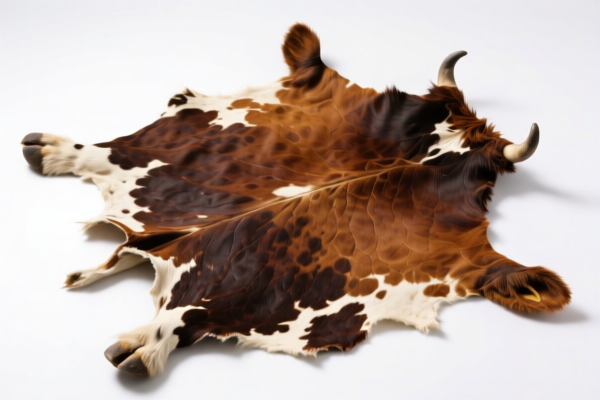
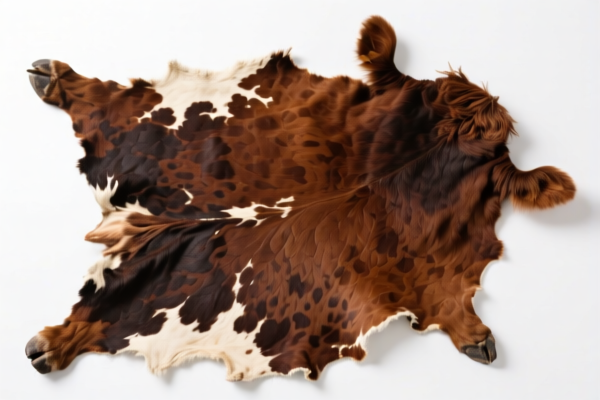
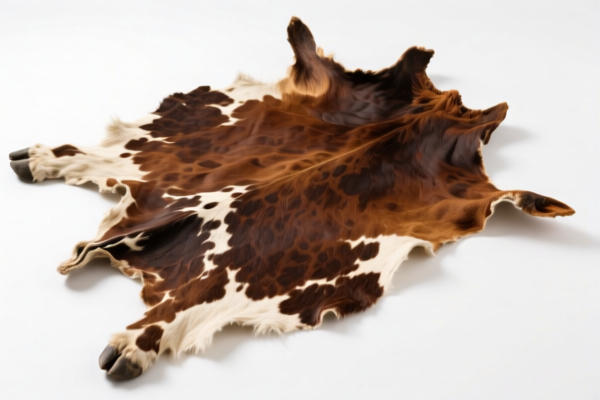
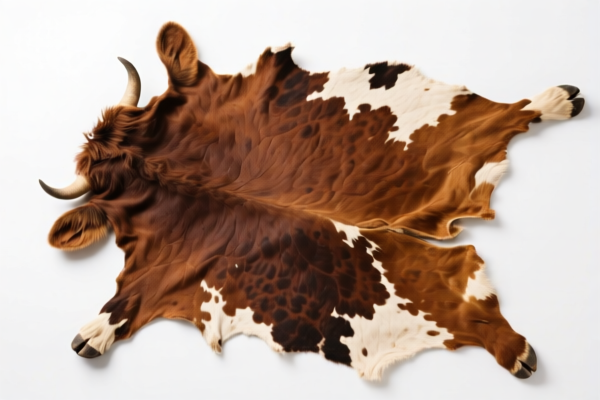
Dried Full Grain Unsplit Cowhide
CN → US| HS Code | Tariff Rate | Origin | Destination | Doc |
|---|---|---|---|---|
| 4101201010 | 17.5% | CN | US | Official Doc |
| 4101501010 | 17.5% | CN | US | Official Doc |
Product Images
AI Analysis
🐄 Dried Full Grain Unsplit Cowhide (Raw Bovine Hides)
🌐 HS Code Reference & Clearance Guide | 2026 Tariff Breakdown | Professional Clearance Strategy
📌 1. Product Definition & Classification: Do You Know "Unsplit Cowhide"?
In international trade, raw hides and skins are strictly classified by species, preservation method, and physical state (split vs. unsplit).
Dried Full Grain Unsplit Cowhide refers to:
Raw State: Not tanned, parchment-dressed, or further prepared.
Preservation: Dried (not fresh, wet-salted, or limed).
Structure: Unsplit (the full thickness of the hide is preserved; the "grain" layer is intact).
Species: Bovine (Cattle).
Weight Constraint*: To fall under the specific "unsplit" category in many tariff schedules, the weight per skin often has limits (e.g., ≤8 kg for simple drying in some jurisdictions, though the provided data focuses on the unsplit nature).
⚠️ Key Distinction:
- If the hide is split (sliced into layers), it falls under a completely different subheading.
- If the hide is tanned, it moves to Chapter 41 Chapter 41 or 42.
- This specific product is "Unsplit" and "Not Pretanned," which dictates its HS Code.
📦 2. HS Code Classification Details (Based on Provided Data)
According to the provided <DATA>, the product falls under Heading 4101. The specific HS Codes depend on the weight of the hide. For Dried Unsplit Bovine Hides, the primary code is:
| HS Code | Product Description | Key Conditions | Applicable To |
|---|---|---|---|
| 4101.20.10.10 | Raw hides and skins of bovine animals: Whole hides and skins, unsplit, of a weight per skin not exceeding 8 kg when simply dried, 10 kg when dry-salted, or 16 kg when fresh... Not pretanned: Of bovine animals | Weight ≤ 8 kg (when dried) Unsplit Dried |
Small-sized dried hides, light calf hides, or specific small bovine skins that meet the weight limit. |
| 4101.50.10.10 | Raw hides and skins of bovine animals: Whole hides and skins, of a weight exceeding 16 kg: Not pretanned: Of bovine animals: Cattle | Weight > 16 kg (when fresh/wet-salted equivalent threshold) Note: For dried hides, the >16kg category often captures larger bovine hides that exceed the lighter thresholds. |
Standard adult cattle hides that are dried but exceed the lighter weight constraints of the previous category. |
🔍 Important Note on Weight:
- The provided data distinguishes between hides not exceeding 8 kg (when dried) and those exceeding 16 kg (often referencing fresh/wet-salted thresholds for larger categories).
- If your dried hides are ≤ 8 kg per skin, use 4101.20.10.10.
- If your dried hides are > 8 kg (and typically fall into the larger "over 16 kg fresh equivalent" bucket for classification purposes in this dataset), use 4101.50.10.10.
- Always verify the actual weight per skin to select the correct code. Misclassifying a heavy hide as "small" can lead to severe penalties.
💰 3. 2026 Tariff Rate Breakdown (Detailed Tax Clauses)
✅ Applicable Country: United States (US)
✅ Origin: China (CN)
✅ Effective Date: 2025/2026 (Current Trade Policy)
🎯 1. HS Code: 4101.20.10.10 (Unsplit Bovine Hides, ≤8 kg, Dried)
| Item | Detail |
|---|---|
| Base Tariff | 0.0% (Ad Valorem) |
| Additional Tariff (301/Other) | +7.5% |
| Total Tariff Rate | 7.5% |
| Tax Calculation | CIF Value × 7.5% |
| De Minimis Eligibility | ❌ Not Applicable (Raw hides are generally not eligible for de minimis exemptions due to their agricultural/raw nature and specific trade restrictions). |
| Legal Basis | Derived from HS:4101.20.10.10 and applicable Additional Tariffs (e.g., Section 301 or specific country-based add-ons). |
📌 Explanation:
- The Base Tariff is 0%, which is typical for raw animal skins under many trade agreements.
- However, the 7.5% Additional Tariff is critical. This is likely due to Section 301 tariffs or IEEPA-related add-ons on certain Chinese-origin raw materials.
- Total Cost Impact: You must budget for 7.5% of the CIF value as duty alone. No base duty, but the add-on is significant.
🎯 2. HS Code: 4101.50.10.10 (Unsplit Bovine Hides, >16 kg equivalent, Dried)
| Item | Detail |
|---|---|
| Base Tariff | 0.0% (Ad Valorem) |
| Additional Tariff (301/Other) | +7.5% |
| Total Tariff Rate | 7.5% |
| Tax Calculation | CIF Value × 7.5% |
| De Minimis Eligibility | ❌ Not Applicable |
| Legal Basis | Derived from HS:4101.50.10.10 and applicable Additional Tariffs. |
📌 Note:
- The tax structure is identical to the smaller hides in this dataset.
- Consistency: Both weight categories carry the same 7.5% total rate in the provided data.
- Verification: Ensure the "exceeding 16 kg" classification is accurate for your specific dried skins, as weight thresholds can be tricky.
🛠️ 4. Clearance Practical Advice (Pitfall Avoidance Guide)
✅ 1. Documentation Checklist (Mandatory)
| Document | Required? | Notes |
|---|---|---|
| ✅ Commercial Invoice | ✔️ | Must clearly state: "Raw Bovine Hides, Dried, Unsplit, Not Tanned." Include weight per skin. |
| ✅ Packing List | ✔️ | Detail number of skins, total weight, and individual skin weights (to prove ≤8 kg or >16 kg). |
| ✅ Certificate of Origin | ✔️ | Essential for proving Chinese origin (to apply 7.5% tariff correctly). |
| ✅ Veterinary Health Certificate | ✔️ | Critical for Animal Products. Must confirm the hides are from disease-free zones and properly treated to prevent pathogen transmission. |
| ✅ Product Photos | ✔️ | Show the grain surface (to prove "Full Grain/Unsplit") and the flesh side (to show no splitting). |
| ✅ Treatment Certificate | ✔️ | Proof of preservation method (e.g., "Dried in shade," "Salted"). |
✅ 2. Declaration Tips (Key Rules)
🔥 "Weight is King, Grain is Truth, Vet is Required!"
| Scenario | Correct Declaration | Wrong Action |
|---|---|---|
| Hides ≤ 8 kg | HS: 4101.20.10.10 |
Declaring as 4101.50.10.10 (Over-declaring weight) → May raise suspicion. |
| Hides > 8 kg | HS: 4101.50.10.10 |
Declaring as 4101.20.10.10 → Misdeclaration, risk of penalty. |
| Split Hides | NOT 4101.20.10.10 | Declaring split hides as unsplit → Fraud, high penalty. |
| Tanned Hides | NOT 4101.xx | Declaring tanned hides as raw → Wrong Chapter, major compliance issue. |
| Mixed Weights | Split Declaration | If a shipment has both ≤8 kg and >8 kg skins, must split the HS Codes in the declaration. Do not average the weight. |
✅ 3. Special Cases
| Situation | Handling Advice |
|---|---|
| OEM/Custom Drying | Provide drying method details. If "Chemically Preserved," ensure it matches "Salted" or "Limed" descriptions if applicable. |
| Damaged Hides | Declare actual condition. If "Rotten" or "Moldy," may be rejected. "Dried" must mean properly preserved. |
| Breed Specific | "Bovine" includes Buffalo. Specify if Buffalo, as some tariffs may differ (though data says "Bovine including Buffalo"). |
| Weight Fluctuation | Weights can vary. Use the maximum potential weight for classification if uncertain, to avoid under-declaration. |
🌍 5. Global Market Comparison (2026)
| Country/Region | Recommended HS Code | Tariff Rate | Certification | Notes |
|---|---|---|---|---|
| 🇺🇸 USA | 4101.20.10.10 / 4101.50.10.10 |
7.5% | Veterinary Cert | Base 0% + 7.5% Add-on. |
| 🇨🇳 China | 4101.20.10.10 |
Varies (Likely 0-8%) | CIQ (Inspection) | Import of raw hides is restricted; check import licenses. |
| 🇪🇺 EU | 4101 20 / 4101 50 |
0% | TRACES Certificate | Strict animal by-product regulations. |
| 🇮🇳 India | 4101 20 |
Varies | Veterinary Cert | High duties may apply depending on source. |
📌 Conclusion:
- USA has a clear 7.5% duty on these goods from China.
- EU has 0% base duty but strict veterinary controls.
- Always prioritize Veterinary Health Certificates for animal products globally.
📌 6. Common Mistakes & Pitfall Guide (Lessons Learned)
❌ Mistake 1: Declaring "Split Hides" as "Unsplit"
👉 Consequence: HS Code error, potential seizure, fines.
Fix: Check the flesh side. If you can peel it into two layers, it's split.
❌ Mistake 2: Ignoring Weight Limits
👉 Consequence: Misclassification between 4101.20 and 4101.50.
Fix: Weigh every batch or a statistically significant sample. Declare based on the heaviest skin in the lot if mixed.
❌ Mistake 3: Missing Veterinary Certificate
👉 Consequence: Shipment rejected at border, destroyed or returned.
Fix: Obtain Veterinary Health Certificate from the exporting country's official vet authority before shipment.
❌ Mistake 4: Confusing "Dried" with "Tanned"
👉 Consequence: Wrong Chapter (41 vs. 41/42). Tanned hides are further processed.
Fix: Ensure no tanning agents (Chrome, Vegetable) are present. Raw hides are pale/white/yellowish, not dark brown (chrome tanned).
✅ Correct Practice:
"Raw Bovine Hides, Dried, Unsplit, Full Grain, 50 pcs, Total Weight 200 kg, Avg 4 kg/skin, Vet Cert #12345, Treated with Salt, Origin: China"
🎯 7. Conclusion: Professional Declaration for Smooth Clearance
🎯 Remember the Mantra:
🔹 "Unsplit = Grain Intact; Dried = Not Tanned; Weight = Code Determinant."
🔹 "7.5% Duty in USA; Vet Cert is Mandatory; Split Hides = Different Code!"
📌 Pro Tip:
If your hides are Buffalo (not Cattle), check if the tariff differs. The provided data includes Buffalo under "Bovine," but verify with your customs broker for specific "Buffalo" vs. "Cattle" nuances in your destination country.
Pre-clearance Consultation: Engage a licensed customs broker to verify the weight threshold (8 kgvs16 kg) for your specific shipment size.
📣 Immediate Action:
📞 Contact your customs broker with the Vet Cert and Weight Details.
🚀 Ensure your invoice clearly states "Unsplit" and "Dried" to avoid ambiguity.
💼 Accurate classification saves time, money, and legal headaches!
✨ Professional Clearance Starts with Precise Classification!
💼 Every Hide Counts – Get the HS Code Right!
Customer Reviews
About HS Code Classification
The Harmonized System (HS) is an internationally standardized nomenclature developed by the World Customs Organization (WCO) to classify traded products. Over 200 countries use the HS system as the basis for customs tariffs, trade statistics, and import/export regulations.
Each HS code follows a hierarchical structure:
- Chapter (2 digits) — Broad category of goods (e.g., Chapter 84: Machinery and Mechanical Appliances)
- Heading (4 digits) — More specific grouping within the chapter
- Subheading (6 digits) — Internationally standardized breakdown, used by all WCO member countries
- National subdivisions (8-10 digits) — Country-specific extensions for further classification, such as US HTSUS 10-digit codes
Correct HS code classification is essential for smooth customs clearance, accurate duty payment, and compliance with trade regulations. Misclassification can lead to customs delays, overpayment of duties, or penalties.
When importing from CN to US, the applicable tariff rates may include:
- Most-Favored-Nation (MFN) rate — The standard duty rate applied to WTO members
- General rate — Applied to countries without trade agreements
- Trade remedy duties — Additional tariffs such as Section 301 (anti-dumping), Section 232 (national security), or countervailing duties
The information provided on this page is for reference purposes only. For official classification, please consult with your local customs authority or a licensed customs broker.