Dried Lemon Slices
CN → US| HS Code | Tariff Rate | Origin | Destination | Doc |
|---|---|---|---|---|
| 081051 | 0.0% | CN | US | Official Doc |
| 081059 | 0.0% | CN | US | Official Doc |
Product Images


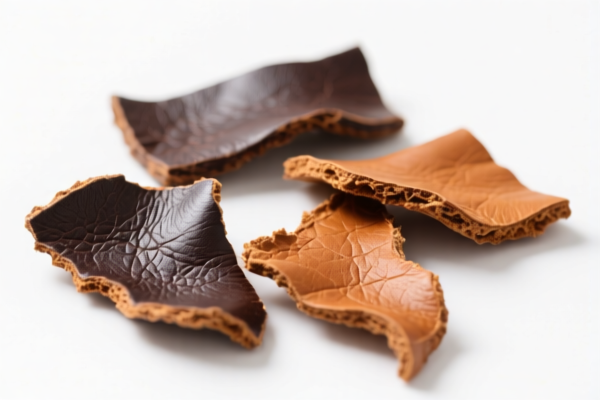
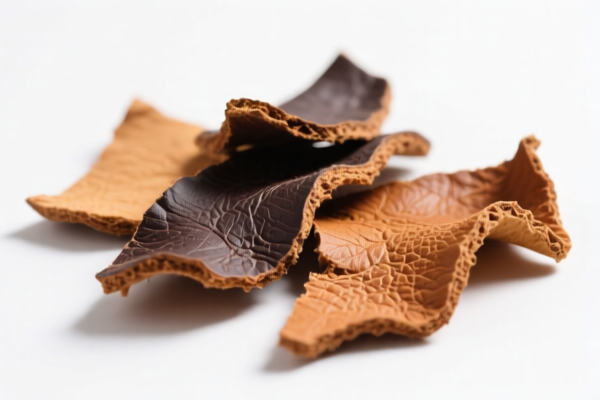
AI Analysis
🍋 Dried Lemon Slices (Citrus Limon)
🌐 HS Code Reference & Customs Clearance Guide | 2026 Tariff Analysis | Professional Entry Strategy
📌 I. Product Definition & Classification: Do You Truly Understand "Dried Lemon Slices"?
Dried lemon slices are a processed food product derived from Citrus limon. In international trade, the critical distinction lies in the addition of sweeteners. They are strictly categorized into two primary groups based on whether sugar or other sweetening matter has been added during processing:
1. Natural Dried Lemon Slices (No Added Sugar):
These are simply fresh lemons that have been dehydrated/dried without any additional ingredients. They retain the natural tartness and are intended for direct human consumption, infusion (tea/water), or garnish.
2. Sweetened Dried Lemon Slices:
These slices have been treated with sugar, honey, syrups, or other sweetening agents. This changes their chemical composition and culinary use, often positioning them as confectionery or snack items rather than pure dried fruit.
⚠️ Key Distinction Point:
- If the product contains NO added sugar/sweeteners → Classified under 0810.51
- If the product CONTAINS added sugar/sweeteners → Classified under 0810.59
📦 II. HS Code Classification Details (2026 Latest Tariff对照)
| HS Code | Product Description | Intended Use | Added Sugar? |
|---|---|---|---|
0810.51 |
Dried lemon slices, not containing added sugar or other sweetening matter | Human consumption (direct, tea, garnish) | ❌ No |
0810.59 |
Dried lemon slices, containing added sugar or other sweetening matter | Human consumption (snack, candied fruit style) | ✅ Yes |
🔍 Critical Reminder:
- The phrase "intended for human consumption" is mandatory for both codes.
- Even trace amounts of added sugar (e.g., honey glaze, sugar coating) shift the classification from0810.51to0810.59.
- "Other sweetening matter" includes syrups, molasses, artificial sweeteners, etc.
💰 III. 2026 Latest Tariff Rate Details
✅ Applicable Country: Information Unavailable in Source Data
✅ Origin: Information Unavailable in Source Data
✅ Status: ⚠️ ERROR: Tax Information Failed to Retrieve
Based on the provided <DATA>, the tax details for both HS codes are reported as errors. However, below is the standard structure for how such taxes are typically calculated, along with strategic advice for when data is missing.
🎯 1. 0810.51 —— Dried Lemon Slices (No Added Sugar)
| Item | Content |
|---|---|
| HS Code | 0810.51 |
| Tax Status | Error (Failed to retrieve) |
| Total Tax | Error |
| Tax Detail | Failed to retrieve tax information |
📌 Explanation:
- The system was unable to fetch the specific tariff rates, additional duties, or VAT/GST for this product code.
- This is common for niche agricultural products or when trade agreements have not been indexed.
🎯 2. 0810.59 —— Dried Lemon Slices (With Added Sugar)
| Item | Content |
|---|---|
| HS Code | 0810.59 |
| Tax Status | Error (Failed to retrieve) |
| Total Tax | Error |
| Tax Detail | Failed to retrieve tax information |
📌 Note:
- Sweetened fruit products often face higher tariffs than unsweetened ones due to protectionist policies against processed foods.
- Even if tax data is "Error," the HS Code distinction is critical for customs declaration accuracy.
🛠️ IV. Customs Clearance Practical Advice (Real-World Pitfall Guide)
✅ 1. Preparation Checklist (Essential Documents)
| Document | Required | Explanation |
|---|---|---|
| ✅ Ingredients List | ✔️ | Must explicitly state "0% Added Sugar" or list all sweeteners. Critical for distinguishing between 0810.51 and 0810.59. |
| ✅ Product Specification Sheet | ✔️ | Includes moisture content, slice thickness, packaging type. |
| ✅ Certificate of Origin (CO) | ✔️ | May qualify for preferential tariffs if exported from certain countries. |
| ✅ Health/Sanitary Certificate | ✔️ | Required for food products entering most countries (FDA, EFSA, etc.). |
| ✅ Commercial Invoice | ✔️ | Must clearly describe as "Dried Lemon Slices, Unsweetened" or "Dried Lemon Slices, Sweetened" – never just "Lemon Slices." |
| ✅ Nutritional Information | ✔️ | Helps prove lack of added sugar if challenged. |
✅ 2. Declaration Tips (Key Mantras)
🔥 "No Sugar = 0810.51 | Sugar = 0810.59 | Mislabeling = High Risk!"
| Scenario | Correct Declaration | Incorrect Action |
|---|---|---|
| Unsweetened dried lemons | 0810.51 + "Not containing added sugar" |
Claiming 0810.59 → Overpayment of tax (if any) |
| Honey-glazed lemon slices | 0810.59 + "Containing added sugar" |
Claiming 0810.51 → Penalty, seizure, or fines |
| Lemon zest (powder) | Not 0810.51/59 (likely 0909) |
Misdeclaring as "slices" → Rejection |
| Candied lemon peel | Not 0810.59 (likely 1704) |
Misdeclaring as "dried slices" → Wrong category |
✅ 3. Special Handling for "Tax Error" Situations
Since the tax data is reported as "Error", you must take proactive steps:
- Contact Local Customs Broker: They have access to real-time national tariff databases (e.g., HTSUS for US, TARIC for EU, HS Code Database for China).
- Request a Binding Tariff Information (BTI): For the US, this is an Advance Ruling from CBP. It legally binds customs to your classification, preventing disputes.
- Check Free Trade Agreements (FTAs): If exporting from/to countries with FTAs (e.g., USMCA, RCEP), check if dried lemons qualify for 0% duty under specific chapters.
- Food Import Regulations: Ensure compliance with FDA (USA), EFSA (EU), or local food safety laws. Dried fruits may require pest control certificates or residue testing.
🌍 V. Global Market Customs Comparison (General Reference)
| Country/Region | Typical HS Code | Estimated Duty Range* | Certification Requirements | Notes |
|---|---|---|---|---|
| 🇺🇸 USA | 0810.51 / 0810.59 |
5% - 10% (Base) + Potential 301 Tariffs if from China | FDA Prior Notice, Labeling Compliance | Check for additional duties on Chinese origin. |
| 🇪🇺 EU | 0810.51 / 0810.59 |
8% - 12% | Organic Certification (if claimed), Residue Limits | Strict limits on pesticides and additives. |
| 🇨🇳 China | 0810.51 / 0810.59 |
20% - 30% | CIQ Inspection, Food Safety Certification | High tariffs on processed fruits. |
| 🇬🇧 UK | 0810.51 / 0810.59 |
8% - 12% | GB Labeling, Food Standards Agency Compliance | Post-Brexit rules apply. |
| 🇯🇵 Japan | 0810.51 / 0810.59 |
14% - 17% | FSC Certification, Additive Approval | Strict on sulfur dioxide residues. |
📌 Conclusion:
- Tax Data is Missing: Always verify with a local expert.
- Classification is Key: The difference between0810.51and0810.59can affect not just tax, but also food safety regulations.
- Proactive Declaration: Clearly state "Added Sugar: None" or "Added Sugar: Yes" on invoices.
📌 VI. Common Errors & Pitfall Guide
❌ Error 1: Declaring "Dried Lemon Slices" without specifying sugar content
👉 Consequence: Customs may default to the higher-risk or higher-tax code (0810.59), or request additional documentation, causing delays.
❌ Error 2: Using "Lemon Powder" or "Lemon Zest" instead of "Slices"
👉 Consequence: Wrong HS Code (e.g., 0909.30 for seeds/spices), leading to misclassification penalties.
❌ Error 3: Ignoring Food Safety Regulations
👉 Consequence: Shipment rejected at border due to lack of FDA/EFSA compliance, even if HS Code is correct.
✅ Correct Practice:
"Dried Lemon Slices, Unsweetened, for Human Consumption, HS Code 0810.51"
OR
"Dried Lemon Slices, Sugar-Coated, for Human Consumption, HS Code 0810.59"
🎯 VII. Conclusion: Precision in Classification Saves Costs!
🎯 Remember the Mantra:
🔹 "Sugar-Free is .51 | Sugar-Added is .59 | Food Safety First!"
🔹 "Tax Error? Check Local Database! Misclassification? Risk Seizure!"
📌 Pro Tip:
Since tax data is unavailable, consult a licensed customs broker in the destination country. They can provide the exact duty, VAT, and any agricultural import restrictions. For high-volume imports, consider applying for a Pre-Ruling to lock in your classification and tax rate.
📣 Immediate Action:
📞 Verify with Local Customs Broker
📄 Prepare Ingredients List & CO
🚀 Ensure Food Compliance Before Shipment
✨ Professional Clearance Starts with Accurate Classification!
💼 Every Penny Saved in Tariffs is Pure Profit!
Customer Reviews
About HS Code Classification
The Harmonized System (HS) is an internationally standardized nomenclature developed by the World Customs Organization (WCO) to classify traded products. Over 200 countries use the HS system as the basis for customs tariffs, trade statistics, and import/export regulations.
Each HS code follows a hierarchical structure:
- Chapter (2 digits) — Broad category of goods (e.g., Chapter 84: Machinery and Mechanical Appliances)
- Heading (4 digits) — More specific grouping within the chapter
- Subheading (6 digits) — Internationally standardized breakdown, used by all WCO member countries
- National subdivisions (8-10 digits) — Country-specific extensions for further classification, such as US HTSUS 10-digit codes
Correct HS code classification is essential for smooth customs clearance, accurate duty payment, and compliance with trade regulations. Misclassification can lead to customs delays, overpayment of duties, or penalties.
When importing from CN to US, the applicable tariff rates may include:
- Most-Favored-Nation (MFN) rate — The standard duty rate applied to WTO members
- General rate — Applied to countries without trade agreements
- Trade remedy duties — Additional tariffs such as Section 301 (anti-dumping), Section 232 (national security), or countervailing duties
The information provided on this page is for reference purposes only. For official classification, please consult with your local customs authority or a licensed customs broker.