Dried Sheepskin for Leather Production
CN → USProduct Images
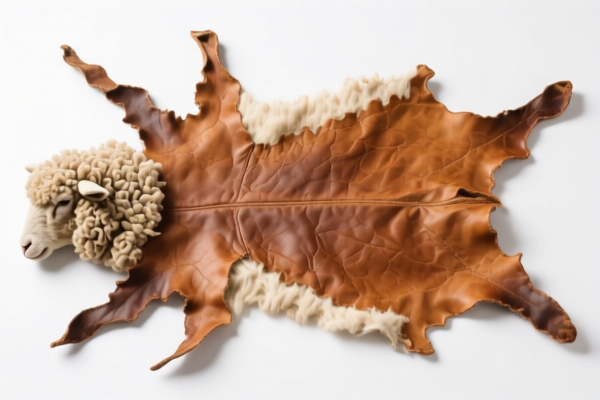
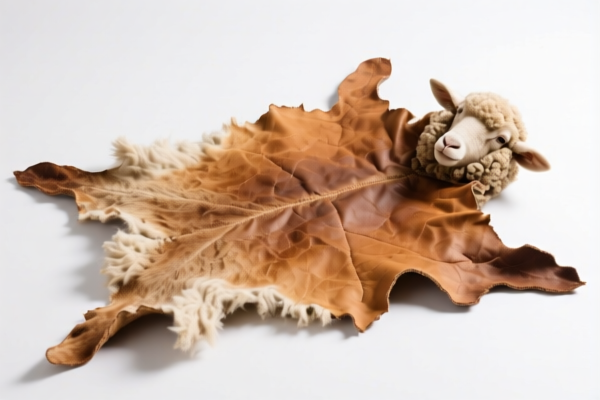
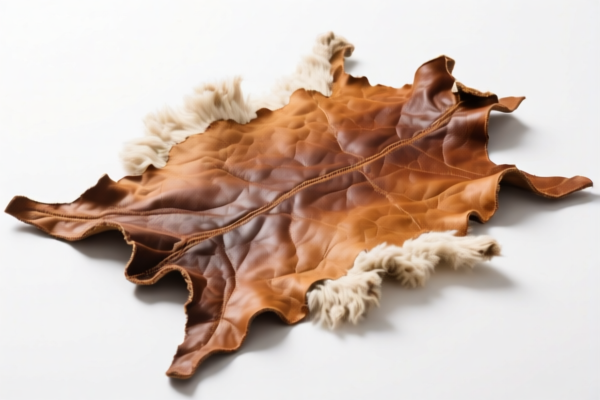
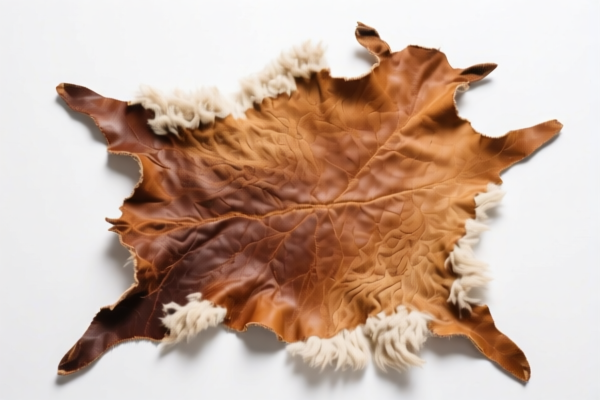
AI Analysis
🐑 Dried Sheepskin for Leather Production
🌐 HS Code Reference & Customs Clearance Guide | 2026 Latest Tariff Analysis | Professional-Level Strategy
📌 One, Product Definition and Classification: What Exactly is “Dried Sheepskin”?
In international trade, Dried Sheepskin refers to raw animal hides (specifically from sheep or lambs) that have been salted, dried, or otherwise preserved to prevent decomposition, intended primarily for tanning and leather production. It is NOT finished leather, nor is it fresh meat or wool.
Crucially, classification depends on: 1. Preservation Method: Salted, dried, limed, or pickled? 2. Condition: Whole skin vs. split/sections? 3. End-Use: Primarily for leather goods?
⚠️ Critical Distinction:
- If the skin is raw (wet-salted or dried) and untanned →归入 Chapter 41 (Raw Hides and Skins).
- If the skin is partially tanned (semi-processed) → Still often Chapter 41, unless chemically altered significantly.
- If finished leather → 归入 Chapter 41 or Chapter 39/42 depending on further processing.
- If with wool intact (sheepskin vs. sheepskin leather) → Still Chapter 41 if raw.
📦 Two, HS Code Classification Details (2026 Latest Tariff Authority Comparison)
| HS Code | Product Description | Application Scenario | Is it Raw/Untanned? |
|---|---|---|---|
4101.21.00.00 |
Sheep/lamb skins, wet-salted, weighing ≤ 8 kg net each | Freshly salted, high moisture, short-term storage/transport | ✅ Yes (Raw) |
4101.22.00.00 |
Sheep/lamb skins, wet-salted, weighing > 8 kg net each | Bulk commercial shipment, large hides | ✅ Yes (Raw) |
4101.30.00.00 |
Sheep/lamb skins, dry-salted, other than green | Dried, low moisture, long-term storage | ✅ Yes (Raw) |
4101.90.00.00 |
Other sheep/lamb skins (e.g., limed, pickled, bleached) | Slightly processed for tanning prep | ✅ Yes (Raw/Semi) |
4102.10.00.00 |
Skins of sheep or lambs, with wool on | Sheepskin with fleece, raw | ✅ Yes (Raw) |
4102.29.00.00 |
Other sheep/lamb skins, dehaired or otherwise processed | Dehaired raw skin, ready for tanning | ✅ Yes (Raw) |
🔍 Key Reminder:
- All untanned, raw sheepskins (whether dried, salted, or with wool) fall under Chapter 41.
- DO NOT confuse with wool (5101) or finished leather (4107);
- If the skin has been tanned or crusted, it moves to4107or4108– but this question specifies “for leather production”, implying raw input.
💰 Three, 2026 Latest Tariff Rate Breakdown (Including Surtaxes, Policy Add-ons)
✅ Applicable Country: United States (US)
✅ Country of Origin: China (CN)
✅ Effective Date: November 10, 2025 (and subsequent imports)
🎯 1. 4101.21.00.00 – Sheep/Lamb Skins, Wet-Salted (≤8 kg)
| Item | Content |
|---|---|
| Base Tariff | 12.5% (ad valorem) |
| USITC Surtax | +25% (under Section 301, Footnote 9903.88.01) |
| IEEPA Surtax | +10% (China/HK origin, effective Nov 10, 2025) |
| Total Tariff | 47.5% |
| Tax Calculation | CIF Value × 47.5% |
| De Minimis Eligibility | ❌ No (deny_de_minimis) |
| Legal Basis Path | IEEPA:9903.01.25 → IEEPA:9903.01.24 → USITC:4101.21.00.00 → FOOTNOTE:9903.88.01 |
📌 Explanation:
- The 25% USITC surtax is from Section 301 tariffs on Chinese-origin goods;
- The 10% IEEPA surtax is an additional national security-related tariff;
- Total 47.5% is extremely high – must be factored into cost modeling!
🎯 2. 4101.22.00.00 – Sheep/Lamb Skins, Wet-Salted (>8 kg)
| Item | Content |
|---|---|
| Base Tariff | 12.5% |
| USITC Surtax | +25% |
| IEEPA Surtax | +10% |
| Total Tariff | 47.5% |
| Tax Calculation | CIF × 47.5% |
| De Minimis Eligibility | ❌ No |
| Legal Basis Path | IEEPA:9901.25 → IEEPA:9903.01.24 → USITC:4101.22.00.00 → FOOTNOTE:9903.88.01 |
📌 Note:
- Same rate as above; weight threshold only affects classification, not tariff rate in this case.
🎯 3. 4101.30.00.00 – Sheep/Lamb Skins, Dry-Salted
| Item | Content |
|---|---|
| Base Tariff | 12.5% |
| USITC Surtax | +25% |
| IEEPA Surtax | +10% |
| Total Tariff | 47.5% |
| Tax Calculation | CIF × 47.5% |
| De Minimis Eligibility | ❌ No |
| Legal Basis Path | Same as above |
🎯 4. 4101.90.00.00 – Other Sheep/Lamb Skins
| Item | Content |
|---|---|
| Base Tariff | 12.5% |
| USITC Surtax | +25% |
| IEEPA Surtax | +10% |
| Total Tariff | 47.5% |
| Tax Calculation | CIF × 47.5% |
| De Minimis Eligibility | ❌ No |
🎯 5. 4102.10.00.00 – Sheep/Lamb Skins, With Wool On
| Item | Content |
|---|---|
| Base Tariff | 12.5% |
| USITC Surtax | +25% |
| IEEPA Surtax | +10% |
| Total Tariff | 47.5% |
| Tax Calculation | CIF × 47.5% |
| De Minimis Eligibility | ❌ No |
📌 Critical Insight:
- All raw sheepskins, regardless of weight, preservation method, or wool presence, face the same 47.5% effective tariff rate when originating from China and entering the US.
- There is no de minimis exemption – even small samples are subject to full duty.
🛠️ Four, Customs Clearance Practical Advice (Real-World Pitfall Avoidance Guide)
✅ 1. Required Documentation Checklist (All Mandatory)
| Document | Must Provide | Notes |
|---|---|---|
| ✅ Product Specification Sheet | ✔️ | Include preservation method, weight, moisture content, intended use |
| ✅ Photos of Skins | ✔️ | Show texture, wool presence, salt crust, packaging |
| ✅ Commercial Invoice | ✔️ | Clearly state “Raw Sheepskins, Dried/Salted, For Leather Production” |
| ✅ Packing List | ✔️ | Detail net/gross weight, number of hides per carton |
| ✅ Certificate of Origin (CO) | ✔️ | If non-China origin, may qualify for preferential rates |
| ✅ Third-Party Inspection Report | ✔️ | Confirm no disease, no contamination (e.g., BSE-free certification) |
| ✅ Tanning Intent Declaration | ✔️ | Prove end-use is leather production, not consumer goods |
✅ 2. Declaration Tips (Key Mantras)
🔥 “Raw not tanned, Chapter 41, specify preservation, avoid Chapter 42!”
| Situation | Correct Declaration | Wrong Practice |
|---|---|---|
| Dried sheepskins | 4101.30.00.00 or 4101.21.00.00 |
Misdeclare as “leather” → 4107 → 20% base + 25% + 10% = 55% |
| Skins with wool | 4102.10.00.00 |
Declare as “wool” → 5101 → different tariff |
| Split/sections | Same as whole, specify “cut” | Splitting to lower weight doesn’t change HS if still raw |
| Semi-tanned skins | Still 4101 if not fully tanned |
Misdeclare as finished leather → penalties |
✅ 3. Special Cases Handling
| Situation | Handling Advice |
|---|---|
| OEM for US Leather Brands | Provide client contracts + end-use declaration to prove industrial use |
| Sheepskins with Wool (Fleece On) | Declare as 4102.10.00.00, not 5101 (wool) – structure matters |
| Dehaired Skins | Declare as 4102.29.00.00, still raw |
| Shipment from Vietnam/Mexico | Eligible for IEEPA exemption, tariff drops to 0–12.5% – verify origin carefully |
🌍 Five, Global Market Comparison (2026 Latest)
| Country/Region | Recommended HS Code | Tariff (China Origin) | Certification Required | Notes |
|---|---|---|---|---|
| 🇺🇸 US | 4101.30.00.00 |
47.5% | USDA/APHIS + BSE-Free | Highest surtax globally |
| 🇨🇳 China | 4101.30.00.00 |
5–12.5% | None | No surtaxes |
| 🇪🇺 EU | 4101.30.00.00 |
0% (if GSP not applicable) | CE/EU Veterinary Health Cert | No US-style surtaxes |
| 🇦🇺 Australia | 4101.30.00.00 |
5% | Biosecurity Clearance | Moderate tariff |
| 🇯🇵 Japan | 4101.30.00.00 |
0% | Veterinary Health Cert | Preferential under JETP |
📌 Conclusion:
- US is the only major market imposing massive surtaxes on raw sheepskins from China;
- China, EU, Japan, Australia have significantly lower or zero tariffs;
- Supply chain diversification (e.g., sourcing from Mongolia, Australia, or EU) can reduce landed cost by 30–40%.
📌 Six, Common Mistakes & Pitfall Guide (Lessons Learned the Hard Way)
❌ Mistake 1: Declaring “leather” when product is raw sheepskin
👉 Consequence: HS misclassification → audit → back taxes + fines
❌ Mistake 2: Ignoring BSE-free certification
👉 Consequence: US Customs + FDA may reject shipment due to animal health concerns
❌ Mistake 3: Using “wool” instead of “sheepskin” in declaration
👉 Consequence: Chapter 51 vs. 41 error → delayed clearance + 25% surtax on wrong code
❌ Mistake 4: Assuming small samples are de minimis
👉 Consequence: No exemption – even 1 kg sample faces 47.5% duty
✅ Correct Declaration Example:
“Raw Dried Sheepskins, Salted, Untanned, For Leather Production, HS 4101.30.00.00, BSE-Free Certified, Country of Origin: China”
🎯 Seven, Conclusion: Precision Classification Saves Thousands!
🎯 Remember the Mantra:
🔹 “Raw = Chapter 41, Tanned = Chapter 41/42, Wool = Not 5101 if raw!”
🔹 “47.5% US tariff on China-origin raw sheepskins – plan your sourcing wisely!”
📌 Pro Tip:
If your sheepskins are originally from Australia, New Zealand, Mongolia, or EU, you can avoid IEEPA surtaxes and reduce effective tariff to 0–12.5%.
Consider supplier diversification or pre-clearance rulings for large shipments.
📣 Immediate Action:
📞 Engage a customs broker + Provide photos + spec sheets + Apply for Advance Ruling
🚀 Minimize duty exposure, ensure compliance, and boost profit margins!
✨ Professional clearance starts with accurate classification!
💼 Every percent of duty saved is pure profit!
Customer Reviews
About HS Code Classification
The Harmonized System (HS) is an internationally standardized nomenclature developed by the World Customs Organization (WCO) to classify traded products. Over 200 countries use the HS system as the basis for customs tariffs, trade statistics, and import/export regulations.
Each HS code follows a hierarchical structure:
- Chapter (2 digits) — Broad category of goods (e.g., Chapter 84: Machinery and Mechanical Appliances)
- Heading (4 digits) — More specific grouping within the chapter
- Subheading (6 digits) — Internationally standardized breakdown, used by all WCO member countries
- National subdivisions (8-10 digits) — Country-specific extensions for further classification, such as US HTSUS 10-digit codes
Correct HS code classification is essential for smooth customs clearance, accurate duty payment, and compliance with trade regulations. Misclassification can lead to customs delays, overpayment of duties, or penalties.
When importing from CN to US, the applicable tariff rates may include:
- Most-Favored-Nation (MFN) rate — The standard duty rate applied to WTO members
- General rate — Applied to countries without trade agreements
- Trade remedy duties — Additional tariffs such as Section 301 (anti-dumping), Section 232 (national security), or countervailing duties
The information provided on this page is for reference purposes only. For official classification, please consult with your local customs authority or a licensed customs broker.