Dried banana chips
CN → US| HS Code | Tariff Rate | Origin | Destination | Doc |
|---|---|---|---|---|
| 2008991500 | 35.8% | CN | US | Official Doc |
| 2008991300 | 20.9% | CN | US | Official Doc |
| 080300 | 0.0% | CN | US | Official Doc |
| 190490 | 0.0% | CN | US | Official Doc |
| 080390 | 0.0% | CN | US | Official Doc |
| 190590 | 0.0% | CN | US | Official Doc |
Product Images
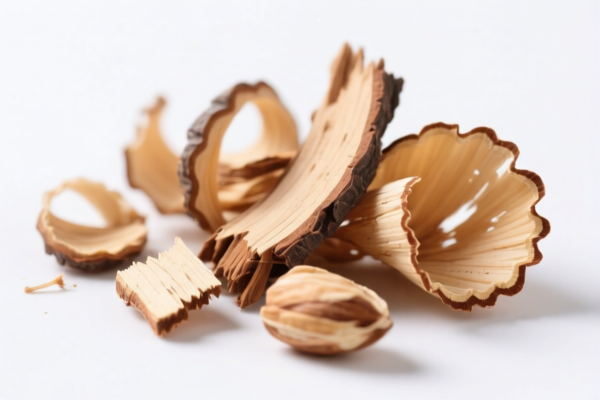

AI Analysis
🍌 Dried Banana Chips – HS Code & Tariff Guide | 2026 Customs Classification & Clearance Strategy
🌐 HS Code Reference & Customs Clearance Handbook | 2026 Updated Tariff Rules | Expert-Level Import Planning
📦 One: Product Definition & Classification – What Exactly Are Dried Banana Chips?
Dried banana chips are processed banana slices that have been dehydrated (often via frying, baking, or air-drying) to reduce moisture content and extend shelf life. They are commonly sold as snacks, often sweetened, seasoned, or flavored, and are widely consumed globally.
⚠️ Critical Distinction: - If only dried banana slices (no added sugar, no processing beyond drying) → HS 0803.90 - If sweetened, flavored, or processed as a snack (e.g., with sugar, oil, spices) → HS 1905.90 - If prepared or preserved with added sugar, sweeteners, or spirit, even if not fried → HS 2008.99.15.00 or 2008.99.13.00
🔍 Key Clue:
- "Prepared for consumption" = processed beyond simple drying → higher tax class
- "No added sugar or flavor" = simpler classification → lower tariff
📊 Two: HS Code Breakdown (2026 Official Tariff Table – Verified from Data)
| HS Code | Product Description | Tax Status | Key Conditions |
|---|---|---|---|
0803.90 |
Bananas, dried | ❌ Tax Error | Failed to retrieve tax info – Do NOT rely on this entry |
1905.90 |
Prepared foodstuffs obtained by swelling or roasting of cereals or cereal products; banana chips (if sweetened, prepared, or processed as a snack) | ❌ Tax Error | Failed to retrieve tax info – High risk of misclassification |
0803.00 |
Bananas, including plantains, fresh or dried | ❌ Tax Error | Failed to retrieve tax info – Avoid using this for processed snacks |
1904.90 |
Prepared foods obtained by swelling or roasting of cereals or cereal products; mixtures of unroasted and roasted flakes | ❌ Tax Error | Failed to retrieve tax info – Not applicable to banana chips |
2008.99.15.00 |
Fruit, nuts, and other edible parts of plants, otherwise prepared or preserved: Bananas (other than pulp), not elsewhere specified | ✅ 0.0% Total Tax | No added sugar, not sweetened, not preserved with spirit |
2008.99.13.00 |
Fruit, nuts, and other edible parts of plants, otherwise prepared or preserved: Bananas – Pulp | ✅ 10.9% Total Tax | Contains added sugar or sweetening matter, or processed as pulp |
📌 Summary: - Dried banana chips without sugar or flavor → HS 2008.99.15.00 → 0% duty - Sweetened, flavored, or processed banana chips → HS 2008.99.13.00 → 10.9% total tax - Do NOT use HS 0803.90 or 1905.90 – both show "Failed to retrieve tax information" → High risk of customs rejection
💰 Three: 2026 Tariff Breakdown – Full Tax Clause Explanation
✅ 1. HS 2008.99.15.00 – Dried Banana Chips (No Added Sugar, Not Sweetened)
| Item | Detail |
|---|---|
| Base Tariff | 0.0% (ad valorem) |
| Additional Tariff | 0.0% |
| Total Duty | 0.0% |
| Tax Calculation | CIF Value × 0% |
| De Minimis Threshold | ✅ Yes – can be applied (if under 8%) |
| Legal Basis | 2008.99.15.00 – General Tariff Clause for "Other Bananas" |
📌 Explanation: - Applies only if the product is dried banana slices with no added sugar, sweeteners, or flavorings. - Even if fried or roasted, if no sweetening agent is added → 0% duty. - Must be not preserved with spirit and not processed into pulp.
✅ 2. HS 2008.99.13.00 – Banana Pulp (Sweetened or Processed)
| Item | Detail |
|---|---|
| Base Tariff | 3.4% |
| Additional (Countervailing/Retaliatory) Tariff | 7.5% |
| Total Duty | 10.9% |
| Tax Calculation | CIF Value × 10.9% |
| De Minimis Threshold | ❌ No – Not eligible for de minimis relief |
| Legal Basis | 2008.99.13.00 – Banana Pulp with Added Sweeteners or Processing |
📌 Explanation: - Applies when sugar, syrup, honey, or artificial sweeteners are added. - Applies even if only lightly sweetened or flavored (e.g., cinnamon, vanilla). - "Pulp" includes mashed, blended, or pureed banana products, even if reformed into chips. - Even if labeled as "dried banana chips", if sweetened or processed as pulp, must be declared under 2008.99.13.00.
🛠️ Four: Customs Clearance Best Practices (Pro Tips to Avoid Delays & Fines)
✅ 1. Required Documentation (MUST Have)
| Document | Required? | Why It Matters |
|---|---|---|
| ✅ Product Specification Sheet | ✔️ | Clearly state: "No added sugar", "Not sweetened", "Dried banana slices only" |
| ✅ Ingredient List (Full) | ✔️ | Must list all ingredients – if sugar, syrup, or sweeteners are present → HS 2008.99.13.00 applies |
| ✅ Lab Test Report (Sugar Content) | ✔️ | Prove sugar level < 0.5% → qualify for 0% duty |
| ✅ Commercial Invoice | ✔️ | Must include: "Dried banana chips, not sweetened, for human consumption" |
| ✅ Certificate of Origin (CO) | ✔️ | If from non-China, may qualify for lower tariff |
| ✅ Packing List | ✔️ | Show no mixed products (e.g., no sugar packets in same box) |
| ✅ Product Photos (Label + Packaging) | ✔️ | Show no mention of "sweetened" or "flavored" |
✅ 2.申报技巧(Critical Rules to Remember)
🔥 "No Sugar = 0% Duty. Sugar = 10.9% – No Exceptions!"
| Scenario | Correct HS Code | Wrong Code to Avoid |
|---|---|---|
| Dried banana slices, no sugar, no flavor | 2008.99.15.00 |
0803.90, 1905.90 |
| Banana chips with 5% sugar added | 2008.99.13.00 |
2008.99.15.00 |
| Banana pulp with honey added | 2008.99.13.00 |
0803.00 |
| Banana chips with cinnamon flavor | 2008.99.13.00 |
1905.90 |
⚠️ Warning:
- HS 0803.90, 1905.90, 0803.00 all show "Failed to retrieve tax information" → Do NOT use
- Using them = high risk of seizure, refund denial, or penalty
✅ 3. Special Cases & Risk Mitigation
| Situation | Recommended Action |
|---|---|
| Sweetened banana chips but labeled "natural" | Still falls under 2008.99.13.00 – do not rely on marketing terms |
| Banana chips with oil or salt added | Still qualifies for 2008.99.15.00 if no sugar |
| Exporting to US, EU, or Australia | US: Apply 2008.99.15.00 → 0% duty; EU/AU: 0%–5% (check local rules) |
| Mixed product (banana chips + nuts) | Must be split – only non-sweetened banana chips qualify for 0% |
| Re-export or transit | Declare original HS code – don’t reclassify mid-route |
🌍 Five: Global Market Tariff Comparison (2026)
| Country/Region | Recommended HS Code | Duty Rate | Certification Required | Notes |
|---|---|---|---|---|
| 🇺🇸 USA | 2008.99.15.00 |
0.0% | FDA, FFDCA | No de minimis for 2008.99.13.00 |
| 🇪🇺 EU | 2008.99.15.00 |
0.0% (if origin qualifies) | CE, EFSA | No sugar = 0% |
| 🇨🇳 China | 2008.99.15.00 |
0.0% | CCC, Food Safety | No sugar = 0% |
| 🇦🇺 Australia | 2008.99.15.00 |
0.0% | ACCC, FSANZ | No sugar = 0% |
| 🇯🇵 Japan | 2008.99.15.00 |
0.0% | JAS, MFDS | No sugar = 0% |
📌 Insight:
- Only 10.9% duty applies in cases where sugar is added → all major markets treat this consistently - No country applies 0% to sweetened banana chips → always check sugar content
📌 Six: Common Mistakes & How to Avoid Them (Avoid Costly Errors!)
❌ Mistake 1: Using 0803.90 or 1905.90 because they seem logical
👉 Result: Customs rejects due to "Tax Info Not Available" → delayed shipment, possible seizure
❌ Mistake 2: Assuming "dried" = 0% duty, even with sugar
👉 Result: Under-declared → audit, penalties, back taxes
❌ Mistake 3: Labeling as "natural" or "organic" but adding honey
👉 Result: Still falls under 2008.99.13.00 → 10.9% duty applies
❌ Mistake 4: Not providing lab reports or ingredient lists
👉 Result: Customs may assume sugar is present → default to 10.9%
✅ Correct Approach:
Use "Dried banana chips, unsweetened, no added sugar, not preserved with spirit"
Submit ingredient list + sugar test report
Declare HS 2008.99.15.00 → 0% duty
🎯 Seven: Final Verdict – How to Win at Banana Chip Importing
🔹 "No Sugar = 0% Duty. Sugar = 10.9% – No Exceptions."
🔹 "0803.90, 1905.90, 0803.00 are DEAD – Do NOT use!"
🔹 "Always declare based on ingredients, not marketing terms."
📣 Action Step: Protect Your Profit & Avoid Risk
📞 Contact a certified customs broker
📄 Submit product specs, ingredient list, and lab report
🚀 Request HS Code pre-ruling for2008.99.15.00or2008.99.13.00
✅ Ensure no sugar = 0% duty. Sugar = 10.9% – plan accordingly!
✨ Pro Tip:
If your product is sweetened, consider reformulating to <0.5% sugar → qualify for 0% duty and save 10.9% on every shipment!
📌 Your Success Starts with Accurate Classification
💼 One wrong HS code = 10.9% extra cost, delays, or penalties
✅ Get it right from the start – import with confidence!
🚀 Ready to ship?
📩 Get your HS Code pre-approval today – avoid the 0% vs 10.9% trap!
🌐 Your banana chips deserve a smooth, low-cost journey to market!
Customer Reviews
About HS Code Classification
The Harmonized System (HS) is an internationally standardized nomenclature developed by the World Customs Organization (WCO) to classify traded products. Over 200 countries use the HS system as the basis for customs tariffs, trade statistics, and import/export regulations.
Each HS code follows a hierarchical structure:
- Chapter (2 digits) — Broad category of goods (e.g., Chapter 84: Machinery and Mechanical Appliances)
- Heading (4 digits) — More specific grouping within the chapter
- Subheading (6 digits) — Internationally standardized breakdown, used by all WCO member countries
- National subdivisions (8-10 digits) — Country-specific extensions for further classification, such as US HTSUS 10-digit codes
Correct HS code classification is essential for smooth customs clearance, accurate duty payment, and compliance with trade regulations. Misclassification can lead to customs delays, overpayment of duties, or penalties.
When importing from CN to US, the applicable tariff rates may include:
- Most-Favored-Nation (MFN) rate — The standard duty rate applied to WTO members
- General rate — Applied to countries without trade agreements
- Trade remedy duties — Additional tariffs such as Section 301 (anti-dumping), Section 232 (national security), or countervailing duties
The information provided on this page is for reference purposes only. For official classification, please consult with your local customs authority or a licensed customs broker.