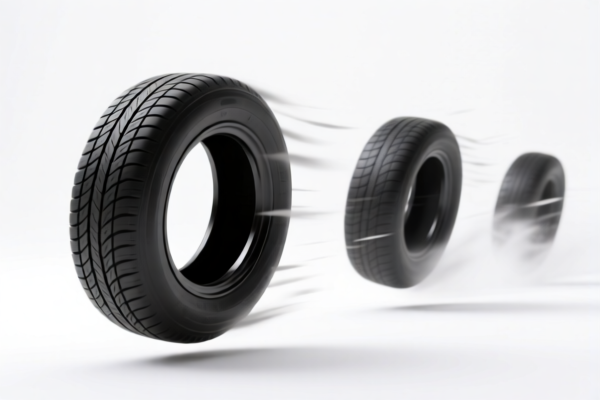
Drifting car tires
CN → US| HS Code | Tariff Rate | Origin | Destination | Doc |
|---|---|---|---|---|
| 4013100010 | 38.7% | CN | US | Official Doc |
| 4013905050 | 38.7% | CN | US | Official Doc |
| 4012118000 | 38.4% | CN | US | Official Doc |
| 4012114000 | 39.0% | CN | US | Official Doc |
| 4011105000 | 38.4% | CN | US | Official Doc |
| 4011101070 | 39.0% | CN | US | Official Doc |
Product Images

AI Analysis
🏎️ Drifting Car Tires (High-Performance Rubber Tires)
🌐 HS Code Reference & Customs Clearance Guide | 2026 Tariff Breakdown | Strategic Import Strategy for Automotive Parts
📌 1. Product Definition & Classification: What Are "Drifting Tires"?
In the context of international trade, "Drifting car tires" are not a single HS Code category but a functional description of pneumatic tires designed for motorsports. Customs classification depends strictly on two factors: 1. Condition: New or Retreaded? 2. Construction: Radial or Non-Radial? 3. Size: Rim diameter (especially critical for modern drift cars using 18"+ wheels).
Drifting tires are typically classified under Chapter 40 (Rubber and Articles Thereof), specifically heading 4011 (New Pneumatic Tires) or 4012 (Retreaded Tires).
⚠️ Critical Distinction:
- If the tires are NEW, they fall under 4011.
- If the tires are RETREADED (recapped), they fall under 4012.
- Note: Drifting tires are often replaced frequently. If they are discarded, they are "Used." If re-capped, they are "Retreaded." "Used" tires generally have 0% duty but are subject to stricter sanitary/structural inspections.
📦 2. HS Code Classification Matrix (2026 Data Extract)
Based on the provided <DATA>, here are the precise HS Codes for drifting tires. Note that "Drifting" is not a keyword in HS codes; you must use the technical attributes (New/Retreaded, Radial, Size).
| HS Code | Product Description | Key Attributes for Drifting Cars | Duty Rate (Total) |
|---|---|---|---|
| 4011.10.50.00 | New pneumatic tires... Other | Non-Radial or Small Diameter (<18") New Tires | 28.4% |
| 4011.10.10.70 | New pneumatic tires... Radial, Rim > 45.72 cm (18") | Most Common for Modern Drift Cars (18"+ Wheels) | 29.0% |
| 4012.11.80.00 | Retreaded tires... Other | Recapped Non-Radial Retreaded Tires | 0.0% |
| 4012.11.40.00 | Retreaded tires... Radial | Recapped Radial Retreaded Tires | 0.0% |
🔍 Why These Codes?
- Radial vs. Non-Radial: Almost all modern high-performance drifting tires are Radial. If your tires are Radial AND have a rim diameter greater than 18 inches (45.72 cm), you MUST use4011.10.10.70.
- Non-Radial: Older or specific budget drift tires might be Bias-ply (Non-Radial). These fall under4011.10.50.00(if new).
- Retreaded: If you import used tires to have them re-capped, or import pre-retreaded tires, use 4012 codes. These have 0% duty, making them a popular option for cost-saving in motorsports, despite performance limitations.
💰 3. Tariff Rate Detailed Analysis (Tax Breakdown)
✅ Scope: Analysis based on the provided tax structure (likely US Market given the "25% additional tariff" pattern typical of Section 301 tariffs on Chinese goods).
✅ Origin: Assumed China (CN) due to the "25% additional tariff" mentioned in the data.
🎯 1. New Radial Tires (>18") | HS: 4011.10.10.70
This is the most likely code for high-end drift builds using wide, low-profile tires on large rims.
| Component | Rate | Source/Reason |
|---|---|---|
| Base Duty | 4.0% | Standard MFN duty for car tires |
| Additional Duty | 25.0% | Section 301 Tariff (China Origin) |
| Total Tax | 29.0% | High Cost Alert |
📌 Explanation:
- New radial tires for cars are subject to a higher base duty (4.0%) compared to non-radial (3.4%).
- The 25% additional tariff significantly impacts profitability.
- Total Landed Duty Cost: 29.0% of CIF value.
🎯 2. New Non-Radial Tires | HS: 4011.10.50.00
For older style bias-ply drift tires or those with smaller rims (<18").
| Component | Rate | Source/Reason |
|---|---|---|
| Base Duty | 3.4% | Standard MFN duty |
| Additional Duty | 25.0% | Section 301 Tariff (China Origin) |
| Total Tax | 28.4% | Slightly lower than Radial |
📌 Explanation:
- Non-radial tires have a lower base duty (3.4%) but still face the full 25% penalty.
- Total Landed Duty Cost: 28.4% of CIF value.
🎯 3. Retreaded Tires (Radial & Non-Radial) | HS: 4012.11.40.00 / 4012.11.80.00
Cost-saving strategy for teams willing to compromise on ultimate grip consistency.
| Component | Rate | Source/Reason |
|---|---|---|
| Base Duty | 0.0% | Preferential duty for retreaded tires |
| Additional Duty | 0.0% | Exempt from Section 301 additional tariffs |
| Total Tax | 0.0% | Tax-Free Entry |
📌 Explanation:
- Retreaded tires are classified differently because they are considered "remanufactured" rather than new.
- Total Landed Duty Cost: 0.0%.
- ⚠️ Risk: Retreaded tires may not meet the heat dissipation and structural integrity requirements for high-speed drifting, potentially affecting safety and performance.
🛠️ 4. Customs Clearance Practical Advice (Avoid Pitfalls)
✅ 1. Documentation Checklist (Essential for Clearance)
| Document | Requirement | Reason |
|---|---|---|
| Commercial Invoice | Must specify "New Pneumatic Tire" or "Retreaded Tire" explicitly. | Ambiguous terms like "Auto Parts" lead to delays. |
| Technical Specification Sheet | Must list: - Radial/Bias construction - Rim Diameter (in inches/cm) - Tread Depth (if new) - Load/Speed Rating |
Customs needs to verify if it fits 4011.10.10.70 (>18") or 4011.10.50.00 (Other). |
| Origin Certificate | Proof of Country of Origin (e.g., China). | Required to apply/calculate the 25% additional tariff. |
| Labeling/Marking | Each tire must be marked with size, type, and origin. | Prevents "Unmarked Goods" penalties. |
✅ 2. Declaration Tips (Key Mnemonic)
🔥 "Radial > 18? Use 10.70. New Bias? Use 50.00. Retreaded? Zero Duty!"
| Scenario | Correct HS Code | Error Consequence |
|---|---|---|
| 18-inch Radial Drift Tire (New) | 4011.10.10.70 |
Misclassifying as 50.00 under-declares duty (Penalty!). |
| 17-inch Non-Radial Drift Tire (New) | 4011.10.50.00 |
Misclassifying as 10.70 over-declares duty (Refund delay). |
| Recapped Tire | 4012.11.40.00 |
Declaring as "New" pays 29% tax unnecessarily. |
| Inner Tubes (Accessories) | 4013.10.00.10 |
Must be declared separately if not packaged with tires. |
✅ 3. Special Cases & Warnings
| Situation | Recommendation |
|---|---|
| Mixed Container | If shipping both New (29% tax) and Retreaded (0% tax) tires, declare separately. Do not mix under one HS code. |
| Inner Tubes | If inner tubes are included, declare them under 4013.10.00.10 (0% tax). Ensure they are listed as "Inner Tubes, Rubber" not "Tire Parts." |
| Sample vs. Commercial | For "Samples," still declare correctly. Use "Sample for Evaluation" on invoice, but HS Code remains the same. No automatic duty exemption for tires. |
| Tire Flaps/Treads | If shipping only tire treads or flaps (not full tires), use 4012.90 codes (0% duty). Ensure description says "Tire Treads" not "Tires." |
🌍 5. Global Market Comparison (Contextual Note)
| Region | Duty Rate (New Tires) | Notes |
|---|---|---|
| USA | 28.4% - 29.0% | Includes 25% Section 301 tariff on Chinese goods. |
| EU | ~10% + VAT | No additional Section 301 tariffs, but higher base duty. |
| China | 20% - 30% | High duty on imported tires; local production is cheaper. |
| UK | ~10% | Post-Brexit tariffs align closely with EU. |
📌 Conclusion:
- The USA is the most expensive market for importing Chinese drifting tires due to the 25% additional tariff.
- Retreaded tires (4012) offer a 0% duty loophole, but performance trade-offs must be considered.
- Always verify Rim Diameter. Using<18"Non-Radial code (4011.10.50.00) for a 20" Radial tire is a common customs error that leads to severe penalties.
📌 6. Common Errors & Pitfalls (Lessons Learned)
❌ Error 1: Declaring "Drifting Tires" as a generic "Auto Part"
👉 Result: Customs reclassifies, assigns higher duty, and imposes fines.
✅ Fix: Use specific HS Code 4011.10.10.70 or 4011.10.50.00.
❌ Error 2: Ignoring Rim Diameter
👉 Result: Misclassifying 20" Radial tires as 4011.10.50.00 (28.4% tax) instead of 4011.10.10.70 (29.0% tax). While the difference is small, under-declaration of value or code is risky.
✅ Fix: Measure rim diameter in centimeters. >45.72 cm = 10.10.
❌ Error 3: Mixing New and Retreaded Tires in One Line Item
👉 Result: Confusion at border, detention of goods.
✅ Fix: Split line items on Invoice and Packing List clearly by HS Code.
🎯 7. Final Strategy for Drifting Tire Importers
🔹 "New Radials > 18" Pay 29% Tax. Retreads Pay 0%. New Bias < 18" Pay 28.4%."
- For Top-Tier Competitions: Import New Radial Tires (
4011.10.10.70). Budget for 29% duty. Ensure technical specs prove Radial construction and >18" rim. - For Budget/Practice Runs: Consider Retreaded Tires (
4012.11.40.00). 0% Duty. Source from reputable retreaders to ensure safety. - For Accessories: Include Inner Tubes (
4013.10.00.10) separately. They are 0% tax and essential for tubeless setups with sealant.
📣 Immediate Action:
📞 Verify Rim Diameter & Construction before shipping.
📄 Prepare Tech Specs showing Radial/Bias and Rim Size.
💼 Calculate CIF Value + 29% (for new radials) to determine true landed cost.
✨ Precision in Classification Saves Millions in Customs!
💼 Your Tires, Your Code, Your Cost.
Customer Reviews
About HS Code Classification
The Harmonized System (HS) is an internationally standardized nomenclature developed by the World Customs Organization (WCO) to classify traded products. Over 200 countries use the HS system as the basis for customs tariffs, trade statistics, and import/export regulations.
Each HS code follows a hierarchical structure:
- Chapter (2 digits) — Broad category of goods (e.g., Chapter 84: Machinery and Mechanical Appliances)
- Heading (4 digits) — More specific grouping within the chapter
- Subheading (6 digits) — Internationally standardized breakdown, used by all WCO member countries
- National subdivisions (8-10 digits) — Country-specific extensions for further classification, such as US HTSUS 10-digit codes
Correct HS code classification is essential for smooth customs clearance, accurate duty payment, and compliance with trade regulations. Misclassification can lead to customs delays, overpayment of duties, or penalties.
When importing from CN to US, the applicable tariff rates may include:
- Most-Favored-Nation (MFN) rate — The standard duty rate applied to WTO members
- General rate — Applied to countries without trade agreements
- Trade remedy duties — Additional tariffs such as Section 301 (anti-dumping), Section 232 (national security), or countervailing duties
The information provided on this page is for reference purposes only. For official classification, please consult with your local customs authority or a licensed customs broker.