Drive Shaft and Crankshaft
CN → US| HS Code | Tariff Rate | Origin | Destination | Doc |
|---|---|---|---|---|
| 8483103010 | 37.5% | CN | US | Official Doc |
| 8483105000 | 35.0% | CN | US | Official Doc |
| 8708996805 | 37.5% | CN | US | Official Doc |
Product Images
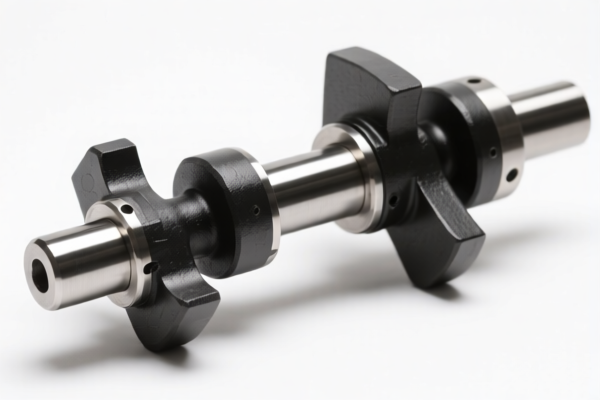
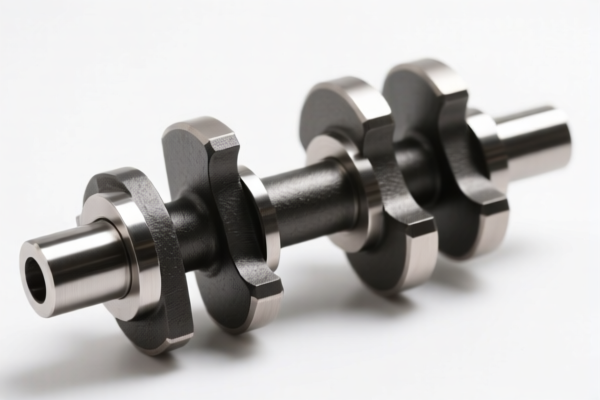
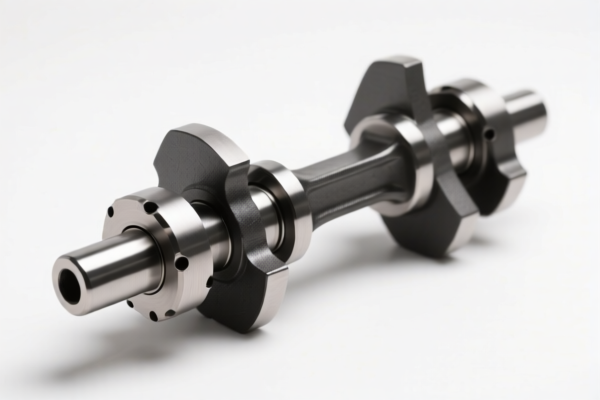
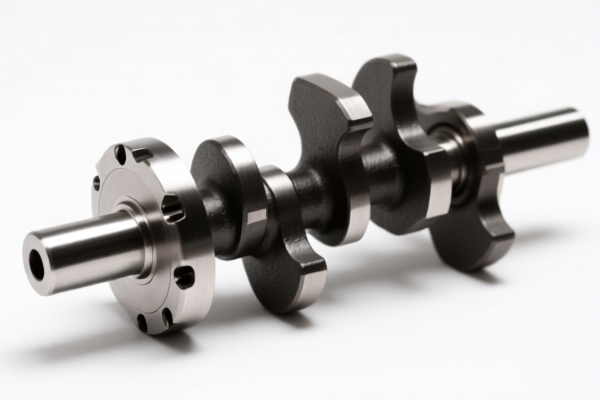
AI Analysis
🚗 Drive Shaft & Crankshaft: The Dual-Identity Classification Guide
🌐 HS Code Reference & Customs Clearance Guide | 2026 Latest Tariff Analysis | Professional Clearance Strategy
📌 I. Product Definition & Classification: Do You Truly Understand the Difference?
While "Drive Shaft" and "Crankshaft" may sound similar in industrial contexts, they serve fundamentally different roles in vehicle power transmission and engine mechanics. However, under the Harmonized System (HS), both are classified under Chapter 84 or 87, depending on their specific nature and intended use.
In international trade, these parts are often grouped under automotive components or mechanical power transmission parts. The key distinction lies in:
- Drive Shaft (传动轴): A mechanical component used to transmit torque and rotation from the engine/gearbox to the wheels or other machinery. It is a power transmission part.
- Crankshaft (曲轴): A critical internal engine component that converts reciprocating motion into rotational motion. It is an engine part.
⚠️ Critical Distinction:
- If the part is a transmission link (connecting gearbox to wheels) → It is typically classified under 8483.10 (Drive Shafts) or 8708.99 (Parts of Motor Vehicles).
- If the part is an engine internal component → It is typically classified under 8409.91 (Parts for Spark-Ignition Engines) or 8409.99 (Parts for Compression-Ignition Engines).
- However, for US Customs Import from China, specific HS codes have been flagged in the provided data.
📦 II. HS Code Classification Details (Based on Provided Data)
According to the provided dataset, the following HS codes are relevant for "Drive Shaft" (传动轴) imports from China to the US. Note that "Crankshaft" is not explicitly listed in the <DATA> set, but "Drive Shaft" is analyzed in depth below.
| HS Code | Product Description | Applicable Scenario | Key Identification |
|---|---|---|---|
8483.10.30.10 |
Drive Shafts (General) | Mechanical power transmission parts, not specific to motor vehicles | General industrial drive shafts |
8483.10.50.00 |
Drive Shafts (Specialized) | Power transmission parts, potentially different material/form | Specific industrial forms |
8708.99.68.05 |
Parts of Motor Vehicles (Drive Shafts) | Automotive drive shafts, parts of motor vehicles | Vehicle-specific drive shafts |
🔍 Key Insight from Data:
- All three codes explicitly reference "Drive Shaft" (传动轴) in their summary.
- The distinction between8483(Mechanical Power Transmission) and8708(Motor Vehicle Parts) depends on end-use.
- If it’s a car part, it likely falls under8708.99.68.05.
- If it’s an industrial machine part, it likely falls under8483.10.xx.xx.
💰 III. 2026 Latest Tariff Rate Breakdown (Including Surtaxes)
✅ Applicable Country: United States (US)
✅ Origin: China (CN)
✅ Effective Date: Ongoing (Including subsequent imports)
🎯 1. 8483.10.30.10 —— General Drive Shafts (Industrial/Mechanical)
| Item | Content |
|---|---|
| Base Tariff | 2.5% |
| Section 301 Surcharge | 25.0% |
| 122 Clause Tariff | 10.0% |
| Total Effective Rate | 37.5% |
| Tax Calculation | CIF Value × 37.5% |
| De Minimis Exemption | ❌ Not Eligible |
| Legal Basis Path | Base Tariff → Section 301 (Footnote 9903.88.01) → IEEPA 122 Clause |
📌 Explanation:
- 2.5% Base Tariff: Standard US tariff for mechanical power transmission parts.
- 25% Section 301 Surcharge: Applied to Chinese goods under trade war tariffs.
- 10% IEEPA 122 Clause: Additional surcharge on Chinese goods under executive orders.
- Total: 37.5% — This is a high tariff bracket.
🎯 2. 8483.10.50.00 —— Specialized Drive Shafts
| Item | Content |
|---|---|
| Base Tariff | 0.0% |
| Section 301 Surcharge | 25.0% |
| 122 Clause Tariff | 10.0% |
| Total Effective Rate | 35.0% |
| Tax Calculation | CIF Value × 35.0% |
| De Minimis Exemption | ❌ Not Eligible |
| Legal Basis Path | Base Tariff → Section 301 → IEEPA 122 Clause |
📌 Note:
- Despite a 0% base tariff, the surcharges push the total to 35%.
- This code may apply to specific industrial forms or materials.
- Still subject to all US surtaxes.
🎯 3. 8708.99.68.05 —— Automotive Drive Shafts (Parts of Motor Vehicles)
| Item | Content |
|---|---|
| Base Tariff | 2.5% |
| Section 301 Surcharge | 25.0% |
| 122 Clause Tariff | 10.0% |
| Total Effective Rate | 37.5% |
| Tax Calculation | CIF Value × 37.5% |
| De Minimis Exemption | ❌ Not Eligible |
| Legal Basis Path | Base Tariff → Section 301 → IEEPA 122 Clause |
📌 Explanation:
- 2.5% Base Tariff: Standard for motor vehicle parts.
- 25% + 10% Surtaxes: Same as above.
- Total: 37.5% — Identical to general drive shafts.
- Key Difference: This code is explicitly for automotive use. Misclassification can lead to audits.
🛠️ IV. Customs Clearance Practical Advice (Battle-Tested Pitfall Guide)
✅ 1. Documentation Checklist (Mandatory)
| Document | Required | Description |
|---|---|---|
| ✅ Product Specification Sheet | ✔️ | Dimensions, material (steel, aluminum, etc.), torque capacity |
| ✅ Engineering Drawing | ✔️ | Clearly show if it’s a drive shaft (transmission) or crankshaft (engine) |
| ✅ Product Photos (with Nameplate) | ✔️ | Must show model number, brand, and intended use |
| ✅ Third-Party Test Report | ✔️ | ISO, SAE, or OEM certification (if applicable) |
| ✅ Commercial Invoice | ✔️ | Must specify: “Drive Shaft for Motor Vehicle” or “Industrial Drive Shaft” |
| ✅ Certificate of Origin (CO) | ✔️ | Essential for surtax verification |
| ✅ Packing List | ✔️ | Detail how parts are packaged; avoid splitting single items |
✅ 2. Declaration Strategy (Key Mnemonics)
🔥 “Be Precise: Use ‘Drive Shaft’ Not ‘Crankshaft’ If Applicable”
| Scenario | Correct Declaration | Incorrect Declaration |
|---|---|---|
| Automotive Drive Shaft | 8708.99.68.05 – “Drive Shaft for Motor Vehicle” |
“Crankshaft” → Wrong HS Code, Delayed Clearance |
| Industrial Drive Shaft | 8483.10.30.10 or 8483.10.50.00 |
“Car Part” → Misclassification |
| Actual Crankshaft | Not listed in data → Likely 8409.91 or 8409.99 |
Forcing into 8483 or 8708 → Penalty Risk |
📌 Critical Warning:
- Do NOT classify a Crankshaft as a Drive Shaft. They are functionally and structurally different.
- Crankshafts are engine internals (Chapter 84, Heading 8409).
- Drive Shafts are transmission components (Chapter 84, Heading 8483 or Chapter 87, Heading 8708).
- The provided data only covers Drive Shafts. If you are shipping Crankshafts, you must use a different HS Code (not listed here).
✅ 3. Special Case Handling
| Scenario | Recommendation |
|---|---|
| OEM Automotive Drive Shaft | Provide OEM contract + design drawings → Use 8708.99.68.05 |
| Industrial Drive Shaft | Provide machinery type + application → Use 8483.10.30.10 or 8483.10.50.00 |
| Crankshaft Shipment | Do NOT use data above. Consult HS Code 8409.91 (Gas Engine) or 8409.99 (Diesel). |
| Mixed Container (Drive Shaft + Crankshaft) | Split Declaration. Each item must have its own HS Code. |
🌍 V. Global Market Comparison (2026 Update)
| Country/Region | Recommended HS Code (Drive Shaft) | Tariff (China Origin) | Certification | Notes |
|---|---|---|---|---|
| 🇺🇸 USA | 8483.10.30.10 / 8708.99.68.05 |
37.5% (301 + 122 Clause) | SAE, ISO | High surtaxes apply |
| 🇨🇳 China | 8483.10 / 8708.99 |
5–7% | CCC | No US surtaxes |
| 🇪🇺 EU | 8483.10 / 8708.99 |
0–2% (if EBA) | CE, E-Mark | Preferential if eligible |
| 🇬🇧 UK | 8483.10 / 8708.99 |
0–3% | UKCA | Post-Brexit rules apply |
| 🇯🇵 Japan | 8483.10 / 8708.99 |
0–5% | JIS | No surtaxes |
📌 Conclusion:
- USA is the most expensive market due to 301 and 122 Clause tariffs.
- Drive Shafts are not exempt from de minimis.
- Crankshafts are not covered in this data. Use separate classification.
📌 VI. Common Mistakes & Pitfalls (Lessons Learned)
❌ Mistake 1: Calling a Crankshaft a “Drive Shaft” to match HS codes
👉 Consequence: Customs audit → Penalty + Back Taxes + Seizure Risk
❌ Mistake 2: Not specifying end-use (Automotive vs. Industrial)
👉 Consequence: Wrong HS Code → 37.5% vs. 0% base rate confusion → Delayed Clearance
❌ Mistake 3: Assuming De Minimis applies to parts under $800
👉 Consequence: All listed HS Codes are denied de minimis. Even small shipments are taxed.
❌ Mistake 4: Using generic terms like “Shaft” in invoice
👉 Consequence: Customs cannot determine HS Code → Holds at Border → Demurrage Fees
✅ Correct Approach:
“Automotive Drive Shaft, Steel, Model XYZ, for Passenger Car Transmission System, Origin: China”
vs.
“Industrial Drive Shaft, Aluminum, Model ABC, for Conveyor System, Origin: China”
🎯 VII. Conclusion: Precision Saves Costs!
🎯 Remember:
🔹 “Drive Shaft ≠ Crankshaft.”
🔹 “US Tariff = 37.5% (for Drive Shafts).”
🔹 “No De Minimis. No Exemptions.”
🔹 “Crankshafts Need Separate HS Codes (8409.xx).”
📌 Pro Tip:
If you are shipping Crankshafts, please consult a customs broker for HS Code 8409.91.00.00 or 8409.99.00.00. The provided data does not cover Crankshafts. Misclassification can lead to severe penalties.
📣 Immediate Action:
📞 Engage a licensed customs broker.
📄 Provide detailed engineering drawings.
🚀 Ensure accurate HS Code declaration to avoid 37.5% surprises!
✨ Professional Customs Clearance Starts with Accurate Classification!
💼 Every dollar of tariff is a dollar of profit. Protect it!
Customer Reviews
About HS Code Classification
The Harmonized System (HS) is an internationally standardized nomenclature developed by the World Customs Organization (WCO) to classify traded products. Over 200 countries use the HS system as the basis for customs tariffs, trade statistics, and import/export regulations.
Each HS code follows a hierarchical structure:
- Chapter (2 digits) — Broad category of goods (e.g., Chapter 84: Machinery and Mechanical Appliances)
- Heading (4 digits) — More specific grouping within the chapter
- Subheading (6 digits) — Internationally standardized breakdown, used by all WCO member countries
- National subdivisions (8-10 digits) — Country-specific extensions for further classification, such as US HTSUS 10-digit codes
Correct HS code classification is essential for smooth customs clearance, accurate duty payment, and compliance with trade regulations. Misclassification can lead to customs delays, overpayment of duties, or penalties.
When importing from CN to US, the applicable tariff rates may include:
- Most-Favored-Nation (MFN) rate — The standard duty rate applied to WTO members
- General rate — Applied to countries without trade agreements
- Trade remedy duties — Additional tariffs such as Section 301 (anti-dumping), Section 232 (national security), or countervailing duties
The information provided on this page is for reference purposes only. For official classification, please consult with your local customs authority or a licensed customs broker.