Driver Power Supply
CN → US| HS Code | Tariff Rate | Origin | Destination | Doc |
|---|---|---|---|---|
| 8537109170 | 37.7% | CN | US | Official Doc |
| 8504404000 | 35.0% | CN | US | Official Doc |
| 8543906800 | 35.0% | CN | US | Official Doc |
| 8504406001 | 35.0% | CN | US | Official Doc |
| 8543908885 | 85.0% | CN | US | Official Doc |
| 8537108000 | 35.0% | CN | US | Official Doc |
Product Images

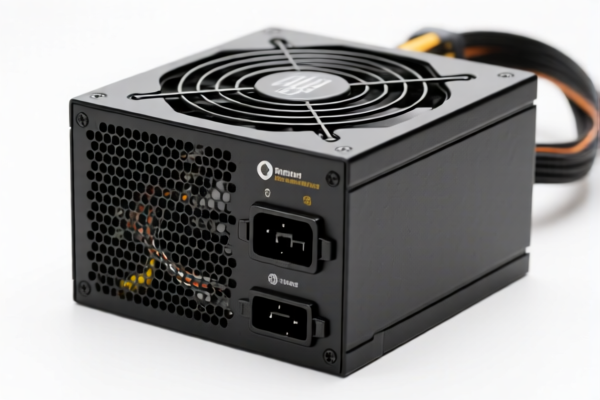
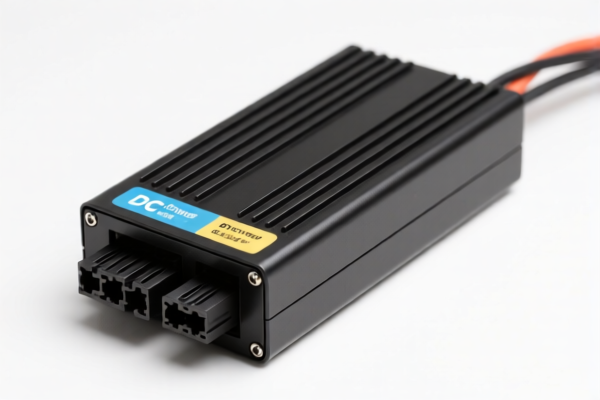
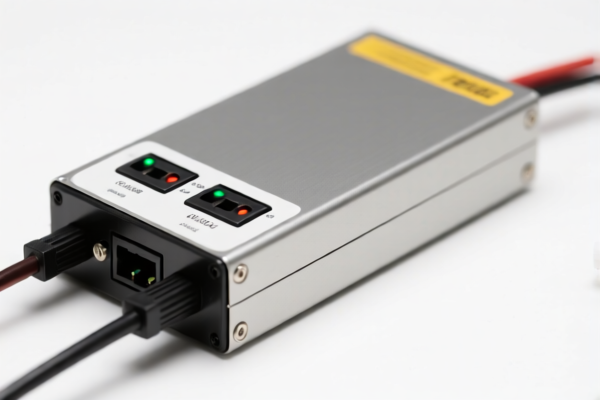
AI Analysis
⚡️ Driver Power Supply (Motor Drive Controllers & Converters)
🌐 HS Code Reference & Customs Clearance Guide | 2026 Tax Rate Breakdown | Professional Import Strategy
📌 I. Product Definition & Classification: What Exactly is a "Driver Power Supply"?
In the global electronics and automation market, "Driver Power Supply" is a generic term often referring to Variable Frequency Drives (VFDs), Motor Speed Controllers, or Power Conversion Units. However, customs authorities do not classify based on the generic name, but on the specific function, internal circuitry, and physical form.
The classification primarily hinges on two critical distinctions:
- Function: Is it a control device (managing voltage/current for distribution) or a conversion device (transforming AC to DC or changing frequency)?
- Form Factor: Is it a complete, standalone unit or a component/part of a larger electrical system?
⚠️ Critical Classification Logic:
- If it functions as a Voltage Control Device for power distribution → Group 8537
- If it functions as a Static Converter (e.g., inverter/drive) → Group 8504
- If it is a Component/Part with independent function → Group 8543
- If it is merely an Electrical Part without independent function → Group 8543 (Specific Subheading)
📦 II. HS Code Classification Details (2026 Latest Tariff Schedule)
Based on the specific function matching for "Driver Power Supply," here are the authoritative HS Codes:
| HS Code | Product Description | Application Scenario | Independent Function? |
|---|---|---|---|
8537.10.91.70 |
Voltage Control Device for Power Control/Distribution | Used as a voltage control unit in power distribution systems; matches "Power Control or Distribution" function. | ✅ Yes (Control Logic) |
8504.40.40.00 |
Static Converter for Motor Speed Drive | Matches "Motor Speed Drive Controller" function; converts electrical energy to control motor speed. | ✅ Yes (Drive Conversion) |
8504.40.60.01 |
Static Converter / Power Supply | Perfectly matches "Static Converter/Power Supply" usage; no material or form conflict. | ✅ Yes |
8543.90.68.00 |
Electric Motor/Device & Printed Circuit Component | Classified as an electrical device with a specific independent function (e.g., control board or module). | ✅ Yes (Highly Specific) |
8543.90.88.85 |
Electrical Equipment Component / Part | Classified as a "part" of electrical equipment, often involving Steel, Aluminum, or Copper components. | ❌ Part (Dependent) |
8537.10.80.00 |
Drive Component for Distribution/Control Systems | Matches logic for "Electrical Control/Distribution Base Component"; used in drive assembly. | ✅ Yes (Component Unit) |
🔍 Key Insight:
-8504.40.xxxx: The go-to code for Motor Drives and Inverters. -8537.10.xxxx: Used when the device acts as a Switchboard, Panel, or Voltage Regulator within a larger system. -8543.90.xxxx: Used for Modules, Boards, or Parts that have independent functions but are not standalone complete units.
💰 III. 2026 Latest Tariff Rate Breakdown (Including Surcharges & Policies)
✅ Applicable Country: United States (US)
✅ Origin: China (CN)
✅ Effective Date: November 10, 2025 (Including subsequent imports)
🚨 Warning: This category faces significant "Section 301" and "122" surcharges.
🎯 1. 8537.10.91.70 —— Voltage Control Device (Power Distribution)
| Item | Content |
|---|---|
| Base Tariff | 2.7% |
| Section 301 Surcharge (Add-on) | +25.0% |
| Section 122 Surcharge | +10.0% |
| Total Tariff Rate | 37.7% |
| Tax Calculation | CIF Value × 37.7% |
| De Minimis Exemption | ❌ Not Allowed |
| Legal Path | Base (2.7%) → 301 (25%) → 122 (10%) |
📌 Explanation:
- This classification assumes the device performs voltage control in a distribution context. - The total tax burden of 37.7% is the sum of the base tariff plus two major US trade defense surcharges. - No exemption is available for standard commercial imports.
🎯 2. 8504.40.40.00 —— Static Converter (Motor Speed Drive)
| Item | Content |
|---|---|
| Base Tariff | 0.0% |
| Section 301 Surcharge (Add-on) | +25.0% |
| Section 122 Surcharge | +10.0% |
| Total Tariff Rate | 35.0% |
| Tax Calculation | CIF Value × 35.0% |
| De Minimis Exemption | ❌ Not Allowed |
| Legal Path | Base (0%) → 301 (25%) → 122 (10%) |
📌 Explanation:
- Even with a 0% base tariff, the 35% total effective rate is very high due to the 25% Section 301 surcharge (on "Electric converters and static converters") and the 10% Section 122 surcharge. - This is the most common classification for Industrial Motor Drives.
🎯 3. 8543.90.68.00 & 8543.90.88.85 —— Components & Parts
| HS Code | Item | Content |
|---|---|---|
8543.90.68.00 |
Independent Function Module | Base: 0% 301: +25% 122: +10% Total: 35.0% |
8543.90.88.85 |
Electrical Part (Steel/Al/Cu) | Base: 0% 301: +25% 122: +10% Material Surcharge: +50% (Steel, Aluminum, Copper) Total: 85.0% |
📌 Critical Warning for
8543.90.88.85:
- If the driver power supply is classified strictly as a Part made of Steel, Aluminum, or Copper, a 50% additional surcharge is applied on top of the standard 35%. - This results in a catastrophic 85.0% total tariff. - Strategy: Avoid "Part" classification for standalone functional units. Ensure it is declared as a Module (8543.90.68.00) or Converter (8504.40.40.00) to avoid the 50% metal surcharge.
🎯 4. 8504.40.60.01 & 8537.10.80.00 —— Alternative Converter/Drive Bases
| Item | Content |
|---|---|
| Base Tariff | 0.0% |
| 301 Surcharge | +25.0% |
| 122 Surcharge | +10.0% |
| Total Tariff | 35.0% |
| Applicability | Matches "Static Converter/Power Supply" and "Drive Component" logic. |
📌 Note: These codes share the 35% rate, offering a slightly more precise description for specific drive components or power bases.
🛠️ IV. Customs Clearance Practical Advice (Avoiding Pitfalls)
✅ 1. Documentation Checklist (Non-Negotiable)
| Document | Required? | Critical Detail |
|---|---|---|
| Technical Spec Sheet | ✔️ | Must state: Input/Output Voltage, Frequency, Power Rating, Function (Drive/Control) |
| Circuit Diagram | ✔️ | Essential to prove it is a "Converter" (8504) vs. "Part" (8543) |
| Product Photos | ✔️ | Clear view of Nameplate, Model Number, Input/Output Terminals |
| Bill of Materials (BOM) | ✔️ | To check if it contains Steel/Aluminum casings that might trigger the 50% surcharge |
| Commercial Invoice | ✔️ | Description must be specific: e.g., "Variable Frequency Drive for Motor," NOT generic "Driver Power Supply" |
| Origin Certificate | ✔️ | Confirms Country of Origin (China) |
| Packing List | ✔️ | Details packaging and quantity |
✅ 2. Declaration Strategy (Golden Rules)
🔥 The Golden Rule: "Function First, Material Second! Do not declare as 'Part' if it works independently!"
| Scenario | Correct Declaration | Risk of Wrong Declaration |
|---|---|---|
| Standalone Motor Drive | 8504.40.40.00 (35% Tax) |
Declaring as "Part" → 85% Tax (50% metal surcharge) |
| Control Unit for VFD | 8537.10.91.70 (37.7% Tax) |
Declaring as "Converter" → May cause audit delay |
| Drive with Steel Housing | 8543.90.68.00 (35% Tax) |
Declaring as "Part with Metal" → 85% Tax |
| Generic "Power Supply" | 8504.40.60.01 (35% Tax) |
Generic name → High risk of re-classification & fines |
💡 Pro Tip:
- If your device has a Steel or Aluminum casing, do NOT use HS Code8543.90.88.85.
- Instead, prove it has an independent function (e.g., contains a control board, converter circuit) and use8543.90.68.00or8504.40.40.00to cap the tax at 35%.
✅ 3. Special Circumstances
| Situation | Handling Advice |
|---|---|
| OEM Custom Driver | Provide the original design drawing and customer order to prove it's a specific "Control Device." |
| Integrated Driver + Motor | If sold as a single unit, the tax rate might differ (Motor is 8501). Declare as "Driver only" if possible. |
| Mixed Shipment | Separate "Driver Power Supplies" from "Steel Mounting Brackets" (which might trigger 50% tax if misclassified). |
| Pre-Classification | Apply for a Binding Ruling from US Customs (CBP) to lock in the 35% rate before shipment. |
🌍 V. Global Market Comparison (2026 Context)
| Region | Recommended HS Code | Estimated Tariff | Certification Needed |
|---|---|---|---|
| 🇺🇸 USA | 8504.40.40.00 |
35.0% (High Risk) | FCC, UL |
| 🇪🇺 EU | 8504.40.40.00 |
~2-4% (No Section 301) | CE, RoHS |
| 🇨🇳 China (Export) | 8504.40.40.00 |
~0-5% | CCC |
| 🇦🇺 Australia | 8504.40.40.00 |
~5-10% | RCM |
📌 Conclusion:
The US market is the only high-risk zone for "Driver Power Supplies" due to the Section 301 (25%) and Section 122 (10%) surcharges. - Europe, Asia, and Oceania generally treat these as standard electrical equipment with low tariffs. - Strategy: Diversify supply chains to non-Chinese origins (Vietnam, Mexico) to bypass US surcharges if possible.
📌 VI. Common Mistakes & "Blood & Tears" Lessons
❌ Mistake 1: Declaring a Complete Motor Drive as a "Part" (8543.90.88.85).
👉 Consequence: You pay 85% tax instead of 35% due to the Steel/Aluminum surcharge. Loss of profit!
❌ Mistake 2: Using the generic term "Driver Power Supply" without specifying "Static Converter" or "Voltage Control."
👉 Consequence: Customs may arbitrarily classify as the highest taxable category or demand extra testing.
❌ Mistake 3: Assuming "0% Base Tariff" means "Free."
👉 Consequence: 35% or 37.7% total tax applies immediately due to Section 301/122.
✅ Correct Action:
"Variable Frequency Drive (VFD), Model XYZ, 3-Phase Input, 24V Control, for Industrial Motor Speed Control, FCC Certified."
🎯 VII. Conclusion: Professional Declaration, Cost Control, Smooth Clearance!
🎯 Remember the Formula:
🔹 "Standalone Drive = 35% (8504/8537)"
🔹 "Misclassified Part + Metal = 85% (Disaster)"
🔹 "Section 301 + 122 = 35% Minimum Surcharge"
🔹 "Generic Name = Risk of Audit"🔹 "Accurate HS Code saves thousands; Generic name costs everything!"
📌 Actionable Tips:
- If your driver contains Steel/Aluminum, ensure the classification is "Independent Function" (
8543.90.68.00) to avoid the 50% surcharge.- For US Imports, budget for 35.0% - 37.7% total tax immediately.
- Apply for a CBP Binding Ruling before shipping to lock in the 35% rate.
📣 Immediate Action:
📞 Contact your Customs Broker + Provide Circuit Diagrams + Request Pre-Classification
🚀 Ensure your Driver Power Supply clears customs efficiently, maximizing your profit margins!
✨ Professional Customs Clearance Starts with Precise Classification!
💼 Every dollar of tax you pay should be calculated precisely!
Customer Reviews
About HS Code Classification
The Harmonized System (HS) is an internationally standardized nomenclature developed by the World Customs Organization (WCO) to classify traded products. Over 200 countries use the HS system as the basis for customs tariffs, trade statistics, and import/export regulations.
Each HS code follows a hierarchical structure:
- Chapter (2 digits) — Broad category of goods (e.g., Chapter 84: Machinery and Mechanical Appliances)
- Heading (4 digits) — More specific grouping within the chapter
- Subheading (6 digits) — Internationally standardized breakdown, used by all WCO member countries
- National subdivisions (8-10 digits) — Country-specific extensions for further classification, such as US HTSUS 10-digit codes
Correct HS code classification is essential for smooth customs clearance, accurate duty payment, and compliance with trade regulations. Misclassification can lead to customs delays, overpayment of duties, or penalties.
When importing from CN to US, the applicable tariff rates may include:
- Most-Favored-Nation (MFN) rate — The standard duty rate applied to WTO members
- General rate — Applied to countries without trade agreements
- Trade remedy duties — Additional tariffs such as Section 301 (anti-dumping), Section 232 (national security), or countervailing duties
The information provided on this page is for reference purposes only. For official classification, please consult with your local customs authority or a licensed customs broker.