Droplet Teardrop Pendant
CN → US| HS Code | Tariff Rate | Origin | Destination | Doc |
|---|---|---|---|---|
| 7113195095 | 23.0% | CN | US | Official Doc |
| 7113195091 | 23.0% | CN | US | Official Doc |
| 7116200500 | 13.3% | CN | US | Official Doc |
| 7117909000 | 28.5% | CN | US | Official Doc |
| 7116201500 | 24.0% | CN | US | Official Doc |
Product Images
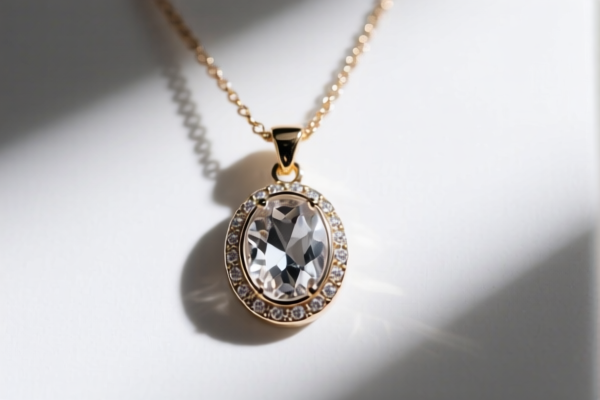
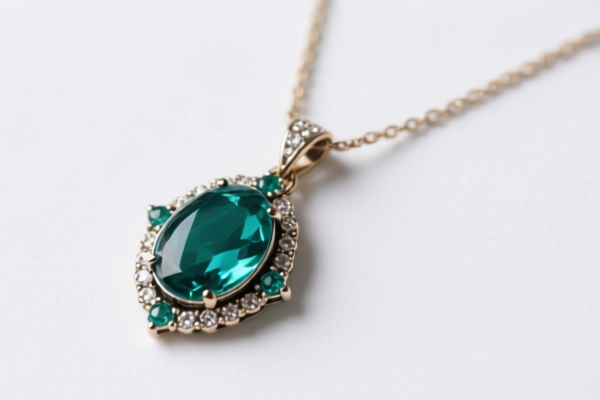
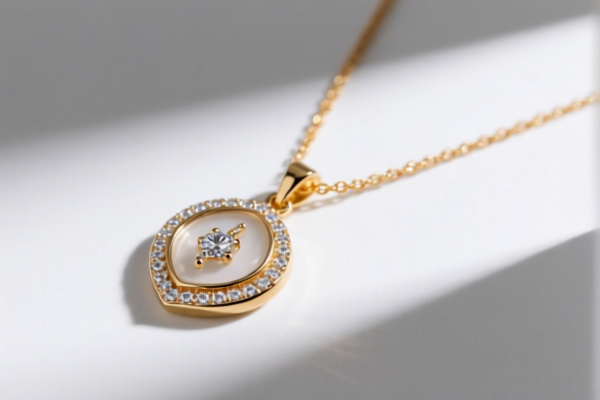

AI Analysis
💧 Droplet Teardrop Pendant (吊坠)
🌐 HS Code Reference & Customs Clearance Guide | 2026 Latest Tariff Analysis | Professional Clearance Strategy
📌 I. Product Definition & Classification: Do You Really Understand "Teardrop Pendants"?
A Teardrop Pendant is a classic jewelry item, characterized by its drop-like shape. In international trade, its classification depends heavily on the material composition and whether it is considered a "real precious stone" or a "simulated/imitation" item. The shape itself (pendant) fits the general category of jewelry, but the substance determines the specific HS Code and the resulting tax burden.
Based on the provided data, there are five potential classifications depending on the inferred material. Below is the detailed breakdown for each.
📦 II. HS Code Classification Details (2026 Latest Tariff Authority Comparison)
| HS Code | Product Description | Material Inference | Conflict Analysis | Total Tax Rate |
|---|---|---|---|---|
7113.19.50.95 |
Pendants (General Precious Metal) | Precious metal or clad precious metal | ✅ No conflict with jewelry form or material | 23.0% |
7113.19.50.91 |
Pendants (General Precious Metal) | Precious metal (Non-chain form) | ✅ No conflict; excludes necklaces/chains | 23.0% |
7116.20.05.00 |
Imitation Jewelry (Gemstone) | Precious/Semi-precious stones | ✅ Logical fit for "stone" inference | 13.3% |
7117.90.90.00 |
Imitation Jewelry (Other) | Base metal / Synthetic / Unspecified | ✅ Fallback "Other" category for imitations | 28.5% |
7116.20.15.00 |
Imitation Jewelry (Gemstone) | Precious/Semi-precious stone (Other) | ✅ Fits "Other" category for stones | 24.0% |
🔍 Key Distinction:
- HS 7113: Typically covers real precious metals/gems. If your pendant is gold, silver, platinum, or contains real gemstones, it falls here.
- HS 7116: Covers imitation jewelry made of natural stones (not classified elsewhere) or semi-precious stones.
- HS 7117: Covers imitation jewelry made of base metals, plastics, glass, etc. (the "catch-all" for non-precious).
💰 III. 2026 Latest Tariff Rate Breakdown (Including Surcharges & Policy Add-ons)
✅ Applicable Country: United States (US)
✅ Origin: China (CN) (Implied by "122 Section" and typical tariff structures)
✅ Effective Time: Current (2025-2026 Period)
🎯 1. 7113.19.50.95 & 7113.19.50.91 —— Pendants (Precious Metal/Clad)
These two codes share the exact same tax structure. They are used for pendants made of precious metals or precious metal-clad metals that do not fit into more specific subcategories (like necklaces).
| Item | Detail |
|---|---|
| Base Tariff | 5.5% |
| Section 301 Surcharge | +7.5% |
| Section 122 Surcharge | +10% |
| Total Tax Rate | 23.0% |
| Calculation Basis | CIF Value × 23% |
| De Minimis Exemption | ❌ Not Applicable (High value jewelry usually exceeds $800 threshold or is restricted) |
| Legal Basis Path | Base: 7113.19 → Add: 7.5% (Trade Act) → Add: 10% (Sec 122) |
📌 Explanation:
- Jewelry made of precious metals is taxed at a base of 5.5%.
- Crucial Point: The Section 122 surcharge (+10%) is a specific provision often applied to certain imports from China to protect domestic industries or address trade imbalances.
- Combined Rate: 23%. This is a moderate-to-high rate for jewelry.
🎯 2. 7116.20.05.00 —— Imitation Jewelry (Precious/Semi-Precious Stones)
This code applies if the teardrop pendant is made of natural precious or semi-precious stones but is considered "imitation" in the tariff sense (e.g., set in base metal, or not meeting the strict definition of HS 7113).
| Item | Detail |
|---|---|
| Base Tariff | 3.3% |
| Section 301 Surcharge | 0.0% |
| Section 122 Surcharge | +10% |
| Total Tax Rate | 13.3% |
| Calculation Basis | CIF Value × 13.3% |
| De Minimis Exemption | ❌ Not Applicable |
| Legal Basis Path | Base: 7116.20 → Add: 10% (Sec 122) |
📌 Explanation:
- Why 0% Section 301? Some stone-based imitation jewelry may be exempt from the 301 tariff list, but the Section 122 surcharge (+10%) still applies.
- Savings: This is the lowest total rate (13.3%) among the options, making it the most cost-effective if the material qualifies.
🎯 3. 7116.20.15.00 —— Imitation Jewelry (Other Stones)
Similar to the above, but a different sub-category for other types of precious/semi-precious stones not covered by 05.00.
| Item | Detail |
|---|---|
| Base Tariff | 6.5% |
| Section 301 Surcharge | +7.5% |
| Section 122 Surcharge | +10% |
| Total Tax Rate | 24.0% |
| Calculation Basis | CIF Value × 24% |
| De Minimis Exemption | ❌ Not Applicable |
| Legal Basis Path | Base: 7116.20 → Add: 7.5% (Sec 301) → Add: 10% (Sec 122) |
📌 Explanation:
- This code attracts both the Section 301 (7.5%) and Section 122 (10%) surcharges.
- Comparison: Slightly higher than7113codes (23% vs 24%), but still competitive if7116.20.05.00is not applicable.
🎯 4. 7117.90.90.00 —— Imitation Jewelry (Other/Base Metal)
This is the fallback category for imitation jewelry made of materials that are not precious metals or stones (e.g., base metals, glass, plastic, resin). It is the "catch-all" for non-precious pendants.
| Item | Detail |
|---|---|
| Base Tariff | 11.0% |
| Section 301 Surcharge | +7.5% |
| Section 122 Surcharge | +10% |
| Total Tax Rate | 28.5% |
| Calculation Basis | CIF Value × 28.5% |
| De Minimis Exemption | ❌ Not Applicable |
| Legal Basis Path | Base: 7117.90 → Add: 7.5% (Sec 301) → Add: 10% (Sec 122) |
📌 Explanation:
- Highest Rate: This is the most expensive classification at 28.5%.
- Warning: If your pendant is made of stainless steel, brass, or synthetic materials, you will pay this rate. Ensure you do not misclassify a base-metal pendant as "precious metal" (HS 7113) to avoid customs penalties, but also be aware of the high cost.
🛠️ IV. Customs Clearance Practical Advice (Battle-Tested Pitfall Guide)
✅ 1. Material Declaration is Critical (Do Not Guess!)
| Scenario | Correct HS Code | Risk of Misclassification |
|---|---|---|
| Real Gold/Silver Pendant | 7113.19.50.95 / 91 |
Misclassifying as 7117 (28.5%) → Overpaying taxes |
| Base Metal / Alloy Pendant | 7117.90.90.00 |
Misclassifying as 7113 (23%) → Underpayment + Penalties |
| Natural Stone (Set in Base Metal) | 7116.20.05.00 / 15 |
Misclassifying as 7113 (23%) → Potential penalty if not "precious" |
| Synthetic Crystal / Glass | 7117.90.90.00 |
Often misclassified as 7116 → Audit Risk |
⚠️ Key Warning:
- HS 7113 requires precious metal content (usually >50% or plated above a certain thickness).
- HS 7117 is for non-precious materials.
- HS 7116 is for natural stones not meeting HS 7113 criteria.
✅ 2. Documentation Checklist (Must-Haves)
| Document | Requirement | Purpose |
|---|---|---|
| Commercial Invoice | Must clearly state "Pendant, Teardrop Shape" and Material (e.g., "14K Gold Pendant" or "Stainless Steel Pendant") | Determines HS Code |
| Material Certificate | Lab report or manufacturer declaration confirming metal content (e.g., "50% Silver Plated") | Proves HS 7113 vs 7117 |
| Product Photos | Clear images showing the item, clasp, and any hallmarks | Visual verification |
| Packing List | Quantity and weight per unit | Customs value verification |
| Section 122 Compliance Statement | If applicable, confirm origin and product type | Avoids delays from Sec 122 checks |
✅ 3. Strategic Tips for Cost Optimization
| Strategy | Action | Potential Saving |
|---|---|---|
| Material Optimization | If using base metal, ensure it is clearly declared as such to avoid penalties, but consider if using natural stones (HS 7116.20.05.00) can lower the rate from 28.5% to 13.3%. | 15.2% Tax Savings |
| Pre-Ruling | Apply for an Advance Ruling with US CBP if unsure about material classification (e.g., is your "gold-plated" item really HS 7113?). | Risk Mitigation |
| De Minimis Check | Ensure the value is above $800 to avoid Section 122 complexities if possible, but note that jewelry often requires formal entry regardless. | Administrative Efficiency |
🌍 V. Global Market Comparison (2026)
| Region | Recommended HS Code | Base Tax | Section 122/301 Impact | Total Estimated Tax |
|---|---|---|---|---|
| 🇺🇸 USA | 7113.19.50.95 / 7116.20.05.00 |
3.3% - 5.5% | +10% Sec 122 | 13.3% - 23.0% |
| 🇨🇳 China | 7113.19.50.95 |
5.5% | No Surcharge | 5.5% |
| 🇪🇺 EU | 7113.19.50.95 |
2.7% | No Surcharge | 2.7% |
| 🇬🇧 UK | 7113.19.50.95 |
2.7% | No Surcharge | 2.7% |
📌 Conclusion:
- The US market is the most expensive due to Section 122 (+10%) and potentially Section 301 (+7.5%).
- HS 7116.20.05.00 (13.3%) is the most tax-efficient option if your pendant can be classified under natural/semi-precious stones.
- HS 7117.90.90.00 (28.5%) is the least favorable for base metal/imitation goods.
📌 VI. Common Errors & Pitfalls (Lessons Learned)
❌ Error 1: Calling a base-metal pendant "Precious Metal Pendant" to get a lower rate.
👉 Consequence: Customs audits, fines, and back taxes of 28.5% - 23%.
❌ Error 2: Not specifying the material on the invoice.
👉 Consequence: Customs assigns the highest default rate (often HS 7117 at 28.5%) due to ambiguity.
❌ Error 3: Ignoring Section 122.
👉 Consequence: Shipment held at port for Sec 122 review, causing delays and storage fees.
✅ Correct Approach:
"Teardrop Pendant, 14K Yellow Gold, 5g, Hallmarked '14K', Model XYZ"
or
"Teardrop Pendant, Natural Ruby, Silver Setting, 2g, Model ABC"
🎯 VII. Conclusion: Precise Classification, Maximizing Profit!
🎯 Remember:
🔹 "Metal Determines the Code, Section 122 Adds 10%!"
🔹 "HS 7116.20.05.00 is the Tax Hero (13.3%) if materials allow!"
🔹 "HS 7117.90.90.00 is the Tax Trap (28.5%) for base metals!"
📌 Pro Tip:
If your supply chain allows, opt for natural stone settings (HS 7116.20.05.00) to reduce the total tax from 23% to 13.3%. This is a 9.7% saving per item, which significantly impacts margins in the jewelry trade.
📣 Immediate Action:
📞 Verify your material composition with your supplier.
🚀 Apply for an Advance Ruling if you are importing large volumes.
💼 Declare accurately to avoid customs holds and penalties.
✨ Professional Clearance, From Precise Classification Onwards!
💼 Every Percentage Point Saved is Profit Added!
Customer Reviews
About HS Code Classification
The Harmonized System (HS) is an internationally standardized nomenclature developed by the World Customs Organization (WCO) to classify traded products. Over 200 countries use the HS system as the basis for customs tariffs, trade statistics, and import/export regulations.
Each HS code follows a hierarchical structure:
- Chapter (2 digits) — Broad category of goods (e.g., Chapter 84: Machinery and Mechanical Appliances)
- Heading (4 digits) — More specific grouping within the chapter
- Subheading (6 digits) — Internationally standardized breakdown, used by all WCO member countries
- National subdivisions (8-10 digits) — Country-specific extensions for further classification, such as US HTSUS 10-digit codes
Correct HS code classification is essential for smooth customs clearance, accurate duty payment, and compliance with trade regulations. Misclassification can lead to customs delays, overpayment of duties, or penalties.
When importing from CN to US, the applicable tariff rates may include:
- Most-Favored-Nation (MFN) rate — The standard duty rate applied to WTO members
- General rate — Applied to countries without trade agreements
- Trade remedy duties — Additional tariffs such as Section 301 (anti-dumping), Section 232 (national security), or countervailing duties
The information provided on this page is for reference purposes only. For official classification, please consult with your local customs authority or a licensed customs broker.