Drumsticks
CN → US| HS Code | Tariff Rate | Origin | Destination | Doc |
|---|---|---|---|---|
| 4421999880 | 38.3% | CN | US | Official Doc |
| 4421999870 | 38.3% | CN | US | Official Doc |
| 9209998000 | 22.8% | CN | US | Official Doc |
| 9209991000 | 23.2% | CN | US | Official Doc |
Product Images
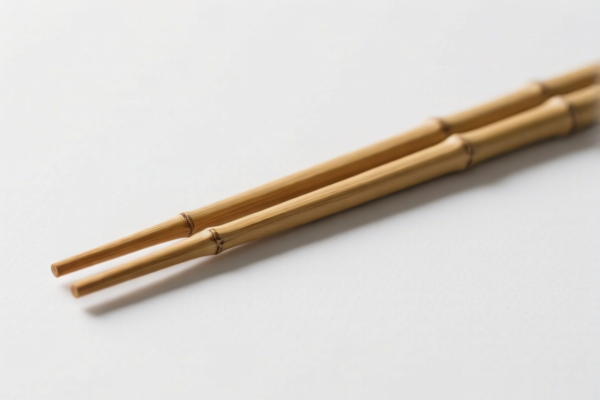
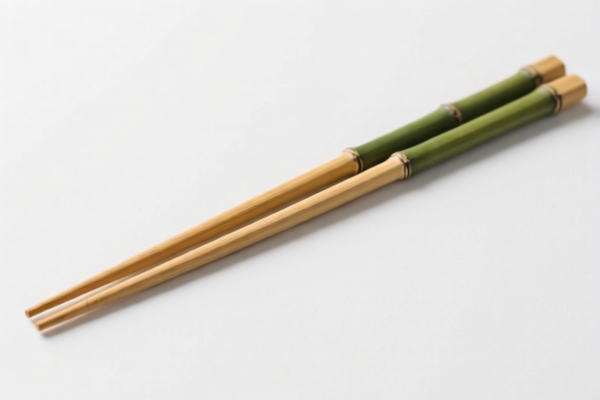
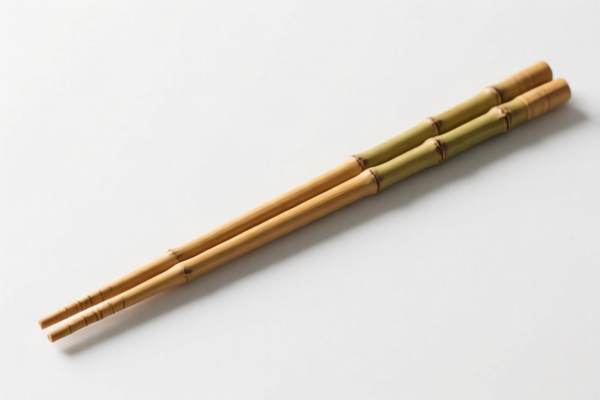
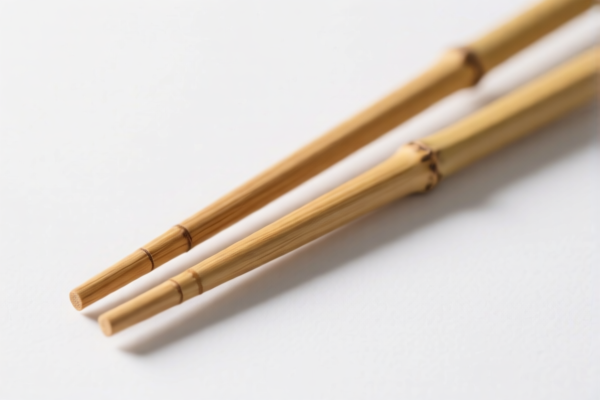
AI Analysis
🥁 Drumsticks (Musical Accessories)
🌐 HS Code Reference & Clearance Guide | 2026 Latest Tariff Analysis | Professional Clearance Strategy
📌 I. Product Definition and Classification: Do You Really Understand "Drumsticks"?
Drumsticks are essential accessories for percussion instruments, primarily used by drummers to strike drums, cymbals, and other percussion surfaces. In international trade, their classification depends heavily on material composition and functional specificity.
Wooden Drumsticks: Classified under general wood products if not specifically identified as instrument accessories.
Instrument Accessories: Classified under musical instrument parts if explicitly defined as attachments for percussion instruments.
⚠️ Key Distinction Point:
- If the material is primarily wood and considered a general wood product → Classified under Chapter 44
- If explicitly defined as an attachment for percussion instruments → Classified under Chapter 92
📦 II. HS Code Classification Details (2026 Latest Tariff Authority Comparison)
Based on the provided data, there are two main classification paths for drumsticks:
Path A: Classified as General Wood Products (Chapter 44)
| HS Code | Product Description | Applicability | Total Tax Rate |
|---|---|---|---|
4421.99.98.80 |
Other wooden articles (Drumsticks as general wood products) | Wooden drumsticks treated as general wood items | 38.3% |
4421.99.98.70 |
Parts/components of wooden articles (Drumsticks as wooden parts) | Wooden drumsticks treated as components/parts | 38.3% |
Path B: Classified as Musical Instrument Accessories (Chapter 92)
| HS Code | Product Description | Applicability | Total Tax Rate |
|---|---|---|---|
9209.99.80.00 |
Accessories for musical instruments (Drumsticks as attachments) | Drumsticks made of wood or synthetic materials, explicitly for instruments | 22.8% |
9209.99.10.00 |
Accessories for percussion instruments (Drumsticks as defined tools) | Wooden or composite tools specifically for striking percussion instruments | 23.2% |
🔍 Key Insight:
- Classification under Chapter 92 (Musical Instruments) is significantly cheaper (22.8%–23.2%) compared to Chapter 44 (38.3%).
- To justify Chapter 92, you must provide evidence that the item is an accessory specifically for musical instruments, not just a generic wooden stick.
💰 III. 2026 Latest Tariff Rate Details (Including Additional Taxes)
✅ Applicable Country: United States (US)
✅ Origin: China (CN)
✅ Effective Date: Including imports after November 10, 2025 (subject to Section 301 and IEEPA provisions)
🎯 1. 4421.99.98.80 & 4421.99.98.70 —— General Wood Products
| Item | Details |
|---|---|
| Base Tariff | 3.3% |
| Section 301 Additional Tariff | +25.0% |
| Section 122 Tariff (IEEPA) | +10.0% |
| Total Effective Tax Rate | 38.3% |
| Calculation Method | CIF Value × 38.3% |
| De Minimis Eligibility | ❌ Not Eligible (High duty rate excludes de minimis benefits) |
| Legal Basis Path | USITC:4421.99.98.80/70 → Section 301 Footnote → IEEPA Section 122 |
📌 Explanation:
- These HS codes treat drumsticks as generic wood goods.
- The 38.3% rate is punitive due to the combination of base, Section 301, and Section 122 tariffs.
- This classification should be avoided if possible due to high cost.
🎯 2. 9209.99.80.00 —— Musical Instrument Accessories (General)
| Item | Details |
|---|---|
| Base Tariff | 5.3% |
| Section 301 Additional Tariff | +7.5% |
| Section 122 Tariff (IEEPA) | +10.0% |
| Total Effective Tax Rate | 22.8% |
| Calculation Method | CIF Value × 22.8% |
| De Minimis Eligibility | ❌ Not Eligible |
| Legal Basis Path | USITC:9209.99.80.00 → Section 301 Footnote (7.5%) → IEEPA Section 122 |
📌 Note:
- This code covers drumsticks made of wood or synthetic materials (e.g., nylon tips).
- The 22.8% rate is significantly lower than the wood classification.
- Suitable for both traditional wooden and modern composite drumsticks.
🎯 3. 9209.99.10.00 —— Musical Instrument Accessories (Percussion Specific)
| Item | Details |
|---|---|
| Base Tariff | 5.7% |
| Section 301 Additional Tariff | +7.5% |
| Section 122 Tariff (IEEPA) | +10.0% |
| Total Effective Tax Rate | 23.2% |
| Calculation Method | CIF Value × 23.2% |
| De Minimis Eligibility | ❌ Not Eligible |
| Legal Basis Path | USITC:9209.99.10.00 → Section 301 Footnote (7.5%) → IEEPA Section 122 |
📌 Note:
- This code is for wooden or composite tools specifically defined for percussion instruments.
- It is very similar to9209.99.80.00but with a slightly higher base tariff (5.7% vs 5.3%).
- Use this if the product is explicitly marketed and designed for percussion only.
🛠️ IV. Clearance Practical Advice (Combat Pitfall Avoidance Guide)
✅ 1. Recommended Declaration Strategy
| Scenario | Recommended HS Code | Reason |
|---|---|---|
| Standard Drumsticks (Wood/Nylon) | 9209.99.80.00 |
Lowest rate (22.8%), covers general instrument accessories. |
| Explicitly Percussion-Only Tools | 9209.99.10.00 |
If marketing emphasizes "percussion tool," use this (23.2%). |
| Generic Wooden Sticks (Risk) | 4421.99.98.80 |
Avoid unless you cannot prove musical use. High rate (38.3%). |
🔥 Golden Rule:
"Always classify as Musical Instrument Accessories (Chapter 92) to save ~15% in duties!"
✅ 2. Required Documentation for Chapter 92 Classification
To successfully clear under 9209.99.80.00 or 9209.99.10.00, you must provide:
| Document | Requirement | Explanation |
|---|---|---|
| Product Catalog | ✔️ | Must clearly show the product is used for playing drums/percussion. |
| Usage Description | ✔️ | "Drumsticks for musical performance" – NOT "wooden sticks for general use." |
| Photos | ✔️ | Show the product in use with drums or in a musical context. |
| Marketing Materials | ✔️ | Websites, brochures mentioning "musical instrument accessory." |
| Bill of Lading/Invoice | ✔️ | Describe as "Drumsticks (Musical Accessory)" – DO NOT write "Wooden Sticks." |
⚠️ Critical Warning:
- If you declare "Wooden Sticks" or "Generic Wood Products," customs will likely misclassify you under Chapter 44, resulting in a 38.3% tax rate.
- Consistency is key: The product name, description, and HS code must all align with "Musical Instrument Accessory."
✅ 3. Special Cases
| Case | Handling Advice |
|---|---|
| OEM/Private Label | Ensure your supplier’s catalog shows "Musical Accessory." Private labeling alone doesn’t change classification. |
| Composite Materials | If made of carbon fiber or nylon, 9209.99.80.00 is still appropriate as "synthetic material accessory." |
| Bulk vs. Retail | No difference in HS code. Bulk shipping still requires correct declaration. |
| Samples | Even samples must be declared correctly. Incorrect declaration can lead to future audits. |
🌍 V. Global Market Clearance Comparison (2026 Latest)
| Country/Region | Recommended HS Code | Tariff (China Origin) | Notes |
|---|---|---|---|
| 🇺🇸 United States | 9209.99.80.00 |
22.8% | Includes Section 301 + Section 122. Avoid Chapter 44 (38.3%). |
| 🇨🇳 China | 9209.99.80.00 |
0-5% (Varies) | Check latest FTA agreements. |
| 🇪🇺 European Union | 9209.99.80 |
0-4.5% | Generally low duties for instrument accessories. |
| 🇬🇧 United Kingdom | 9209.99.80 |
0-4.5% | Post-Brexit tariff schedules may vary slightly. |
📌 Conclusion:
- The US market has the highest risk of misclassification due to complex Section 301 and Section 122 tariffs.
- Chapter 92 is always the optimal choice for drumsticks entering the US.
📌 VI. Common Mistakes & Pitfall Guide (Blood and Tears Lessons)
❌ Mistake 1: Declaring as "Wooden Sticks" or "General Wood Products"
👉 Consequence: Tax rate jumps from 22.8% to 38.3%. Overpayment of ~15.5% on every shipment.
❌ Mistake 2: Not providing proof of musical use
👉 Consequence: Customs may challenge the Chapter 92 classification and default to Chapter 44.
❌ Mistake 3: Using vague descriptions like "Wooden Accessories"
👉 Consequence: Increases scrutiny and risk of audit. Always be specific: "Drumsticks for Musical Instruments."
❌ Mistake 4: Assuming all wood products fall under Chapter 44
👉 Consequence: Ignores the specific provision for musical instrument parts in Chapter 92.
✅ Correct Declaration Example:
"Drumsticks, Musical Accessory, Wood/Nylon Tip, Model XYZ, for Percussion Instruments"
🎯 VII. Conclusion: Precise Classification Saves Money!
🎯 Key Takeaways:
🔹 "Classify as Musical Accessory (Chapter 92), not Wood Product (Chapter 44)!"
🔹 "Save 15.5% in duties by choosing the right HS Code!"
🔹 "Documentation is Key: Prove it’s for Music, not General Use!"
📌 Pro Tip:
- If you export to the US, always use
9209.99.80.00for drumsticks.- Keep marketing materials and product specs ready to prove musical use.
- Consider Advance Ruling if you have large volume imports to secure classification certainty.
📣 Immediate Action:
📞 Review your current HS Code declarations.
📄 Update product descriptions to emphasize "Musical Instrument Accessory."
🚀 Optimize your supply chain to reduce duty costs by up to 15.5%!
✨ Professional Clearance, Starts with Accurate Classification!
💼 Your Profit Margin Deserves Precision!
Customer Reviews
About HS Code Classification
The Harmonized System (HS) is an internationally standardized nomenclature developed by the World Customs Organization (WCO) to classify traded products. Over 200 countries use the HS system as the basis for customs tariffs, trade statistics, and import/export regulations.
Each HS code follows a hierarchical structure:
- Chapter (2 digits) — Broad category of goods (e.g., Chapter 84: Machinery and Mechanical Appliances)
- Heading (4 digits) — More specific grouping within the chapter
- Subheading (6 digits) — Internationally standardized breakdown, used by all WCO member countries
- National subdivisions (8-10 digits) — Country-specific extensions for further classification, such as US HTSUS 10-digit codes
Correct HS code classification is essential for smooth customs clearance, accurate duty payment, and compliance with trade regulations. Misclassification can lead to customs delays, overpayment of duties, or penalties.
When importing from CN to US, the applicable tariff rates may include:
- Most-Favored-Nation (MFN) rate — The standard duty rate applied to WTO members
- General rate — Applied to countries without trade agreements
- Trade remedy duties — Additional tariffs such as Section 301 (anti-dumping), Section 232 (national security), or countervailing duties
The information provided on this page is for reference purposes only. For official classification, please consult with your local customs authority or a licensed customs broker.