Dry Buffalo Upper Leather
CN → US| HS Code | Tariff Rate | Origin | Destination | Doc |
|---|---|---|---|---|
| 4107124000 | 12.5% | CN | US | Official Doc |
| 4107194000 | 12.5% | CN | US | Official Doc |
| 4104413060 | 12.4% | CN | US | Official Doc |
| 4104493060 | 12.4% | CN | US | Official Doc |
| 4101503500 | 19.9% | CN | US | Official Doc |
Product Images
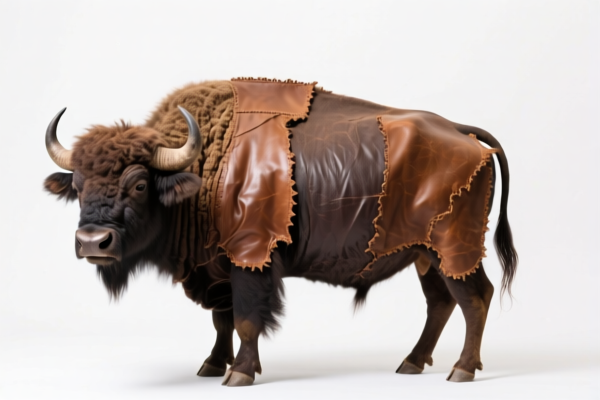
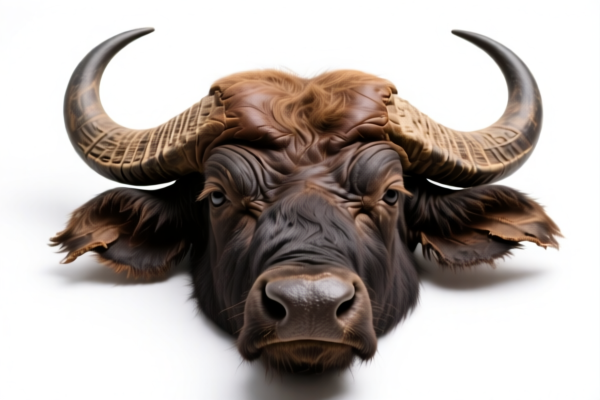
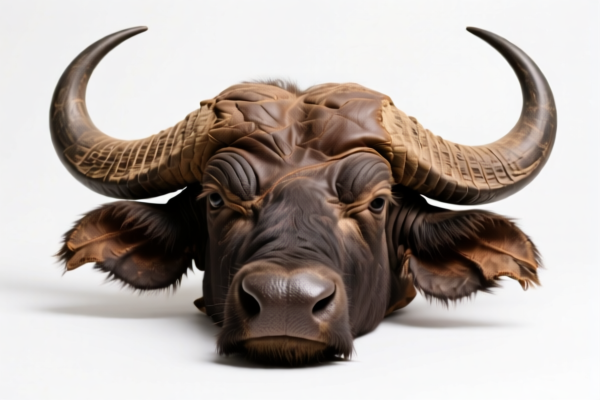
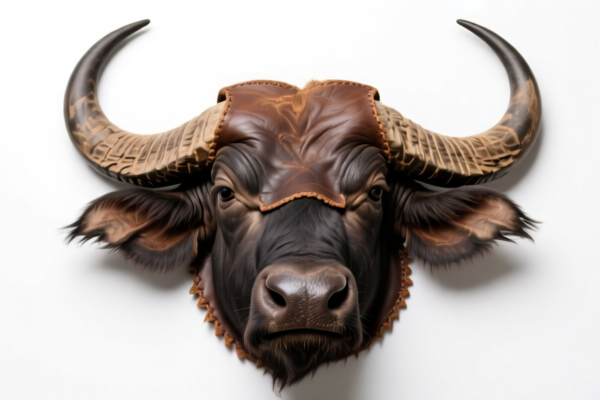
AI Analysis
🐃 Dry Buffalo Upper Leather
🌐 HS Code Reference & Clearance Guide | 2026 Latest Tariff Analysis | Professional Customs Strategy
📌 I. Product Definition & Classification: Do You Truly Understand "Dry Buffalo Upper Leather"?
Dry Buffalo Upper Leather refers to tanned or crust leather derived from buffalo hides, specifically processed for use as the upper material of footwear, bags, or garments. It is characterized by its durability, thickness, and natural grain texture. In international trade, classification depends heavily on the state of processing (e.g., full hide vs. split, wet blue vs. dry/tanned) and specific use.
⚠️ Key Distinction Points:
- If the leather is fully tanned, dried, and prepared for immediate use as an upper → It falls under Chapter 41 (Leather).
- If it is raw, salted, or partially processed (e.g., "wet blue") → It may fall under Chapter 41 (Chapter 41 covers raw/hides) or Chapter 41 (Tanned leather).
- Crucial Note: The term "Upper Leather" implies it is finished for assembly, not raw hides.
📦 II. HS Code Classification Details (2026 Latest Tariff Authority Comparison)
Based on the provided data, here are the five recommended HS Codes for "Dry Buffalo Upper Leather," ranked by relevance and tax efficiency:
| HS Code | Product Description | Application Scenario | Tax Rate (Total) | Reason for Inclusion |
|---|---|---|---|---|
4107.12.40.00 |
Tanned buffalo leather, full grain, suitable for dry leather category | High-quality upper leather, finished surface, ready for shoe/bag manufacturing | 12.5% | Matches buffalo material & leather form, suitable for dry leather category |
4107.19.40.00 |
Tanned buffalo leather, other (non-full grain/split) | General buffalo upper leather, consistent with leather classification definitions | 12.5% | Explicitly includes buffalo material, meets leather classification definition |
4104.41.30.60 |
Tanned buffalo leather, vegetable-tanned | Vegetable-tanned buffalo leather for premium goods | 12.4% | Directly corresponds to buffalo material, fits core definition of this subheading |
4104.49.30.60 |
Tanned buffalo leather, other tanning methods | Chrom-tanned or mixed-tanned buffalo leather for mass production | 12.4% | Buffalo material matches dry leather category, reasonable classification |
4101.50.35.00 |
Buffalo raw hide (partially prepared) | Raw or semi-processed buffalo hides (less common for "upper leather") | 19.9% | Includes buffalo material & hide form, fits raw hide classification |
🔍 Key Insight:
- Codes4107.12.40.00and4107.19.40.00are most accurate for finished "upper leather."
- Codes4104.41.30.60and4104.49.30.60are slightly cheaper (12.4% vs 12.5%) but require verifying if the leather is specifically vegetable-tanned or otherwise processed under Chapter 41 Section II.
- Avoid4101.50.35.00unless you are importing raw, un-tanned hides, as it incurs a 57.8% higher tax (19.9% vs 12.4%).
💰 III. 2026 Latest Tariff Rate Breakdown (Including Surtaxes & Policy Add-ons)
✅ Applicable Country: United States (US)
✅ Origin: China (CN)
✅ Effective Date: From November 10, 2025 (including subsequent imports)
🎯 1. 4107.12.40.00 & 4107.19.40.00 – Tanned Buffalo Upper Leather
| Item | Details |
|---|---|
| Base Tariff | 2.5% (ad valorem) |
| Section 301 Surtax | 0.0% (No additional 301 tariff on leather) |
| Section 122 Tariff | 10% (Additional tariff on certain Chinese goods) |
| Total Tax Rate | 12.5% |
| Tax Calculation | CIF Value × 12.5% |
| De Minimis Eligibility | ❌ Not Eligible (Deny de minimis for leather from China) |
| Legal Basis Path | HTSUS:4107.12.40.00 → USITC Footnote 122 → IEEPA/Trade Policy |
📌 Explanation:
- Base Tariff: 2.5% is the standard Most Favored Nation (MFN) rate for tanned leather.
- Section 301: No additional 301 tariff applies to leather (unlike electronics or steel).
- Section 122: A 10% surtax applies under Section 122 of the Trade Act for certain Chinese-origin goods, including leather products.
- Total: 2.5% + 10% = 12.5%. This is a moderate-high tariff, but significantly lower than Section 301-heavy categories.
🎯 2. 4104.41.30.60 & 4104.49.30.60 – Tanned Leather (Vegetable/Other)
| Item | Details |
|---|---|
| Base Tariff | 2.4% |
| Section 301 Surtax | 0.0% |
| Section 122 Tariff | 10% |
| Total Tax Rate | 12.4% |
| Tax Calculation | CIF Value × 12.4% |
| De Minimis Eligibility | ❌ Not Eligible |
| Legal Basis Path | HTSUS:4104.41.30.60 → USITC Footnote 122 |
📌 Note:
- Slightly 0.1% cheaper than the4107codes.
- Only use if your leather is specifically classified under Chapter 41, Section II, Heading 4104 (other tanned leather), which may require specific documentation to prove it is not "upper leather" under 4107.
🎯 3. 4101.50.35.00 – Raw/Partially Prepared Buffalo Hides
| Item | Details |
|---|---|
| Base Tariff | 2.4% |
| Section 301 Surtax | 7.5% |
| Section 122 Tariff | 10% |
| Total Tax Rate | 19.9% |
| Tax Calculation | CIF Value × 19.9% |
| De Minimis Eligibility | ❌ Not Eligible |
| Legal Basis Path | HTSUS:4101.50.35.00 → USITC Footnote 301 → Footnote 122 |
📌 Warning:
- This code incurs an additional 7.5% Section 301 tariff due to the classification of raw hides under a different heading.
- Total 19.9% is significantly higher. Avoid unless you are importing raw, un-tanned hides.
🛠️ IV. Clearance Practical Advice (Battle-Tested Pitfall Avoidance Guide)
✅ 1. Required Documentation Checklist (No Omissions Allowed)
| Document | Must Provide | Explanation |
|---|---|---|
| ✅ Product Specification Sheet | ✔️ | Must detail: Tanning method (vegetable/chrome), thickness, grain type, and end-use (e.g., "footwear upper"). |
| ✅ Commercial Invoice | ✔️ | Clearly state: "Dry Tanned Buffalo Leather for Upper," HS Code, and CIF value. |
| ✅ Packing List | ✔️ | Specify unit of measure (e.g., "square feet" or "kg") and number of hides/sheets. |
| ✅ Tanning Certificate | ✔️ | Proof of tanning process (vegetable vs. chrome) to support 4104 vs 4107 classification. |
| ✅ Photos of Hide/Leather | ✔️ | Show grain, thickness, and any branding/markings. |
| ✅ Origin Certificate (CO) | ✔️ | If applicable, for any potential future trade agreements. |
✅ 2. Declaration Tips (Key Mantras)
🔥 "Specify Tanning, State End-Use, Avoid 'Raw' if Tanned!"
| Scenario | Correct Declaration | Wrong Practice |
|---|---|---|
| Finished Upper Leather | 4107.12.40.00 or 4107.19.40.00 |
Declare as "Raw Hide" → 19.9% tax |
| Vegetable-Tanned Leather | 4104.41.30.60 |
Declare as "Chrome-Tanned" → Misclassification |
| Raw/Salted Hides | 4101.50.35.00 |
Declare as "Tanned Leather" → Customs penalty |
| Split Leather vs. Full Grain | Specify in invoice | Vague description → Delayed clearance |
✅ 3. Special Case Handling
| Case | Handling Advice |
|---|---|
| Mixed Shipment (Leather + Accessories) | Declare leather separately. Do not bundle with zippers/buttons unless they are part of a finished product. |
| OEM Custom Leather | Provide customer specs and design sheets. Avoid generic descriptions. |
| Chrome vs. Vegetable Tanning | Critical: Chrome-tanned leather is more common for uppers. If vegetable-tanned, use 4104.41.30.60 for 0.1% savings. |
| Split Leather vs. Full Grain | Clearly state "Full Grain" or "Split" in the invoice. Misdeclaration can lead to fines. |
🌍 V. Global Market Clearance Comparison (2026 Latest)
| Country/Region | Recommended HS Code | Tariff | Certification Requirements | Notes |
|---|---|---|---|---|
| 🇺🇸 USA | 4107.12.40.00 |
12.5% | None specific | 10% Section 122 surtax applies |
| 🇨🇳 China | 4107.12.40.00 |
~5-8% | CCC (if applicable) | Lower base tariff, no Section 122 |
| 🇪🇺 EU | 4107.12.40.00 |
6.5% | REACH (Chemical compliance) | No additional surtaxes |
| 🇬🇧 UK | 4107.12.40.00 |
6.5% | UKCA (if applicable) | Post-Brexit rules apply |
| 🇦🇺 Australia | 4107.12.40.00 |
5% | None | Low tariff, fast clearance |
📌 Conclusion:
- USA has a 12.5% effective tariff due to Section 122.
- EU/UK/Australia offer lower base tariffs (5-6.5%) without additional surtaxes.
- China has competitive base rates but varies by domestic policy.
📌 VI. Common Mistakes & Pitfall Avoidance (Blood-Tuition Lessons)
❌ Mistake 1: Declaring "Tanned Leather" as "Raw Hide"
👉 Consequence: Higher tax (19.9% vs 12.5%) + Customs penalty for undervaluation/misclassification.
❌ Mistake 2: Not specifying Tanning Method
👉 Consequence: Customs may classify under a higher-tariff subheading if unclear.
❌ Mistake 3: Ignoring Section 122 Surcharge
👉 Consequence: Unexpected 10% cost increase if not budgeted.
❌ Mistake 4: Using "Leather" as Generic Description
👉 Consequence: Delayed clearance, requests for additional documentation.
✅ Correct Declaration Example:
"DRIED BUFFALO LEATHER, CHROME-TANNED, FULL GRAIN, FOR FOOTWEATHER UPPER, HS 4107.12.40.00, ORIGIN: CHINA"
🎯 VII. Conclusion: Precise Classification, Cost Control, Efficient Clearance
🎯 Remember the Mantra:
🔹 "Tanned? Use 4107. Raw? Use 4101. Specify Tanning, Save 0.1%."
🔹 "Section 122 Adds 10%, Budget Accordingly."
🔹 "HS Code Determines Tariff, Misclassification Costs Thousands."
📌 Pro Tip:
If your leather is imported for non-commercial use (e.g., samples), ensure it is properly labeled as "Sample - Not for Resale" to potentially avoid duties, but de minimis does not apply to China-origin leather.
📣 Immediate Action:
📞 Contact a Licensed Customs Broker + Provide Product Photos + Apply for Advance Ruling
🚀 Ensure Smooth Clearance, Minimize Costs, Maximize Profit!
✨ Professional Clearance Starts with Accurate Classification!
💼 Every Dollar Saved is Profit Earned!
Customer Reviews
About HS Code Classification
The Harmonized System (HS) is an internationally standardized nomenclature developed by the World Customs Organization (WCO) to classify traded products. Over 200 countries use the HS system as the basis for customs tariffs, trade statistics, and import/export regulations.
Each HS code follows a hierarchical structure:
- Chapter (2 digits) — Broad category of goods (e.g., Chapter 84: Machinery and Mechanical Appliances)
- Heading (4 digits) — More specific grouping within the chapter
- Subheading (6 digits) — Internationally standardized breakdown, used by all WCO member countries
- National subdivisions (8-10 digits) — Country-specific extensions for further classification, such as US HTSUS 10-digit codes
Correct HS code classification is essential for smooth customs clearance, accurate duty payment, and compliance with trade regulations. Misclassification can lead to customs delays, overpayment of duties, or penalties.
When importing from CN to US, the applicable tariff rates may include:
- Most-Favored-Nation (MFN) rate — The standard duty rate applied to WTO members
- General rate — Applied to countries without trade agreements
- Trade remedy duties — Additional tariffs such as Section 301 (anti-dumping), Section 232 (national security), or countervailing duties
The information provided on this page is for reference purposes only. For official classification, please consult with your local customs authority or a licensed customs broker.