Dry Powder Fire Extinguishing Agent Compound
CN → US| HS Code | Tariff Rate | Origin | Destination | Doc |
|---|---|---|---|---|
| 2836993000 | 36.7% | CN | US | Official Doc |
| 3813005000 | 38.7% | CN | US | Official Doc |
| 2836995050 | 10.0% | CN | US | Official Doc |
| 3813001000 | 35.0% | CN | US | Official Doc |
| 3208900000 | 38.2% | CN | US | Official Doc |
Product Images
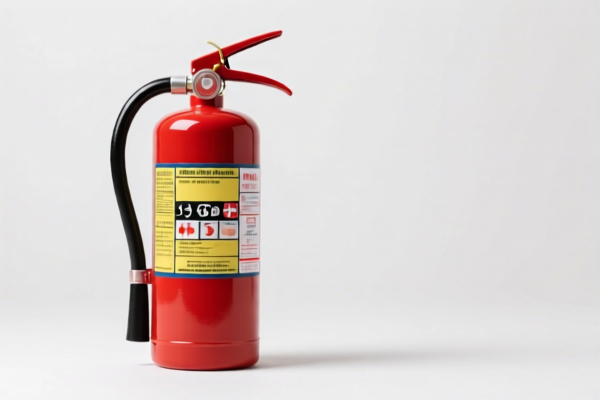
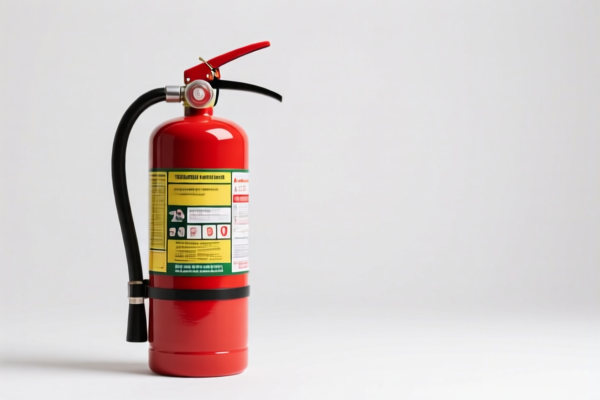
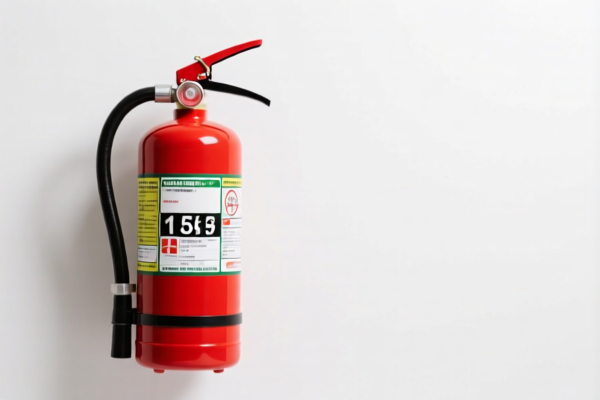

AI Analysis
🧯 Dry Powder Fire Extinguishing Agent Compound
🌐 HS Code Classification & Customs Clearance Guide | 2026 Tax Analysis | Professional Compliance Strategy
📌 I. Product Definition & Core Logic: What is "Dry Powder Fire Extinguishing Agent"?
The product in question, "Dry Powder Fire Extinguishing Agent Compound," is a specialized chemical substance used for fire suppression. In international trade, its classification hinges on two critical factors: 1. Function: Its primary purpose is fire extinguishing (classified under Chapter 38 as "Fire extinguishing preparations"). 2. Composition: It is a chemical compound (often ammonium phosphate, sodium bicarbonate, or urea-based powders), distinguishing it from simple mixtures or other industrial chemicals.
⚠️ Key Classification Distinction:
- If the product is specifically designed and marketed as a fire extinguishing agent, it falls under Chapter 38 (3813).
- If it is a raw chemical material (like pure Ammonium Carbonate) not yet formulated specifically for fire extinguishing, it might fall under Chapter 28 (2836), but this is rare for commercial "fire extinguishing agents."
- Crucial Note: The term "Compound" implies a formulated mixture or chemical compound designed for fire suppression, strongly pointing to HS Code 3813.
📦 II. HS Code Classification Details (2026 Latest Tariff Authority Comparison)
Based on the provided data, here are the potential HS Codes, their matching logic, and tax implications.
| HS Code | Product Description | Matching Logic & Justification | Total Tax Rate (US) |
|---|---|---|---|
3813.00.50.00 |
Other fire extinguishing preparations and charges | Primary Match: The name "Fire Extinguishing Agent" directly matches "Fire extinguishing preparations." "Dry Powder" fits the form factor. No material conflict. | 38.7% |
3813.00.10.00 |
Fire extinguishing preparations in the form of inorganic substances | Strong Match: "Dry Powder" is typically inorganic. Matches "inorganic substance-based extinguishing agents." No material/form conflict. | 35.0% |
2836.99.30.00 |
Other carbonates; peroxocarbonates | Secondary Match: Inferred as a carbonate-based chemical (e.g., Ammonium Carbonate). Matches chemical nature of some dry powders. | 36.7% |
2836.99.50.50 |
Other carbonates (excl. zirconium carbonates) | Alternative Match: Inferred as a chemical powder in primary form (bicarbonate/carbonate). Classified under "Other" carbonates. | 10.0% |
3208.90.00.00 |
Paints and varnishes based on synthetic polymers | ❌ Mismatch: Incorrect. "Fire Extinguishing Agent" is not a paint/coating. "Dry Powder" does not fit "liquid paint." | 38.2% |
🔍 Priority Analysis:
-3813.00.50.00and3813.00.10.00are the most accurate classifications for commercial "Fire Extinguishing Agents."
-2836codes are only applicable if the product is sold as a raw chemical intermediate (e.g., bulk Sodium Bicarbonate) rather than a formulated fire extinguishing product.
-3208is incorrect and should be avoided to prevent customs penalties.
💰 III. 2026 Latest Tariff Rate Breakdown (Including Surcharges)
✅ Applicable Country: United States (US)
✅ Country of Origin: China (CN)
✅ Effective Date: November 10, 2025 (and subsequent imports)
🎯 1. 3813.00.50.00 — Other Fire Extinguishing Preparations
| Item | Detail |
|---|---|
| Base Duty Rate | 3.7% (Ad Valorem) |
| Section 301 Duty (USITC) | +25.0% (China-specific surcharge) |
| 122 Provision Duty (IEEPA) | +10.0% (China-specific surcharge) |
| Total Effective Rate | 38.7% |
| Calculation | CIF Value × 38.7% |
| De Minimis Exemption | ❌ Not Eligible (Deny De Minimis) |
| Legal Basis | USITC:3813.00.50.00 → FOOTNOTE:9903.88.01 (25% Surchage) → IEEPA:9903.01.25 (10% Surcharge) |
📌 Explanation:
- 3.7% Base: Standard MFN rate for fire extinguishing preparations.
- 25% Section 301: Applies to most Chinese-origin chemicals and industrial products.
- 10% IEEPA: Additional surcharge for Chinese goods under international emergency economic powers.
- Total 38.7%: High cost. Must be accounted for in pricing.
🎯 2. 3813.00.10.00 — Fire Extinguishing Preparations (Inorganic)
| Item | Detail |
|---|---|
| Base Duty Rate | 0.0% (Ad Valorem) |
| Section 301 Duty (USITC) | +25.0% (China-specific surcharge) |
| 122 Provision Duty (IEEPA) | +10.0% (China-specific surcharge) |
| Total Effective Rate | 35.0% |
| Calculation | CIF Value × 35.0% |
| De Minimis Exemption | ❌ Not Eligible (Deny De Minimis) |
| Legal Basis | USITC:3813.00.10.00 → FOOTNOTE:9903.88.01 (25% Surchage) → IEEPA:9903.01.25 (10% Surcharge) |
📌 Note:
- If your dry powder is explicitly inorganic (e.g., Sodium Bicarbonate, Potassium Bicarbonate, Ammonium Phosphate), this code offers a 3.7% lower total rate than3813.00.50.00.
- Requires clear documentation proving the "inorganic" nature.
🎯 3. 2836.99.30.00 — Other Carbonates (Ammonium-based)
| Item | Detail |
|---|---|
| Base Duty Rate | 1.7% |
| Section 301 Duty (USITC) | +25.0% |
| 122 Provision Duty (IEEPA) | +10.0% |
| Total Effective Rate | 36.7% |
| Calculation | CIF Value × 36.7% |
| Legal Basis | USITC:2836.99.30.00 → FOOTNOTE:9903.88.01 → IEEPA:9903.01.25 |
📌 Explanation:
- Only applicable if classified as a chemical compound (e.g., Ammonium Carbonate) rather than a fire extinguishing preparation.
- Risk: Customs may reclassify as3813if intended use is fire suppression, leading to potential disputes.
🎯 4. 2836.99.50.50 — Other Carbonates
| Item | Detail |
|---|---|
| Base Duty Rate | 0.0% |
| Section 301 Duty (USITC) | +0.0% |
| 122 Provision Duty (IEEPA) | +10.0% |
| Total Effective Rate | 10.0% |
| Calculation | CIF Value × 10.0% |
| Legal Basis | USITC:2836.99.50.50 → IEEPA:9903.01.25 |
⚠️ High Risk/Low Reward:
- While the tax rate is low (10%), this classification is highly contestable.
- Customs requires proof that the product is not a fire extinguishing preparation. If it is labeled "Fire Extinguishing Agent," this code will likely be rejected.
- Only use if the product is sold as a raw chemical raw material with no fire-fighting marketing or certification.
🎯 5. 3208.90.00.00 — Paints and Varnishes (❌ Incorrect Classification)
| Item | Detail |
|---|---|
| Base Duty Rate | 3.2% |
| Section 301 Duty (USITC) | +25.0% |
| 122 Provision Duty (IEEPA) | +10.0% |
| Total Effective Rate | 38.2% |
| Legal Basis | USITC:3208.90.00.00 → FOOTNOTE:9903.88.01 → IEEPA:9903.01.25 |
🚫 Do Not Use:
- "Dry Powder Fire Extinguishing Agent" is NOT a paint or varnish.
- Misclassification leads to penalties, fines, and shipment delays.
🛠️ IV. Customs Clearance Practical Advice (Battle-Tested Pitfall Avoidance)
✅ 1. Essential Documentation Checklist (Mandatory)
| Document | Required? | Details |
|---|---|---|
| ✅ Product Specification Sheet | ✔️ | Must detail chemical composition (e.g., "80% Monoammonium Phosphate, 20% additives"). |
| ✅ Safety Data Sheet (SDS) | ✔️ | Critical. Must confirm hazard class and fire-extinguishing properties. |
| ✅ Product Photos | ✔️ | Clear images of packaging, labeling, and powder texture. |
| ✅ Commercial Invoice | ✔️ | Description: "Dry Powder Fire Extinguishing Agent, Chemical Compound, for Fire Suppression." |
| ✅ Certificate of Origin (CO) | ✔️ | Required for US origin verification and tariff application. |
| ✅ Fire Extinguisher Certification | ✔️ | UL, FM, or ULC listing numbers (if applicable) to prove intended use. |
| ✅ Packing List | ✔️ | Net/Gross weight, number of packages. |
✅ 2. Declaration Strategy (Key Mantra)
🔥 "Function First, Chemical Second, Label Clearly, Avoid 'Paint'!"
| Scenario | Correct Declaration | Wrong Declaration |
|---|---|---|
| Commercial Fire Extinguishing Agent | 3813.00.10.00 or 3813.00.50.00 |
3208.90.00.00 (Paint) → Penalty |
| Raw Chemical Powder (No Fire Use) | 2836.99.30.00 or 2836.99.50.50 |
3813.00.50.00 → Overpayment |
| Labeled "Fire Extinguishing Agent" | Must use 3813 | Use 2836 → Reinspection/Seizure |
✅ 3. Special Case Handling
| Scenario | Recommendation |
|---|---|
| Mixed Ingredients | If the powder contains both inorganic (e.g., Sodium Bicarbonate) and organic components, 3813.00.50.00 is safer than 3813.00.10.00. |
| Customs Scrutiny | If customs questions the 2836 code, provide SDS and product brochure proving fire-suppression function. |
| Pre-Ruling | Apply for an Advance Ruling from CBP if unsure between 2836 and 3813. |
| Volume Imports | Consider container load optimization due to high density of powder. |
🌍 V. Global Market Comparison (2026 Update)
| Country/Region | Recommended HS Code | Tax Rate (China Origin) | Notes |
|---|---|---|---|
| 🇺🇸 USA | 3813.00.50.00 / 3813.00.10.00 |
38.7% / 35.0% | High tariffs due to Section 301 + IEEPA. |
| 🇨🇳 China | 3813.00.50.00 |
Low/Zero | Import duty often 0% or low for fire safety equipment. |
| 🇪🇺 EU | 3813.00.50.00 |
Varies | Check local VAT and duties. CE marking required. |
| 🇬🇧 UK | 3813.00.50.00 |
Varies | Post-Brexit rules apply. UKCA marking. |
📌 Conclusion:
- USA has the highest tax burden due to multiple surcharges.
- EU/UK may have lower or different tariff structures but require strict compliance with safety standards (CE/UKCA).
- China (domestic or import) typically has lower duties for fire safety equipment.
📌 VI. Common Errors & Pitfalls (Lessons Learned)
❌ Error 1: Declaring as "Paint" (3208) to avoid tariffs
👉 Consequence: Customs rejects, fines, shipment held. Fire extinguishing agents are NOT paints.
❌ Error 2: Using 2836 for a formulated fire extinguishing agent
👉 Consequence: Customs reclassifies to 3813, charges back-taxes + penalties. If the product is marketed as a fire extinguisher, it belongs in 3813.
❌ Error 3: Ignoring SDS and Chemical Composition
👉 Consequence: Inability to prove "inorganic" status for 3813.00.10.00, leading to higher 3813.00.50.00 rates.
✅ Correct Approach:
"Dry Powder Fire Extinguishing Agent, Monoammonium Phosphate Compound, 25kg Bag, UL Listed, For Class A, B, C Fires"
🎯 VII. Conclusion: Precision in Classification Saves Money
🎯 Remember the Mantra:
🔹 "Fire Agent = 3813, Chemical Raw = 2836, Paint = 3208 (Wrong!)"
🔹 "US Tariffs are High, SDS is King, Labeling Must Match!"
📌 Pro Tip:
If your product is 100% Inorganic (e.g., Pure Sodium Bicarbonate), try to secure 3813.00.10.00 (35.0%) over 3813.00.50.00 (38.7%) by providing chemical analysis reports. This saves 3.7% on every shipment.
For chemical intermediates, ensure documentation explicitly states "NOT FOR FIRE EXTINGUISHING USE" if using 2836.
📣 Immediate Action:
📞 Consult a Customs Broker + Provide SDS + Apply for Advance Ruling if needed.
🚀 Ensure clear labeling and accurate HS Code declaration to avoid delays and fines.
✨ Professional Clearance Starts with Accurate Classification!
💼 Every Percent of Tax Saved is Profit Added!
Customer Reviews
About HS Code Classification
The Harmonized System (HS) is an internationally standardized nomenclature developed by the World Customs Organization (WCO) to classify traded products. Over 200 countries use the HS system as the basis for customs tariffs, trade statistics, and import/export regulations.
Each HS code follows a hierarchical structure:
- Chapter (2 digits) — Broad category of goods (e.g., Chapter 84: Machinery and Mechanical Appliances)
- Heading (4 digits) — More specific grouping within the chapter
- Subheading (6 digits) — Internationally standardized breakdown, used by all WCO member countries
- National subdivisions (8-10 digits) — Country-specific extensions for further classification, such as US HTSUS 10-digit codes
Correct HS code classification is essential for smooth customs clearance, accurate duty payment, and compliance with trade regulations. Misclassification can lead to customs delays, overpayment of duties, or penalties.
When importing from CN to US, the applicable tariff rates may include:
- Most-Favored-Nation (MFN) rate — The standard duty rate applied to WTO members
- General rate — Applied to countries without trade agreements
- Trade remedy duties — Additional tariffs such as Section 301 (anti-dumping), Section 232 (national security), or countervailing duties
The information provided on this page is for reference purposes only. For official classification, please consult with your local customs authority or a licensed customs broker.