Dry Powder Fire Extinguishing Agent Mixer
CN → US| HS Code | Tariff Rate | Origin | Destination | Doc |
|---|---|---|---|---|
| 3813001000 | 35.0% | CN | US | Official Doc |
| 8424100000 | 17.5% | CN | US | Official Doc |
| 8424900500 | 17.5% | CN | US | Official Doc |
| 3923900080 | 38.0% | CN | US | Official Doc |
| 8424899000 | 36.8% | CN | US | Official Doc |
Product Images
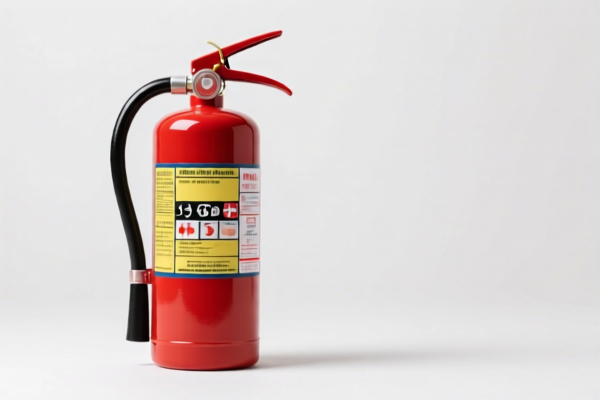
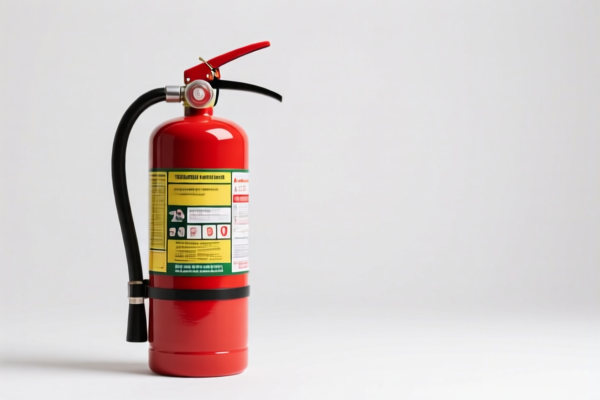
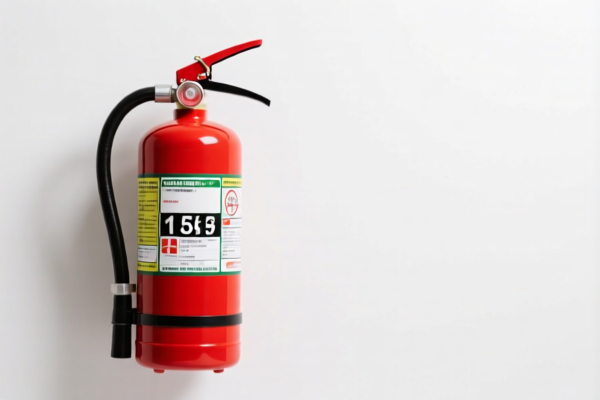

AI Analysis
🚒 Dry Powder Fire Extinguishing Agent Mixer
🌐 HS Code Reference & Customs Clearance Guide | 2026 Latest Tariff Full Analysis | Professional Clearance Strategy
📌 I. Product Definition & Classification: What Exactly Is a "Dry Powder Fire Extinguishing Agent Mixer"?
The "Dry Powder Fire Exuishing Agent Mixer" is a critical piece of equipment used in the manufacturing and refilling of fire extinguishers. Its primary function is to homogenize dry chemical powders (such as Monoammonium Phosphate or Sodium Bicarbonate) with additives to ensure consistent flow and extinguishing efficacy.
In international trade, classification hinges on two key factors: 1. Is it a Container? (If it's a tank/vessel for storing/holding the powder) 2. Is it a Machine/Part? (If it's a mechanical device for mixing, sprinkling, or dispersing)
⚠️ Critical Distinction:
- If the item is primarily a vessel/container designed to hold the agent before it is filled into extinguishers → It may fall under Chapter 38 (Chemicals) or Chapter 39 (Plastics/Containers).
- If the item is a mechanical unit (with motors, blades, or pneumatic systems) that actively mixes or dispenses the powder → It falls under Chapter 84 (Machinery) as parts of fire extinguishers or mechanical appliances.
📦 II. HS Code Classification Details (2026 Latest Tariff Authority Comparison)
Based on the provided data, here are the five possible classifications. Note that the Tax Rate and Classification Logic vary significantly.
| HS Code | Product Description | Application Scenario | Classification Logic |
|---|---|---|---|
3813.00.10.00 |
Mixing Agents / Firefighting Preparation | Containers for filling extinguishing agents; chemical preparations. | Matches the use and form: It is a container for or used to fill extinguishing agents, fitting the definition of a "charging agent." |
8424.10.00.00 |
Fire Extinguishers | Core components of fire extinguishers; the vessel holds the dry powder which is a fire extinguishing medium. | The container belongs to the core component of fire extinguishers. Dry powder fits the characteristic of a fire extinguishing agent. |
8424.90.05.00 |
Parts of Fire Extinguishers | Specialized appliances for extinguishing fires; parts of machinery for spraying/dispersing liquids or powders. | The product is for fire extinguishing purposes and aligns with machinery for spraying/dispersing liquids or powders. Classified as a part of a fire extinguisher. |
3923.90.00.80 |
Other Articles of Plastics (Containers) | Plastic packaging articles, containers, canisters, carboys for conveying/holding goods. | Functions as a container/packaging article. Although material isn't specified, it’s often plastic. No conflict with plastic classification. |
8424.89.90.00 |
Other Mechanical Appliances | Accessories related to fire extinguishers; utensils for holding sprinkling or dispersing liquids/powders. | Belongs to the category of fire extinguisher accessories. Used for holding fire-extinguishing agents, fitting the scope of fire extinguishing appliances. |
🔍 Key Reminder:
-8424Series (8424.10, 8424.90, 8424.89) are generally preferred if the device has mechanical/motorized components for mixing or dispensing.
-3813is specific to the chemical preparation/charging agent aspect.
-3923is a fallback for passive containers (no mechanical mixing function) made of plastic.
💰 III. 2026 Latest Tariff Rate Breakdown (Including Additional Taxes, Policy Add-ons)
✅ Applicable Country: USA (US)
✅ Origin: China (CN)
✅ Effective Time: 2025-11-10 onwards (Includes subsequent imports)
🎯 1. 3813.00.10.00 – Firefighting Preparations / Charging Agents
| Item | Content |
|---|---|
| Base Tariff | 0% (ad valorem) |
| USITC Additional Tariff | +25% (Section 301 Tariffs) |
| IEEPA Additional Tariff | +10% (Targeting China/HK products, effective 2025-11-10) |
| Total Tariff | 35.0% |
| Tax Calculation | CIF Value × 35% |
| De Minimis Exemption | ❌ Not Eligible (deny_de_minimis) |
| Legal Basis Path | IEEPA:9903.01.25 → USITC:3813.00.10.00 → FOOTNOTE:9903.88.01 |
📌 Explanation:
- This classification treats the mixer/container as part of the chemical supply chain for firefighting.
- The 35% rate is moderate compared to plastic containers but higher than standard machinery parts in some contexts.
🎯 2. 8424.10.00.00 – Fire Extinguishers
| Item | Content |
|---|---|
| Base Tariff | 0% |
| USITC Additional Tariff | +7.5% |
| IEEPA Additional Tariff | +10% |
| Total Tariff | 17.5% |
| Tax Calculation | CIF × 17.5% |
| De Minimis Exemption | ❌ Not Eligible |
| Legal Basis Path | IEEPA:9903.01.24 → USITC:8424.10.00.00 |
📌 Explanation:
- This is the most cost-effective option if the unit can be justified as a complete fire extinguisher unit or a core component directly defined under this heading.
- Note: This is rare for a "Mixer" unless it's a self-contained, pressurized extinguisher unit.
🎯 3. 8424.90.05.00 – Parts of Fire Extinguishers
| Item | Content |
|---|---|
| Base Tariff | 0% |
| USITC Additional Tariff | +7.5% |
| IEEPA Additional Tariff | +10% |
| Total Tariff | 17.5% |
| Tax Calculation | CIF × 17.5% |
| De Minimis Exemption | ❌ Not Eligible |
| Legal Basis Path | IEEPA:9903.01.24 → USITC:8424.90.05.00 |
📌 Explanation:
- This is the recommended classification for industrial mixing/dispensing machines used in fire extinguisher manufacturing.
- It falls under "Parts of appliances for spraying/dispersing," which covers the mechanical nature of a mixer.
- Lowest tax burden for mechanical equipment.
🎯 4. 3923.90.00.80 – Other Plastic Articles (Containers)
| Item | Content |
|---|---|
| Base Tariff | 3% |
| USITC Additional Tariff | +25% |
| IEEPA Additional Tariff | +10% |
| Total Tariff | 38.0% |
| Tax Calculation | CIF × 38% |
| De Minimis Exemption | ❌ Not Eligible |
| Legal Basis Path | IEEPA:9903.01.25 → USITC:3923.90.00.80 |
📌 Explanation:
- Only applicable if the item is a simple plastic container with no mechanical parts.
- High tax burden due to the 3% base rate adding to the 35% surcharge. Avoid if the item has motors/blades.
🎯 5. 8424.89.90.00 – Other Mechanical Appliances
| Item | Content |
|---|---|
| Base Tariff | 1.8% |
| USITC Additional Tariff | +25% |
| IEEPA Additional Tariff | +10% |
| Total Tariff | 36.8% |
| Tax Calculation | CIF × 36.8% |
| De Minimis Exemption | ❌ Not Eligible |
| Legal Basis Path | IEEPA:9903.01.25 → USITC:8424.89.90.00 |
📌 Explanation:
- A "catch-all" for machinery not specified elsewhere.
- Higher base rate (1.8%) makes it more expensive than8424.90.05.00(0% base).
🛠️ IV. Customs Clearance Practical Advice (Real-World Pitfall Guide)
✅ 1. Document Checklist (None Can Be Missing)
| Document | Mandatory? | Description |
|---|---|---|
| ✅ Product Specification Sheet | ✔️ | Must detail: Mechanical parts (motor/power) vs. Passive container. Capacity, weight, material. |
| ✅ Technical Diagram | ✔️ | Shows internal structure. Is there a mixing blade? Is there a power cord? |
| ✅ Product Photos | ✔️ | Clear shots of nameplate, brand, model, and any warning labels (NFPA/UL). |
| ✅ Commercial Invoice | ✔️ | Description must be precise: "Industrial Dry Powder Mixer for Fire Extinguisher Refilling" vs. "Plastic Tank." |
| ✅ Certificate of Origin (CO) | ✔️ | Required for preferential treatment if applicable (though unlikely for US/China currently). |
| ✅ Safety Certifications | ✔️ | UL, NFPA, CE certifications are crucial for fire safety equipment to prove compliance. |
✅ 2. Declaration Tips (Key Mnemonic)
🔥 “Mechanical = 8424.90, Passive = 3923, Chemical = 3813. Choose 8424.90.05 for lowest tax!”
| Scenario | Correct Declaration | Wrong Practice |
|---|---|---|
| Motorized Mixer (Has blades/motor) | 8424.90.05.00 (Parts of Fire Extinguishers) |
Declare as "Plastic Container" → 38% Tax |
| Simple Plastic Tank (No moving parts) | 3923.90.00.80 (Plastic Container) |
Declare as "Machine" → May trigger inspection for missing motor docs |
| Pre-filled Agent Canister | 3813.00.10.00 (Charging Agent) |
Declare as "Empty Container" → Valuation dispute |
| Complete Extinguisher Unit | 8424.10.00.00 (Fire Extinguisher) |
Declare as "Parts" → Potential misclassification |
✅ 3. Special Cases Handling
| Situation | Handling Advice |
|---|---|
| OEM Custom Mixers | Provide client order + design drawings. Justify as "Part of Fire Extinguishing System" to use 8424.90.05.00. |
| Plastic vs. Metal | If metal, 3923 is invalid. Must use 8424 (if mechanical) or other steel chapters. |
| Safety Compliance | Fire equipment is sensitive. Ensure UL/NFPA certs are attached to avoid delays in customs inspection. |
| Hybrid Units | If it mixes AND stores, emphasize the mechanical mixing function to qualify for 8424.90.05.00 (17.5% tax) instead of 3813 (35% tax). |
🌍 V. Global Market Comparison (2026 Latest)
| Country/Region | Recommended HS Code | Tariff (China Origin) | Certification Requirements | Notes |
|---|---|---|---|---|
| 🇺🇸 USA | 8424.90.05.00 |
17.5% | UL, NFPA, FCC (if electric) | Best Tax Rate for mechanical mixers. |
| 🇨🇳 China | 8424.90.05.00 |
~8-10% (VAT + Duty) | CCC (if applicable) | No Section 301/IEEPA surcharges. |
| 🇪🇺 EU | 8424.90.05.00 |
0-2% | CE, EN3 Standard | Low duty, strict safety standards. |
| 🇦🇺 Australia | 8424.90.05.00 |
5% | RCM, AS/NZS | No extra surcharges. |
| 🇯🇵 Japan | 8424.90.05.00 |
0-2% | JIS | Low duty, high quality standards. |
📌 Conclusion:
- The USA imposes the highest tariffs on Chinese-made industrial machinery due to trade policies.
- Choosing8424.90.05.00saves you ~17.5% to 20% compared to misclassifying as plastic (3923) or chemicals (3813).
📌 VI. Common Errors & Pitfall Guide (Lessons Learned)
❌ Error 1: Declaring a motorized mixer as a "Plastic Container" (3923)
👉 Consequence: Customs may reclassify it, leading to 38% tax or seizure for false declaration.
❌ Error 2: Not providing Safety Certs (UL/NFPA) for fire equipment
👉 Consequence: Held at customs for safety review, causing shipment delays.
❌ Error 3: Using vague names like "Tank" or "Mixer" without context
👉 Consequence: Ambiguity leads to audit risks. Be specific: "Industrial Dry Powder Mixer for Fire Extinguisher Refilling, Model XYZ."
❌ Error 4: Assuming De Minimis exemption applies
👉 Consequence: Denied. Fire equipment and machinery from China are not eligible for $800 de minimis entry.
✅ Correct Approach:
"Electric Dry Powder Fire Extinguishing Agent Mixer, Industrial Grade, UL Listed, Model: FPX-500, Capacity: 500kg"
🎯 VII. Conclusion: Professional Declaration, Save Costs, Ensure Smooth Clearance!
🎯 Remember the Mantra:
🔹 "Mechanical Mixer = 8424.90.05 (17.5%) | Plastic Tank = 3923 (38%) | Chemical Agent = 3813 (35%)"
🔹 "Lower tax, higher compliance. Choose the machine code, not the container code!"
🔹 "Fire Safety Certs are key. Without them, your cargo gets stuck."
📌 Pro Tip:
If your mixer is originally from Vietnam, Mexico, or Thailand, you may apply for IEEPA Exemption, reducing the tax to 0%~5%.
We recommend applying for an Advance Ruling from CBP to confirm 8424.90.05.00 eligibility before shipping.
📣 Take Action Now:
📞 Contact a professional customs broker + Provide technical specs + Apply for HS Code Advance Ruling
🚀 Ensure your Dry Powder Mixer clears customs smoothly, efficiently, and cost-effectively!
✨ Professional Customs Clearance Starts with Accurate Classification!
💼 Every cent of tax savings is worth precise calculation!
Customer Reviews
About HS Code Classification
The Harmonized System (HS) is an internationally standardized nomenclature developed by the World Customs Organization (WCO) to classify traded products. Over 200 countries use the HS system as the basis for customs tariffs, trade statistics, and import/export regulations.
Each HS code follows a hierarchical structure:
- Chapter (2 digits) — Broad category of goods (e.g., Chapter 84: Machinery and Mechanical Appliances)
- Heading (4 digits) — More specific grouping within the chapter
- Subheading (6 digits) — Internationally standardized breakdown, used by all WCO member countries
- National subdivisions (8-10 digits) — Country-specific extensions for further classification, such as US HTSUS 10-digit codes
Correct HS code classification is essential for smooth customs clearance, accurate duty payment, and compliance with trade regulations. Misclassification can lead to customs delays, overpayment of duties, or penalties.
When importing from CN to US, the applicable tariff rates may include:
- Most-Favored-Nation (MFN) rate — The standard duty rate applied to WTO members
- General rate — Applied to countries without trade agreements
- Trade remedy duties — Additional tariffs such as Section 301 (anti-dumping), Section 232 (national security), or countervailing duties
The information provided on this page is for reference purposes only. For official classification, please consult with your local customs authority or a licensed customs broker.