Dry Water Buffalo Leather for Furniture
CN → US| HS Code | Tariff Rate | Origin | Destination | Doc |
|---|---|---|---|---|
| 4104413060 | 12.4% | CN | US | Official Doc |
| 4101203500 | 19.9% | CN | US | Official Doc |
| 4104113010 | 12.4% | CN | US | Official Doc |
| 4101503500 | 19.9% | CN | US | Official Doc |
| 4107915000 | 12.8% | CN | US | Official Doc |
Product Images
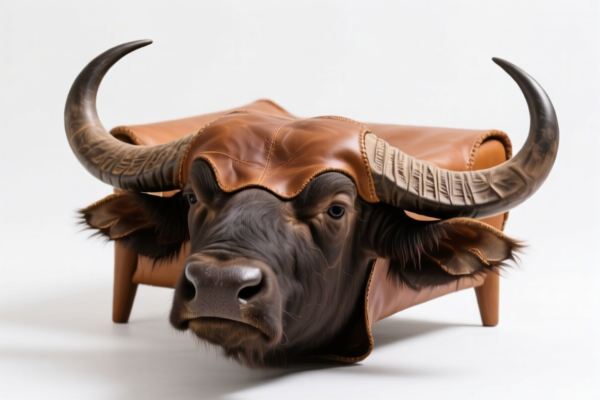
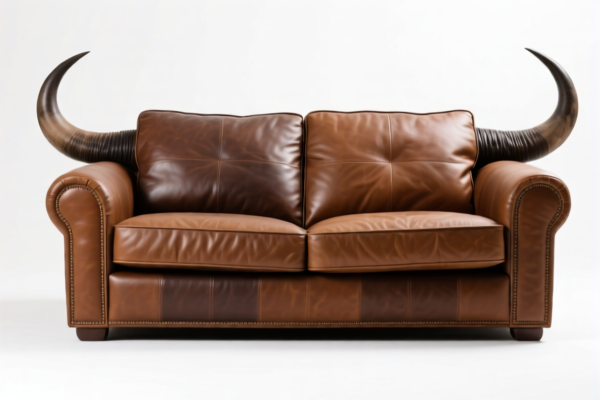
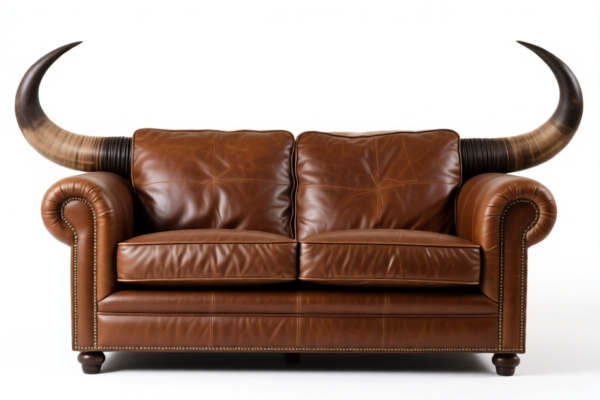
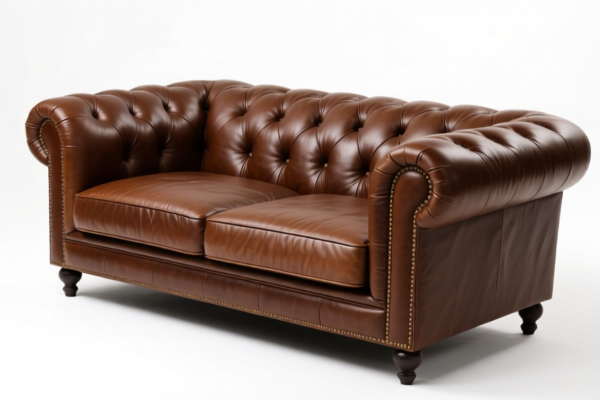
AI Analysis
🐃 Dry Water Buffalo Leather for Furniture
🌐 HS Code Reference & Customs Clearance Guide | 2026 Latest Tariff Breakdown | Professional Entry Strategy
📌 I. Product Definition: What is "Dry Water Buffalo Leather"?
Water buffalo leather is a premium natural material widely used in high-end furniture, upholstery, and automotive interiors due to its durability, texture, and breathability. In international trade, the classification depends heavily on the processing stage (raw vs. tanned) and the physical form (whole hide vs. pieces).
For "Dry Water Buffalo Leather" intended for furniture: * Un-tanned/Preserved (Raw): If the leather is merely salted, dried, or limed but not yet chemically tanned to make it rot-proof, it falls under Chapter 41 (Raw Hides and Skins). * Fully Tanned/Finished: If the leather has undergone the tanning process (vegetable, chrome, or combination) to make it suitable for immediate furniture use, it falls under Chapter 41 (Leather) but in different subheadings depending on the specific tanning method and form.
⚠️ Critical Distinction:
- If it is raw/un-tanned (even if "dry" as in air-dried salted hides) → It is a Raw Hide.
- If it is tanned/finished (ready for upholstery) → It is Leather.
- "Furniture Use" is a destination use, not a defining characteristic for HS classification in Chapter 41. The material state dictates the code.
📦 II. HS Code Classification Matrix (2026 Latest Tariff Authority)
Based on the provided data, here are the 5 potential classifications for "Dry Water Buffalo Leather for Furniture."
| HS Code | Product Description & Logic | Tax Rate (Total) | Tax Detail Breakdown |
|---|---|---|---|
4104.41.30.60 |
Tanned/Finished Buffalo Leather Summary: Matches buffalo material & whole unprocessed leather features for furniture. Classified as "Other". |
12.4% | Base: 2.4% Section 301: 0.0% Section 122: 10.0% |
4101.20.35.00 |
Raw Buffalo Hides (Whole) Summary: Fits buffalo species & whole form. Use (furniture) does not change raw hide status. |
19.9% | Base: 2.4% Section 301: 7.5% Section 122: 10.0% |
4104.11.30.10 |
Tanned/Finished Buffalo Leather Summary: Matches buffalo material & whole unprocessed form. Use difference is non-conflicting. |
12.4% | Base: 2.4% Section 301: 0.0% Section 122: 10.0% |
4101.50.35.00 |
Raw Buffalo Hides (Split/Cut?) Summary: Fits buffalo raw hide features. Use and un-tanned attribute have no conflict. |
19.9% | Base: 2.4% Section 301: 7.5% Section 122: 10.0% |
4107.91.50.00 |
Pigmented/Tanned Leather (Other) Summary: Material, form, and use match characteristics for laying/surfacing leather. |
12.8% | Base: 2.8% Section 301: 0.0% Section 122: 10.0% |
🔍 Key Insight:
- Raw Hides (4101 series) attract a 7.5% Section 301 tariff (Total 19.9%).
- Tanned/Finished Leathers (4104/4107 series) often benefit from 0% Section 301 tariff (Total ~12.4-12.8%), provided they meet specific tanning criteria.
- "Dry" in the product name is ambiguous. If it means "Air-Dried Salted Raw Hide," use 4101. If it means "Dry-Finished Tanned Leather," use 4104/4107.
💰 III. 2026 Tariff Rate Deep Dive (Detailed Tax Clauses)
✅ Applicable Country: USA (US)
✅ Origin: China (CN)
✅ Effective Date: 2025–2026 Period
🎯 1. 4104.41.30.60 & 4104.11.30.10 —— Tanned/Finished Buffalo Leather
Most likely for "Furniture Leather" if fully processed.
| Item | Detail |
|---|---|
| Base Duty | 2.4% (Standard MFN Rate) |
| Section 301 (Trade War) | 0.0% (Excluded for specific tanned leather subheadings) |
| Section 122 (Reciprocal) | 10.0% (Specific levy on certain leather goods) |
| Total Effective Rate | 12.4% |
| Calculation | CIF Value × 12.4% |
| De Minimis Exemption | ❌ Not Applicable (Value typically exceeds $800) |
| Legal Basis | USITC:4104.41.30.60 + Section 122 Levy |
📌 Why 0% Section 301?
Certain subheadings under 4104 (Chromed-tanned or vegetable-tanned leather) are exempt from the 25% Section 301 tariff, retaining only the Section 122 levy if applicable. This makes these codes significantly cheaper than raw hides.
🎯 2. 4101.20.35.00 & 4101.50.35.00 —— Raw Buffalo Hides
Used if the leather is merely salted/dried but NOT tanned.
| Item | Detail |
|---|---|
| Base Duty | 2.4% |
| Section 301 (Trade War) | +7.5% (Not fully exempted for raw hides) |
| Section 122 (Reciprocal) | 10.0% |
| Total Effective Rate | 19.9% |
| Calculation | CIF Value × 19.9% |
| Legal Basis | USITC:4101.20.35.00 + Section 301 Footnote + Section 122 |
⚠️ Risk Alert:
If you import "Raw Hides" and declare them as "Finished Leather" to save tax, customs will inspect the chemical composition. If traces of raw salt/skin remain, they will reclassify to 4101 and charge the higher rate + penalties.
🎯 3. 4107.91.50.00 —— Pigmented/Tanned Leather (Other)
Used for specific finish types (e.g., pigmented surface).
| Item | Detail |
|---|---|
| Base Duty | 2.8% |
| Section 301 | 0.0% |
| Section 122 | 10.0% |
| Total Effective Rate | 12.8% |
| Legal Basis | USITC:4107.91.50.00 |
🛠️ IV. Customs Clearance Practical Advice (Avoid Pitfalls)
✅ 1. Documentation Checklist (Must-Haves)
| Document | Requirement | Purpose |
|---|---|---|
| Product Specification Sheet | Must state: "Water Buffalo," "Tanned," "Finished for Furniture," or "Raw/Salted" | Determines HS Code (4101 vs 4104/4107) |
| Photos (Front/Back/Edge) | Show grain, split, and any salt residue | Proves if raw or tanned |
| Commercial Invoice | Clear description: "Tanned Water Buffalo Leather for Upholstery" | Aligns with HS Code summary |
| Bill of Lading | Weight and packaging details | Verifies quantity |
| Certificate of Origin | Proof of Chinese origin | Triggers Section 122/301 calculations |
✅ 2. Declaration Strategy (Key Mnemonic)
🔥 "Tanned is Low, Raw is High; Finish Type Matters!"
| Scenario | Recommended HS Code | Expected Tax | Why? |
|---|---|---|---|
| Fully Tanned & Finished (Ready to sew) | 4104.41.30.60 or 4104.11.30.10 |
12.4% | Exempt from 7.5% 301 tariff. Best for finished furniture leather. |
| Raw/Hides (Salted, Dried, Un-tanned) | 4101.20.35.00 |
19.9% | Subject to 7.5% 301 tariff. Higher cost. |
| Pigmented Finish | 4107.91.50.00 |
12.8% | Specific for pigmented leathers; still low Section 301. |
✅ 3. Common Errors & Fixes
| ❌ Mistake | ✅ Correction |
|---|---|
| Declaring "Leather" when it is Raw | Result: Customs detects raw salt/skin → Reassign to 4101 → Pay 19.9% + Penalty. |
| Declaring "Raw" when it is Tanned | Result: Overpaying tax. File Post Entry Correction to reclaim difference. |
| Ignoring Section 122 | Result: All leather imports from China face 10% Section 122. Factor this into COGS. |
| Vague Description ("Buffalo Skin") | Result: Audit risk. Use precise terms: "Vegetable-Tanned Water Buffalo Leather." |
🌍 V. Global Market Comparison (2026)
| Region | HS Code | Tariff (Approx.) | Note |
|---|---|---|---|
| 🇺🇸 USA | 4104.41.30.60 |
12.4% | Includes 10% Sec 122. Best for tanned. |
| 🇨🇳 China (Export) | 4104.41.30.60 |
0-13% | Check local export duties. |
| 🇪🇺 EU | 4104.41 |
4-6.5% | No Section 122 equivalent. |
| 🇬🇧 UK | 4104.41 |
4-6.5% | Post-Brexit rules apply. |
📌 Conclusion:
The US market is highly sensitive to Section 122 (10%) and Section 301 (0-7.5%).
- If your leather is tanned, ensure it falls under 4104 or 4107 to minimize tax to ~12.5%.
- If it is raw, expect ~20% duty.
📌 VI. Final Recommendation
- Verify Processing State: Is it Tanned or Raw? This is the single most important factor.
- Choose
4104.41.30.60if fully tanned and finished. It offers the best balance of tax efficiency (12.4%). - Label Clearly: Use "Tanned Water Buffalo Leather" on invoices. Avoid ambiguous terms like "Dry Skin" unless it is indeed raw.
- Budget for Section 122: Always include the 10% Section 122 levy in your cost calculations for US-bound leather.
🎯 Pro Tip:
If you are importing large volumes, consider applying for a HTSUS Exclusion under Section 301 if applicable, though leather has limited exclusions. Alternatively, ensure the Country of Origin is clearly marked to avoid misclassification penalties.
📣 Action Item:
📞 Consult your customs broker with photos and spec sheets.
🚀 Accurate HS Code selection can save 7.5% in tariffs (Section 301 exemption).
💼 Don't let "Dry" mislead you – confirm "Tanned" status!
✨ Precise Classification = Profitable Clearance!
💼 Your Leather, Your Tariff Strategy!
Customer Reviews
About HS Code Classification
The Harmonized System (HS) is an internationally standardized nomenclature developed by the World Customs Organization (WCO) to classify traded products. Over 200 countries use the HS system as the basis for customs tariffs, trade statistics, and import/export regulations.
Each HS code follows a hierarchical structure:
- Chapter (2 digits) — Broad category of goods (e.g., Chapter 84: Machinery and Mechanical Appliances)
- Heading (4 digits) — More specific grouping within the chapter
- Subheading (6 digits) — Internationally standardized breakdown, used by all WCO member countries
- National subdivisions (8-10 digits) — Country-specific extensions for further classification, such as US HTSUS 10-digit codes
Correct HS code classification is essential for smooth customs clearance, accurate duty payment, and compliance with trade regulations. Misclassification can lead to customs delays, overpayment of duties, or penalties.
When importing from CN to US, the applicable tariff rates may include:
- Most-Favored-Nation (MFN) rate — The standard duty rate applied to WTO members
- General rate — Applied to countries without trade agreements
- Trade remedy duties — Additional tariffs such as Section 301 (anti-dumping), Section 232 (national security), or countervailing duties
The information provided on this page is for reference purposes only. For official classification, please consult with your local customs authority or a licensed customs broker.