Dry buffalo hide, untanned, grain splits
CN → US| HS Code | Tariff Rate | Origin | Destination | Doc |
|---|---|---|---|---|
| 4101501020 | 17.5% | CN | US | Official Doc |
| 4101201010 | 17.5% | CN | US | Official Doc |
| 4101901020 | 17.5% | CN | US | Official Doc |
Product Images
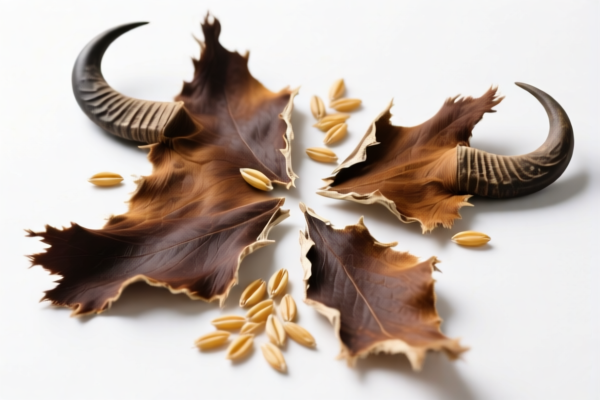
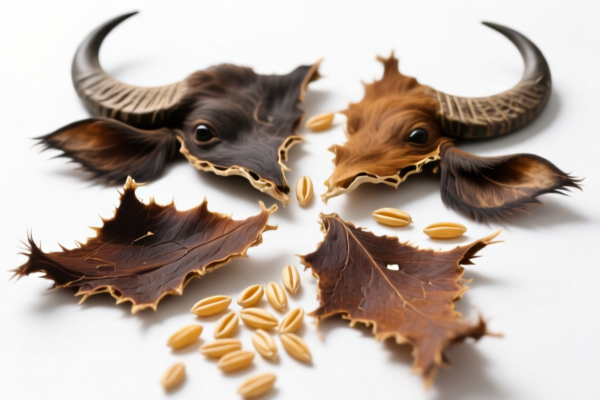
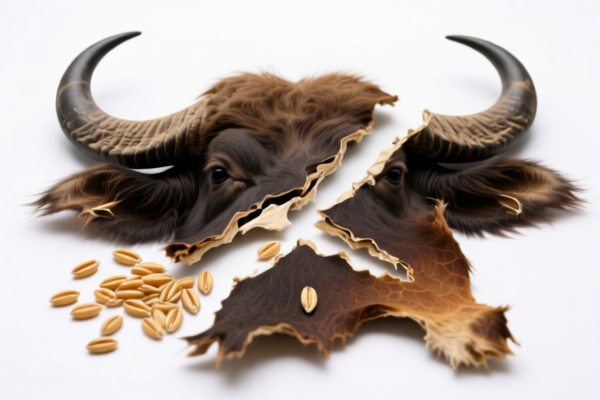

AI Analysis
🐃 Dry Buffalo Hides: Untanned Grain Splits (The "Rough Diamond" of Leather Industry)
🌐 HS Code Reference & Customs Clearance Guide | 2024-2026 Latest Tariff Structure | Professional-Level Clearance Strategy
📌 I. Product Definition & Classification: What Exactly Are "Dry Buffalo Hides, Untanned, Grain Splits"?
"Dry Buffalo Hides" refer to the raw skins of buffalo that have been preserved primarily through drying (salt-drying or air-drying) to prevent decomposition, without undergoing any tanning process. The term "Grain Splits" is a crucial technical distinction.
In leather manufacturing, a whole hide is often split into layers: 1. Top Grain (The "Grain"): The outermost layer, which is the most valuable and durable. 2. Splits: The fibrous layers beneath the grain.
"Grain Splits" in this context (as per the provided data summary) refers to split leather derived from buffalo hides that have not been tanned, dyed, or finished, and are preserved in a dry state. They are raw materials for further processing (suede, lower-grade leather, or industrial use).
⚠️ Key Distinction Point: - If the hide is wet salted or pickled (not dry), it does not fit the "Dry" description and may fall under different sub-headings depending on weight and preservation method. - If the hide is tanned (even preliminarily), it is no longer "Untanned" and falls under Chapter 41 (Tanned Leather), not Chapter 41 (Raw Hides). - "Grain Splits" implies the physical structure of the skin. However, for HS Code classification purposes under the provided data, the focus is on: Buffalo + Untanned + Dry.
📦 II. HS Code Classification Details (Based on Provided Data)
According to the <DATA> provided, the following HS Codes and Tax Details apply to Untanned, Dry Buffalo Hides (including splits). Note that while the summary mentions "Grain Splits," the HS codes provided in the data correspond to general categories of untanned buffalo/cattle hides. We must map the specific product description to the most accurate code from the provided list.
| HS Code | Product Description (from Data) | Applicable Scenario | Key Characteristics |
|---|---|---|---|
4101.50.10.20 |
Untanned Buffalo Hide, meets characteristics of whole raw buffalo hide | Whole Hide / Large Splits | Dry, salted or unsalted, buffalo origin, untanned |
4101.20.10.10 |
Buffalo Hide, untanned, meets material and form requirements | Standard Untanned Hides | Dry or wet-salted, cattle/buffalo origin, untanned |
4101.20.10.10 |
Dry Raw Buffalo Hide, untanned, meets cattle category and raw skin scope | Dry Hides | Specifically Dry preservation, untanned |
4101.90.10.20 |
Buffalo Hide, pre-tanned not applied, dry preservation, no material or form conflict | Dry, Untanned (Other) | Dry state, no tanning, specific to buffalo |
🔍 Critical Analysis for "Grain Splits": - HS Code
4101.50.10.20is likely the most appropriate if the "grain splits" are substantial pieces of buffalo hide that still retain the general character of a raw buffalo hide (as per the summary "fits the characteristics of whole raw buffalo hide"). - HS Code4101.20.10.10is a strong candidate for general untanned cattle/buffalo hides, whether dry or wet. - HS Code4101.90.10.20is used for dry, untanned hides that do not fit the specific sub-categories of 4101.20 or 4101.50 exactly, but are still clearly buffalo and untanned.
Recommendation: For Dry Buffalo Hides, 4101.20.10.10 or 4101.90.10.20 are the most precise based on the "Dry" and "Untanned" attributes. If the splits are large and resemble whole hides, 4101.50.10.20 may apply. All three codes in the data share the same tax structure.
💰 III. 2024-2026 Latest Tariff Rate Breakdown (Including Surtaxes & Policy Add-ons)
✅ Applicable Country: United States (US)
✅ Country of Origin: China (CN)
✅ Effective Date: Current rates apply (based on 2024-2026 trade policies)
🎯 1. 4101.50.10.20 / 4101.20.10.10 / 4101.90.10.20 —— Untanned Buffalo Hides (Dry)
| Item | Content |
|---|---|
| Base Tariff Rate | 0% (ad valorem) |
| Section 301 Surcharge (122 Clause) | +10% |
| Additional Surcharge (Section 301/Other) | +7.5% |
| Total Tariff Rate | 17.5% |
| Tax Calculation | CIF Value × 17.5% |
| De Minimis Exemption Eligibility | ❌ No (Hides are industrial materials, not eligible for small package de minimis) |
| Legal Basis Path | USITC:4101.xxxx.xx.xx → Section 301: 122 Clause (10%) → Other Surtaxes (7.5%) |
📌 Explanation of Tax Components: - Base Rate (0%): Raw hides are generally low-tariff goods to support the domestic leather industry. - Section 301 (10%): This refers to the specific 122 clause tariffs applied to certain Chinese products under the U.S.-China trade agreement. - Additional 7.5%: This is another layer of surtax, possibly related to specific trade measures or anti-dumping/countervailing duties depending on the exact product specification and origin verification. - Total (17.5%): This is a moderate-to-high effective tariff for raw materials. Importers must factor this into their cost structure.
⚠️ Important Note:
- The provided data states:Base Tariff: 0.0%, Additional Surcharge: 7.5%, Section 122 Tariff: 10%.
- Sum: 17.5%.
- These taxes are cumulative. They are not mutually exclusive.
🛠️ IV. Customs Clearance Practical Advice (Real-World Pitfall Avoidance)
✅ 1. Required Documentation Checklist (Non-Negotiable)
| Document | Mandatory | Explanation |
|---|---|---|
| ✅ Commercial Invoice | ✔️ | Must clearly state "Dry Buffalo Hide, Untanned, Grain Splits" and HS Code. |
| ✅ Packing List | ✔️ | Detail weight, number of hides, and packaging type. |
| ✅ Bill of Lading / Air Waybill | ✔️ | Standard transport document. |
| ✅ Origin Certificate (CO) | ✔️ | Crucial for proving origin as China (CN). If from another country, tax rates may differ. |
| ✅ Phytosanitary Certificate | ✔️ | Critical for animal products. Proves the hides are free from diseases and pests. |
| ✅ Processing Method Description | ✔️ | Explicitly state "Dry Salted" or "Air Dried" and "Untanned." |
| ✅ Third-Party Inspection Report | ✔️ | Optional but recommended for quality verification (weight, moisture content). |
✅ 2. Declaration Tips (Key Mnemonic)
🔥 "Dry & Untanned, Split or Whole, Say 'Buffalo' Not 'Cow', Certify Health, Avoid Delays!"
| Scenario | Correct Declaration | Incorrect Practice |
|---|---|---|
| Dry Hides | Declare as "Dry Untanned Buffalo Hide" | Declare as "Wet Salted" → Wrong HS, wrong tax |
| Grain Splits | Describe as "Grain Splits, Untanned" | Hide the fact they are splits → Risk of reclassification |
| Origin | Clearly state "Made in China" | Vague origin → Potential anti-dumping investigation |
| Processing | State "No Tanning Process" | Claim "Semi-tanned" → Falls under different, potentially higher tariff |
✅ 3. Special Case Handling
| Situation | Handling Advice |
|---|---|
| High Moisture Content | Ensure "Dry" is accurate. If too wet, it may be classified as "Wet Salted" (4101.21), which has different rules. |
| Mixed Origins | If a shipment contains hides from multiple countries, split the declaration. Apply correct tax rates per origin. |
| Re-export | If importing for further processing and re-export, consider Bonded Warehouse or Foreign Trade Zone (FTZ) to defer duties. |
| Phytosanitary Issues | If the phytosanitary certificate is missing or invalid, customs will reject the entry or require destruction. |
🌍 V. Global Market Customs Comparison (2024-2026)
| Country/Region | Recommended HS Code | Base Tariff | Surtaxes | Total Effective Rate | Certification Required |
|---|---|---|---|---|---|
| 🇺🇸 USA | 4101.20.10.10 / 4101.50.10.20 / 4101.90.10.20 |
0% | 17.5% (10% + 7.5%) | 17.5% | Phytosanitary, CO (China) |
| 🇨🇳 China (Import) | 4101.20 / 4101.50 |
0-5% | None | 0-5% | None for raw hides |
| 🇪🇺 EU | 4101.20 / 4101.50 |
0-6% | None | 0-6% | Veterinary Health Certificate |
| 🇬🇧 UK | 4101.20 / 4101.50 |
0-5% | None | 0-5% | Veterinary Health Certificate |
| 🇯🇵 Japan | 4101.20 / 4101.50 |
0-5% | None | 0-5% | Phytosanitary, Veterinary |
📌 Conclusion: - The USA imposes the highest effective tariff (17.5%) on Chinese-origin untanned buffalo hides due to Section 301 and other surcharges. - EU, UK, Japan, and China have significantly lower or zero tariffs, making them more competitive markets for Chinese leather exporters if domestic processing is not available.
📌 VI. Common Mistakes & Pitfall Guide (Lessons Learned)
❌ Mistake 1: Declaring "Buffalo Hides" as "Cattle Hides"
👉 Consequence: Incorrect HS Code (4101.10 vs 4101.50), potential audit, penalty.
❌ Mistake 2: Not declaring "Untanned"
👉 Consequence: If the hides are later found to be semi-tanned, they may be classified under 4104 or 4105, which have different tax rates and regulatory requirements.
❌ Mistake 3: Missing Phytosanitary Certificate
👉 Consequence: Shipment rejected or destroyed by USDA/APHIS. No exceptions for commercial value.
❌ Mistake 4: Mislabeling "Grain Splits" as "Whole Hides"
👉 Consequence: While tax rate may be the same in the provided data, it can lead to quality disputes and customs seizures for misrepresentation.
✅ Correct Practice:
"Dry Untanned Buffalo Hide, Grain Splits, Salted/Dried, Origin: China, HS Code: 4101.20.10.10"
🎯 VII. Conclusion: Professional Declaration, Cost Control, Efficiency!
🎯 Remember the Mantra:
🔹 "Dry & Untanned, Buffalo, Not Cow. Phytosanitary is Key. 17.5% is the Price."
🔹 "HS Code Accuracy Saves Money. De Minimis is a Myth for Hides."
📌 Pro Tip:
- If you are importing large volumes, consider pre-classification rulings from CBP to confirm the HS Code and tax rate.
- Work with a licensed customs broker who specializes in animal products to ensure compliance with USDA regulations.
- For grain splits, ensure the description matches the physical product to avoid disputes during inspection.
📣 Immediate Action:
📞 Contact a Customs Broker + Verify Phytosanitary Status + Confirm HS Code (4101.20.10.10 / 4101.50.10.20)
🚀 Ensure Smooth Clearance, Avoid Delays, and Optimize Costs!
✨ Professional Customs Clearance Starts with Accurate Classification!
💼 Every Cent Saved is Profit Gained!
Customer Reviews
About HS Code Classification
The Harmonized System (HS) is an internationally standardized nomenclature developed by the World Customs Organization (WCO) to classify traded products. Over 200 countries use the HS system as the basis for customs tariffs, trade statistics, and import/export regulations.
Each HS code follows a hierarchical structure:
- Chapter (2 digits) — Broad category of goods (e.g., Chapter 84: Machinery and Mechanical Appliances)
- Heading (4 digits) — More specific grouping within the chapter
- Subheading (6 digits) — Internationally standardized breakdown, used by all WCO member countries
- National subdivisions (8-10 digits) — Country-specific extensions for further classification, such as US HTSUS 10-digit codes
Correct HS code classification is essential for smooth customs clearance, accurate duty payment, and compliance with trade regulations. Misclassification can lead to customs delays, overpayment of duties, or penalties.
When importing from CN to US, the applicable tariff rates may include:
- Most-Favored-Nation (MFN) rate — The standard duty rate applied to WTO members
- General rate — Applied to countries without trade agreements
- Trade remedy duties — Additional tariffs such as Section 301 (anti-dumping), Section 232 (national security), or countervailing duties
The information provided on this page is for reference purposes only. For official classification, please consult with your local customs authority or a licensed customs broker.