Dry tanned Beef Tenderloin Leather
CN → US| HS Code | Tariff Rate | Origin | Destination | Doc |
|---|---|---|---|---|
| 6403519015 | 20.0% | CN | US | Official Doc |
| 4113903000 | 38.3% | CN | US | Official Doc |
| 4113906000 | 36.6% | CN | US | Official Doc |
| 6403516015 | 18.5% | CN | US | Official Doc |
| 6403516015 | 18.5% | CN | US | Official Doc |
Product Images
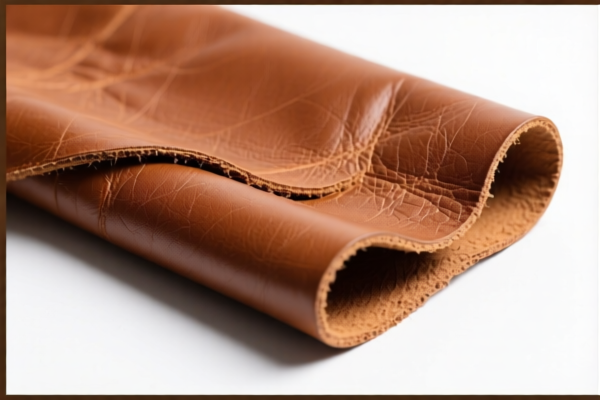
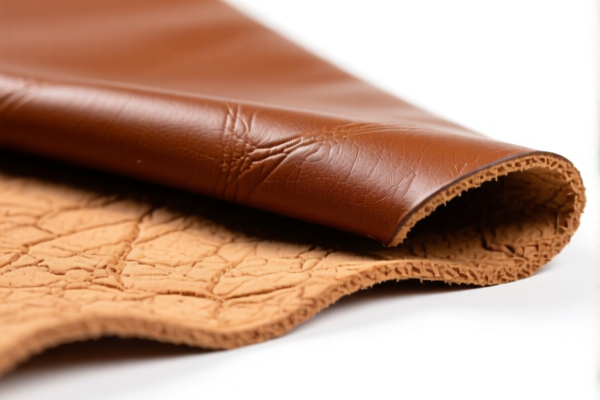
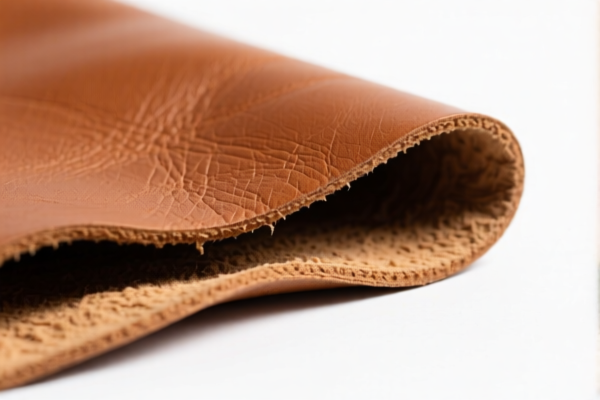
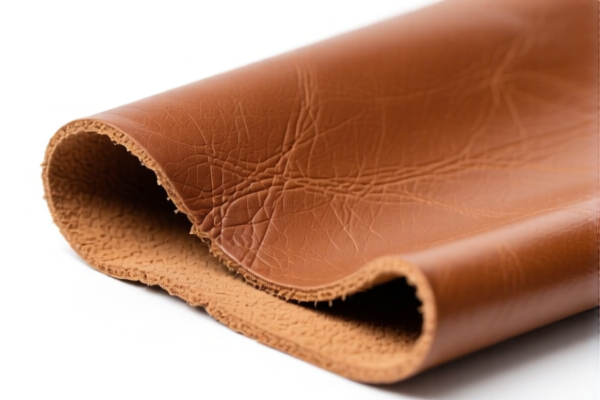
AI Analysis
🥩 Dry Tanned Beef Tenderloin Leather
🌐 HS Code Reference & Customs Clearance Guide | 2026 Latest Tariff Analysis | Professional Clearance Strategy
📌 I. Product Definition & Classification: Do You Really Understand "Beef Tenderloin Leather"?
"Beef Tenderloin Leather" is a misnomer in the context of standard leather trade. In international trade, leather is categorized by the animal source (cow, buffalo, pig, etc.) and the processing state (vegetable-tanned, chrome-tanned, etc.), not by the cut of meat (e.g., tenderloin vs. brisket).
However, based on the provided data, the term likely refers to Dry Tanned Buffalo Leather (often colloquially or erroneously associated with beef due to similar cattle origins) or specific high-grade leather derived from cattle, but the classification data explicitly points to Buffalo Leather attributes for the primary codes.
⚠️ Key Distinction:
- If the material is Buffalo Leather (as implied by the detailed summaries): It falls under Chapter 41 (Leather) for raw/tanned skins or Chapter 64 (Footwear) if it is a半成品 (semi-finished) part for footwear uppers. - If the material is Cattle/Beef Leather: It typically falls under Chapter 41, but the provided data specifically analyzes Buffalo variants. - Crucial Point: The classification depends on whether it is considered Raw Leather (Chapter 41) or Footwear Material/Component (Chapter 64).
📦 II. HS Code Classification Details (2026 Latest Tariff Authority Comparison)
Based on the provided data, the product "Dry Tanned Beef Tenderloin Leather" (interpreted as Buffalo/Cattle Leather for Footwear Uppers) is classified into two main categories: Footwear Components (Chapter 64) and Tanned Leather (Chapter 41).
| HS Code | Product Description | Application Scenario | Tariff Category |
|---|---|---|---|
6403.51.90.15 |
Dry Buffalo Upper Leather, Material: Buffalo Skin, Fits Leather Upper & Pigskin/L Leather Category | Raw material for footwear uppers, semi-finished | ✅ Footwear Material |
4113.90.30.00 |
Dry Buffalo Upper Leather, Material: Buffalo Skin (Other Animal Leather), Form: Further Processed Tanned Leather | Tanned leather for further manufacturing | ✅ Tanned Leather (Other) |
4113.90.60.00 |
Dry Buffalo Upper Leather, Material: Buffalo Leather (Animal Leather), Form: Processed Leather | Fits attribute of Other Animal Leather | ✅ Tanned Leather (Other) |
6403.51.60.15 |
Dry Buffalo Upper Leather, Material: Buffalo Skin (Leather Category), Form: Semi-finished Leather | Inferred semi-finished leather for footwear | ✅ Footwear Material |
6403.51.60.15 |
Dry Buffalo Upper Leather, Material: Buffalo Leather (Contains Pigskin-level Materials), Form: Footwear Raw Material | Consistent with upper material classification logic | ✅ Footwear Material |
🔍 Key Reminder:
- Chapter 64 Codes (6403...): Treats the leather as a component of footwear. This is common for pre-cut or pre-shaped upper materials intended for shoe manufacturing. - Chapter 41 Codes (4113...): Treats the leather as tanned hides/skins for further processing into various goods. - Conflicting Classifications: The data shows significant divergence in tax rates between Chapter 64 (lower base tax) and Chapter 41 (higher base tax + 301 tariff). Correct classification is critical to avoid underpayment penalties.
💰 III. 2026 Latest Tariff Rate Breakdown (Including Surcharge, Policy Surcharge)
✅ Applicable Country: United States (US)
✅ Origin: China (CN)
✅ Effective Time: November 10, 2025 onwards (including subsequent imports)
🎯 1. 6403.51.90.15 & 6403.51.60.15 —— Footwear Upper Leather (Chapter 64)
| Item | Content |
|---|---|
| Base Tariff | 8.5% (for 6403.51.60.15) / 10.0% (for 6403.51.90.15) |
| Section 301 Surcharge | 0.0% |
| IEEPA Surcharge (122 Clause) | +10% |
| Total Tariff Rate | 18.5% (6403.51.60.15) / 20.0% (6403.51.90.15) |
| Tax Calculation | CIF Value × 18.5% or 20.0% |
| De Minimis Eligible | ❌ No (Deny de minimis for footwear/leather components from China) |
| Legal Basis Path | USITC:6403.51.60.15 → FOOTNOTE:122 (10%) |
📌 Explanation:
- Base Rate: 8.5% or 10% is the standard Most Favored Nation (MFN) rate for footwear uppers. - No Section 301: Footwear components often escape the 25% Section 301 tariff if classified specifically as materials rather than finished footwear. - IEEPA 10%: A specific surcharge applied to Chinese-origin goods under certain executive orders (referenced as "122 Clause" in data). - Total: 18.5% - 20.0%. This is significantly lower than the Chapter 41 classification.
🎯 2. 4113.90.30.00 —— Tanned Other Animal Leather (Chapter 41)
| Item | Content |
|---|---|
| Base Tariff | 3.3% |
| Section 301 Surcharge | +25.0% |
| IEEPA Surcharge (122 Clause) | +10% |
| Total Tariff Rate | 38.3% |
| Tax Calculation | CIF Value × 38.3% |
| De Minimis Eligible | ❌ No |
| Legal Basis Path | USITC:4113.90.30.00 → USITC:9903.88.01 (25%) → IEEPA:9903.01.25 (10%) |
📌 Explanation:
- Base Rate: 3.3% is low for tanned leather. - Section 301 (25%): Tanned leather from China is subject to the full 25% Section 301 tariff. - IEEPA 10%: Additional 10% surcharge. - Total: 38.3%. This is a high tariff rate. Misclassifying as Chapter 41 can double the tax burden compared to Chapter 64.
🎯 3. 4113.90.60.00 —— Other Processed Animal Leather
| Item | Content |
|---|---|
| Base Tariff | 1.6% |
| Section 301 Surcharge | +25.0% |
| IEEPA Surcharge (122 Clause) | +10% |
| Total Tariff Rate | 36.6% |
| Tax Calculation | CIF Value × 36.6% |
| De Minimis Eligible | ❌ No |
| Legal Basis Path | USITC:4113.90.60.00 → USITC:9903.88.01 (25%) → IEEPA:9903.01.24 (10%) |
📌 Explanation:
- Similar to above, this code applies to other processed animal leathers not specified elsewhere. - Total: 36.6%. Still subject to the heavy 25% Section 301 surcharge.
🛠️ IV. Customs Clearance Practical Advice (Real-World Pitfall Guide)
✅ 1. Preparation Checklist (Must-Haves)
| Document | Required | Description |
|---|---|---|
| ✅ Product Specification Sheet | ✔️ | Must specify: "Dry Tanned," "Buffalo/Cattle," "For Footwear Uppers." |
| ✅ Material Certificate | ✔️ | Confirm animal source (Buffalo vs. Cow). Crucial for Chapter 41 vs. 64 distinction. |
| ✅ Product Photos | ✔️ | Show texture, finish, and dimensions. Prove it is a "semi-finished upper" vs. "raw hide." |
| ✅ Commercial Invoice | ✔️ | Clearly state "Leather for Footwear Uppers" to support 6403 classification. |
| ✅ Packing List | ✔️ | Standard shipping documentation. |
✅ 2. Declaration Strategy (Key Mantra)
🔥 "Classify as Footwear Material, Avoid Chapter 41, Save 20% Tax!"
| Scenario | Correct Declaration | Incorrect Declaration |
|---|---|---|
| Leather cut to shape for shoes | 6403.51.60.15 (18.5%) |
4113.90.30.00 (38.3%) → Overpay 20% |
| Large sheets for further cutting | 4113.90.30.00 (38.3%) |
6403... → Underpayment Risk |
| Raw, untanned skins | Chapter 41, different subheading | 4113... (Tanned) → Classification Error |
📌 Note:
- If the leather is pre-cut or shaped specifically for footwear uppers,6403is preferred to save on the 25% Section 301 tariff. - If the leather is in raw sheet form for general use, it may be forced into4113, triggering the 25% surcharge. - "Beef Tenderloin" is a risky term. Use "Buffalo Leather for Footwear Uppers" or "Tanned Cattle Leather for Footwear" to align with HS Code summaries.
✅ 3. Special Cases Handling
| Situation | Handling Advice |
|---|---|
| Mixed Material | If leather is combined with synthetic material, consult classification rules for composite goods. May still fall under 6403 if leather is dominant. |
| OEM Custom Cuts | Provide design templates to prove "footwear upper" intent. Supports 6403 classification. |
| Buffalo vs. Cow | Ensure the Bill of Lading and Invoice match the Animal Source. Data specifies "Buffalo." Misdeclaration can lead to seizure. |
| Pre-Ruling | Highly Recommended. Apply for an Advance Ruling from US CBP for HS Code 6403.51.60.15 to lock in the 18.5% rate. |
🌍 V. Global Market Customs Comparison (2026 Latest)
| Country/Region | Recommended HS Code | Tariff (China Origin) | Certification | Notes |
|---|---|---|---|---|
| 🇺🇸 USA | 6403.51.60.15 |
18.5% | None specific | Avoid 4113 (38.3%) due to Section 301. |
| 🇨🇳 China | 4113.90.30.00 |
10-13% | N/A | Import duty on leather varies. |
| 🇪🇺 EU | 4113.90.00 |
6.5% | REACH | No Section 301. Lower base rate. |
| 🇬🇧 UK | 4113.90.00 |
6.5% | UKCA | Post-Brexit rules apply. |
📌 Conclusion:
- The US market is the most challenging due to the 25% Section 301 surcharge on Chapter 41 leather. - Strategic Advantage: Classifying as Footwear Material (6403) allows you to bypass the 25% surcharge, reducing total tax from ~38% to ~18-20%.
📌 VI. Common Errors & Pitfall Guide (Blood & Tears Lessons)
❌ Error 1: Declaring "Leather" as 4113 without proving it's not a footwear component.
👉 Consequence: Pay 38.3% tax instead of 18.5%. Loss of 20% margin!
❌ Error 2: Using "Beef Tenderloin Leather" in the declaration.
👉 Consequence: Customs may reject or request clarification. Use "Buffalo/Cattle Leather for Footwear Uppers."
❌ Error 3: Ignoring the "122 Clause" IEEPA surcharge.
👉 Consequence: Under-declaration by 10%. Penalties + Interest.
✅ Correct Practice:
"Dry Tanned Buffalo Leather, For Footwear Uppers, Pre-Cut, Model XYZ, HS Code 6403.51.60.15"
🎯 VII. Conclusion: Professional Declaration, Save Time, Reduce Cost!
🎯 Remember the Mantra:
🔹 "Chapter 64 Saves 20%, Chapter 41 Triggers 25%!"
🔹 "Specify 'Footwear Upper' to Avoid Section 301!"
🔹 "Buffalo, Not Tenderloin – Precision is Profit!"
📌 Pro Tip:
If your leather is originating from Vietnam, Thailand, or India, you may avoid IEEPA/Section 301 tariffs, reducing rates to 0-5%.
Recommendation: Apply for an Advance Ruling from US CBP to confirm 6403.51.60.15 eligibility.
📣 Take Action Now:
📞 Contact Professional Customs Broker + Provide Product Samples + Apply for HS Code Advance Ruling
🚀 Ensure smooth customs clearance, efficient export, and double your profits!
✨ Professional Clearance Starts with Accurate Classification!
💼 Every cent of your cost deserves precise calculation!
Customer Reviews
About HS Code Classification
The Harmonized System (HS) is an internationally standardized nomenclature developed by the World Customs Organization (WCO) to classify traded products. Over 200 countries use the HS system as the basis for customs tariffs, trade statistics, and import/export regulations.
Each HS code follows a hierarchical structure:
- Chapter (2 digits) — Broad category of goods (e.g., Chapter 84: Machinery and Mechanical Appliances)
- Heading (4 digits) — More specific grouping within the chapter
- Subheading (6 digits) — Internationally standardized breakdown, used by all WCO member countries
- National subdivisions (8-10 digits) — Country-specific extensions for further classification, such as US HTSUS 10-digit codes
Correct HS code classification is essential for smooth customs clearance, accurate duty payment, and compliance with trade regulations. Misclassification can lead to customs delays, overpayment of duties, or penalties.
When importing from CN to US, the applicable tariff rates may include:
- Most-Favored-Nation (MFN) rate — The standard duty rate applied to WTO members
- General rate — Applied to countries without trade agreements
- Trade remedy duties — Additional tariffs such as Section 301 (anti-dumping), Section 232 (national security), or countervailing duties
The information provided on this page is for reference purposes only. For official classification, please consult with your local customs authority or a licensed customs broker.