Durable Plastic Tablecloth
CN → US| HS Code | Tariff Rate | Origin | Destination | Doc |
|---|---|---|---|---|
| 3920200055 | 39.2% | CN | US | Official Doc |
| 5903102010 | 35.0% | CN | US | Official Doc |
| 5903102090 | 35.0% | CN | US | Official Doc |
| 3920100000 | 39.2% | CN | US | Official Doc |
Product Images
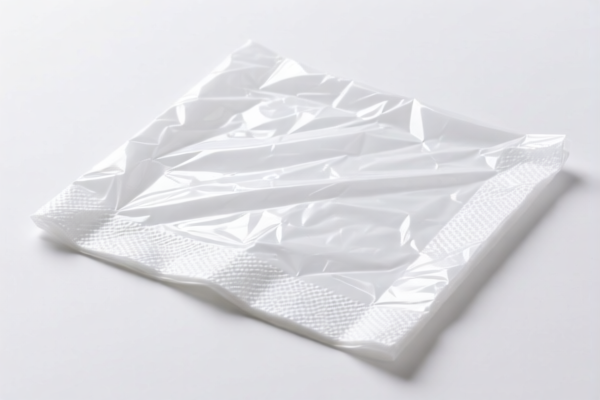
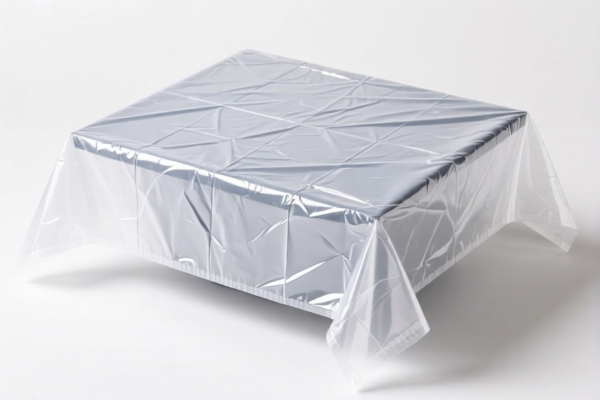


AI Analysis
🍽️ Durable Plastic Tablecloth (Plastic Tablecloths)
🌐 HS Code Reference & Customs Clearance Guide | 2026 Latest Tariff Analysis | Professional Customs Strategy
📌 Part I: Product Definition & Classification: What Exactly is a "Plastic Tablecloth"?
In international trade, "Plastic Tablecloth" is not a single commodity but a category dependent on material composition and physical structure. The customs classification hinges on one critical question:
Is it a solid sheet of plastic, or is it a textile fabric coated/impregnated with plastic?
1. Solid Plastic Sheets (Non-Woven/No Fabric Base)
- Description: Rigid or flexible sheets made entirely of polymers (e.g., Polypropylene PP, Polyethylene PE).
- Key Feature: No woven fabric background. It is essentially a plastic film or sheet.
- Common Use: Disposable hard plastic covers, heavy-duty industrial mats.
2. Plastic-Coated Textiles (Woven Fabric Base)
- Description: Textile fabrics (e.g., polyester, cotton) that have been impregnated, coated, covered, or laminated with plastic (e.g., PVC, PE).
- Key Feature: You can see the weave of the fabric underneath the plastic layer. It behaves like fabric but is waterproof due to the plastic coating.
- Common Use: Soft PVC tablecloths, oilcloth, laminated table covers.
⚠️ Critical Distinction:
- If it is pure plastic (no fabric) →归类 to Chapter 39 (Plastics).
- If it is fabric + plastic coating → 归类 to Chapter 59 (Impregnated/Coated Textiles).
📦 Part II: HS Code Classification Details (2026 Latest Tariff Authority)
Based on the specific product structure, here are the two main classification paths for durable plastic tablecloths:
| HS Code | Product Description | Applicable Scenario | Material Structure | |--------|--------------------------|--------------------------| | 3920.20.00.55 | Plastic tablecloths, made of Polypropylene (PP). Form: Sheets, films, foils, strips. | Pure PP plastic sheets; no fabric base. | ❌ No Fabric (Solid Plastic) | | 5903.10.20.10 | Textile fabric impregnated, coated, covered, or laminated with PVC or other plastics. | Soft PVC tablecloths; laminated fabric table covers. | ✅ Yes (Fabric Base + Plastic Coating) | | 5903.10.20.90 | Other plastic-covered/laminated textile fabrics (e.g., PE coating on fabric not specified elsewhere). | Other coated fabrics (e.g., PE-coated) not specifically PVC. | ✅ Yes (Fabric Base + Plastic Coating) | | 3920.10.00.00 | Plastic tablecloths, made of Vinyl Polymers (e.g., PE). Form: Sheets, films. | Pure vinyl/PE plastic sheets; no fabric base. | ❌ No Fabric (Solid Plastic) |
🔍 Key Reminder:
- Pure Plastic Sheets (like a hard plastic tray or thin PE film) go to 3920.
- Coated Fabrics (like a soft, washable PVC tablecloth) go to 5903.
- Misclassification Risk: Declaring a PVC-coated tablecloth as "Plastic Sheet" (3920) may lead to rejection or reclassification by customs because it contains textile fibers.
💰 Part III: 2026 Latest Tariff Rate Breakdown (Including Surcharge Policies)
✅ Applicable Country: United States (US)
✅ Country of Origin: China (CN)
✅ Effective Date: From November 10, 2025 (including subsequent imports)
🎯 1. Pure Plastic Tablecloths (HS Code: 3920.20.00.55 & 3920.10.00.00)
These are classified as solid plastic products.
| Item | Detail |
|---|---|
| Base Tariff Rate | 4.2% (Ad Valorem) |
| Section 301 Surcharge | +25.0% (From USITC Footnote 9903.88.01) |
| IEEPA Surcharge (122 Clause) | +10.0% (Against Chinese/HK products, effective Nov 10, 2025) |
| Total Tax Rate | 39.2% |
| Tax Calculation | CIF Value × 39.2% |
| De Minimis Eligibility | ❌ Not Eligible (deny_de_minimis) |
| Legal Basis Path | IEEPA:9903.01.25 → IEEPA:9903.01.24 → USITC:3920.20.00.55 → FOOTNOTE:9903.88.01 |
📌 Explanation:
- The 4.2% is the standard MFN tariff for plastic sheets.
- The 25% is the Section 301 tariff on Chinese plastics.
- The 10% is the new IEEPA surcharge for specific Chinese goods.
- Total: 39.2%. This is a high-cost category for pure plastic items.
🎯 2. Plastic-Coated Textile Tablecloths (HS Code: 5903.10.20.10 & 5903.10.20.90)
These are classified as textile products with plastic coating.
| Item | Detail |
|---|---|
| Base Tariff Rate | 0.0% (Ad Valorem) |
| Section 301 Surcharge | +25.0% (From USITC Footnote 9903.88.01) |
| IEEPA Surcharge (122 Clause) | +10.0% (Against Chinese/HK products, effective Nov 10, 2025) |
| Total Tax Rate | 35.0% |
| Tax Calculation | CIF Value × 35.0% |
| De Minimis Eligibility | ❌ Not Eligible (deny_de_minimis) |
| Legal Basis Path | IEEPA:9903.01.25 → IEEPA:9903.01.24 → USITC:5903.10.20.10 → FOOTNOTE:9903.88.01 |
📌 Note:
- Although the base tariff is 0%, the surcharges apply.
- Total: 35.0%. This is 4.2% lower than pure plastic tablecloths.
- Crucial: If your product is a fabric-based PVC tablecloth, ensure it is declared under 5903 to avoid misclassification penalties, but be aware that both categories now face high combined tariffs.
🛠️ Part IV: Customs Clearance Practical Advice (Avoid Pitfalls)
✅ 1. Required Documentation Checklist (Non-Negotiable)
| Document | Must Provide | Description |
|---|---|---|
| ✅ Product Specification Sheet | ✔️ | Detail material composition: Is it 100% plastic? Or Fabric + Plastic Coating? |
| ✅ Product Photos (Label & Structure) | ✔️ | Show close-up of the surface. Is it a woven fabric? Or a smooth plastic sheet? |
| ✅ Commercial Invoice | ✔️ | Clearly state: "Plastic Tablecloth, [Material: PP/PVC], [Structure: Sheet/Coated Fabric]" |
| ✅ Packing List | ✔️ | Include gross/net weight. Plastic products are often heavy; accurate weight is critical for inspection. |
| ✅ Certificate of Origin (CO) | ✔️ | Must clearly state China as origin to trigger/confirm surcharges. |
| ✅ Declaration of Non-Woven/Non-Fabric | ✔️ | For HS 3920, explicitly declare "No textile fibers" if applicable. |
✅ 2. Declaration Tips (Key Mantras)
🔥 "Material Dictates Code: Plastic vs. Fabric, Don't Confuse!"
| Scenario | Correct Declaration | Wrong Practice |
|---|---|---|
| Pure PP/PE Sheet | 3920.20.00.55 or 3920.10.00.00Desc: "Polypropylene Plastic Sheet, No Fabric" |
Misdeclaring as "Textile" → Audit Risk |
| PVC Coated Fabric | 5903.10.20.10Desc: "PVC-Coated Polyester Tablecloth" |
Misdeclaring as "Plastic Sheet" → Classification Error |
| Mixed Packaging | Declare All Items together | Splitting packaging to reduce value → Fraud Risk |
| OEM Custom Design | Provide design files + material breakdown | Generic name "Tablecloth" → Clearance Delay |
✅ 3. Special Cases Handling
| Situation | Handling Advice |
|---|---|
| OEM Custom Tablecloths | Provide customer order + material spec sheet. Avoid ambiguous terms like "Synthetic Material." |
| Laminated vs. Coated | Coated: Plastic impregnated into fabric (5903). Laminated: Plastic film glued to fabric (may still be 5903). Provide proof. |
| Recycled Plastic Content | If >50% recycled, may still fall under 3920, but declare accurately to avoid environmental compliance issues. |
| Multi-Component Sets | If tablecloth comes with napkins/serviettes, declare as a set. The tablecloth determines the HS code for the set. |
🌍 Part V: Global Market Customs Comparison (2026 Latest)
| Country/Region | Recommended HS Code | Tariff (China Origin) | Certification | Notes |
|---|---|---|---|---|
| 🇺🇸 USA | 3920.20.00.55 / 5903.10.20.10 |
39.2% / 35.0% | No special certs needed for basic tablecloths | High Surcharge Applies |
| 🇨🇳 China | 3920.20.00.55 / 5903.10.20.10 |
4.2% / 0.0% | RoHS (if electrical, but not for tablecloths) | Low Tariff, No Surcharge |
| 🇪🇺 EU | 3920.10 / 5903.10 |
~3-6.5% | REACH (Chemical Safety) | No 301/IEEPA Surcharge |
| 🇬🇧 UK | 3920.10 / 5903.10 |
~5-7% | UKCA (if applicable) | Post-Brexit rules apply |
| 🇦🇺 Australia | 3920.10 / 5903.10 |
~5% | ACCC Standards | No Surcharge |
📌 Conclusion:
- USA is the most expensive market for Chinese plastic tablecloths due to the 35-39.2% combined tariff.
- EU/UK/Australia have lower tariffs but stricter chemical safety standards (REACH/UKCA).
- China Origin is the key trigger for the 122 Clause IEEPA Surcharge in the US.
📌 Part VI: Common Mistakes & Pitfall Guide (Lessons Learned)
❌ Mistake 1: Declaring a PVC-coated fabric tablecloth as "Plastic Sheet" (3920)
👉 Consequence: Customs will reclassify to 5903. While the rate is similar (35% vs 39.2%), you face fines for misdeclaration and clearance delays.
❌ Mistake 2: Not declaring the material composition
👉 Consequence: Customs cannot determine if it is 3920 (4.2% base) or 5903 (0% base). Results in hold for inspection and additional fees.
❌ Mistake 3: Ignoring the "122 Clause" IEEPA Surcharge
👉 Consequence: Underestimating landed cost. The 10% IEEPA surcharge is new and applies to both categories. Budget for 35-39.2% total tax, not just the base rate.
❌ Mistake 4: Using vague names like "Table Cover"
👉 Consequence: Customs officers may choose the worst-case HS code. Be specific: "Polypropylene Plastic Tablecloth" or "PVC-Coated Polyester Tablecloth."
✅ Correct Practice:
"Durable Plastic Tablecloth, Material: 100% Polypropylene (PP), Form: Flat Sheet, No Fabric Base, HS 3920.20.00.55"
OR
"Soft PVC Tablecloth, Material: Polyester Fabric with PVC Coating, HS 5903.10.20.10"
🎯 Part VII: Conclusion: Professional Declaration, Cost Control
🎯 Remember the Mantra:
🔹 "Plastic Sheet: 39.2% | Coated Fabric: 35.0% | Both have 301+IEEPA Surcharges!"
🔹 "Material Structure is King: Don't confuse Fabric with Plastic!"
📌 Pro Tip:
- If you have alternative suppliers in Vietnam, Mexico, or Thailand, you may avoid the 122 Clause IEEPA Surcharge and potentially the 301 Tariff (depending on trade agreements), reducing total tax to 0-5%.
- Apply for Advance Ruling from US Customs if your product structure is complex (e.g., multi-layer lamination).
📣 Immediate Action:
📞 Contact a professional customs broker + Provide Material Test Report + Verify HS Code pre-classification
🚀 Ensure your tablecloths clear customs smoothly, avoid unexpected costs, and maximize profit margins!
✨ Professional Customs Clearance Starts with Accurate Classification!
💼 Your Every Penny of Cost Deserves Precise Calculation!
Customer Reviews
About HS Code Classification
The Harmonized System (HS) is an internationally standardized nomenclature developed by the World Customs Organization (WCO) to classify traded products. Over 200 countries use the HS system as the basis for customs tariffs, trade statistics, and import/export regulations.
Each HS code follows a hierarchical structure:
- Chapter (2 digits) — Broad category of goods (e.g., Chapter 84: Machinery and Mechanical Appliances)
- Heading (4 digits) — More specific grouping within the chapter
- Subheading (6 digits) — Internationally standardized breakdown, used by all WCO member countries
- National subdivisions (8-10 digits) — Country-specific extensions for further classification, such as US HTSUS 10-digit codes
Correct HS code classification is essential for smooth customs clearance, accurate duty payment, and compliance with trade regulations. Misclassification can lead to customs delays, overpayment of duties, or penalties.
When importing from CN to US, the applicable tariff rates may include:
- Most-Favored-Nation (MFN) rate — The standard duty rate applied to WTO members
- General rate — Applied to countries without trade agreements
- Trade remedy duties — Additional tariffs such as Section 301 (anti-dumping), Section 232 (national security), or countervailing duties
The information provided on this page is for reference purposes only. For official classification, please consult with your local customs authority or a licensed customs broker.