Durable Textile Outer Layer Beverage Bags
CN → US| HS Code | Tariff Rate | Origin | Destination | Doc |
|---|---|---|---|---|
| 6307909891 | 24.5% | CN | US | Official Doc |
| 4202920809 | 42.0% | CN | US | Official Doc |
| 6305900000 | 23.7% | CN | US | Official Doc |
| 6305390000 | 25.9% | CN | US | Official Doc |
| 4202920807 | 42.0% | CN | US | Official Doc |
Product Images
AI Analysis
🧳 Durable Textile Outer Layer Beverage Bags (Foldable)
🌐 HS Code Reference & Customs Clearance Guide | 2026 Latest Tariff Analysis | Professional Classification Strategy
📌 I. Product Definition & Classification: Understanding the "Textile Beverage Bag"
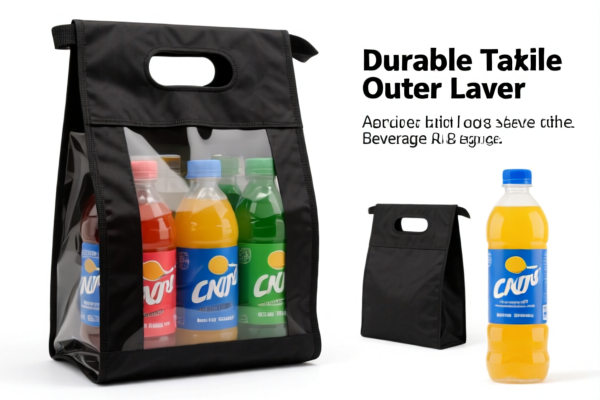
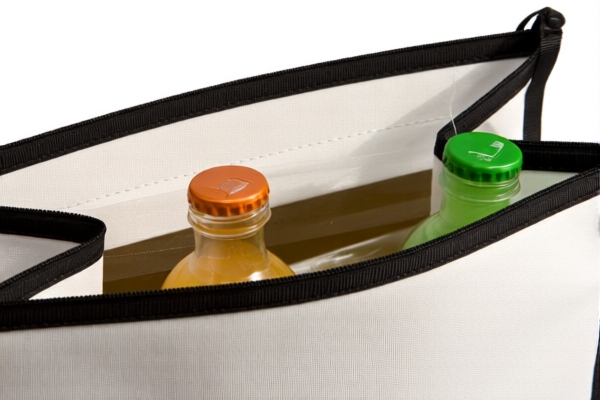
Durable Textile Outer Layer Beverage Bags are specialized containers designed to hold and transport beverages. Key characteristics include: 1. Foldable Design: The structure can be collapsed when not in use, saving storage space. 2. Textile Outer Layer: The exterior material is primarily made of woven or non-woven textiles (e.g., polyester, nylon, cotton blends). 3. Insulation/Protection: While not explicitly stated as "vacuum insulated," the "beverage bag" function implies some level of thermal retention or protective cushioning compared to a simple plastic bag.
In international trade, the classification depends heavily on material composition (natural vs. synthetic textile) and specific function (general packaging vs. specific insulated container).
⚠️ Key Distinction:
- If the bag is considered a general textile article (packaging bag) → Classified under Chapter 63.
- If the bag is considered a specific insulated container (like a thermos bag) with textile exterior → Classified under Chapter 42.
- The choice between Chapters 42 and 63 significantly impacts the Additional Duties (Section 301/122), leading to drastically different total tax rates.
📦 II. HS Code Classification Details (2026 Latest Tariff Authority Comparison)
Based on the provided data, there are 5 potential HS Code classifications, falling into two main categories: Chapter 63 (Miscellaneous Manufactured Articles) and Chapter 42 (Articles of Leather; Saddle Harness; Travel Goods).
| HS Code | Product Description | Applicable Scenario | Tax Rate (Total) | Additional Duty Risk |
|---|---|---|---|---|
| 6307.90.98.91 | Other made-up articles (General textile bag) | General foldable bag, no specific insulation function claimed; "Other" category | 24.5% | Moderate (7.5% Addl.) |
| 6305.90.00.00 | Sacks and bags, of other textile materials | Used for packaging purposes (e.g., carrying multiple cans/bottles as packaging); textile material unspecified but not "saddle leather" | 23.7% | Moderate (7.5% Addl.) |
| 6305.39.00.00 | Sacks and bags, of man-made textile materials | Specifically made of synthetic/man-made fibers (e.g., polyester) for packaging | 25.9% | Moderate (7.5% Addl.) |
| 4202.92.08.09 | Travel goods / Satchels, with outer surface of textile materials | Specific beverage/insulated bag; textile exterior; classified as "food or drink bag" or "thermal bag" | 42.0% | HIGH (25% Addl.) |
| 4202.92.08.07 | Travel goods / Satchels, with outer surface of textile materials | Same as above, but inferred man-made fiber material | 42.0% | HIGH (25% Addl.) |
🔍 Critical Analysis:
- Chapters 6307/6305: Lower total taxes (23.7%–25.9%). These codes treat the item as a general textile bag or packaging sack. This is favorable if the bag is seen as a disposable or semi-disposable packaging item.
- Chapter 4202: Higher total taxes (42.0%). These codes treat the item as a durable travel good or specialized insulated bag. This is the standard for reusable, insulated beverage bags (e.g., like Yeti coolers or lunch boxes with textile shells).
- The 17.5% Difference: The gap between ~25% and 42% is driven by the Additional Duty:
- 7.5% (Section 122/Other) for Chapter 63.
- 25.0% (Section 301) for Chapter 42.
💰 III. 2026 Latest Tariff Rate Breakdown (Detailed Tax Clauses)
✅ Applicable Country: United States (US)
✅ Origin: China (CN)
✅ Effective Date: Current tariffs apply as per 2026 data.
🎯 1. Lower Tax Group: Chapter 63 (Miscellaneous Textile Articles)
📌 Option A: 6305.90.00.00 (Cheapest Option)
| Item | Content |
|---|---|
| Base Tariff | 6.2% (ad valorem) |
| Additional Duty (Sec 301/122) | +7.5% |
| 122 Clause Tariff | +10% |
| Total Effective Rate | 23.7% |
| Tax Calculation | CIF Value × 23.7% |
| De Minimis Exemption | ❌ No (Subject to full duties) |
| Legal Basis | USITC:6305.90.00.00 → Additional:7.5% + 122 Clause:10% |
📌 Explanation:
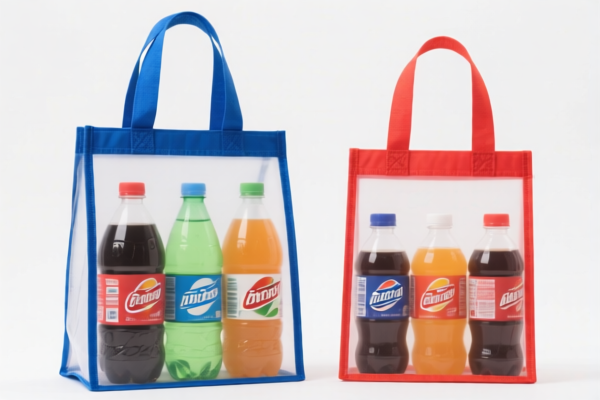
- This code fits bags used for packaging (carrying goods). If your beverage bag is marketed as a "carrier bag" for multiple drinks, this code may apply.
- The 10% "122 Clause" is a specific U.S. trade remedy duty on certain Chinese textiles/apparel.
- Total: 23.7% is the most cost-effective if customs accepts this classification.
📌 Option B: 6305.39.00.00 (Man-Made Fibers)
| Item | Content |
|---|---|
| Base Tariff | 8.4% |
| Additional Duty | +7.5% |
| 122 Clause Tariff | +10% |
| Total Effective Rate | 25.9% |
| Tax Calculation | CIF Value × 25.9% |
📌 Explanation:
- Specifically for bags made of man-made textiles (polyester, nylon).
- Slightly higher base rate than 6305.90 due to material specificity.
- Total: 25.9%.
📌 Option C: 6307.90.98.91 (Other Made-Up Articles)
| Item | Content |
|---|---|
| Base Tariff | 7.0% |
| Additional Duty | +7.5% |
| 122 Clause Tariff | +10% |
| Total Effective Rate | 24.5% |
| Tax Calculation | CIF Value × 24.5% |
📌 Explanation:
- A "catch-all" for made-up textile articles not elsewhere specified.
- Suitable if the bag doesn't fit the "packaging sack" definition of 6305.
- Total: 24.5%.
🎯 2. Higher Tax Group: Chapter 42 (Travel Goods & Insulated Bags)
📌 Option D: 4202.92.08.09 (Textile Outer, General Beverage Bag)
| Item | Content |
|---|---|
| Base Tariff | 7.0% |
| Additional Duty (Sec 301) | +25.0% |
| 122 Clause Tariff | +10% |
| Total Effective Rate | 42.0% |
| Tax Calculation | CIF Value × 42.0% |
| Legal Basis | USITC:4202.92.08.09 → Sec 301:25% + 122 Clause:10% |
📌 Option E: 4202.92.08.07 (Textile Outer, Man-Made Fiber)
| Item | Content |
|---|---|
| Base Tariff | 7.0% |
| Additional Duty (Sec 301) | +25.0% |
| 122 Clause Tariff | +10% |
| Total Effective Rate | 42.0% |
| Tax Calculation | CIF Value × 42.0% |
📌 Critical Warning:
- 42.0% is the highest rate. This applies if Customs views the item as a durable, reusable insulated bag (like a lunch box or cooler).
- The 25% Section 301 Tariff is the primary driver of this high cost.
- Do not use this code unless the product is explicitly marketed as a "thermal beverage carrier" or "travel drink bag" with durable insulation.
🛠️ IV. Customs Clearance Practical Advice (Avoid Pitfalls)
✅ 1. Preparation Checklist (Must-Haves)
| Document | Required | Explanation |
|---|---|---|
| ✅ Product Photos | ✔️ | Must clearly show the textile outer layer, foldable structure, and insulation lining (if any). |
| ✅ Product Description | ✔️ | Use neutral terms: "Foldable Textile Beverage Carrier" vs. "Insulated Thermal Cooler Bag". |
| ✅ Material Breakdown | ✔️ | Specify fabric type (e.g., "100% Polyester Weave", "Foam Liner"). Critical for 6305 vs. 6305.39. |
| ✅ Commercial Invoice | ✔️ | Must match HS Code description exactly. |
| ✅ Packing List | ✔️ | Show units per carton, weight, dimensions. |
| ✅ Usage Statement | ✔️ | "Used for carrying beverages at picnics/events" (Supports 6307/6305) vs. "Thermal Insulation for Cold Drinks" (Supports 4202). |
✅ 2. Strategic Classification Tips (The "Tax Optimization" Playbook)
🔥 Key Rule: "Function Dictates Chapter, Material Dictates Subheading"
| Scenario | Recommended HS Code | Reasoning |
|---|---|---|
| Bag is primarily for carrying multiple drinks (like a six-pack carrier) | 6305.90.00.00 or 6307.90.98.91 | Customs may view this as a "packaging article" or "general bag," attracting only 7.5% additional duty + 10% 122 clause. |
| Bag is a single-bottle insulator with high-end thermal features | 4202.92.08.09 | Likely classified as "travel good" or "satchel," incurring 25% Section 301 tariff. |
| Bag is made of synthetic fabric (Polyester/Nylon) | 6305.39.00.00 | If using Chapter 63, specify "man-made fiber" to avoid ambiguity. |
| Bag is made of natural fabric (Cotton/Wool) | 6305.90.00.00 | Fits "other textile materials" in Chapter 63. |
📌 Strategic Advice:
- If the bag has minimal insulation (e.g., just a fabric sleeve), argue for Chapter 63 (6307.90.98.91 or 6305.90.00.00) to save ~17.5% in taxes.
- If the bag is heavily insulated (foam/vacuum), Customs will likely insist on Chapter 42 (4202.92.08.09/07), resulting in 42% tax.
- Pre-Ruling Recommendation: Apply for an Import Ruling from U.S. Customs and Border Protection (CBP) before shipping. This locks in the HS Code and prevents post-clearance audits.
✅ 3. Special Case Handling
| Situation | Handling Advice |
|---|---|
| OEM Custom Design | Provide design specs showing foldable hinges, zippers, and textile weave. Prove it's a "bag" not a "cooling device." |
| Combined Packaging | If sold with cans/bottles, declare the bag as a "container" and the drinks as the primary product. The bag may be considered incidental. |
| "Eco-Friendly" Marketing | If marketed as reusable, customs may lean toward Chapter 42. To stay in Chapter 63, emphasize "disposable/reusable carrier" nature. |
🌍 V. Global Market Comparison (2026)
| Country/Region | Recommended HS Code | Estimated Tariff (China Origin) | Notes |
|---|---|---|---|
| 🇺🇸 USA | 6307.90.98.91 or 6305.90.00.00 |
23.7%–24.5% | Avoid Chapter 42 (42%) unless necessary. |
| 🇨🇳 China | 6307.90 or 4202.92 |
5%–10% | No Section 301 or 122 clauses. Chapter 42 may have lower base duty. |
| 🇪🇺 EU | 4202.92 or 6305 |
0%–12% | Check for "Green Deal" exemptions if using sustainable textiles. |
| 🇬🇧 UK | 4202.92 or 6305 |
0%–12% | Post-Brexit rules apply. Check UK Global Tariff. |
📌 Conclusion:
- The USA is the most critical market due to Section 301 (25%) and 122 Clause (10%).
- Strategic Classification in Chapter 63 can save you up to 17.5% in duties.
- Ensure your product description does not over-emphasize "thermal insulation" if you aim for Chapter 63.
📌 VI. Common Errors & Pitfalls (Lessons Learned)
❌ Error 1: Calling it "Insulated Cooler Bag" in the invoice
👉 Result: Customs will classify under 4202.92, applying 42% tax.
👉 Fix: Use terms like "Textile Beverage Carrier" or "Foldable Drink Sleeve."
❌ Error 2: Ignoring the 122 Clause (10%)
👉 Result: Underpayment and penalties.
👉 Fix: All textile bags from China to the US attract the 10% 122 Clause. It applies to both Chapter 63 and 42.
❌ Error 3: Confusing "Packaging Bag" with "Travel Good"
👉 Result: Audit risk if a "packaging bag" is seen as a durable travel item.
👉 Fix: Provide evidence of foldability and lightweight nature to support Chapter 63.
✅ Correct Declaration Example:
"Foldable Beverage Carrier Bag, Outer Layer: 100% Polyester Textile, Inner: Non-Woven Lining, Used for carrying multiple beverage cans during outdoor events."
🎯 VII. Conclusion: Optimize Classification, Maximize Profit!
🎯 Key Takeaway:
🔹 "Chapter 63 is your friend (24%), Chapter 42 is your enemy (42%)."
🔹 Use descriptive terms that emphasize "bag" and "carrier," not "insulated cooler."
🔹 Always account for the 10% 122 Clause on all textile goods from China.
📌 Pro Tip:
If your product is not made in China (e.g., Vietnam, Bangladesh), the Section 301 (25%) and 122 Clause may not apply, reducing taxes to 0–10%.
For US-bound goods, always get an Import Ruling for HS Codes in the 4202 vs. 6307 gray area.
📣 Immediate Action:
📞 Consult a Customs Broker to file for an Import Ruling using the 6307.90.98.91 or 6305.90.00.00 classification.
📄 Update Marketing Materials to avoid "thermal insulation" claims if targeting the lower tax bracket.
🚀 Optimize Your Supply Chain to ensure clear documentation supporting the "textile bag" classification.
✨ Professional Classification Saves Money!
💼 Every percentage point of duty impacts your bottom line.
Customer Reviews
About HS Code Classification
The Harmonized System (HS) is an internationally standardized nomenclature developed by the World Customs Organization (WCO) to classify traded products. Over 200 countries use the HS system as the basis for customs tariffs, trade statistics, and import/export regulations.
Each HS code follows a hierarchical structure:
- Chapter (2 digits) — Broad category of goods (e.g., Chapter 84: Machinery and Mechanical Appliances)
- Heading (4 digits) — More specific grouping within the chapter
- Subheading (6 digits) — Internationally standardized breakdown, used by all WCO member countries
- National subdivisions (8-10 digits) — Country-specific extensions for further classification, such as US HTSUS 10-digit codes
Correct HS code classification is essential for smooth customs clearance, accurate duty payment, and compliance with trade regulations. Misclassification can lead to customs delays, overpayment of duties, or penalties.
When importing from CN to US, the applicable tariff rates may include:
- Most-Favored-Nation (MFN) rate — The standard duty rate applied to WTO members
- General rate — Applied to countries without trade agreements
- Trade remedy duties — Additional tariffs such as Section 301 (anti-dumping), Section 232 (national security), or countervailing duties
The information provided on this page is for reference purposes only. For official classification, please consult with your local customs authority or a licensed customs broker.