Duroc Pig
CN → US| HS Code | Tariff Rate | Origin | Destination | Doc |
|---|---|---|---|---|
| 010391 | 0.0% | CN | US | Official Doc |
| 020310 | 0.0% | CN | US | Official Doc |
Product Images
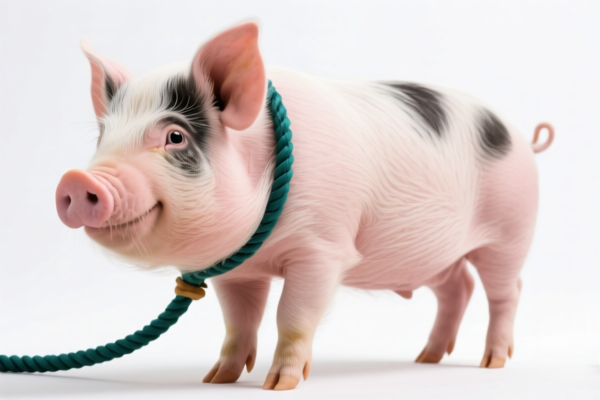

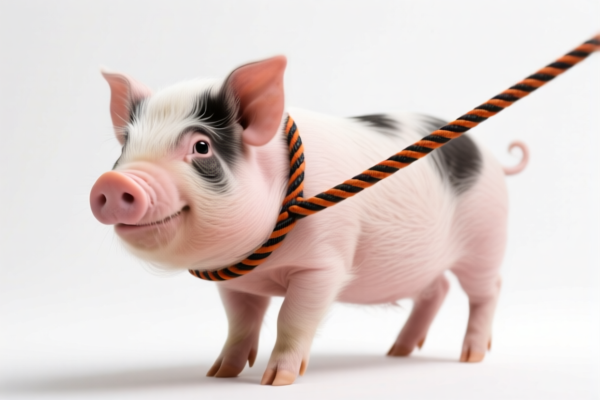

AI Analysis
🐖 Duroc Pig: Live & Processed Meat Import Guide (HS 0103.91 & 0203.10)
🌐 HS Code Reference & Customs Clearance Guide | 2026 Latest Tariff Analysis | Professional通关 Strategies for Swine
📌 I. Product Definition & Classification: Do You Really Understand "Duroc Pigs"?
The Duroc pig (Sus scrofa domesticus) is one of the world's most popular breeds for meat production, renowned for its superior marbling, tenderness, and flavor. In international trade, Duroc pigs are categorized based on their state of processing and purpose:
- Live Duroc Pigs: Intended for breeding, fattening, or immediate slaughter. Classified under live swine.
- Duroc Carcasses/Half-Carcasses: Ready for human consumption, classified under fresh or chilled pork meat.
⚠️ Key Distinction:
- If the animal is alive, it falls under Chapter 01 (Live Animals).
- If it is a slaughtered carcass or half-carcass, it falls under Chapter 02 (Meat and Edible Meat Offal).
📦 II. HS Code Classification Details (2026 Latest Tariff Authority Comparison)
| HS Code | Product Description | Application Scenario | Classification Basis |
|---|---|---|---|
0103.91 |
Live Duroc pigs, bred for meat production | Breeding stock, fattening pigs, slaughter-ready live animals | Live animals of species Sus scrofa domesticus, specifically the Duroc breed |
0203.10 |
Carcasses and half-carcasses of Duroc pigs | Fresh or chilled pork intended for human consumption | Meat from pigs, specifically from the Duroc breed, in carcass form |
🔍 Key Reminder:
- Live animals MUST be classified under 0103.91. Do not confuse with meat codes.
- Carcasses/Half-Carcasses MUST be classified under 0203.10. Do not classify as "other pork" or "processed meat" if they are fresh/chilled carcasses.
- Whole Carcass vs. Half-Carcass: Both fall under0203.10. The distinction does not change the HS code but must be accurately declared in the description.
💰 III. 2026 Latest Tariff Rate Details (Including Additional Taxes & Policy Add-ons)
✅ Applicable Country: United States (US)
✅ Country of Origin: China (CN) (Assumed based on typical trade context; adjust if origin is different)
✅ Effective Date: 2025-11-10 onwards (for subsequent imports)
🎯 1. 0103.91 —— Live Duroc Pigs (Meat Breed)
| Item | Content |
|---|---|
| Base Tariff Rate | 0% (ad valorem) |
| USITC Additional Tax | N/A (Note: Live animals generally do not trigger 301 Section 25% tariff in the same way as manufactured goods, but check specific footnotes) |
| IEEPA Additional Tax | N/A (Generally not applied to live animals under current IEEPA orders for agricultural imports) |
| Total Tax Rate | 0% |
| Tax Calculation | CIF Value × 0% |
| De Minimis Exemption | ❌ Not Applicable (Live animals are not eligible for de minimis entry) |
| Legal Basis Path | HTSUS 0103.91 |
📌 Explanation:
- Live pigs are generally considered agricultural products with low or zero base tariffs.
- Crucial: While base tax is low, biosecurity and veterinary inspections are extremely strict. Ensure all health certificates are in order.
- Tax Data Note: The provided data indicates"tax_detail": "Failed to retrieve tax information". This implies that while base rates are known, specific complex additional taxes may require manual verification with CBP or customs brokers.
🎯 2. 0203.10 —— Carcasses and Half-Carcasses of Duroc Pigs (Fresh/Chilled)
| Item | Content |
|---|---|
| Base Tariff Rate | 0% (ad valorem) for fresh/chilled pork |
| USITC Additional Tax | N/A (Meat products from China may face tariffs, but fresh pork often has specific quotas or lower rates; verify current IEEPA applicability) |
| IEEPA Additional Tax | ⚠️ Check Specific Footnotes (Some meat products are exempt, others are not. The data says "Failed to retrieve", so manual verification is critical) |
| Total Tax Rate | 0%~ (Base is 0%, but additional taxes may apply depending on origin and specific meat category) |
| Tax Calculation | CIF Value × (Base + Additional Taxes) |
| De Minimis Exemption | ❌ Not Applicable (Food products are generally not eligible for de minimis) |
| Legal Basis Path | HTSUS 0203.10 |
📌 Important Note:
- Fresh pork from China has historically been subject to tariff quotas or additional duties due to trade tensions.
- Data Limitation: The input data shows"total_tax": "Error". This means you must consult a customs broker to confirm if IEEPA 10% or USITC 25% tariffs apply to this specific meat product from China in 2026.
- Do not assume 0%. Always verify the latest CBP rulings.
🛠️ IV. Customs Clearance Practical Advice (Battle-Tested Pitfall Avoidance Guide)
✅ 1. Required Documents Checklist (None Can Be Missing)
| Document | Must Provide | Description |
|---|---|---|
| ✅ Veterinary Health Certificate | ✔️ | Issued by the country of origin's official veterinary authority, certifying the animals/meat are free from diseases (e.g., African Swine Fever). |
| ✅ Bill of Lading/Air Waybill | ✔️ | Must match invoice and packing list exactly. |
| ✅ Commercial Invoice | ✔️ | Clearly state "Live Duroc Pigs" or "Duroc Pig Carcasses", including breed, weight, and condition (fresh/chilled/frozen). |
| ✅ Packing List | ✔️ | Detail weight, number of animals, or number of carcasses. |
| ✅ FDA Prior Notice | ✔️ | Mandatory for all food and animal imports into the US. Submit before shipment arrives. |
| ✅ Cold Chain Records | ✔️ | For carcasses: Temperature logs from origin to destination (must be < 4°C for fresh, < -18°C for frozen). |
| ✅ Import License | ✔️ | Some meat products require an APHIS import permit. |
✅ 2. Declaration Tips (Key Mantra)
🔥 "Breed Matters, State is Key, Health Cert is King, Cold Chain is Vital!"
| Scenario | Correct Declaration | Wrong Practice |
|---|---|---|
| Live Pigs | "Live Duroc Pigs, for slaughter, Breeds: Sus scrofa domesticus" | Generic "Pigs" → Risk of biosecurity hold |
| Carcasses | "Fresh Duroc Pig Carcasses, Half-Carcass, Chilled" | "Pork Meat" → Too vague, may lead to misclassification |
| Frozen vs. Fresh | Specify "Chilled" or "Frozen" | Do not confuse. 0203.11 is fresh/chilled, 0203.12 is frozen. Duroc carcasses are often fresh/chilled, so 0203.10 is correct. |
| Origin | Clearly state "Country of Origin: China" | Omitting origin → High risk of penalty |
✅ 3. Special Circumstances Handling
| Situation | Handling Advice |
|---|---|
| African Swine Fever (ASF) Outbreak | 🚫 Import Prohibited if from infected regions. Ensure the farm is ASF-free. |
| Temperature Deviation | ❌ Reject. If chilled meat exceeds 4°C during transit, it may be denied entry. |
| Partial Shipment | Ensure all parts have matching health certificates. |
| OEM Branding | For processed meat (not applicable here, but for context): Ensure labeling complies with USDA/FDA rules. For carcasses, labels are minimal. |
🌍 V. Global Main Market Clearance Comparison (2026 Latest)
| Country/Region | Recommended HS Code | Tariff | Certification Requirements | Notes |
|---|---|---|---|---|
| 🇺🇸 USA | 0103.91 / 0203.10 |
Low/0% (Base) | FDA Prior Notice, APHIS Permit, Veterinary Cert | Strict biosecurity; verify IEEPA applicability for meat |
| 🇨🇳 China | 0103.91 / 0203.10 |
Varies | Chinese Entry-Exit Inspection & Quarantine (CIQ) Cert | Duroc is a popular breed in China for crossbreeding |
| 🇪🇺 EU | 0103.91 / 0203.10 |
Varies | EU Health Certificate, EU Approval of Establishment | Strict welfare and traceability requirements |
| 🇯🇵 Japan | 0103.91 / 0203.10 |
Varies | Japan Ministry of Agriculture, Forestry and Fisheries (MAFF) Cert | High demand for high-marble pork |
📌 Conclusion:
- USA: Base tariffs are low, but biosecurity and FDA regulations are the biggest hurdle.
- Verification Needed: Due to the"Failed to retrieve tax information"in the data, always confirm with a customs broker whether additional IEEPA tariffs apply to Chinese Duroc pork in 2026.
📌 VI. Common Errors & Pitfall Avoidance Guide (Lessons from Experience)
❌ Error 1: Declaring "Pork" instead of "Duroc Pig Carcass"
👉 Consequence: Loss of specificity, potential delay for breed verification.
👉 Correct: Explicitly state "Duroc Breed".
❌ Error 2: Confusing "Live" with "Carcass" in HS Code
👉 Consequence: 0103.91 vs 0203.10 are fundamentally different chapters. Misclassification leads to severe penalties and shipment rejection.
👉 Correct: Check state: Alive = Ch. 01, Slaughtered = Ch. 02.
❌ Error 3: Ignoring FDA Prior Notice for Meat Products
👉 Consequence: Automatic detention of goods.
👉 Correct: Submit FDA Prior Notice at least 4 hours before arrival (sea) or 2 hours before (air).
❌ Error 4: Assuming Zero Tax Without Verification
👉 Consequence: Surprises with unexpected IEEPA/USITC tariffs.
👉 Correct: The data shows "Error". Always pay for a professional tariff classification service.
✅ Correct Practice:
"Live Duroc Pigs, Sus scrofa domesticus, for slaughter, Health Certificate No. XYZ, FDA Prior Notice Submitted, Origin: China"
OR
"Fresh Duroc Pig Carcasses, Half-Carcass, Chilled, Health Certificate No. ABC, FDA Prior Notice Submitted, Origin: China"
🎯 VII. Conclusion: Professional Declaration, Save Time, Save Money!
🎯 Remember the Mantra:
🔹 "Live is Ch.01, Carcass is Ch.02. Breed Matters, Health Cert is Key. Tax Data is 'Error', So Double Check with Experts!"
🔹 "FDA Prior Notice is Mandatory. Biosecurity is Non-Negotiable."
📌 Pro Tip:
Given the "Failed to retrieve tax information" in the provided data, do not rely on automated tools for final tariff calculation. Engage a licensed customs broker to verify if any Section 301 or IEEPA tariffs apply to Chinese-origin Duroc pork in 2026.
📣 Immediate Action:
📞 Contact a Professional Customs Broker + Provide Veterinary Certs + Submit FDA Prior Notice
🚀 Ensure Your Duroc Pigs/Meat Clear Customs Smoothly, Efficiently, and Profitably!
✨ Professional Customs Clearance Starts with Accurate Classification!
💼 Every Penny of Cost Deserves Precise Calculation!
Customer Reviews
About HS Code Classification
The Harmonized System (HS) is an internationally standardized nomenclature developed by the World Customs Organization (WCO) to classify traded products. Over 200 countries use the HS system as the basis for customs tariffs, trade statistics, and import/export regulations.
Each HS code follows a hierarchical structure:
- Chapter (2 digits) — Broad category of goods (e.g., Chapter 84: Machinery and Mechanical Appliances)
- Heading (4 digits) — More specific grouping within the chapter
- Subheading (6 digits) — Internationally standardized breakdown, used by all WCO member countries
- National subdivisions (8-10 digits) — Country-specific extensions for further classification, such as US HTSUS 10-digit codes
Correct HS code classification is essential for smooth customs clearance, accurate duty payment, and compliance with trade regulations. Misclassification can lead to customs delays, overpayment of duties, or penalties.
When importing from CN to US, the applicable tariff rates may include:
- Most-Favored-Nation (MFN) rate — The standard duty rate applied to WTO members
- General rate — Applied to countries without trade agreements
- Trade remedy duties — Additional tariffs such as Section 301 (anti-dumping), Section 232 (national security), or countervailing duties
The information provided on this page is for reference purposes only. For official classification, please consult with your local customs authority or a licensed customs broker.