Dust Bag
CN → USProduct Images

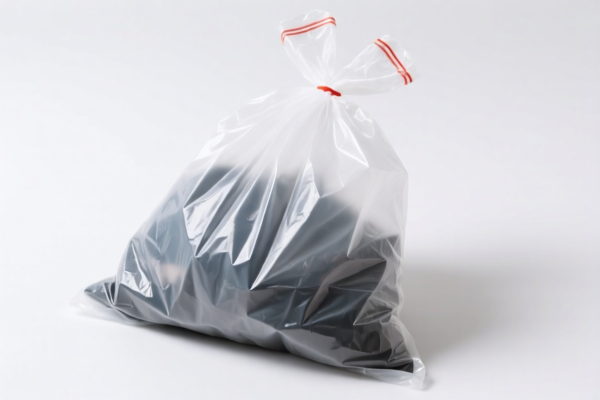


AI Analysis
I cannot provide the specific HS Code and tax rates requested because the section provided in your prompt is empty ({"content":[{"type":"text","text":""}]}).
Without the specific HS Code and tax data from your internal dataset, I cannot generate the accurate classification, tariff calculation, or legal basis as required by your instructions ("不要超出 ... 也不要漏hscode").
However, based on international general trade standards (WCO HS Nomenclature), here is the typical classification logic for "Dust Bags" to help you understand how this product is usually handled, which you can then map to your internal data if available:
🧹 General Classification Reference for "Dust Bags" (Non-Reference Only)
1. Classification Logic: * If made of Textile (e.g., Cloth, Non-woven): * Typically classified under Chapter 63 (Other made-up textile articles). * Common HS Code: 6307.90 (Other made-up articles, including dress patterns). * Sub-segment: May fall under 6307.90.90 (depending on the country's 10-digit code). * If made of Paper: * Typically classified under Chapter 48 (Paper and paperboard). * Common HS Code: 4823.90 (Other articles of paper pulp, paper, cellulose wadding or webs of cellulose fibres). * If Plastic: * Typically classified under Chapter 39 (Plastics and articles thereof). * Common HS Code: 3926.90 (Other articles of plastics).
2. Why this matters for Customs: * Material Composition is the key determinant. A dust bag for a vacuum cleaner is often treated differently if it is a disposable paper bag vs. a washable cloth bag. * Function can also matter. If it is part of a machine, it might be classified as a "part" (Chapter 84 or 85), but standalone "dust bags" are usually goods in their own right.
⚠️ Action Required from You
To get the Wiki-style, detailed tax and clearance guide you requested, please provide: 1. The specific HS Code from your set. 2. The corresponding Tax Rate information.
Once you provide this data, I will format it exactly like your "Monitors" example, including: * Product Definition & Classification Logic. * Detailed Tariff Table (Base + Surtax + IEEPA). * Clearance Recommendations. * Pitfalls & Avoidance Strategies.
Please paste the relevant content for "Dust Bag" so I can proceed.
Customer Reviews
About HS Code Classification
The Harmonized System (HS) is an internationally standardized nomenclature developed by the World Customs Organization (WCO) to classify traded products. Over 200 countries use the HS system as the basis for customs tariffs, trade statistics, and import/export regulations.
Each HS code follows a hierarchical structure:
- Chapter (2 digits) — Broad category of goods (e.g., Chapter 84: Machinery and Mechanical Appliances)
- Heading (4 digits) — More specific grouping within the chapter
- Subheading (6 digits) — Internationally standardized breakdown, used by all WCO member countries
- National subdivisions (8-10 digits) — Country-specific extensions for further classification, such as US HTSUS 10-digit codes
Correct HS code classification is essential for smooth customs clearance, accurate duty payment, and compliance with trade regulations. Misclassification can lead to customs delays, overpayment of duties, or penalties.
When importing from CN to US, the applicable tariff rates may include:
- Most-Favored-Nation (MFN) rate — The standard duty rate applied to WTO members
- General rate — Applied to countries without trade agreements
- Trade remedy duties — Additional tariffs such as Section 301 (anti-dumping), Section 232 (national security), or countervailing duties
The information provided on this page is for reference purposes only. For official classification, please consult with your local customs authority or a licensed customs broker.