Dust Collector
CN → US| HS Code | Tariff Rate | Origin | Destination | Doc |
|---|---|---|---|---|
| 8508600000 | 35.0% | CN | US | Official Doc |
| 8508700000 | 85.0% | CN | US | Official Doc |
| 8421390115 | 35.0% | CN | US | Official Doc |
| 8432290080 | 35.0% | CN | US | Official Doc |
| 8432290060 | 35.0% | CN | US | Official Doc |
Product Images
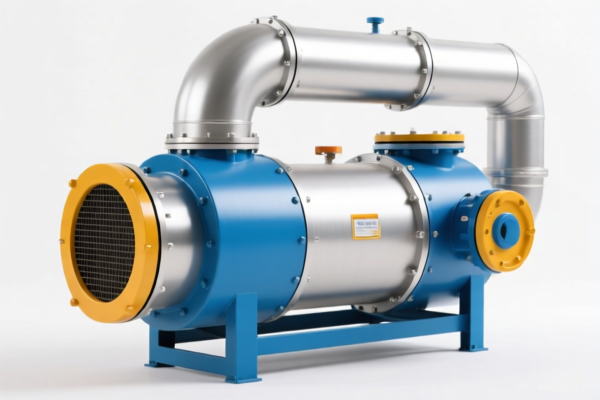
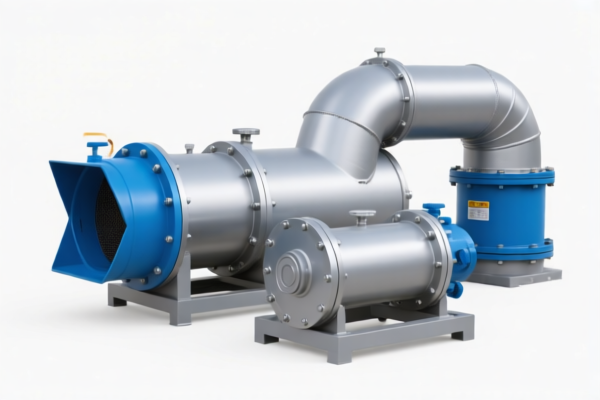
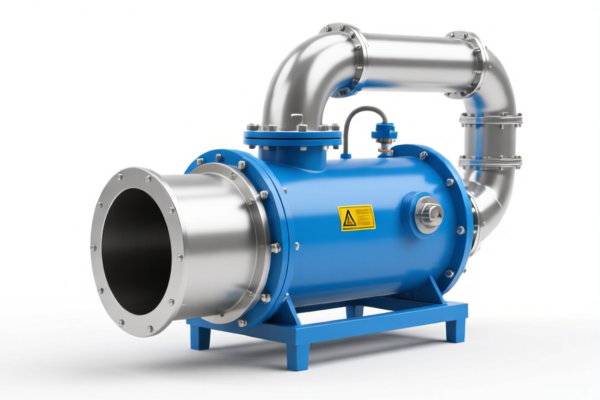
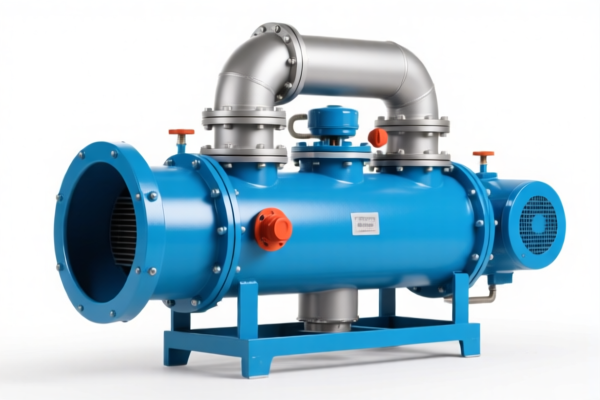
AI Analysis
🌪️ Dust Collector (Industrial & Commercial Air Filtration Systems)
🌐 HS Code Reference & Customs Clearance Guide | 2026 Latest Tariff Analysis | Professional Clearance Strategy
📌 I. Product Definition & Classification: Do You Truly Understand "Dust Collectors"?
In the international trade landscape, "Dust Collectors" are not a single unified category but rather fall into different classifications based on functionality, structure, and component logic. Misclassification can lead to massive tax penalties or shipment delays.
Core Distinction Logic: 1. Vacuum-Compatible: Devices primarily used for suction/cleaning that fit the definition of vacuum cleaners. 2. Purification/Filtering: Dedicated air filtration units for industrial/commercial air quality control. 3. Component Logic: Devices treated as parts/extensions of other machinery. 4. Agricultural/Landscaping Tools: Specialized tools for yard maintenance (often misclassified as gardening tools).
⚠️ Critical Classification Points:
- If it functions as a suction device for cleaning → Look at Vacuum Cleaner codes (8508).
- If it is a dedicated air filtration system → Look at Air Purification codes (8421).
- If it is part of a larger machine → Consider Parts codes (8508/8421).
- If it is a yard tool (e.g., blower-collector) → Look at Gardening codes (8432).
📦 II. HS Code Classification Details (2026 Latest Tariff Authority Cross-Reference)
| HS Code | Product Description | Application Scenario | Tax Logic & Risk Profile |
|---|---|---|---|
8508.60.00.00 |
Dust Collector as Vacuum Cleaner (Matches vacuum functionality) |
Household/commercial suction devices, portable collectors | Low-Medium Risk Aligned with standard vacuum categories. |
8508.70.00.00 |
Parts/Extensions of Dust Collectors (Component logic) |
Spare parts, specialized attachments, or extended equipment under vacuum logic | High Risk Subject to material-specific surcharges (Steel/Alu/Cu +50%). |
8421.39.01.15 |
Dedicated Dust & Air Purification Unit (No material/shape conflict) |
Industrial air filters, central dust extraction systems | Medium Risk Standard industrial classification, no material conflicts. |
8432.29.00.80 |
Landscaping/Weeding Tool Reference (Similar use reference) |
Yard sweepers, blower-collectors, landscaping equipment | Low Risk Referenced as similar gardening tools. |
8432.29.00.60 |
Gardening Equipment (Hoe/Mower Logic) (Gardening tool definition) |
Lawn mowers, garden tillers, manual/semi-auto sweepers | Low Risk Classified under general gardening tools. |
🔍 Key Reminder:
- "Dust Collector" is a functional description, not a strict HS Code term.
- If your device is electrically driven for suction, 8508 is the primary search area.
- If it is a static filtration unit (no suction motor), 8421 is more appropriate.
- Landscaping blowers that also collect debris should be evaluated under 8432, not industrial vacuums.
💰 III. 2026 Latest Tariff Rate Breakdown (Including Surcharges & Policy Add-ons)
✅ Applicable Country: United States (US)
✅ Origin: China (CN)
✅ Effective Date: From November 10, 2025 (and subsequent imports)
🎯 1. 8508.60.00.00 —— Dust Collector Classified as Vacuum Cleaner
| Item | Content |
|---|---|
| Base Tariff | 0.0% |
| Section 301 Surcharge | +25.0% |
| Section 122 Tariff | +10.0% |
| Total Tariff Rate | 35.0% |
| Tax Calculation | CIF Value × 35% |
| De Minimis Exemption | ❌ Not Applicable (Denied) |
| Legal Basis Path | Base: 0% → 301: 25% → 122: 10% |
📌 Explanation:
- This is the standard rate for vacuum-type dust collectors.
- The 35% total is significant but lower than the "Parts" classification.
- No material-based surcharges apply here because it is classified as a finished appliance.
🎯 2. 8508.70.00.00 —— Parts/Extensions of Dust Collectors
| Item | Content |
|---|---|
| Base Tariff | 0.0% |
| Section 301 Surcharge | +25.0% |
| Section 122 Tariff | +10.0% |
| Steel/Aluminum/Copper Surcharge | +50.0% (If applicable materials) |
| Total Tariff Rate | 85.0% (Max) |
| Tax Calculation | CIF Value × 85% |
| De Minimis Exemption | ❌ Not Applicable |
| Legal Basis Path | Base: 0% → 301: 25% → 122: 10% → Material Surcharge: 50% |
📌 Critical Warning:
- This is the highest risk category.
- If your dust collector or its parts contain steel, aluminum, or copper components, you face an additional 50% tariff.
- Total 85% can destroy profit margins. Avoid this classification if possible by classifying as a complete unit (8508.60) or air purifier (8421).
🎯 3. 8421.39.01.15 —— Dedicated Air Purification Equipment
| Item | Content |
|---|---|
| Base Tariff | 0.0% |
| Section 301 Surcharge | +25.0% |
| Section 122 Tariff | +10.0% |
| Total Tariff Rate | 35.0% |
| Tax Calculation | CIF Value × 35% |
| De Minimis Exemption | ❌ Not Applicable |
| Legal Basis Path | Base: 0% → 301: 25% → 122: 10% |
📌 Advantage:
- No material-based surcharge applies because this code focuses on air purification function, not mechanical parts.
- Ideal for industrial filtration systems that are not primarily "vacuums."
🎯 4. & 5. 8432.29.00.80 & 8432.29.00.60 —— Gardening/Landscaping Tools
| Item | Content |
|---|---|
| Base Tariff | 0.0% |
| Section 301 Surcharge | +25.0% |
| Section 122 Tariff | +10.0% |
| Total Tariff Rate | 35.0% |
| Tax Calculation | CIF Value × 35% |
| De Minimis Exemption | ❌ Not Applicable |
| Legal Basis Path | Base: 0% → 301: 25% → 122: 10% |
📌 Applicability:
- Use this for outdoor yard sweepers, blowers, or lawn care equipment that collect debris.
- Do not use this for indoor industrial dust collectors.
🛠️ IV. Customs Clearance Practical Advice (Battle-Tested Pitfall Avoidance Guide)
✅ 1. Documentation Checklist (Mandatory)
| Document | Must Provide? | Description |
|---|---|---|
| ✅ Product Specification Sheet | ✔️ | Detail: Voltage, Power (Watts/Amps), Airflow (CFM/m³/h), Filter Type, Material Composition. |
| ✅ Function Diagram/Flow Chart | ✔️ | Show: Suction path, filtration stage, exhaust port. Proves it's a "Vacuum" or "Purifier." |
| ✅ Product Photos (Clear & Labeled) | ✔️ | Show: Nameplate, Model, Input/Output ports, Filter housing. |
| ✅ Material Breakdown | ✔️ | Crucial for 8508.70: If classifying as parts, declare material % to avoid accidental 50% surcharge. |
| ✅ Commercial Invoice | ✔️ | Clear description: e.g., "Industrial Air Filter Unit" or "Vacuum Type Dust Collector." Avoid vague terms like "Dust Removal Tool." |
| ✅ Packing List | ✔️ | Ensure complete unit is packed together if declaring as one HS Code. |
✅ 2. Declaration Strategies (Key Mnemonics)
🔥 “Complete Unit First, Parts Last, Function Dictates Code, Material Traps Await!”
| Scenario | Correct Declaration | Incorrect Action | Consequence |
|---|---|---|---|
| Industrial Central Dust System | 8421.39.01.15 |
Misclassify as Vacuum | May still be 35%, but 8421 is more accurate for non-suction filtration. |
| Portable Shop Vacuum | 8508.60.00.00 |
Misclassify as Parts (8508.70) |
Tax jumps from 35% to 85%! |
| Vacuum Cleaner with Steel Housings | 8508.60.00.00 |
Declare as Parts (8508.70) |
Avoids the +50% material surcharge. |
| Lawn Sweeper/Blower | 8432.29.00.80 |
Declare as Industrial Vacuum | Misclassification risk; 8432 is safer for outdoor tools. |
| Spare Filter Bags | Check specific parts code | Include in main unit declaration | Can cause valuation disputes. |
✅ 3. Special Case Handling
| Situation | Handling Advice |
|---|---|
| Mixed Material Units | If your dust collector is 90% plastic but has 10% steel motor, do NOT classify as 8508.70 (Parts) unless necessary. Stick to 8508.60 to avoid the 50% steel surcharge. |
| "All-in-One" Lawn Equipment | Use 8432 codes. Emphasize "Gardening/Landscaping" in the description. |
| HEPA Filter Only (No Machine) | Classify as Parts or Articles of Textiles depending on construction. High risk of being audited. |
| Custom OEM Units | Provide design drawings. If the design is unique but functions as a vacuum, 8508.60 is still the best anchor. |
🌍 V. Global Market Comparison (2026 Latest)
| Country/Region | Recommended HS Code | Tariff Rate (CN Origin) | Certification Req. | Notes |
|---|---|---|---|---|
| 🇺🇸 USA | 8508.60.00.00 or 8421.39.01.15 |
35% | FCC (if electric), UL/CETL recommended | Avoid 8508.70 due to 85% total tax. |
| 🇨🇳 China | 8508.60.00.00 |
5% - 10% | CCC (if applicable) | Standard domestic rate. |
| 🇪🇺 EU | 8508.70.00.00 (Vacuum) |
~5-6% | CE, RoHS | Lower tariffs than US, but strict safety standards. |
| 🇬🇧 UK | 8508.70.00.00 |
~5% | UKCA, RoHS | Post-Brexit alignment with EU standards. |
| 🇦🇺 Australia | 8508.70.00.00 |
5% | RCM | Competitive tariff. |
📌 Conclusion:
- USA is the most expensive market for dust collectors due to Section 301 and 122 tariffs.
- The 85% trap for8508.70is unique to certain part classifications and must be avoided by declaring as a complete machine (8508.60) or air purifier (8421).
- EU/UK offer safer, lower-tariff alternatives if your target market is not the US.
📌 VI. Common Mistakes & Pitfalls (Blood-Tested Lessons)
❌ Mistake 1: Classifying a complete vacuum-style dust collector as "Parts" (8508.70)
👉 Consequence: Tax spikes from 35% to 85% due to material surcharges. Do not do this.
❌ Mistake 2: Using "Dust Collector" as the only description
👉 Consequence: Customs officer may classify it incorrectly (e.g., as machinery parts). Always specify function: "Electric Vacuum Dust Collector" or "Air Purification Filter Unit."
❌ Mistake 3: Ignoring Material Composition for Parts
👉 Consequence: If declared as parts, failing to declare steel/aluminum content can lead to audits and retroactive 50% surcharges.
❌ Mistake 4: Mixing Lawn Sweepers with Industrial Vacuums
👉 Consequence: Misdeclaration leads to detention. Outdoor tools belong to 8432, not 8508.
✅ Correct Approach:
"Electric Portable Dust Collector, Vacuum Type, 2000W, Plastic & Steel Housing, with HEPA Filter, Model XYZ, For Workshop Use"
🎯 VII. Conclusion: Precise Declaration, Cost Efficiency, Risk Mitigation
🎯 Remember the Mnemonic:
🔹 "Complete Machine is 35%, Parts are 85%, Steel Kills the Profit!"
🔹 "Function First: Vacuum or Purifier? Choose 8508 or 8421, Not Parts!"
📌 Pro Tip:
If your product contains significant metal components, ALWAYS classify as 8508.60.00.00 (Finished Vacuum) or 8421.39.01.15 (Air Purifier) rather than 8508.70.00.00 (Parts) to avoid the 50% material surcharge.
Consider applying for a Binding Tariff Information (BTI) or Advance Ruling if the classification is borderline.
📣 Immediate Action:
📞 Contact a licensed customs broker + Provide Product Photos + Specify Material Composition
🚀 Ensure your dust collector passes US customs smoothly, avoids the 85% trap, and maximizes profit margins!
✨ Professional Clearance Starts with Accurate Classification!
💼 Every Percent Saved is Pure Profit!
Customer Reviews
About HS Code Classification
The Harmonized System (HS) is an internationally standardized nomenclature developed by the World Customs Organization (WCO) to classify traded products. Over 200 countries use the HS system as the basis for customs tariffs, trade statistics, and import/export regulations.
Each HS code follows a hierarchical structure:
- Chapter (2 digits) — Broad category of goods (e.g., Chapter 84: Machinery and Mechanical Appliances)
- Heading (4 digits) — More specific grouping within the chapter
- Subheading (6 digits) — Internationally standardized breakdown, used by all WCO member countries
- National subdivisions (8-10 digits) — Country-specific extensions for further classification, such as US HTSUS 10-digit codes
Correct HS code classification is essential for smooth customs clearance, accurate duty payment, and compliance with trade regulations. Misclassification can lead to customs delays, overpayment of duties, or penalties.
When importing from CN to US, the applicable tariff rates may include:
- Most-Favored-Nation (MFN) rate — The standard duty rate applied to WTO members
- General rate — Applied to countries without trade agreements
- Trade remedy duties — Additional tariffs such as Section 301 (anti-dumping), Section 232 (national security), or countervailing duties
The information provided on this page is for reference purposes only. For official classification, please consult with your local customs authority or a licensed customs broker.