Dust Removal Sprayer
CN → US| HS Code | Tariff Rate | Origin | Destination | Doc |
|---|---|---|---|---|
| 8424820020 | 37.4% | CN | US | Official Doc |
| 8424820090 | 37.4% | CN | US | Official Doc |
| 8508600000 | 35.0% | CN | US | Official Doc |
| 8508700000 | 85.0% | CN | US | Official Doc |
| 8421390115 | 35.0% | CN | US | Official Doc |
Product Images
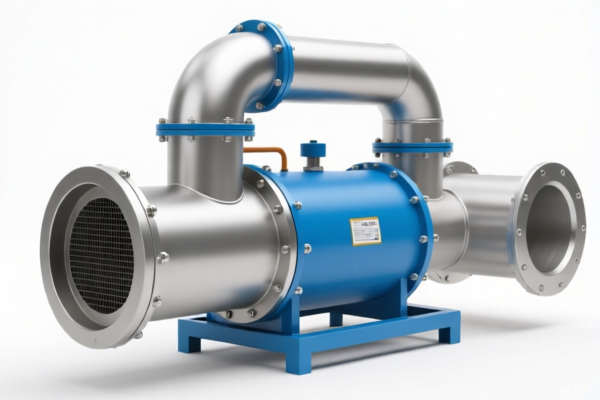
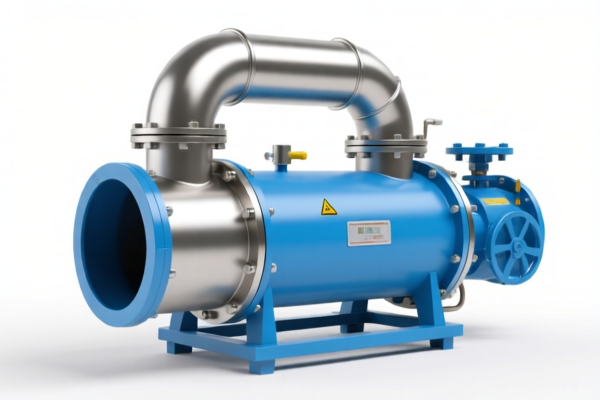
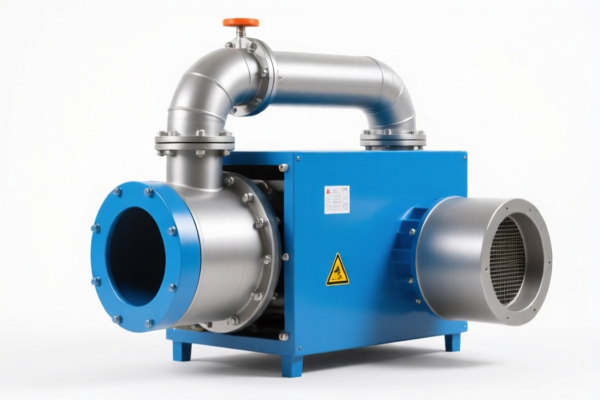
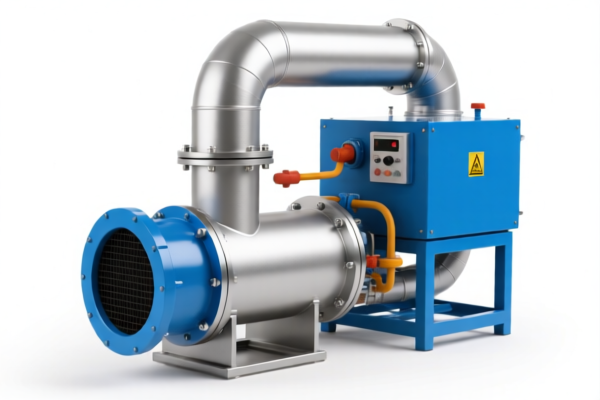
AI Analysis
🌫️ Dust Removal Sprayer & Dust Extractors (Industrial Cleaning & Atmospheric Control Equipment)
🌐 HS Code Reference & Customs Clearance Guide | 2026 Latest Tariff Full Analysis | Professional-Level Clearance Strategy
📌 I. Product Definition & Classification: Do You Really Understand "Dust Removal Sprayer"?
The term "Dust Removal Sprayer" is ambiguous in international trade. It can refer to two fundamentally different types of equipment based on function and form:
-
Pressurized Spraying Equipment (降尘喷淋器):
- Function: Uses mechanical force to jet or disperse liquids (water/dust suppressants) into the air to settle dust.
- Form: Mechanical devices, usually made of metal or plastic.
- Key Distinction: It is NOT an agricultural irrigation tool. It is a general-purpose liquid disperser.
- Target HS Codes:
8424.82.00.20or8424.82.00.90.
-
Vacuum/Dust Extraction Equipment (除尘器/吸尘器):
- Function: Sucks in air and dust particles, filtering them out. Often called "Dust Collectors" or "Industrial Vacuums."
- Form: Electrically powered machines, similar to vacuums.
- Key Distinction: If it functions by suction/vacuum, it falls under vacuum cleaners. If it functions by filtration/separation, it may fall under air purification devices.
- Target HS Codes:
8508.60.00.00,8508.70.00.00, or8421.39.01.15.
⚠️ Critical Distinction:
- If the device sprays water/liquid to suppress dust → Chapter 84 (Machinery for liquid dispersal).
- If the device sucks dust/air and filters it → Chapter 85 (Electric Vacuums) or Chapter 84 (Air Purification).
- Misclassification Risk: Declaring a vacuum as a "sprayer" or vice versa will lead to severe customs penalties and delayed clearance.
📦 II. HS Code Classification Details (2026 Latest Tariff Authoritative Comparison)
| HS Code | Product Description | Application Scenario | Key Characteristic |
|---|---|---|---|
8424.82.00.20 |
Dust Suppression Sprayers (Metal/Plastic) | Industrial dust suppression, construction sites | Mechanical spraying, non-irrigation |
8424.82.00.90 |
Other Agricultural/Horticultural Sprayers (Non-Irrigation) | General liquid dispersal, non-specific agricultural use | "Other" category, fits "mechanical器具" |
8508.60.00.00 |
Other Vacuum Cleaners (Dust Extractors) | Industrial dust collection, workshops | Functions like a vacuum, "catch-all" vacuum category |
8508.70.00.00 |
Parts & Accessories of Vacuum Cleaners (Dust Collectors) | Components of dust extraction systems, attachments | Extended logic under vacuum parts, high risk if declared as main unit |
8421.39.01.15 |
Dust Removal & Air Purification Equipment | Dedicated air filtration systems, industrial dust collectors | Direct match for "Dust Removal," filtration-based |
🔍 Key Reminders:
- 8424.82.xx.xx: Must prove it is NOT for irrigation. If it sprays water on crops, it goes to irrigation codes (higher tax/different rules). This code is for atmospheric dust suppression.
- 8508.60.00.00 vs 8421.39.01.15: If the device sucks, it's likely8508. If it filters air through a static system without suction (e.g., electrostatic precipitator), it might be8421.
- 8508.70.00.00: Be extremely careful. This is for parts/accessories. Declaring a whole machine here triggers a 85.0% tariff due to metal/aluminum/copper surcharges.
💰 III. 2026 Latest Tariff Rate Details (Including Surcharges, Policy Add-ons)
✅ Applicable Country: United States (US)
✅ Country of Origin: China (CN)
✅ Effective Time: From November 10, 2025 (including subsequent imports)
🎯 1. 8424.82.00.20 & 8424.82.00.90 —— Dust Suppression Sprayers (Non-Irrigation)
| Item | Content |
|---|---|
| Base Tariff | 2.4% (ad valorem) |
| USITC Additional Tariff (Section 301) | +25.0% |
| Section 122 Tariff (China Specific) | +10.0% |
| Total Tariff Rate | 37.4% |
| Tax Calculation | CIF Value × 37.4% |
| De Minimis Exemption | ❌ Not Eligible (deny_de_minimis) |
| Legal Basis Path | Base: 2.4% → 301: +25.0% → 122: +10.0% |
📌 Explanation:
- These sprayers are classified as general liquid dispersal machinery.
- They attract the full Section 301 (25%) and Section 122 (10%) surcharges because they are Chinese-origin goods.
- Total Cost: 37.4% of the CIF value. This is a medium-high tariff burden.
🎯 2. 8508.60.00.00 —— Other Vacuum Cleaners (Dust Extractors)
| Item | Content |
|---|---|
| Base Tariff | 0.0% |
| USITC Additional Tariff (Section 301) | +25.0% |
| Section 122 Tariff (China Specific) | +10.0% |
| Total Tariff Rate | 35.0% |
| Tax Calculation | CIF Value × 35.0% |
| De Minimis Exemption | ❌ Not Eligible (deny_de_minimis) |
| Legal Basis Path | IEEPA:9903.01.25 → IEEPA:9903.01.24 → USITC:8508.60.00.00 |
📌 Explanation:
- Vacuum cleaners have a 0% base tariff, which is lower than sprayers.
- However, they still face the 35% combined surcharge (25% + 10%).
- Total Cost: 35.0% of the CIF value. Slightly cheaper than sprayers (37.4%).
🎯 3. 8508.70.00.00 —— Parts/Accessories of Vacuum Cleaners (High Risk!)
| Item | Content |
|---|---|
| Base Tariff | 0.0% |
| USITC Additional Tariff (Section 301) | +25.0% |
| Section 122 Tariff (China Specific) | +10.0% |
| Metal/Aluminum/Copper Surcharge | +50.0% (if applicable materials) |
| Total Tariff Rate | 85.0% |
| Tax Calculation | CIF Value × 85.0% |
| De Minimis Exemption | ❌ Not Eligible (deny_de_minimis) |
| Legal Basis Path | Base: 0% → 301: +25.0% → 122: +10.0% → Metal Surcharge: +50.0% |
📌 ⚠️ CRITICAL WARNING:
- This code is for parts, not complete machines.
- If you declare a complete dust extractor as a "part" under this code, you will face the 85.0% rate due to the additional 50% surcharge on metal components.
- Penalty: Misclassification here can lead to massive overpayment and potential fraud allegations.
🎯 4. 8421.39.01.15 —— Dust Removal & Air Purification Equipment
| Item | Content |
|---|---|
| Base Tariff | 0.0% |
| USITC Additional Tariff (Section 301) | +25.0% |
| Section 122 Tariff (China Specific) | +10.0% |
| Total Tariff Rate | 35.0% |
| Tax Calculation | CIF Value × 35.0% |
| De Minimis Exemption | ❌ Not Eligible (deny_de_minimis) |
| Legal Basis Path | Base: 0% → 301: +25.0% → 122: +10.0% |
📌 Explanation:
- If your "Dust Removal Sprayer" is actually an air filtration unit (no moving parts for spraying), this code is the best fit.
- Total Cost: 35.0% of the CIF value. Same as vacuum cleaners.
- Advantage: Lower base rate than sprayers.
🛠️ IV. Customs Clearance Practical Advice (Combat Pit-avoidance Guide)
✅ 1. Preparation Checklist (All Required)
| Document | Required | Description |
|---|---|---|
| ✅ Product Specification Sheet | ✔️ | Must clearly state: Spraying (liquid dispersal) vs. Suction (vacuum) vs. Filtration (air purification). |
| ✅ Technical Drawings | ✔️ | Show internal structure: Pump/Motor for sprayer? Fan/Motor for vacuum? Filter for air purifier? |
| ✅ Product Photos (with Nameplate) | ✔️ | Clear view of brand, model, voltage, and function. |
| ✅ Third-party Test Report | ✔️ | FCC, CE, RoHS, UL (if applicable). |
| ✅ Commercial Invoice | ✔️ | Precise description: "Industrial Dust Suppression Sprayer (Non-Irrigation)" OR "Industrial Dust Collector (Vacuum Type)". |
| ✅ Packing List | ✔️ | List all accessories. Do not split a complete machine into "machine + part". |
✅ 2. Declaration Techniques (Key Mantras)
🔥 “Spray vs. Suction, Code Defines Cost!”
| Scenario | Correct Declaration | Wrong Practice |
|---|---|---|
| Liquid Sprayer (No Irrigation) | 8424.82.00.20 (37.4%) |
Declare as Irrigation Tool → Different HS, Higher Tax |
| Vacuum Dust Collector | 8508.60.00.00 (35.0%) |
Declare as 8508.70.00.00 (Parts) → 85.0% Tax! |
| Air Filter Unit (No Suction) | 8421.39.01.15 (35.0%) |
Declare as Vacuum → Wrong Function |
| Sprayer + Controller | Whole Machine | Split into Machine + Controller → Each taxed separately |
✅ 3. Special Situations Handling
| Situation | Handling Advice |
|---|---|
| OEM Custom Sprayer | Provide client order + design drawings to prove it's not a standard agricultural tool. |
| Water Tank Sprayer | If it includes a tank, still declare as 8424.82.00.20. Do not declare as "Tank" and "Sprayer" separately. |
| Used Equipment | Provide proof of usage, age, and condition. May face additional inspection. |
| Mixed Shipment (Sprayer + Vacuum) | Declare separately with distinct HS codes. Do not combine. |
🌍 V. Global Market Clearance Comparison (2026 Latest)
| Country/Region | Recommended HS Code | Tariff Rate | Certification | Notes |
|---|---|---|---|---|
| 🇺🇸 USA | 8424.82.00.20 or 8508.60.00.00 |
35.0% - 37.4% | FCC + RoHS | High Tariff Market due to Section 301 & 122 |
| 🇨🇳 China | 8424.82.00.20 or 8508.60.00.00 |
2.4% - 0% | CCC + RoHS | No additional surcharges |
| 🇪🇺 EU | 8424.82.00.20 or 8508.60.00.00 |
0% - 2.4% | CE + ErP | No additional surcharges |
| 🇦🇺 Australia | 8424.82.00.20 or 8508.60.00.00 |
5% | RCM | No additional surcharges |
| 🇯🇵 Japan | 8424.82.00.20 or 8508.60.00.00 |
0% - 2.4% | PSE | No additional surcharges |
📌 Conclusion:
- USA is the only market with significant surcharges (35-37.4%).
- China-origin goods face 35-37.4% total tax in the US.
- European/Japanese markets are much cheaper (0-5%).
- Strategy: If selling to the US, ensure precise HS classification to avoid the 85% trap. Consider supply chain diversification for US-bound goods if tariffs exceed margin.
📌 VI. Common Mistakes & Pit-avoidance Guide (Lessons Learned)
❌ Mistake 1: Declaring a complete vacuum dust collector as a part/accessory (8508.70.00.00)
👉 Consequence: Tax jumps from 35% to 85% → Massive Overpayment!
❌ Mistake 2: Declaring a dust sprayer as an agricultural irrigation tool
👉 Consequence: Wrong HS code, potential fraud allegations, and delayed clearance.
❌ Mistake 3: Vague description "Dust Machine"
👉 Consequence: Customs cannot determine function → Inspection Delay or Rejection.
❌ Mistake 4: Ignoring Section 122 Tariff
👉 Consequence: Underpayment of 10% → Back Taxes + Penalties.
✅ Correct Action:
"Industrial Dust Suppression Sprayer, Metal, Non-Irrigation, Model XYZ, FCC & RoHS Certified"
OR
"Industrial Vacuum Dust Collector, Electric, Model ABC, FCC & RoHS Certified"
🎯 VII. Conclusion: Precise Classification Saves Money!
🎯 Remember Mantras:
🔹 "Spray = 8424 (37.4%), Suck = 8508 (35.0%), Parts = 8508.70 (85.0%!!)"
🔹 "China Origin = 35-37% Tax in US. Don't let misclassification cost you 50% more!"
🔹 "Function Defines Code, Code Defines Cost."
📌 Pro Tip:
If your product is originating from Vietnam, Mexico, Thailand, or Malaysia, you may apply for IEEPA Exemption, reducing the tax to 0%~5%.
Recommendation: Apply for Advance Ruling (Precise HS Classification) before shipment to avoid customs risks.
📣 Immediate Action:
📞 Contact a Professional Broker + Provide Product Photos + Apply for HS Code Advance Ruling
🚀 Let your Dust Removal Equipment pass customs smoothly, efficiently, and profitably!
✨ Professional Clearance Starts with Precise Classification!
💼 Every Penny of Your Cost Deserves Precise Calculation!
Customer Reviews
About HS Code Classification
The Harmonized System (HS) is an internationally standardized nomenclature developed by the World Customs Organization (WCO) to classify traded products. Over 200 countries use the HS system as the basis for customs tariffs, trade statistics, and import/export regulations.
Each HS code follows a hierarchical structure:
- Chapter (2 digits) — Broad category of goods (e.g., Chapter 84: Machinery and Mechanical Appliances)
- Heading (4 digits) — More specific grouping within the chapter
- Subheading (6 digits) — Internationally standardized breakdown, used by all WCO member countries
- National subdivisions (8-10 digits) — Country-specific extensions for further classification, such as US HTSUS 10-digit codes
Correct HS code classification is essential for smooth customs clearance, accurate duty payment, and compliance with trade regulations. Misclassification can lead to customs delays, overpayment of duties, or penalties.
When importing from CN to US, the applicable tariff rates may include:
- Most-Favored-Nation (MFN) rate — The standard duty rate applied to WTO members
- General rate — Applied to countries without trade agreements
- Trade remedy duties — Additional tariffs such as Section 301 (anti-dumping), Section 232 (national security), or countervailing duties
The information provided on this page is for reference purposes only. For official classification, please consult with your local customs authority or a licensed customs broker.