Dust free Paper Roll Core
CN → US| HS Code | Tariff Rate | Origin | Destination | Doc |
|---|---|---|---|---|
| 4822900000 | 35.0% | CN | US | Official Doc |
| 4822100000 | 35.0% | CN | US | Official Doc |
| 4823901000 | 35.0% | CN | US | Official Doc |
| 4823908000 | 35.0% | CN | US | Official Doc |
Product Images


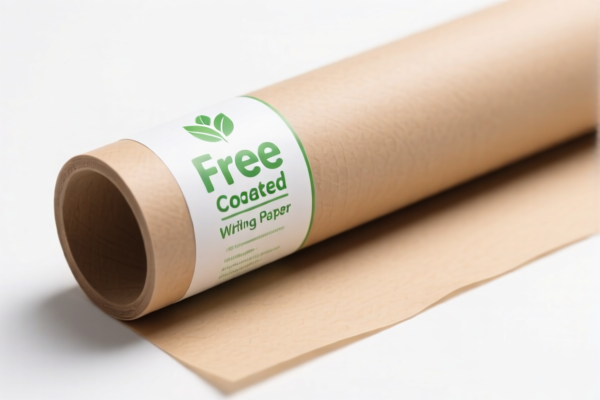
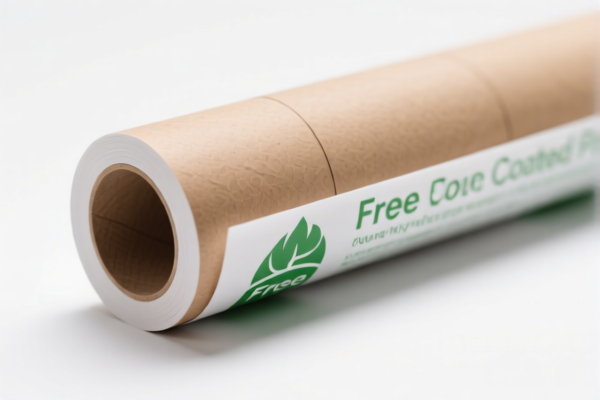
AI Analysis
🧻 Paper Roll Core (Dust-Free)
🌐 HS Code Reference & Customs Clearance Guide | 2026 Latest Tariff Full Analysis | Professional-Level Clearance Strategy
📌 I. Product Definition and Classification: Do You Really Understand "Paper Roll Core"?
A Paper Roll Core (also known as a Paper Tube or Cardboard Core) is the inner cylindrical support used to wind various flexible materials such as paper, film, fabric, foil, or adhesive tape. It provides structural integrity during storage, transportation, and processing.
In international trade, it is generally classified under Chapter 48 (Paper and Paperboard). The specific classification depends on its manufacturing process, precise shape, and specific function.
⚠️ Key Distinction Point:
- If it is a standard cylindrical tube used strictly for winding → 4822.10.00.00
- If it is a simple support/blank core without specific winding features → 4822.90.00.00
- If it is cut into specific shapes (like discs, gaskets, or separators) → 4823.90
- Note: "Dust-free" refers to the surface quality/cleaning process, not a separate HS category.
📦 II. HS Code Classification Details (2026 Latest Tariff Authoritative Comparison)
| HS Code | Product Description | Application Scenario | Key Classification Logic |
|--------|--------------------------|--------------------------|
| 4822.10.00.00 | Paper roll cores, wound, whether or not hardened or coated | Standard industrial cores for winding paper, film, or tape | Primary Choice: Fits the definition of "support for winding" |
| 4822.90.00.00 | Other paper roll cores | Simple support cores, blanks, or non-winding specific supports | Secondary Choice: For cores not specifically for "winding" or generic supports |
| 4823.90.10.00 | Other articles of paper pulp | Paper pulp-based structural items, discs, or molded cores | Alternative: If made of pulp and shaped like discs/pads rather than tubes |
| 4823.90.80.00 | Other paper, paperboard, cellulose wadding and fabrics | Gaskets, washers, seals, or cut structural paper parts | Alternative: If the core is cut into specific mechanical components like gaskets |
🔍 Key Reminder:
- 4822.10.00.00 is the most common and accurate code for standard cylindrical cores used in manufacturing lines (e.g., for toilet paper, tissue, or industrial film).
- 4822.90.00.00 is used when the core is a generic "support" not strictly defined as a "winding core" in customs interpretation.
- 4823 Series is only applicable if the product is cut into specific shapes (like discs or pads) or used as a gasket/seal, not as a long tube.
💰 III. 2026 Latest Tariff Rate Details (Including Additional Taxes, Policy Add-ons)
✅ Applicable Country: United States (US)
✅ Country of Origin: China (CN)
✅ Effective Date: From November 10, 2025 (including subsequent imports)
🎯 1. 4822.10.00.00 —— Paper Roll Cores (Wound)
| Item | Content |
|---|---|
| Base Tariff | 0.0% (ad valorem) |
| USITC Additional Tariff | +25.0% (Section 301 Tariff) |
| IEEPA Additional Tariff | +10.0% (Targeting China/HK products, effective Nov 10, 2025) |
| Total Tariff Rate | 35.0% |
| Tax Calculation | CIF Value × 35% |
| De Minimis Exemption Available? | ❌ No (deny_de_minimis) |
| Legal Basis Path | IEEPA:9903.01.25 → IEEPA:9903.01.24 → USITC:4822.10.00.00 → FOOTNOTE:9903.88.01 |
📌 Explanation:
- The "Base Tariff 0%" means normal MFN rate is free.
- The "25% Additional Tariff" comes from Section 301 of the U.S. Trade Act.
- The "10% IEEPA Tariff" is the new additional levy on Chinese goods.
- Total 35%, which is a high tariff, requiring advance planning!
🎯 2. 4822.90.00.00 —— Other Paper Roll Cores
| Item | Content |
|---|---|
| Base Tariff | 0.0% |
| USITC Additional Tariff | +25.0% |
| IEEPA Additional Tariff | +10.0% |
| Total Tariff Rate | 35.0% |
| Tax Calculation | CIF × 35% |
| De Minimis Exemption Available? | ❌ No |
| Legal Basis Path | IEEPA:9903.01.25 → IEEPA:9903.01.24 → USITC:4822.90.00.00 → FOOTNOTE:9903.88.01 |
📌 Note:
- Same tax rate as 4822.10.00.00.
- Applies to generic support cores.
🎯 3. 4823.90.10.00 & 4823.90.80.00 —— Other Paper Articles / Gaskets
| Item | Content |
|---|---|
| Base Tariff | 0.0% |
| USITC Additional Tariff | +25.0% |
| IEEPA Additional Tariff | +10.0% |
| Total Tariff Rate | 35.0% |
| Tax Calculation | CIF × 35% |
| De Minimis Exemption Available? | ❌ No |
| Legal Basis Path | IEEPA:9903.01.25 → IEEPA:9903.01.24 → USITC:4823.90.x0.00 → FOOTNOTE:9903.88.01 |
📌 Note:
- Even if classified under Chapter 48 Section 3, the Section 301 and IEEPA surcharges still apply.
- Total rate remains 35%.
🛠️ IV. Customs Clearance Practical Advice (Battlefield Pit-Avoidance Guide)
✅ 1. Required Documentation Checklist (All are Mandatory)
| Document | Must Provide | Description |
|---|---|---|
| ✅ Product Specification Sheet | ✔️ | Include dimensions (length, inner/outer diameter), material (kraft paper, paper pulp, cardboard), ply count, and "dust-free" treatment description |
| ✅ Product Photos | ✔️ | Clear images of the core, showing the spiral wound structure, cut ends, and packaging |
| ✅ Commercial Invoice | ✔️ | Must clearly state "Paper Roll Core" or "Paper Tube," not vague terms like "Packaging Material" |
| ✅ Packing List | ✔️ | Specify weight, quantity, and dimensions. Ensure no mixed shipments with non-paper items |
| ✅ Material Declaration | ✔️ | Confirm 100% paper/cardboard content (no plastic lining or metal parts) |
✅ 2. Declaration Tips (Key Mantra)
🔥 "Specify Material, Clarify Function, Avoid Ambiguity!"
| Scenario | Correct Declaration | Wrong Practice |
|---|---|---|
| Standard Winding Core | 4822.10.00.00 - "Paper Roll Core for Winding" |
Vague "Paper Tube" → Risk of misclassification |
| Generic Support Core | 4822.90.00.00 - "Paper Support Core" |
Declared as "Cardboard" (Chapter 4801) → Wrong chapter |
| Cut Gasket/Seal | 4823.90.80.00 - "Paper Gasket" |
Declared as "Roll Core" → Inaccurate description |
| Mixed Shipment | Split Declaration | Mixed with plastic packaging → Complex customs review |
✅ 3. Special Situations Handling
| Situation | Handling Advice |
|---|---|
| "Dust-Free" Claim | Provide a brief explanation or test report showing surface cleanliness. This does not change the HS code but helps customs clear the goods without suspicion of contamination. |
| Coated/Impregnated Cores | If cores are coated with plastic or resin, ensure the paper content still meets Chapter 48 criteria. If plastic > paper, it may shift to Chapter 39 (Plastics) or 49 (Printed matter). |
| OEM Custom Sizes | Provide custom drawings to prove they are "cores" and not finished goods. |
| Small Sample Shipments | Even samples are subject to 35% tariff. No de minimis exemption. |
🌍 V. Global Main Market Clearance Comparison (2026 Latest)
| Country/Region | Recommended HS Code | Tariff | Certification Requirements | Notes |
|---|---|---|---|---|
| 🇺🇸 USA | 4822.10.00.00 |
35% | None specific | High tariff due to Section 301 + IEEPA |
| 🇨🇳 China | 4822.10.00.00 |
5% | None | Import tax applies |
| 🇪🇺 EU | 4822.10.00.00 |
0% | FSC/PEFC (if eco-friendly claimed) | No additional tariffs |
| 🇦🇺 Australia | 4822.10.00.00 |
5% | None | Moderate tariff |
| 🇯🇵 Japan | 4822.10.00.00 |
0% | None | Free trade |
📌 Conclusion:
- USA is the most critical market for paper roll cores due to the 35% combined tariff.
- EU, Japan, and Australia have significantly lower tariffs, making them more competitive for export if supply chains can be adjusted.
- China has no tariff for paper cores from China (domestic), but imports from other countries face ~5%.
📌 VI. Common Errors & Pitfall Avoidance (Lessons Learned)
❌ Error 1: Declaring "Paper Roll Core" as "Cardboard" (HS 4801/4802)
👉 Consequence: Incorrect chapter, potential penalty, delay in clearance.
✅ Correct: Use 4822 for rolled/wound paper products.
❌ Error 2: Ignoring the "Section 301 + IEEPA" surcharge
👉 Consequence: Unexpected 35% cost hitting your profit margin.
✅ Correct: Factor in 35% total landed cost for US shipments from China.
❌ Error 3: Vague Description "Packaging Material"
👉 Consequence: Customs may inspect thoroughly, causing delays.
✅ Correct: Use precise terms: "Kraft Paper Roll Core, Dust-Free, Diameter X, Length Y."
❌ Error 4: Assuming De Minimis Exemption Applies
👉 Consequence: Packages under $800 still taxed.
✅ Correct: No de minimis exemption for Chinese-origin goods under current IEEPA rules.
🎯 VII. Conclusion: Professional Declaration, Save Time, Reduce Costs!
🎯 Remember the Mantra:
🔹 "Winding Core goes to 4822, Gaskets go to 4823, US Tariff is 35%, Don't Guess!"
🔹 "HS Code determines fate, 35% difference is huge, declare accurately, save thousands!"
📌 Pro Tip:
If your paper roll cores are originating from Vietnam, Thailand, or Mexico, you may qualify for IEEPA Exemption or lower Section 301 rates.
Recommend applying for an Advance Ruling before shipment to ensure correct classification and tax calculation.
📣 Act Now:
📞 Contact a professional customs broker + Provide product specs + Apply for HS Code Advance Ruling
🚀 Let your Paper Roll Cores clear customs smoothly, export efficiently, and maximize profits!
✨ Professional clearance starts with accurate classification!
💼 Every cent of your cost deserves precise calculation!
Customer Reviews
About HS Code Classification
The Harmonized System (HS) is an internationally standardized nomenclature developed by the World Customs Organization (WCO) to classify traded products. Over 200 countries use the HS system as the basis for customs tariffs, trade statistics, and import/export regulations.
Each HS code follows a hierarchical structure:
- Chapter (2 digits) — Broad category of goods (e.g., Chapter 84: Machinery and Mechanical Appliances)
- Heading (4 digits) — More specific grouping within the chapter
- Subheading (6 digits) — Internationally standardized breakdown, used by all WCO member countries
- National subdivisions (8-10 digits) — Country-specific extensions for further classification, such as US HTSUS 10-digit codes
Correct HS code classification is essential for smooth customs clearance, accurate duty payment, and compliance with trade regulations. Misclassification can lead to customs delays, overpayment of duties, or penalties.
When importing from CN to US, the applicable tariff rates may include:
- Most-Favored-Nation (MFN) rate — The standard duty rate applied to WTO members
- General rate — Applied to countries without trade agreements
- Trade remedy duties — Additional tariffs such as Section 301 (anti-dumping), Section 232 (national security), or countervailing duties
The information provided on this page is for reference purposes only. For official classification, please consult with your local customs authority or a licensed customs broker.