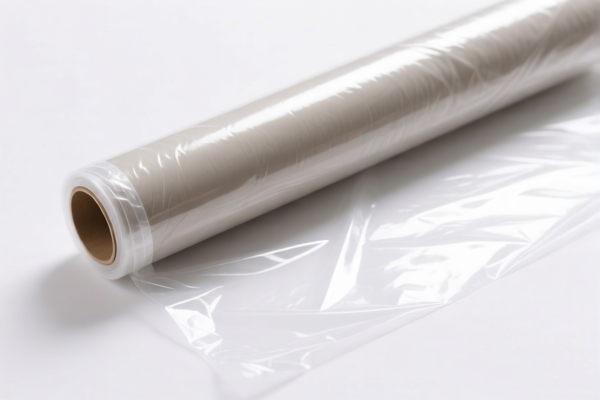
Dust proof Film
CN → US| HS Code | Tariff Rate | Origin | Destination | Doc |
|---|---|---|---|---|
| 4016990500 | 20.9% | CN | US | Official Doc |
| 5603110070 | 35.0% | CN | US | Official Doc |
| 4016996050 | 37.5% | CN | US | Official Doc |
| 5603120070 | 35.0% | CN | US | Official Doc |
| 3926909989 | 22.8% | CN | US | Official Doc |
Product Images


AI Analysis
🛡️ Dust Proof Film / Protective Cover (防尘罩/保护膜)
🌐 HS Code Reference & Customs Clearance Guide | 2026 Latest Tariff Analysis | Professional Clearance Strategy
📌 I. Product Definition & Classification: What Exactly is a "Dust Proof Film"?
In international trade, "Dust Proof Film" (often referred to as Dust Covers, Protective Shrouds, or Protective Bags) is a broad category. Its classification depends heavily on the material (Rubber/Plastic vs. Non-woven/Fabric) and the form (Rigid Shell vs. Flexible Cover). Misclassification is the most common cause of customs delays for this product.
⚠️ Key Distinction Points:
- Rubber/Plastic Material: If made of vulcanized rubber or hard/soft plastic, it falls under Chapter 40 or 39.
- Non-woven Textile Material: If made of felt-like synthetic fibers (common for electronics/clothing dust bags), it falls under Chapter 56.
- Application: Is it a protective shell (Part of machinery) or a general household item?
📦 II. HS Code Classification Details (2026 Latest Tariff Authority Comparison)
| HS Code | Product Description | Material | Applicable Scenario |
|---|---|---|---|
4016.99.05.00 |
Other vulcanized rubber articles, household or personal use | 🟥 Rubber | Household dust covers, rubber boots, flexible rubber seals |
5603.11.00.70 |
Non-woven fabrics, weight ≤ 25 g/m², impregnated/coated | 🟦 Non-woven | Lightweight non-woven dust bags for electronics/furniture parts |
4016.99.60.50 |
Other vulcanized rubber articles, household or personal use (General) | 🟥 Rubber | Heavy-duty rubber protective covers, industrial rubber shields |
5603.12.00.70 |
Non-woven fabrics, weight 25–70 g/m², impregnated/coated | 🟦 Non-woven | Standard non-woven dust sheets, protective covers for appliances |
3926.90.99.89 |
Other articles of plastics, other | 🟧 Plastic | Plastic film, rigid plastic shells, PE/PP protective bags |
🔍 Critical Note:
- If the product is a flexible bag/cover made of non-woven fabric, it belongs to 5603.
- If the product is a rigid or semi-rigid shell made of rubber, it belongs to 4016.
- If the product is a plastic bag/shield, it belongs to 3926.
💰 III. 2026 Latest Tariff Rate Breakdown (Including Surcharges & Policy Add-ons)
✅ Applicable Country: United States (US)
✅ Origin: China (CN)
✅ Effective Time: From November 10, 2025 (including subsequent imports)
🎯 1. 4016.99.05.00 —— Vulcanized Rubber Articles (Household)
| Item | Content |
|---|---|
| Basic Duty Rate | 3.4% (ad valorem) |
| USITC Additional Duty | +7.5% (Section 301 Additional Tariff) |
| IEEPA Additional Duty | +10% (Specific to China/HK products, effective Nov 10, 2025) |
| Total Duty Rate | 20.9% |
| Tax Calculation | CIF Value × 20.9% |
| De Minimis Eligible? | ❌ No (deny_de_minimis applies to many rubber/plastic goods from CN) |
| Legal Basis Path | USITC:4016.99.05.00 → FOOTNOTE:301.88.01 → IEEPA:9903.01.25 |
📌 Explanation:
- Rubber household items face significant Section 301 tariffs. - The 10% IEEPA is a new layer on top, pushing the total to 20.9%.
🎯 2. 5603.11.00.70 —— Non-woven Fabrics (Lightweight ≤25g/m²)
| Item | Content |
|---|---|
| Basic Duty Rate | 0.0% |
| USITC Additional Duty | +25.0% (Section 301 Additional Tariff) |
| IEEPA Additional Duty | +10% (Specific to China/HK products) |
| Total Duty Rate | 35.0% |
| Tax Calculation | CIF Value × 35.0% |
| De Minimis Eligible? | ❌ No |
| Legal Basis Path | USITC:5603.11.00.70 → FOOTNOTE:301.88.01 → IEEPA:9903.01.25 |
📌 Note:
- Even though the basic duty is 0%, the 25% Section 301 surcharge is very high. - This HS code is typical for lightweight non-woven dust covers (e.g., for computer cases or furniture).
🎯 3. 4016.99.60.50 —— Vulcanized Rubber Articles (General/Protective)
| Item | Content |
|---|---|
| Basic Duty Rate | 2.5% |
| USITC Additional Duty | +25.0% (Section 301 Additional Tariff) |
| IEEPA Additional Duty | +10% |
| Total Duty Rate | 37.5% |
| Tax Calculation | CIF Value × 37.5% |
| De Minimis Eligible? | ❌ No |
| Legal Basis Path | USITC:4016.99.60.50 → FOOTNOTE:301.88.01 → IEEPA:9903.01.25 |
📌 Explanation:
- This is a "catch-all" for other rubber protective items not specified elsewhere. - Highest base surcharge among rubber items (25% vs 7.5%).
🎯 4. 5603.12.00.70 —— Non-woven Fabrics (Medium Weight 25–70g/m²)
| Item | Content |
|---|---|
| Basic Duty Rate | 0.0% |
| USITC Additional Duty | +25.0% (Section 301 Additional Tariff) |
| IEEPA Additional Duty | +10% |
| Total Duty Rate | 35.0% |
| Tax Calculation | CIF Value × 35.0% |
| De Minimis Eligible? | ❌ No |
| Legal Basis Path | USITC:5603.12.00.70 → FOOTNOTE:301.88.01 → IEEPA:9903.01.25 |
📌 Note:
- Similar to5603.11.00.70, but for heavier non-woven materials. - Common for sturdier dust sheets for machinery or appliances.
🎯 5. 3926.90.99.89 —— Other Plastic Articles (Other)
| Item | Content |
|---|---|
| Basic Duty Rate | 5.3% |
| USITC Additional Duty | +7.5% (Section 301 Additional Tariff) |
| IEEPA Additional Duty | +10% |
| Total Duty Rate | 22.8% |
| Tax Calculation | CIF Value × 22.8% |
| De Minimis Eligible? | ❌ No |
| Legal Basis Path | USITC:3926.90.99.89 → FOOTNOTE:301.88.01 → IEEPA:9903.01.25 |
📌 Explanation:
- For plastic dust films, covers, or shells. - Lower total tax than rubber/non-woven counterparts, making it a potentially cheaper classification if the material allows.
🛠️ IV. Customs Clearance Practical Advice (Real-World Pitfall Guide)
✅ 1. Required Documentation List (All are Mandatory)
| Document | Mandatory? | Notes |
|---|---|---|
| ✅ Product Specification Sheet | ✔️ | Must clearly state Material Composition (e.g., "100% Polypropylene Non-woven" or "Silicone Rubber") |
| ✅ Material Certificate | ✔️ | Crucial to prove whether it is Rubber (4016) vs. Plastic (3926) vs. Non-woven (5603) |
| ✅ Product Photos | ✔️ | Show the item’s structure: Is it a rigid shell or a soft bag? |
| ✅ Commercial Invoice | ✔️ | Description must match HS Code logic (e.g., "Rubber Dust Cover" vs. "Non-woven Dust Bag") |
| ✅ Packing List | ✔️ | Ensure weights and dimensions align with the declared value |
✅ 2. Declaration Tips (Key Mantra)
🔥 "Material First, Function Second. Wrong Material = Wrong Code = Heavy Penalty!"
| Scenario | Correct Declaration | Wrong Practice |
|---|---|---|
| Non-woven Bag | 5603.xx.xx.xx + "Non-woven Fabric Dust Cover" |
Declare as "Plastic Bag" → Customs reclassifies, adds fines |
| Rubber Cover | 4016.99.05.00 + "Vulcanized Rubber Dust Shield" |
Declare as "Textile" → Incorrect chapter, penalty |
| Plastic Film | 3926.90.99.89 + "PE Protective Film" |
Declare as "Rubber" → Unjustified high tax risk |
✅ 3. Special Case Handling
| Scenario | Handling Advice |
|---|---|
| Mixed Material Products | If the product has both rubber and fabric parts, customs will classify based on the essential character (usually the heavier or more functional part). Provide clear photos. |
| Custom OEM Covers | Provide design drawings. If it’s a specific part for a machine, it might be considered a "part" (Chapter 84/85/86), which has different tariffs. Don’t assume it’s a "general article." |
| Small Sample Shipments | Even small samples are subject to these tariffs. Do not claim "De Minimis" (Section 321) if you know it’s subject to Section 301/IEEPA; it will be flagged. |
🌍 V. Global Market Customs Comparison (2026 Latest)
| Country/Region | Recommended HS Code (Example) | Duty Rate (China Origin) | Certification Requirements | Notes |
|---|---|---|---|---|
| 🇺🇸 USA | 5603.11.00.70 (Non-woven) |
35.0% | N/A | High tariffs due to Section 301 + IEEPA |
| 🇪🇺 EU | 5603.11.00 (Non-woven) |
~0–6.5% (depending on type) | CE (if applicable) | No Section 301 equivalent |
| 🇨🇳 China | 5603.11.00 |
Varies (Import Duty) | None | Domestic sales don't face these export tariffs |
| 🇬🇧 UK | 5603.11.00 |
~0–6.5% | UKCA (if applicable) | Post-Brexit rules similar to EU |
📌 Conclusion:
- USA is the most expensive market for dust covers due to the combination of Base Duty + 25% Section 301 + 10% IEEPA. - Non-woven items (5603) often have 0% base duty but 25% surcharge. - Rubber items (4016) may have lower surcharges (7.5%) but higher base duties.
📌 VI. Common Mistakes & Pitfall Guide (Lessons Learned)
❌ Mistake 1: Declaring a Non-woven dust bag as Plastic (3926) to save on surcharges.
👉 Consequence: Customs lab test reveals fiber content. Result: Retrospective tax + Fine + Delay.
❌ Mistake 2: Using generic terms like "Protective Film" without specifying material.
👉 Consequence: Customs uses "Best Guess" classification, often defaulting to the highest duty or requiring manual review.
❌ Mistake 3: Ignoring the IEEPA 10% surcharge.
👉 Consequence: Profit margin erosion. Many importers only accounted for the 25% Section 301, missing the new 10% layer.
✅ Correct Approach:
"Non-woven Dust Cover, Polypropylene, Weight 50g/m², For Computer Case Protection"
HS Code:5603.12.00.70
Total Duty: 35.0%
🎯 VII. Conclusion: Professional Declaration, Cost Control!
🎯 Remember the Mantra:
🔹 "Material Defines the Chapter. Rubber=40, Plastic=39, Non-woven=56."
🔹 "Section 301 is 25%, IEEPA is 10%. Total Tax is Not Negotiable!"
🔹 "Be Specific in Description. Vague = High Risk."
📌 Pro Tip:
If your Dust Proof Film is made from recycled materials or has special anti-static properties, you might qualify for different sub-categories. However, the Section 301 and IEEPA surcharges generally apply to the chapter, not just the sub-category.
📣 Immediate Action:
📞 Verify Material Composition with your supplier.
📄 Choose the correct HS Code based on the material table above.
💰 Calculate Landed Cost including Total Duty (Base + 301 + IEEPA).
🚀 Ensure Compliance to avoid customs holds!
✨ Professional Clearance Starts with Accurate Classification!
💼 Your Every Penny of Cost is Worth Calculating Precisely!
Customer Reviews
About HS Code Classification
The Harmonized System (HS) is an internationally standardized nomenclature developed by the World Customs Organization (WCO) to classify traded products. Over 200 countries use the HS system as the basis for customs tariffs, trade statistics, and import/export regulations.
Each HS code follows a hierarchical structure:
- Chapter (2 digits) — Broad category of goods (e.g., Chapter 84: Machinery and Mechanical Appliances)
- Heading (4 digits) — More specific grouping within the chapter
- Subheading (6 digits) — Internationally standardized breakdown, used by all WCO member countries
- National subdivisions (8-10 digits) — Country-specific extensions for further classification, such as US HTSUS 10-digit codes
Correct HS code classification is essential for smooth customs clearance, accurate duty payment, and compliance with trade regulations. Misclassification can lead to customs delays, overpayment of duties, or penalties.
When importing from CN to US, the applicable tariff rates may include:
- Most-Favored-Nation (MFN) rate — The standard duty rate applied to WTO members
- General rate — Applied to countries without trade agreements
- Trade remedy duties — Additional tariffs such as Section 301 (anti-dumping), Section 232 (national security), or countervailing duties
The information provided on this page is for reference purposes only. For official classification, please consult with your local customs authority or a licensed customs broker.