Dyed Fox Furskins (For Garments)
CN → US| HS Code | Tariff Rate | Origin | Destination | Doc |
|---|---|---|---|---|
| 4303100060 | 39.0% | CN | US | Official Doc |
| 4303900000 | 35.0% | CN | US | Official Doc |
| 4302194530 | 37.2% | CN | US | Official Doc |
Product Images
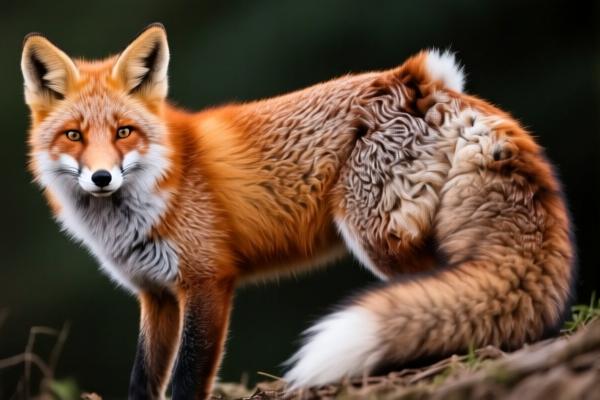
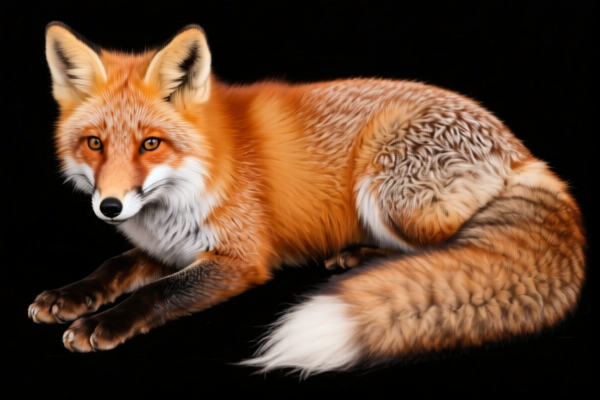
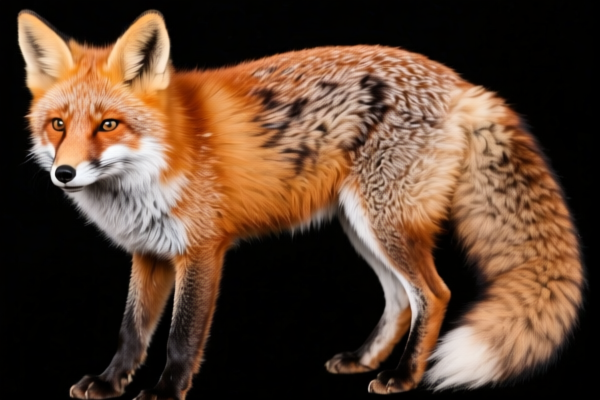
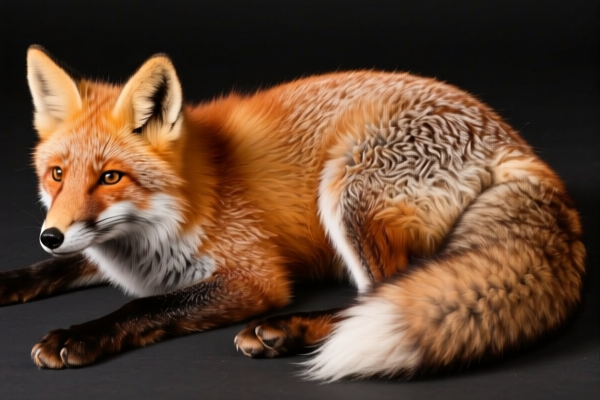
AI Analysis
🦊 Dyed Fox Furskins (For Garments)
🌐 HS Code Reference & Customs Clearance Guide | 2026 Latest Tariff Analysis | Professional Entry Strategies
📌 I. Product Definition & Classification: Do You Really Understand "Fox Furskins"?
Fox furskins, dyed and intended for garment manufacturing, represent a high-value raw material in the international fur trade. Unlike finished fur garments, these are raw or semi-processed pelts. In international trade, they are strictly classified based on:
- Material Consistency: Are all parts of the skin from the same animal?
- Processing State: Are they whole, stitched, or cut?
- Intended Use: Explicitly stated as "For Garment."
⚠️ Key Distinction Point:
- If the skins are uniform in material (e.g., whole fox skins, dyed) → They fall under General Fur Skins (4303).
- If the skins are raw/uncured or have specific processing nuances (e.g., "Whole" but potentially categorized under raw skin protocols) → They may fall under Preparation of Fur Skins (4302).
- Crucial Note: "Fox" is generally classified under "Other" (non-mink, non-squirrel) fur categories in most tariff schedules.
📦 II. HS Code Classification Details (2026 Latest Tariff Authority Comparison)
Based on the provided data, there are three potential classifications depending on the precise physical state and customs interpretation of "Dyed Fox Furskins."
| HS Code | Product Description | Applicable Scenario | Key Classification Logic |
|---|---|---|---|
| 4303.10.00.60 | Dyed fur skins (uniform material), used for garment making, classified as other fur products excluding mink. | Whole fox skins, dyed, consistent material. | Summary: "Dyed fur skins (uniform material), use for garment making, belongs to other fur products excluding mink fur." |
| 4303.90.00.00 | Fur products made of fur, form is fur products, use is clothing, fitting the classification characteristics of fur-made garments and accessories. | Fur items where the primary characteristic is "fur garment accessory" rather than raw skin. | Summary: "Material is fur, form is fur product, use is clothing, fitting classification features of fur-made garments and accessories." |
| 4302.19.45.30 | "Dyed" corresponds to "dyed," "Fur Skins Whole" corresponds to "whole skins," "For Garment" fits its use as a fur raw material. | Whole skins explicitly described as raw/semi-raw materials for garment production. | Summary: "Product name 'Dyed' matches 'dyed', 'Fur Skins Whole' matches 'whole skins', 'For Garment' matches its use as fur raw material." |
🔍 Key Reminder:
- 4303.10.00.60 is the most direct classification for dyed, whole, uniform-material fox skins intended for garments.
- 4302.19.45.30 applies if customs views the item strictly as a raw/semi-processed raw material ("Whole skins") rather than a finished "fur product."
- 4303.90.00.00 is a broader "Other" category if the specific "dyed whole skin" descriptor doesn't fit the primary subheadings.
💰 III. 2026 Latest Tariff Rate Details (Including Surcharges, Policy Add-ons)
✅ Applicable Country: United States (US)
✅ Origin: China (CN)
✅ Effective Time: 2025年11月10日起 (From Nov 10, 2025, including subsequent imports)
🎯 1. 4303.10.00.60 —— Dyed Fur Skins (Uniform Material, Excl. Mink)
| Item | Content |
|---|---|
| Base Tariff | 4.0% (Ad Valorem) |
| Section 301 Surcharge | +25.0% (From USITC Footnote) |
| 122 Clause Tariff | +10.0% (Specific policy addition) |
| Total Tax Rate | 39.0% |
| Tax Calculation | CIF Value × 39.0% |
| De Minimis Exemption | ❌ Not Eligible (High tariff rate denies de minimis) |
| Legal Basis Path | Base: 4.0% → Add-on: 25.0% → Clause 122: 10% |
📌 Explanation:
- This is the standard classification for dyed, whole fur skins (excluding mink).
- The 39% total rate includes the base duty (4%), the Section 301 tariff (25%), and the 122 Clause tariff (10%).
- This is a high-cost entry point; accurate declaration is critical to avoid misclassification penalties.
🎯 2. 4303.90.00.00 —— Other Fur Products (Garment Accessories)
| Item | Content |
|---|---|
| Base Tariff | 0.0% (Ad Valorem) |
| Section 301 Surcharge | +25.0% (From USITC Footnote) |
| 122 Clause Tariff | +10.0% (Specific policy addition) |
| Total Tax Rate | 35.0% |
| Tax Calculation | CIF Value × 35.0% |
| De Minimis Exemption | ❌ Not Eligible |
| Legal Basis Path | Base: 0.0% → Add-on: 25.0% → Clause 122: 10% |
📌 Explanation:
- If classified as "Other Fur Products" (possibly viewed as accessories or less specific forms), the base duty is lower (0%).
- However, the 35% total is still significant due to the 25% and 10% surcharges.
- Risk: Misclassifying whole skins as "accessories" to reduce base duty can lead to customs audits.
🎯 3. 4302.19.45.30 —— Dyed Whole Fur Skins (Raw Material)
| Item | Content |
|---|---|
| Base Tariff | 2.2% (Ad Valorem) |
| Section 301 Surcharge | +25.0% (From USITC Footnote) |
| 122 Clause Tariff | +10.0% (Specific policy addition) |
| Total Tax Rate | 37.2% |
| Tax Calculation | CIF Value × 37.2% |
| De Minimis Exemption | ❌ Not Eligible |
| Legal Basis Path | Base: 2.2% → Add-on: 25.0% → Clause 122: 10% |
📌 Explanation:
- This classification treats the item as a raw material ("Whole skins") rather than a finished product.
- The base duty is 2.2%, which is between the other two options.
- The 37.2% total rate applies to all Chinese-origin fur skins under this specific raw material code.
- Key Phrase Match: "Dyed" + "Fur Skins Whole" + "For Garment."
🛠️ IV. Customs Clearance Practical Advice (Battle-Tested Pitfall Avoidance)
✅ 1. Required Documentation Checklist (Missing Items = Delays)
| Document | Mandatory? | Explanation |
|---|---|---|
| ✅ Product Specification Sheet | ✔️ | Must detail: Animal type (Fox), State (Dyed, Whole), Use (Garment). |
| ✅ Commercial Invoice | ✔️ | Must explicitly state "Dyed Fox Furskins, Whole, For Garment." Avoid vague terms like "Fur Items." |
| ✅ Packing List | ✔️ | Itemize by skin count, weight, and dimensions. |
| ✅ Photos (Front/Back) | ✔️ | Show dye quality, fur density, and any labels/tags. |
| ✅ Certificate of Origin | ✔️ | Proves China origin; crucial for 301/122 tariff application. |
| ✅ Import License (if applicable) | ✔️ | Check local regulations for fur imports. |
✅ 2. Declaration Strategy (Key Mantra)
🔥 "Whole Skins, State Clear, Use Specific, Tariff Accurate!"
| Scenario | Correct Declaration | Incorrect Practice |
|---|---|---|
| Dyed Whole Fox Skins | 4303.10.00.60 or 4302.19.45.30 |
Declaring as "Fur Garments" → Wrong HS, high penalty |
| Cut Fur Pieces | 4303.90.00.00 (if accessories) |
Declaring as "Whole Skins" → Misdescription |
| Raw (Undyed) Skins | Different HS Code (not in this dataset) | Declaring as "Dyed" → Fraud/Civil Penalty |
| Mixed Materials | Split declaration | Bundling with synthetic fur → Classification error |
✅ 3. Special Case Handling
| Situation | Handling Advice |
|---|---|
| OEM Orders | Provide buyer’s spec sheet confirming "Fox" and "Dyed." |
| Small Samples | Even samples are subject to 39% tariff; do not use de minimis to hide value. |
| Re-exported Goods | If imported from China to US, full 39% (or 35%/37.2%) applies. No duty-free treatment. |
| Dispute on "Whole" | If skins are cut or stitched, they may fall under 4303.90.00.00. Clarify with customs broker. |
🌍 V. Global Market Clearance Comparison (2026 Latest)
| Country/Region | Recommended HS Code | Tariff Rate | Certification | Notes |
|---|---|---|---|---|
| 🇺🇸 USA | 4303.10.00.60 / 4302.19.45.30 |
39.0% / 37.2% | None specific | High tariffs due to 301 & 122 clauses. |
| 🇨🇳 China | 4303.10.00.60 |
~4-13% | None | Domestic trade has different rates. |
| 🇪🇺 EU | 4303.10 |
0-4% | CITES Permit* | Stricter environmental/fur bans in some countries. |
| 🇬🇧 UK | 4303.10 |
0-4% | None | Post-Brexit rules apply. |
| 🇨🇦 Canada | 4303.10 |
0% (MFN) | None | No Section 301 equivalent. |
📌 Conclusion:
- USA is the most expensive market for Chinese-origin fur skins due to layered surcharges.
- Total cost burden: 35%–39%.
- Compliance is key: Misdeclaring "dyed" as "raw" or "whole" as "cut" will result in severe penalties.
📌 VI. Common Errors & Pitfall Guide (Blood-Teaching Lessons)
❌ Error 1: Declaring "Dyed Fox Skins" as "Finished Fur Garments"
👉 Consequence: HS Code mismatch → 100% fine + seizure. Finished garments have different HS codes.
❌ Error 2: Omitting "Dyed" in the description
👉 Consequence: Customs may classify as "Raw Skins" (different base rate) → Audit & Back-taxes.
❌ Error 3: Using "De Minimis" for small shipments
👉 Consequence: Fur products are often excluded from de minimis (Section 321) if over $800 or if subject to specific prohibitions. Check current policy.
❌ Error 4: Misidentifying Animal Type
👉 Consequence: "Fox" vs. "Mink" → Different HS subheadings → 4303.10.00.60 (Fox) vs. Mink-specific codes. Mink may have different tax treatments.
✅ Correct Practice:
"Dyed Fox Furskins, Whole, For Garment Manufacturing, Origin: China, HS: 4303.10.00.60"
🎯 VII. Conclusion: Professional Declaration, Save Time, Reduce Cost!
🎯 Remember the Mantra:
🔹 "Whole Skins, Dye State Clear, Fox vs. Mink Distinct, 39% Tax Looming!"
🔹 "HS Code Determines Fate, Tariff Differs by 4%, One Mistake Costs Thousands!"
📌 Pro Tip:
If your fur skins are originated from Canada, Russia, or other non-China sources, the Section 301 (25%) and 122 Clause (10%) surcharges do NOT apply.
- Result: Total tariff drops to 4% (base) or 2.2% (base).
- Action: Always verify the Country of Origin. If not China, declare correctly to avoid unnecessary surcharges.
📣 Immediate Action:
📞 Contact a professional customs broker + Provide clear photos + Apply for Pre-Ruling (if needed)
🚀 Ensure your Dyed Fox Furskins clear customs smoothly, efficiently, and legally!
✨ Professional Clearance Starts with Accurate Classification!
💼 Every Dollar of Cost is Worth Calculating Precisely!
Customer Reviews
About HS Code Classification
The Harmonized System (HS) is an internationally standardized nomenclature developed by the World Customs Organization (WCO) to classify traded products. Over 200 countries use the HS system as the basis for customs tariffs, trade statistics, and import/export regulations.
Each HS code follows a hierarchical structure:
- Chapter (2 digits) — Broad category of goods (e.g., Chapter 84: Machinery and Mechanical Appliances)
- Heading (4 digits) — More specific grouping within the chapter
- Subheading (6 digits) — Internationally standardized breakdown, used by all WCO member countries
- National subdivisions (8-10 digits) — Country-specific extensions for further classification, such as US HTSUS 10-digit codes
Correct HS code classification is essential for smooth customs clearance, accurate duty payment, and compliance with trade regulations. Misclassification can lead to customs delays, overpayment of duties, or penalties.
When importing from CN to US, the applicable tariff rates may include:
- Most-Favored-Nation (MFN) rate — The standard duty rate applied to WTO members
- General rate — Applied to countries without trade agreements
- Trade remedy duties — Additional tariffs such as Section 301 (anti-dumping), Section 232 (national security), or countervailing duties
The information provided on this page is for reference purposes only. For official classification, please consult with your local customs authority or a licensed customs broker.